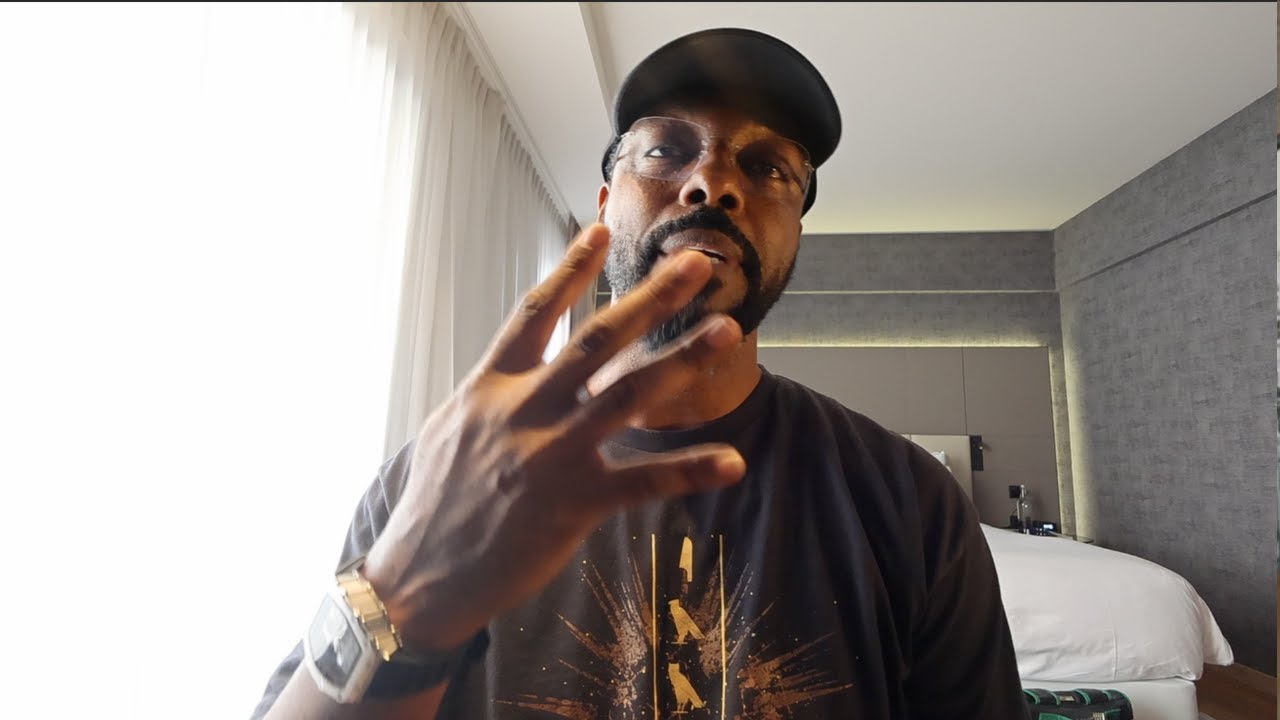
The law of assumption is the idea that whatever you assume to be true, and feel as true, tends to harden into your lived experience. It is a modern label for the teaching of Neville Goddard (1905–1972), who told audiences to "assume the feeling of the wish fulfilled" and to rehearse that feeling in a drowsy, relaxed condition he called a "state akin to sleep", which online communities now abbreviate as SATS.
The idea matters because it sits underneath a huge share of today's manifestation content, from TikTok scripting trends to guided meditations, and it is often confused with the law of attraction. Knowing what Neville actually taught, what psychology can confirm, and how Billy Carson's method lines up with it lets readers practise with clear eyes.
Watch the video
Who was Neville Goddard?
Neville Goddard was a Barbadian-born mystic and lecturer who taught that human imagination is the creative power behind experience. He was born on February 19, 1905, in St. Michael, Barbados, moved to New York in 1922 at seventeen to work in theatre, and went on to lecture at venues such as The Town Hall in New York and later the Wilshire Ebell Theatre in Los Angeles. He died in West Hollywood on October 1, 1972.
Neville credited much of his outlook to a teacher he called Abdullah, whom he described as a Black man of Jewish background who taught Hebrew, Kabbalah and a symbolic reading of the Bible in New York. By Neville's account they worked together for about five years in the 1930s. Little independent record of Abdullah survives, so most of what is known comes from Neville himself.
His key books, all short, are Your Faith Is Your Fortune (1941), Feeling Is the Secret (1944), The Power of Awareness (1952) and The Law and the Promise (1961). The last opens with a chapter titled "The Law: Imagining Creates Reality", which is about as compact a summary of his teaching as exists.
What does the law of assumption actually say?
At its core, the law of assumption says that the state of consciousness you occupy, and assume to be real, is what shows up in your world. Neville did not frame this as a cosmic magnet or a vibration that pulls things toward you. He framed it as identity: you do not attract a new life, you occupy the state of the person who already has it, and experience follows.
Four teachings carry most of the weight:
- Assume the feeling of the wish fulfilled. Rather than wanting an outcome, Neville asked students to feel as they would feel if it had already happened. Wanting, in his framework, affirms lack.
- Think from the end. In The Law and the Promise he repeatedly urges readers to "think from the end", meaning to imagine from inside the finished result rather than looking at it from a distance. Students today often shorten this to "living in the end".
- Revision. In the chapter "Turn the Wheel Backward", Neville describes replaying an unwanted event in imagination as it should have gone, so that the remembered version no longer shapes the present.
- Persistence. He held that an assumption, faithfully maintained, "hardens into fact", a phrase that gave the title to one of his lectures.
The phrase "law of assumption" itself is not the title of any Neville book. It is a label that spread through online manifestation communities, especially on TikTok, in the early 2020s, when manifestation as a distinct internet practice took off. It is a fair summary of his method, but readers should know it is a modern umbrella term.
What is SATS, the "state akin to sleep"?
SATS is the practice of entering a drowsy, relaxed condition, close to sleep, and repeating a short imagined scene that implies your wish has already come true. The words "state akin to sleep" are Neville's own; the acronym SATS is later online shorthand.
In the lecture published as "Assumptions Harden Into Fact", he argued that the future is changed most easily in that condition "for then effort is reduced to its minimum". His instructions in Feeling Is the Secret and elsewhere follow a consistent pattern:
- Choose a single, short scene that would only happen after the wish is fulfilled, such as a friend congratulating you or holding the keys to a new home.
- Lie down or sit comfortably and let the body relax until you feel heavy and drowsy.
- Run the scene in the first person, as if you are inside it rather than watching it, with sensory detail such as touch, sound and voices.
- Loop it until it feels natural and real, then let yourself drift into sleep with that feeling.
The logic, in Neville's framing, is that the drowsy state lowers the critical, effortful mind and lets the assumption reach what he called the subconscious.
How is the law of assumption different from the law of attraction?
The law of attraction says like attracts like through thought or vibration; the law of assumption says the self you assume becomes the life you see. The two overlap in practice, but they come from different framings.
The law of attraction descends from the New Thought movement, usually traced to the nineteenth-century mental healer Phineas Quimby. The phrase was popularised by William Walker Atkinson's Thought Vibration or the Law of Attraction in the Thought World (1906), and Wallace Wattles' The Science of Getting Rich (1910) became another foundational text. Rhonda Byrne credited Wattles as an inspiration for her 2006 film and book The Secret, which carried the idea to a mass audience, alongside the Abraham-Hicks teachings of Esther and Jerry Hicks. The recurring image is vibrational: your thoughts emit a frequency, and matching circumstances are drawn to you.
Neville rarely talks that way. His language is about states, identity and the imagination as the one creative power. There is no "out there" to attract; there is only the state you occupy and the world that reflects it. That is why law-of-assumption teachers tend to downplay vision boards and wishing, and emphasise feeling, self-concept and persistence instead. Readers comparing frameworks may also find the 369 manifestation method useful, since it is a writing ritual that sits closer to the attraction side of the family.
What does psychology say about it?
There is no scientific evidence that imagining an outcome changes external events directly. What research does show is more specific and more useful: how you imagine affects what you do, and that changes outcomes indirectly.
The most important caution comes from Gabriele Oettingen, a psychologist at New York University and the University of Hamburg. In a 2002 paper in the Journal of Personality and Social Psychology, Oettingen and Doris Mayer separated positive expectations (judging a desired future as likely) from positive fantasies (enjoying images of that future). Across studies of job seekers, students with a romantic interest and students preparing for exams, positive expectations predicted more effort and better results, while indulging in positive fantasies predicted the reverse. Pure daydreaming about the finished result can feel so good that it saps the drive to pursue it.
Oettingen's answer is mental contrasting: imagine the wish and its best outcome, then deliberately imagine the main inner obstacle. Combined with Peter Gollwitzer's implementation intentions, simple "if-then" plans described in his 1999 American Psychologist paper, it forms the WOOP method (Wish, Outcome, Obstacle, Plan), formally known as mental contrasting with implementation intentions.
A second line of evidence comes from Lien Pham and Shelley Taylor at UCLA. In a 1999 study, students preparing for a midterm who mentally rehearsed the process of studying put in more hours and scored higher than students who only pictured getting a good grade; outcome-only visualisation did not help. And Albert Bandura's work on self-efficacy, the belief that you can carry out the actions a goal requires, consistently links that belief to persistence and performance.
Put together, the research suggests the feeling part of Neville's method can help when it builds confidence and self-concept, and can hurt when it replaces effort.
How to practise the law of assumption with the evidence in mind
A grounded practice keeps Neville's emphasis on feeling and identity, and adds the safeguards the research supports.
- Define one wish in a sentence. Be specific enough that you would know it happened.
- Build a short end-scene. One moment that implies fulfilment, felt from inside, in the first person.
- Rehearse it in a relaxed state. Before sleep or after waking, run the scene until the feeling settles, which is the SATS step.
- Name the obstacle. After the scene, spend a minute on what inside you is most likely to get in the way, then write one if-then plan: "If doubt shows up at 9 p.m., then review the plan instead of scrolling."
- Rehearse the process too. Picture yourself doing the next concrete steps well, not only enjoying the result.
- Act from the assumed identity. Ask what the person who already has this would do today, then do one of those things.
- Use revision on setbacks. When a day goes badly, replay it in imagination as you wanted it, then return to step six.
Billy Carson's reading
Billy Carson teaches manifestation as a discipline of consciousness built on three linked principles: thought, frequency and action. In his framework, laid out in how to manifest what you want, "frequency" is the emotional state of already having the outcome, and it is generated through visualisation, scripting and gratitude. That is the closest point of contact with Neville's "feeling is the secret", and the editorial pillar on his method draws that parallel directly.
His episode The Quantum Field Doesn't Respond to Affirmations (It Responds to This), available on the 4biddenknowledge Podcast, makes the same point from another angle: in Carson's view words alone do not manifest, and what counts is the inner state behind them. His book Manifestation Codes organises the process into seven steps, with emotional alignment, belief work and visualisation sitting alongside inspired action and detachment from timing.
Where Carson parts company with a pure "assume and wait" reading is action. He treats committed physical action as non-negotiable, which happens to be the component with the most research support. He also addresses why assumptions fail to stick. His account of the subconscious snapback argues that the subconscious is built for safety rather than success and pulls people back to familiar patterns, and his seven blocks catalogue the habits that stall the process. Both map neatly onto the "obstacle" step that Oettingen's research recommends.
Watch, read and go deeper
Start with Billy's episode on affirmations and the quantum field, available on the podcast page. For the full system, read Manifestation Codes and pair it with the archive piece on the four types of imagination, which explores the faculty Neville placed at the centre of everything. The manifestation topic hub collects every method, critique and episode in one place.
Frequently asked questions
Is the law of assumption real?
There is no scientific evidence that assuming a wish is fulfilled changes outside events by itself. Research does show that confidence, self-efficacy and rehearsing the process improve effort and performance. Many practitioners find value in the method for those reasons, whether or not they accept Neville's metaphysics.
What is the difference between the law of assumption and the law of attraction?
The law of attraction, from New Thought writers like William Walker Atkinson and Wallace Wattles, says thoughts emit a vibration that draws matching circumstances. The law of assumption, based on Neville Goddard, says the state or identity you assume in consciousness becomes your experience. One is about attracting; the other is about occupying a state.
How do you do SATS?
Relax until you feel drowsy, then repeat a short first-person scene that implies your wish has come true, such as hearing a specific person congratulate you. Loop it until it feels natural and fall asleep in that feeling. The phrase "state akin to sleep" is Neville's; SATS is later online shorthand.
Which Neville Goddard book should a beginner read first?
Feeling Is the Secret (1944) is the shortest and most practical introduction to his method. The Power of Awareness (1952) expands on assumption and persistence, and The Law and the Promise (1961) adds revision and many case stories from his students.
Does Billy Carson teach the law of assumption?
Billy Carson teaches his own method of thought, frequency and action rather than using the law of assumption label. His emphasis on the feeling of already having the outcome closely parallels Neville's "feeling is the secret", while his insistence on committed action goes further than many law-of-assumption teachers.
Sources and further reading
- Neville Goddard, Feeling Is the Secret (1944)
- Neville Goddard, The Power of Awareness (1952)
- Neville Goddard, The Law and the Promise (1961)
- Mitch Horowitz, One Simple Idea: How Positive Thinking Reshaped Modern Life (2014)
- Gabriele Oettingen and Doris Mayer, "The Motivating Function of Thinking About the Future: Expectations Versus Fantasies", Journal of Personality and Social Psychology 83 (2002)
- Peter M. Gollwitzer, "Implementation Intentions: Strong Effects of Simple Plans", American Psychologist 54 (1999)
- Lien B. Pham and Shelley E. Taylor, "From Thought to Action: Effects of Process- Versus Outcome-Based Mental Simulations on Performance", Personality and Social Psychology Bulletin 25 (1999)
- Gabriele Oettingen, Rethinking Positive Thinking: Inside the New Science of Motivation (2014)