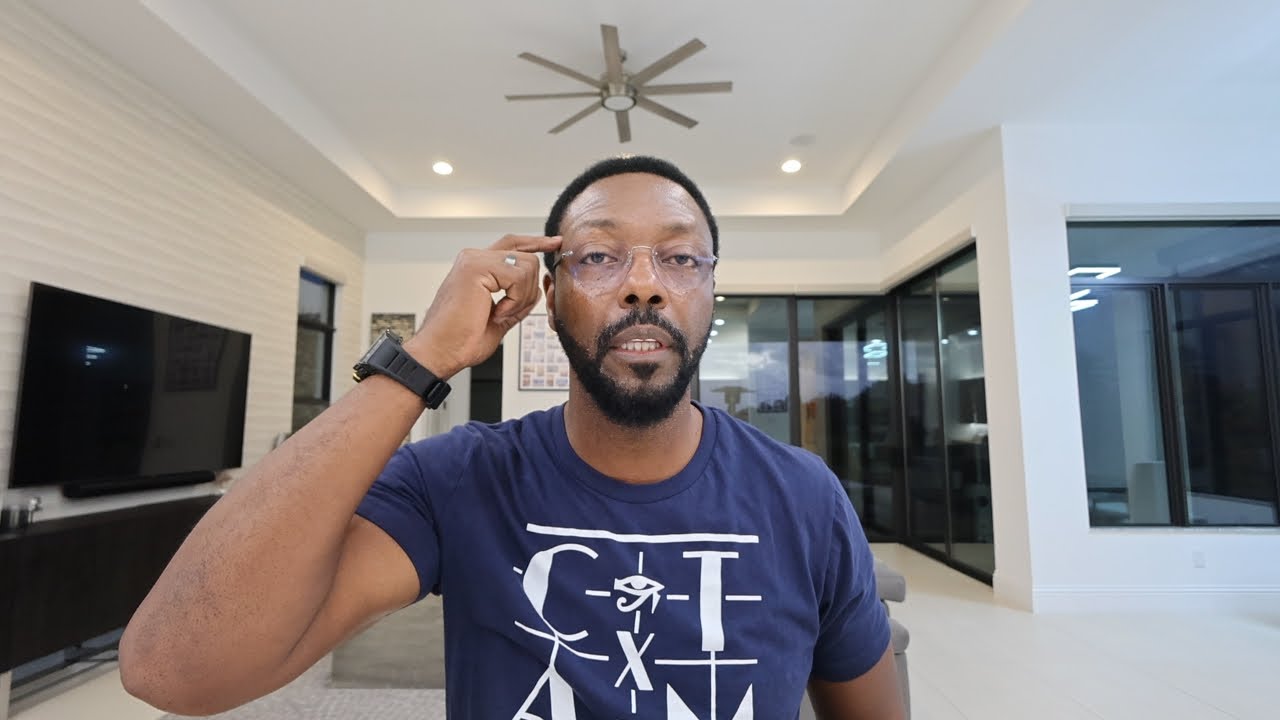
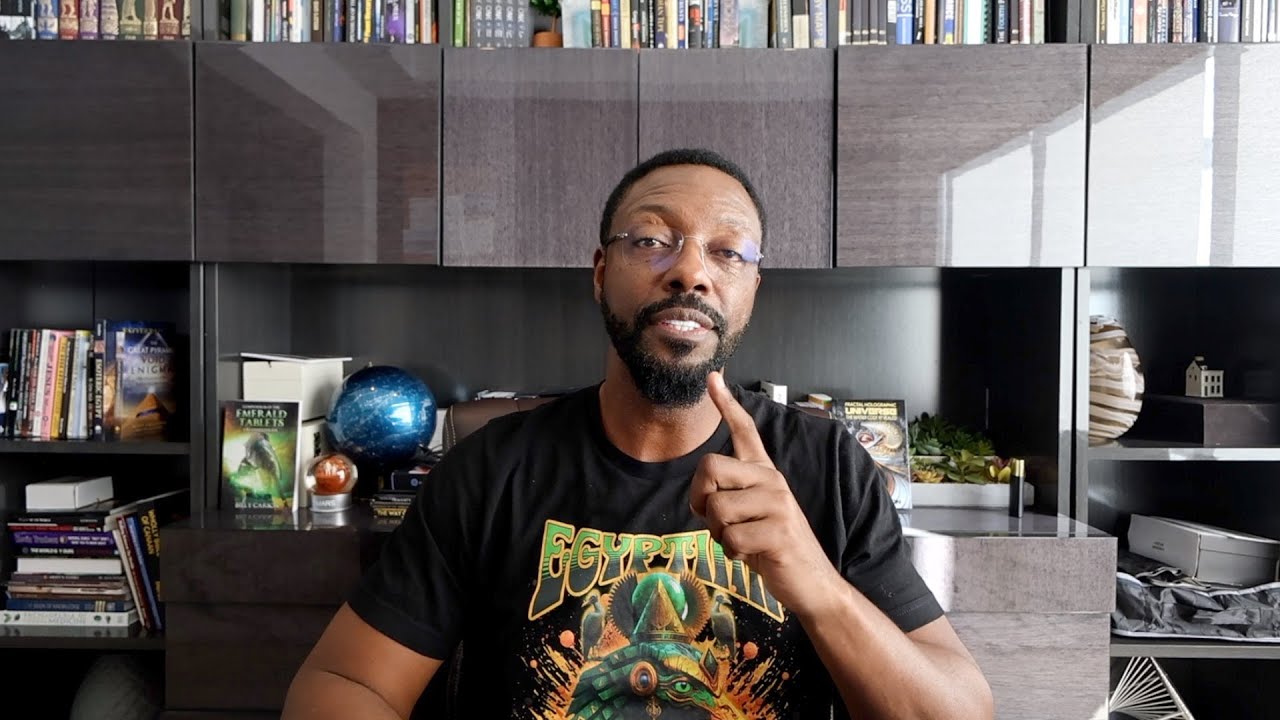
Billy Carson's argument in this video is that manifestation fails less often for lack of desire than for lack of capacity: a nervous system running on stress, old trauma and a scarcity mindset cannot hold the outcome it is asking for, so the result either never arrives or arrives and gets squandered. He builds the case from the fate of lottery winners, reframes the nervous system as the body's bandwidth, and then describes five days at Dave Asprey's 40 Years of Zen program, where EEG-monitored meditation, journaling and one supervised ketamine session convinced him that resetting the nervous system is the missing step in manifestation teaching.
The topic matters because it answers the most common complaint in this field: someone did everything the books say and nothing changed. Carson shifts the question from what you want to what you are prepared to receive, and because he leans on research about money, trauma and ketamine, the claims can be checked.
What the video covers
The universe is not punishing you (from the start)
Carson opens with the usual frustration: the money has not shown up and it feels like a punishment. His counter is that the universe may be withholding a result because the person is not yet on the frequency needed to keep it. The delay is protective: a blessing that lands before someone is ready tends to get destroyed, missed or abused.
Lottery winners as the worked example (from about 0:41)
The example Carson uses throughout is the lottery. Several hundred people a year win significant sums, and by his account most are broke again within two to three years. He runs them through his own model: conscious thought, action in buying the ticket, the manifestation arriving, money as the energy exchange. Every box was ticked except one. They were not on what he calls the abundance frequency, had no financial literacy and had lived in a scarcity mindset, so sudden wealth found nothing to hold it. This is not about intelligence but preparation, he says: reprogram those winners before the draw and teach basic money management, and most would build on the windfall instead of depleting it.
Why the nervous system is the bottleneck (from about 2:55)
This is where the video turns to its title. In Carson's words, "desire isn't just enough. Your nervous system has to be able to hold the success that you're claiming." He lists the loads most people carry: trauma, dramatic relationships, cortisol spikes and a stressful news feed. A nervous system in fight or flight, he argues, is not configured to receive abundance, which is why someone can be doing almost everything right and still see nothing. He then introduces entropy, the movement from order to disorder, as a fractal pattern running through the universe and into the body and mind, and the practical image follows at about 4:29: "Think of your nervous system as your inner Wi-Fi." If it is saturated with low-frequency data, meaning fear, anxiety, money worry and old pain, the high-frequency signal cannot get through, and if it did the person would not recognize it. That, he says, is the neurological version of the lottery winner who blows the prize.
Frequency is a mirror, not a wish (from about 6:35)
Carson anticipates the objection that this is positive thinking by another name: "Frequency is not just wishful thinking," he says. The universe behaves like a mirror, so a person broadcasting chaos, doubt and dread receives more of the same. From about 7:34 he adds a second mechanism: many people are not ready for the next chapter because they are replaying old ones as if they were happening now. The remedy is processing rather than reliving: moving the experience through the body, acknowledging it and letting it go.
Downloads, quantum computers and 11 dimensions (from about 8:45)
Carson defends the idea of receiving downloads, insisting every human gets them and that quantum physics has proved it. He points viewers to physics.org, then to Google's quantum chip, which he says answered in seconds a question that would have taken every other computer hundreds of thousands of years, and which researchers concluded had drawn on multiple universes. Since the chip is, in his view, a fractal of human consciousness, the brain is the original quantum computer, and he cites a brain institute finding that the mind connects to up to 11 dimensions. The real skill is discernment: from about 10:32 he asks whether you can recognize that the person who just appeared in your life is the connection that leads to the next one, which is how a manifestation actually arrives.
Five days at 40 Years of Zen (from about 11:20)
The second half is a first-hand account. About four months before recording, Carson flew to Seattle for Dave Asprey's 40 Years of Zen program. He credits Asprey with coining the term biohacking, notes the two have appeared on each other's podcasts and says he went because of Asprey's work on processing past trauma. The promise, in Carson's words, is "40 years of working on yourself, but only in five days."
The day begins at 8 a.m. with a team of psychotherapists, analysts and scientists and a conversation that sets a mission for the day, which participants journal. From about 13:33 he describes the pod: a capsule he compares to a small Star Trek shuttle, with blackout goggles, headphones carrying binaural beats, a recliner in darkness and an EEG cap wired to an analyst outside who watches brainwave activity throughout.
Day one, the method and the hero's dose (from about 14:43)
Day one runs four and a half hours in the pod with no psychedelic, and Carson admits it was hard to hold focus. The method, described from about 15:43, works through an itemized list of painful events and people, including oneself: relive each one inside the meditation, feel the full emotion, process it, move into forgiveness, then gratitude and finally love, then come out, journal and talk it through with a psychotherapist. Anyone unwilling to be candid in those sessions, he says, is wasting their time.
Day two, from about 16:41, adds what the program calls a hero's dose of ketamine, a dissociative used in supervised clinical settings. Carson says it gave him a neuroplasticity that let him meet the same memories in a new way and reset his neurological system. Re-grounding and psychotherapy follow, and days three to five repeat the work without the drug.
The lesson he brought home (from about 18:18)
Carson's takeaway is that "the nervous system is highly responsible for the way that we manifest our reality," including how we respond to people, to our own thoughts and even to our own speech. Until a person settles it into coherence, the life they are asking for will not take hold. He closes by saying he now teaches at-home brain-heart coherence exercises aimed at the same reset without the travel or the cost of a retreat, the work his 4biddenknowledge Academy is built around.
Key takeaways
Carson's position is that an unprepared nervous system, not a lack of desire, is the most common reason a manifestation stalls or gets squandered.
The lottery is his test case: thought, action and energy exchange were all present, but the winners lacked the frequency and the financial literacy to keep the money.
He treats the nervous system as bandwidth, where low-frequency data from stress and old trauma crowds out the signal a person is trying to receive.
Processing the past rather than reliving it is what clears that bandwidth in his model.
At 40 Years of Zen he used EEG-monitored meditation, a forgiveness-gratitude-love sequence, psychotherapy and one ketamine session to do that work in five days, and brain-heart coherence exercises at home are his substitute for a retreat.
Billy Carson's reading
This talk is Carson's manifestation model with a new layer added. His core method, set out in how to manifest what you want and in the book covered in Manifestation Codes by Billy Carson, already has the steps he runs the lottery winners through: conscious thought, multiplied action, energy exchange. What this video adds is a prerequisite. The receiver has to be upgraded first, and the receiver is the body.
He holds the view for two reasons. The first is his fractal cosmology, laid out in the fractal holographic universe: if every part reflects the whole, a quantum chip reflects the brain and a chaotic inner state is mirrored back as a chaotic outer one. The second is personal: the 40 Years of Zen account ends with a turn in his own teaching toward nervous-system work, the thread that also runs through his conversation with Dr. Daniel Amen in facing trauma and the brain you bring to it.
What mainstream scholarship says
The lottery claim is partly folklore. The widely repeated line that 70 percent of winners go broke was disowned by the National Endowment for Financial Education, which said it was never its research. Hankins, Hoekstra and Skiba's 2011 study of Florida winners did find that people who won 50,000 to 150,000 dollars were about as likely to file for bankruptcy within five years as small winners, so a windfall does not fix money habits. Large studies of Swedish winners by Cesarini, Lindqvist, Östling and colleagues found wealth largely retained a decade later. Some winners fare badly, but the two-to-three-year rule Carson states is not an established finding.
The quantum references need correction. Google's 2019 Sycamore experiment and the 2024 Willow chip were benchmarks showing a quantum processor completing a contrived sampling task far faster than a classical supercomputer. The parallel-universes remark came from a blog post by Google's Hartmut Neven speculating that the result lends credence to the many-worlds interpretation; it was not a finding that the chip accessed other dimensions. The 11 dimensions figure traces to a 2017 Blue Brain Project paper that used algebraic topology to describe groups of neurons as cliques of up to 11 dimensions, abstract dimensions of a mathematical graph rather than spatial ones. No physics result shows the brain downloading information from elsewhere, and entropy's extension from thermodynamics to moods is a metaphor.
40 Years of Zen does use EEG neurofeedback, which has a research base mostly for attention and anxiety, with mixed results and debate about placebo effects. Ketamine is approved as an anesthetic, and the nasal form esketamine for treatment-resistant depression; ketamine-assisted psychotherapy for trauma remains investigational and must be medically supervised. What trials show for binaural audio is covered in binaural beats explained. The forgiveness-gratitude sequence resembles methods with real support, since exposure-based processing of memories, expressive writing and gratitude exercises each show modest benefits, as laid out in how to reprogram your subconscious mind.
Watch, read and go deeper
Everything Carson has published on intention, frequency and abundance is collected in the manifestation topic hub, and the practices with evidence behind them are in how to reprogram your subconscious mind. Longer solo teachings in the same vein are gathered in Best of Billy Carson on 4BK TV.
Frequently asked questions
Can your nervous system block manifestation?
That is Carson's claim: a nervous system stuck in fight or flight cannot hold or recognize the outcome a person is asking for, so the manifestation stalls or gets squandered. The mainstream parallel is narrower: chronic stress measurably impairs decision-making and impulse control, which affects how people handle opportunities and money, but there is no evidence that it filters a signal from the universe.
What is 40 Years of Zen?
40 Years of Zen is a five-day intensive founded by Dave Asprey near Seattle. By Carson's account each day combines a morning mission-setting session, journaling, hours in an isolation pod with binaural audio and EEG monitoring, psychotherapy, and on one day a supervised ketamine session.
Do most lottery winners really go broke?
No reliable study shows that most do. The familiar 70 percent figure has no source, and large Swedish studies found winners keep most of their wealth. A Florida study did find mid-sized winners filing for bankruptcy at similar rates to small winners within five years, so money habits matter, which is the part of Carson's point the research supports.
What is brain-heart coherence?
The term, popularized by the HeartMath Institute, describes a state in which heart rhythm becomes smooth and regular and is said to synchronize with brain activity, usually reached through slow, paced breathing with attention on the heart. Heart rate variability is measurable; claims about synchronized fields and intuition go beyond the evidence.
Sources mentioned
Carson cites physics.org without naming an article, Google's quantum computing result, a brain institute finding on 11 dimensions, and Dave Asprey's 40 Years of Zen program. For the research above, see Hankins, Hoekstra and Skiba, The Ticket to Easy Street? (Review of Economics and Statistics, 2011); Cesarini, Lindqvist, Östling and Wallace on Swedish lottery players (Quarterly Journal of Economics, 2016); Arute et al., Quantum Supremacy Using a Programmable Superconducting Processor (Nature, 2019); and Reimann et al., Cliques of Neurons Bound into Cavities (Frontiers in Computational Neuroscience, 2017). Carson's own book on the subject is Manifestation Codes.
These statements have not been evaluated by the Food and Drug Administration. This content is for information only and is not medical advice.