Reprogramming your subconscious mind means changing the automatic habits, associations and self-beliefs that run without conscious effort, and the research says it happens through repetition, not revelation. New behaviours become automatic over weeks to months of practice in a consistent context, the brain physically adapts to sustained training, and some popular shortcuts, such as subliminal tapes and blanket positive affirmations, have failed controlled tests.
That matters because most of what people want to change, from snapping at a partner to reaching for the phone at midnight, is a pattern that fires before deliberate thought arrives. This guide separates the research from the folklore, then sets out Billy Carson's own method, clearly labelled as his.
Watch the video
What does "subconscious mind" actually mean?
In everyday speech, the subconscious mind is the part of mental life that operates outside awareness. Sigmund Freud wrote about the unconscious as a store of repressed wishes and memories, pushed out of awareness because they were threatening. Modern cognitive science describes something broader and less dramatic: non-conscious processing.
That includes automaticity (skills such as typing or driving that run with little attention), implicit memory (learning that shows up in behaviour without conscious recall), and fast judgements formed before reasoning begins. The social psychologist Timothy Wilson called this the "adaptive unconscious" in his book Strangers to Ourselves (2002), treating it as useful machinery rather than buried trauma. Daniel Kahneman's Thinking, Fast and Slow (2011) popularised a related framework: System 1, fast and intuitive, and System 2, slow and effortful.
When self-help writers talk about reprogramming the subconscious, the closest scientific match is changing these automatic responses: habits, cue-driven reactions and habitual self-talk.
What the subconscious is not
The subconscious is not a hidden recorder that can be overwritten in a weekend. A figure that circulates widely, that 95 percent of the mind is subconscious, has no clear source in the peer-reviewed literature. Researchers agree that a great deal of mental processing happens outside awareness, but there is no agreed way to measure it as a single percentage, and the number should be treated as a slogan.
The recorder idea also took a hit from one of the most direct tests ever run. In 1991, Anthony Greenwald and colleagues published double-blind tests of commercial subliminal self-help audiotapes in Psychological Science. Across three replications with 237 participants, tapes sold to improve memory or self-esteem produced no effects attributable to their subliminal content. The authors concluded that the claims for these products lacked an empirical foundation, and that whatever benefits users reported were better explained by expectation.
How long does it take to rewire a habit?
Forming a new automatic behaviour takes longer than the popular "21 days" suggests, and it varies widely. In a study published in the European Journal of Social Psychology in 2010, Phillippa Lally and colleagues at University College London followed 96 volunteers for 12 weeks as each repeated a chosen daily eating, drinking or exercise behaviour in the same context. The median time to reach peak automaticity was 66 days, with a range from 18 to 254 days. Missing a single opportunity did not materially derail the process.
Two practical lessons follow. First, consistency in a stable context matters more than intensity, because the behaviour gets attached to its cue: the same time, place or preceding action. Second, an occasional lapse is not failure. The journalist Charles Duhigg popularised the cue, routine and reward loop in The Power of Habit (2012), and the model is a useful way to audit any pattern: identify what triggers it, what the routine is, and what payoff keeps it going, then keep the cue and reward while swapping the routine.
Does the brain really change with practice?
Yes, the adult brain changes in response to sustained practice, a property called neuroplasticity. The best-known demonstration comes from Eleanor Maguire and colleagues at University College London, published in the Proceedings of the National Academy of Sciences in 2000. Using MRI, they found that 16 licensed London taxi drivers had larger posterior hippocampi, a region involved in spatial memory, than 50 non-driving controls, and that the volume of the right posterior hippocampus correlated with time spent as a taxi driver.
The finding is specific to years of intensive navigation and does not show that a few affirmations reshape the brain. It supports the general principle that the brain adapts to what it is made to do repeatedly.
Sleep is part of that process. Matthew Walker and colleagues reported in Neuron in 2002 that people practising a finger-tapping sequence improved after a night of sleep, but not after an equivalent period awake. Sleep appears to help consolidate what was practised, so rest is part of training.
Do affirmations work?
It depends on the kind. Generic positive self-statements can backfire for the people who most want them to work. In 2009, Joanne Wood, Elaine Perunovic and John Lee reported in Psychological Science that participants with low self-esteem who repeated the statement "I am a lovable person" felt worse afterwards than those who did not. Participants with high self-esteem felt slightly better. The authors suggested that a statement far from a person's self-view invites contradicting thoughts.
A different practice, self-affirmation, has a stronger research base. Claude Steele's self-affirmation theory (1988) proposes that people protect their sense of integrity, and that reflecting on core personal values, often by writing briefly about why a value matters, makes threatening information easier to face. Geoffrey Cohen and David Sherman reviewed the evidence in the Annual Review of Psychology in 2014, describing benefits in education, health behaviour and relationships, while noting that effects depend heavily on timing and context.
The practical takeaway: swap sweeping claims for believable statements and values. "I am learning to handle money carefully" survives scrutiny better than "I am a millionaire", and writing about what you value is better supported than repeating either.
Do visualisation and mental rehearsal help?
Mental rehearsal works, but less than the real thing. A meta-analysis by James Driskell, Carolyn Copper and Aidan Moran in the Journal of Applied Psychology (1994) found a reliable, small-to-moderate benefit of mental practice on performance, smaller than the effect of physical practice. Rehearsal helped most on tasks with a large thinking component, and the benefit faded over time without refreshing, dropping by roughly half after about two weeks.
Research also distinguishes between picturing the outcome and picturing the process. Rehearsing the steps, obstacles included, tends to be more useful than daydreaming about the finished result, a point the 4biddenknowledge guide on how to manifest what you want also makes. It supplements the work rather than replacing it.
What about hypnosis and journaling?
Hypnosis is a real, studied phenomenon, but the evidence covers specific uses rather than general reprogramming. In 2014 the American Psychological Association's Division 30 (Society of Psychological Hypnosis) defined it as "a state of consciousness involving focused attention and reduced peripheral awareness characterized by an enhanced capacity for response to suggestion." Systematic reviews of controlled trials support hypnosis delivered by trained clinicians for pain and for irritable bowel syndrome. There is no comparable evidence that hypnosis recordings rewrite identity or beliefs wholesale.
Writing has a longer track record. In 1986 James Pennebaker and Sandra Beall reported in the Journal of Abnormal Psychology that students who wrote about difficult experiences for 15 minutes on four consecutive days made fewer visits to the campus health centre in the following months than students who wrote about trivial topics. Many expressive-writing studies have followed, with modest average effects. Gratitude journaling has support too: Robert Emmons and Michael McCullough reported in the Journal of Personality and Social Psychology in 2003 that people who kept regular gratitude lists reported higher well-being than comparison groups.
None of these are treatments for mental-health conditions. Anyone dealing with trauma, anxiety or depression should work with a licensed professional rather than a self-guided programme.
A 30-day practice built on habit research
A month will not finish the job, given the 66-day median, but it is long enough to establish a routine. This protocol draws only on the methods above.
- Days 1 to 3: pick one pattern to change and one replacement behaviour. Write down its cue, routine and reward, and choose a fixed time and place for the new behaviour.
- Days 4 to 10: perform the replacement behaviour daily after the same cue. Each morning, write two or three sentences about a personal value and why it matters to you.
- Days 11 to 20: add five minutes of process rehearsal before the behaviour, picturing the steps and the likely obstacles. Replace any sweeping affirmation with a believable, present-tense statement of progress.
- Days 21 to 30: add a short evening entry noting three things that went well, and protect sleep. If you miss a day, resume the next day; the habit data say one lapse does not reset progress.
At day 30, review what has become easier and keep going; for most people automaticity arrives later.
Billy Carson's reading
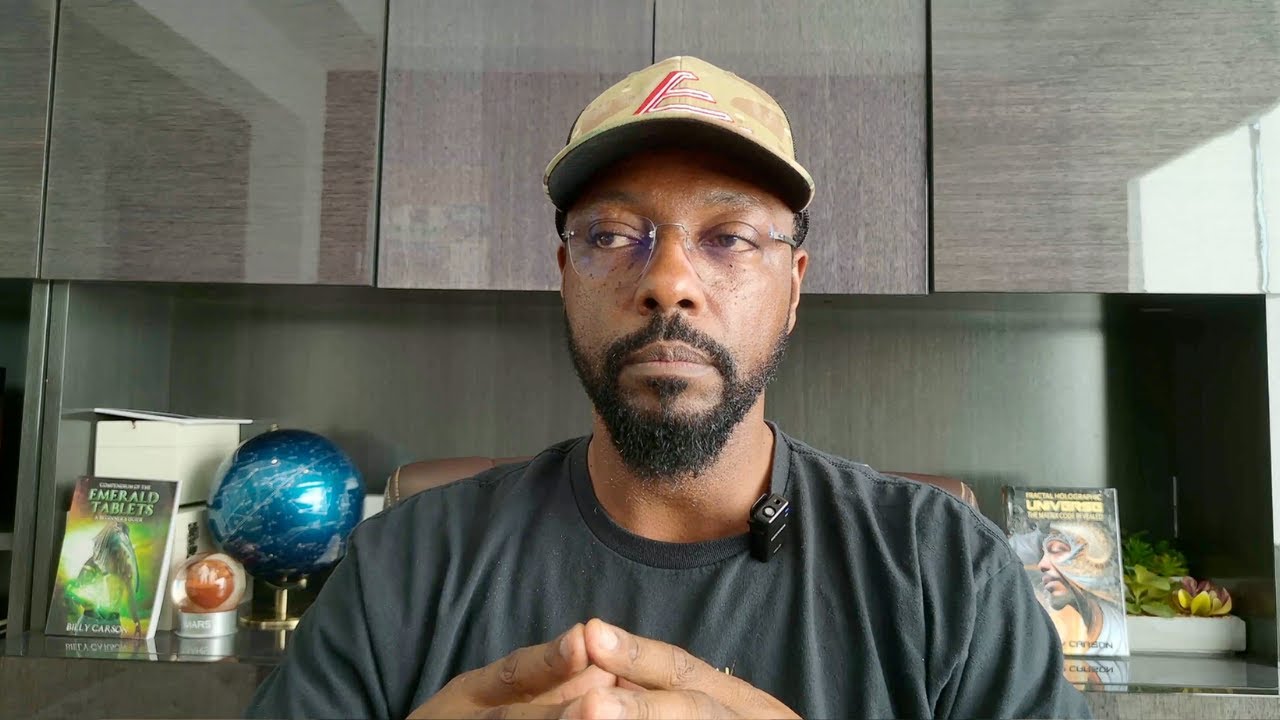
Billy Carson approaches the same territory from a different direction. In his video Subconscious Mind Programming – Why Your Identity Is an Illusion, he presents the self-image as a programme rather than a fixed fact, something installed by past experience and capable of being rewritten through daily practice, frequency work and affirmation. His companion teaching on the subconscious snapback describes why change so often reverses: in his account, the subconscious prioritises safety over success and pulls a person back toward a familiar identity, so the new identity has to be practised until it feels normal.
His prescription is set out in his daily frequency practice: a small set of present-tense affirmations repeated several times a day, timed check-ins to name one's emotional state, and journaling to process difficult experiences and record progress. In The Invisible Power That Creates Your Reality, Carson extends the idea to everyday speech, arguing that the words people use about themselves reinforce the beliefs they hold.
Carson's emphasis on daily repetition, journaling and watching self-talk sits close to the habit, expressive-writing and self-affirmation research. His framing of frequency as an emotional state that shapes outcomes is his interpretation, and it goes beyond what laboratory studies test. His own method guide also recommends phrasing affirmations as believable next steps, which is consistent with the Wood findings.
Watch, read and go deeper
Billy Carson works through these ideas at length in the podcast episode How to Raise Your Frequency and Reprogram Your Reality. His book is covered chapter by chapter in Manifestation Codes: what the book teaches, which sets out his practices on intent, belief work, visualisation and gratitude. For related articles, start at the manifestation topic hub, and for the wider questions of awareness and the mind, the consciousness topic hub.
Frequently asked questions
How long does it take to reprogram your subconscious mind?
There is no single figure, but habit research gives a realistic range. In Lally and colleagues' 2010 study, a new daily behaviour took a median of 66 days to become automatic, with individual times from 18 to 254 days. Expect months of consistent practice rather than a weekend.
Can you reprogram your subconscious while you sleep?
There is no good evidence that listening to affirmations or subliminal recordings during sleep changes beliefs or behaviour. Controlled tests of subliminal self-help tapes in 1991 found no effect of their hidden content. Sleep does appear to help consolidate skills practised while awake, so practice by day and rest at night is the evidence-based pairing.
Do positive affirmations work?
Sweeping affirmations can backfire for people with low self-esteem, according to a 2009 study in Psychological Science. Reflecting on core personal values, known as self-affirmation, has a stronger evidence base. Believable, specific statements of progress are a safer choice than grand claims.
Is hypnosis a good way to reprogram the subconscious?
Hypnosis has research support for specific clinical uses, such as pain and irritable bowel syndrome, when delivered by trained professionals. There is no comparable evidence that it reprograms identity or beliefs in general. Anyone seeking help with a mental-health concern should see a licensed professional.
Is it true that 95 percent of the mind is subconscious?
That figure has no clear source in the scientific literature. Researchers agree that a large share of mental processing happens outside awareness, but there is no accepted measurement that reduces it to a percentage.
Sources and further reading
- Timothy D. Wilson, Strangers to Ourselves: Discovering the Adaptive Unconscious (Harvard University Press, 2002)
- Daniel Kahneman, Thinking, Fast and Slow (2011)
- Phillippa Lally et al., "How are habits formed: Modelling habit formation in the real world," European Journal of Social Psychology (2010)
- Eleanor A. Maguire et al., "Navigation-related structural change in the hippocampi of taxi drivers," Proceedings of the National Academy of Sciences (2000)
- Joanne V. Wood, W. Q. Elaine Perunovic and John W. Lee, "Positive Self-Statements: Power for Some, Peril for Others," Psychological Science (2009)
- Geoffrey L. Cohen and David K. Sherman, "The Psychology of Change: Self-Affirmation and Social Psychological Intervention," Annual Review of Psychology (2014)
- James E. Driskell, Carolyn Copper and Aidan Moran, "Does Mental Practice Enhance Performance?" Journal of Applied Psychology (1994)
- Anthony G. Greenwald et al., "Double-Blind Tests of Subliminal Self-Help Audiotapes," Psychological Science (1991)
These statements have not been evaluated by the Food and Drug Administration. This content is for information only and is not medical advice.