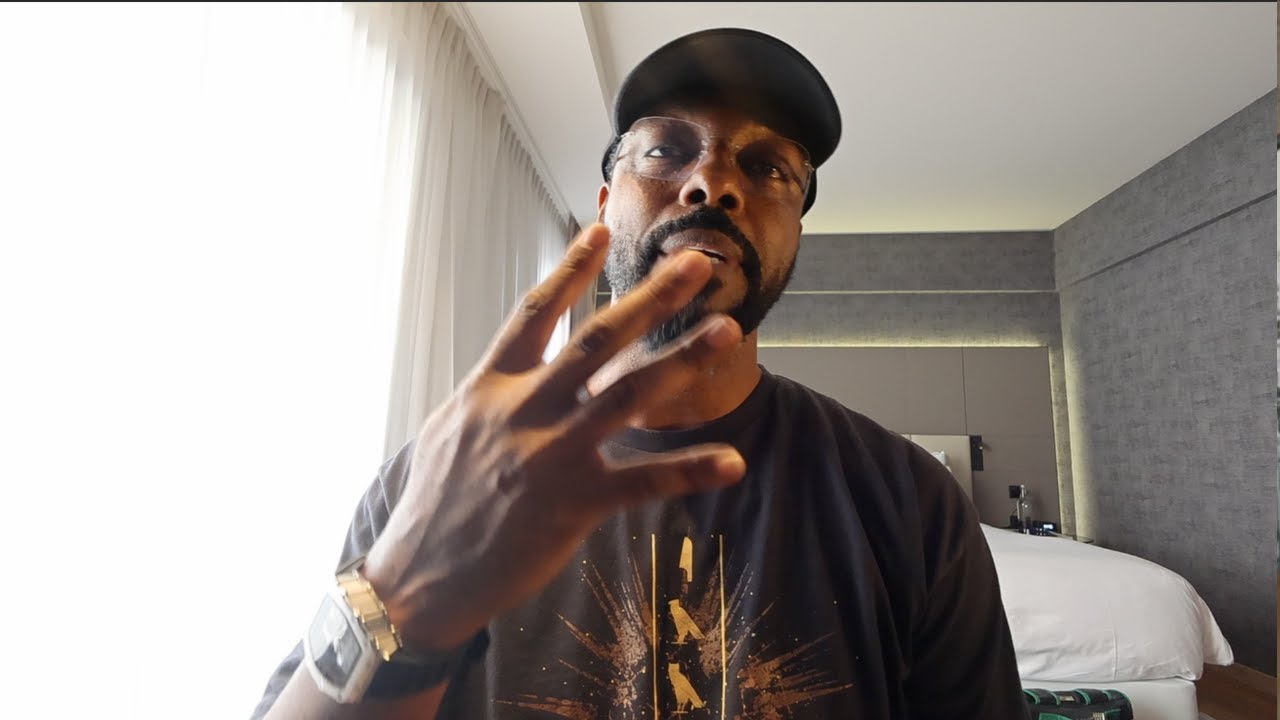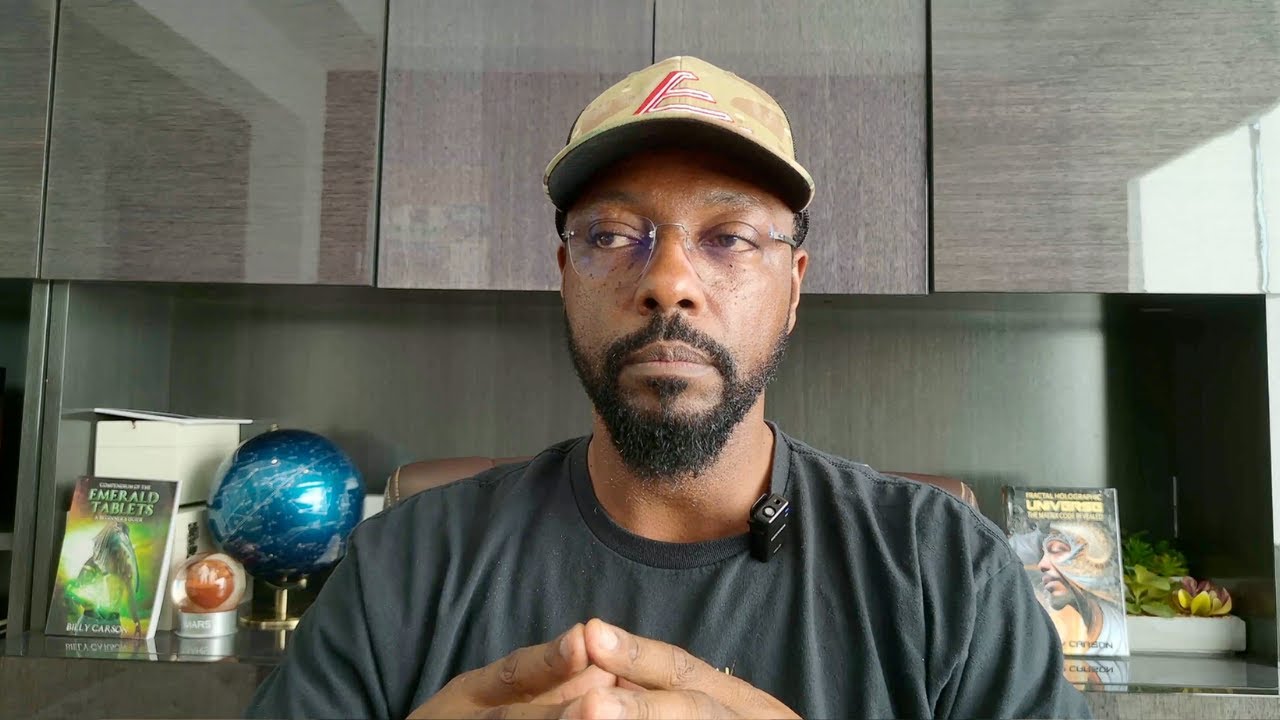
Why you keep manifesting the same reality, according to Billy Carson, comes down to one design feature: the subconscious mind is built to keep you safe, not successful, so it reads growth as a threat and pulls you back to familiar ground. This article calls that pull the subconscious snapback. The talk covers where that resistance comes from, how it shows up as automatic negative thoughts, and how Carson catches it.
The topic matters because it answers the most common complaint in manifestation work: the vision board is done, the affirmations are said, and nothing changes. Carson's answer is that the problem is not bad luck or a broken method. "It's your old identity trying to survive," he says, and until that identity is noticed and retrained, the same circumstances keep returning.
What the video covers
The subconscious is a survival system (from about 1:28)
In Carson's account, the subconscious mind's primary function is survival, a design inherited from the hunter-gatherer era, when the questions that mattered were food, clean water and protection from attack. That programming, he argues, is still running. The subconscious stores habits, fears and emotional patterns from past experience and uses them to steer you away from perceived danger, even when the danger is not real. As Carson puts it, "the subconscious is really designed for safety, not success," so the simple danger of change, of leaving a comfort zone for the unknown, is enough to trigger it.
Automatic negative thoughts (from about 3:08)
Carson then introduces ANTs, or automatic negative thoughts, a term he credits to psychiatrist Daniel Amen, whom he says he saw for a SPECT scan of his brain. In practice, he says, you set an intention to manifest something, and a second or two later a quiet doubt arrives. He calls the pattern ANT syndrome and argues it leads people to sabotage themselves while believing they are doing everything right. His remedy is awareness first, then interruption: notice the thought, stop, rethink and reprogram.
Growth triggers internal resistance (from about 5:06)
To explain why resistance spikes during growth, Carson uses the image of a curious baby reaching for an electrical outlet. The parent who stops the baby is protecting it, but the baby experiences it as being held back, and cries. The subconscious plays the parent; the self that wants to grow plays the baby. A new relationship, a new business or a new idea stretches the mind into unknown territory, so the subconscious answers with anxiety or a self-sabotaging mindset.
Fear right before a breakthrough (from about 7:18)
Carson argues that fear, procrastination and self-doubt tend to show up right before a major breakthrough, and offers his own example. Carson says he had a large deal pending and, excited, started planning everything he would do once it closed. Almost immediately the doubts came: it was too simple, too smooth. He says he had to catch himself, reprogram, restate and rethink the outcome. For Carson, catching yourself is the evidence of growth, and he is blunt that the pattern never fully disappears: "Anyone who tells you that they've completely eliminated that out of their life, they're lying to you."
The rubber band and the realtor (from about 9:03)
The central image of the talk is a rubber band. Growth stretches you; the subconscious tries to snap you back; awareness lets you resist the snapback. Carson then uses a saying often attributed to Oliver Wendell Holmes: "a mind once stretched can never go back." His illustration is a realtor whose client has an $800,000 budget. If the realtor shows a $2 million house first, the client falls in love with it, and the in-budget houses that follow feel like settling. Carson calls this a mistake from the realtor's side, but the lesson he draws for manifestation is that once your own mind has been stretched to a bigger picture, the old one stops satisfying you, and that stretch can be used deliberately.
The speed limiter (from about 11:43)
Transformation, Carson says, is not just doing new things but becoming someone new, not by changing who you are at your core but by changing how you perceive the world. His analogy is one of his cars, whose speedometer he says reads to 230 miles an hour. Floor it and the car still will not get there, because a speed limiter caps it for safety. Remove the limiter and it is the same car, same engine, same torque; only the limit is gone. That, he says, is how the subconscious works.
Lottery winners and the old mindset (from about 13:14)
"You can't carry your old identity into a new reality," Carson says. His example is lottery winners, around 98 percent of whom, he says, are broke within three to five years, because they bring their existing mindset into a new financial reality without first gaining the financial literacy to match it.
Seeds, water and sunlight (from about 14:14)
Carson describes visualization and affirmations as seeds for a new identity. Reprogramming the subconscious lets them take root. Returning to his pending deal, he maps the rest: the negative thought creeps in, he catches it (the water), then restates and rethinks the outcome (the sunshine), and the seeds keep growing.
The walk-down-the-block exercise (from about 15:16)
To show that the mind is multi-dimensional, Carson offers an exercise. Walk down your block, glance at the houses, yards and cars, and meanwhile recall a joyful memory, such as a birth, a wedding or a trip, and feel it again. You are balancing, observing and re-experiencing the past at once.
Gracefully evolve (from about 17:37)
The talk closes on the spiritual side. Carson says the shift is about surrender, not force: forcing is chasing, while surrendering lets the new reality come toward you. He encourages thanking the old self for getting you this far and releasing it with love and gratitude. The final step is to step into the version of you who has already lived the life you want, and to think, choose and act from that frequency. The video ends with an invitation to his 4biddenknowledge Academy.
Key takeaways
- Carson argues that the subconscious is wired for safety, so it treats change itself as a danger.
- Automatic negative thoughts often arrive seconds after a new intention is set, and noticing them is the first step to interrupting them.
- Fear and doubt just before a breakthrough are, in his reading, signs of growth rather than signs to stop.
- A mind stretched to a bigger vision does not settle comfortably back into the old one, and that can be used on purpose.
- Carrying an old identity into a new reality, as he says many lottery winners do, tends to recreate the old circumstances.
- His method is practical: catch the thought, restate the outcome, and act from the version of yourself who already has what you want.
Billy Carson's reading
Carson's reading sits inside the thought, frequency and action framework that runs through his teaching. Thought sets the intention, frequency is the emotional state and identity it is held from, and action is the behavior that follows. The snapback, in his view, is what happens when the thought changes but the frequency does not, so the old subconscious keeps producing the old behavior and the old results. That is why the talk ends on identity rather than technique.
He holds this view partly from experience, as the deal story shows, and partly because he treats the mind as more capable than most assume: if it can walk, observe and relive the past at once, it can learn to observe its own thoughts.
For the step-by-step version of his method, see how to manifest what you want using the Billy Carson method, and for his book, Manifestation Codes by Billy Carson: what the book teaches. The snapback overlaps with the obstacles in Billy Carson's seven blocks explained, and his idea that life mirrors your inner state is developed in the universe isn't testing you, it's reflecting you.
What mainstream scholarship says
The idea of a subconscious that keeps you safe maps loosely onto well-studied psychology. Habit research shows that repeated behaviors become automatic and resist change, and behavioral economics documents loss aversion and status quo bias, the tendency to weigh losses more heavily than equal gains and to prefer the familiar. Researchers would not call this one protective subconscious with intentions, but change provoking resistance is well supported. Automatic thoughts are a concept from Aaron Beck's cognitive therapy; the ANTs acronym was popularized by Daniel Amen, whose use of SPECT imaging in routine psychiatric assessment remains controversial in mainstream psychiatry. The realtor story is a textbook case of anchoring and the contrast effect, and the stretched-mind saying is commonly credited to Oliver Wendell Holmes Sr., though the wording varies.
The lottery figure needs caution. Claims that most winners go broke are rarely sourced. A well-known study of Florida lottery winners by Scott Hankins, Mark Hoekstra and Paige Marie Skiba found that larger prizes postponed bankruptcy rather than preventing it, which supports Carson's broader point that money alone does not change financial behavior, though it does not back the 98 percent figure. Finally, the advice to notice a negative thought, question it and replace it is broadly consistent with cognitive restructuring, a core technique in cognitive behavioral therapy, even though the language of frequency and dimensions sits outside that field.
Watch, read and go deeper
The full talk is embedded above, and the audio version is on the 4biddenknowledge Podcast episode page. For a structured daily practice to pair with Carson's catch-and-restate method, read the 369 manifestation method explained. More of his talks are collected in the Best of Billy Carson show on 4BK TV, and related articles live on the manifestation topic hub.
Frequently asked questions
Why do people keep manifesting the same reality over and over?
In Billy Carson's view, the subconscious mind is designed for safety and treats change as a threat. When you try to grow, it pulls you back toward familiar patterns, so the same circumstances keep returning. He argues that noticing this snapback, rather than blaming luck, is the first step to breaking it.
What are automatic negative thoughts in manifestation?
Automatic negative thoughts, or ANTs, are quick, often unspoken doubts that appear right after you set an intention. Carson credits the acronym to psychiatrist Daniel Amen; the underlying idea comes from Aaron Beck's cognitive therapy. Carson's advice is to catch each thought, stop it and restate the outcome you want.
What does it mean that a stretched mind can never go back?
It means that once you have seriously imagined a bigger possibility, the smaller one no longer feels satisfying. Carson illustrates it with a homebuyer who sees a $2 million house before the ones in budget and then feels they are settling.
How do you reprogram the subconscious mind, according to Billy Carson?
Carson describes a cycle: plant the new identity with visualization and affirmations, catch negative thoughts when they surface, and restate the outcome you intend. He also stresses surrender over force, and making choices from the version of yourself who already has what you want.
Sources mentioned
In the video, Carson cites psychiatrist Daniel Amen as the source of the term automatic negative thoughts, and uses the stretched-mind saying commonly attributed to Oliver Wendell Holmes Sr. For standard references, see Aaron T. Beck's Cognitive Therapy and the Emotional Disorders, Daniel Amen's Change Your Brain, Change Your Life, Daniel Kahneman and Amos Tversky's paper on prospect theory, and the Hankins, Hoekstra and Skiba study The Ticket to Easy Street? The Financial Consequences of Winning the Lottery.