The 369 method is a manifestation journaling ritual: you write one desire, phrased as a present-tense affirmation, three times in the morning, six times in the afternoon and nine times before bed, usually every day for 33 or 45 days. It spread on TikTok in 2020 and is widely credited to Nikola Tesla, although nothing in Tesla's own writings or interviews describes it. In practical terms, it is a structured way of returning attention to a single goal three times a day.
The method matters because so many people now use it and so much of its appeal rests on a borrowed name. A quotation no one can source and a number pattern with a plain mathematical explanation have given a simple writing habit an air of cosmic authority. Separating the origin story from the practice lets fans and skeptics alike judge the ritual on what it asks of them: clarity, repetition and attention.
What is the 369 method?
The 369 method is a daily writing schedule for a single intention. The basic version, as it circulates online, runs like this:
- Choose one specific desire and phrase it as a short affirmation in the present tense, as though it is already true.
- In the morning, write the affirmation by hand three times.
- In the afternoon, write it six times.
- Before bed, write it nine times.
- Repeat daily for 33 days, or 45 in some versions, without skipping.
Many teachers add a pause before writing, holding the feeling of the outcome for 17 seconds or longer, and most insist on one intention at a time so that the practice stays focused. The numbers themselves carry no technique; they set the rhythm. The written statement and the attention paid to it are the working parts. For the wider set of practices this sits within, the [manifestation topic hub](/topics/manifestation) collects the related articles and episodes.
Where the 369 method came from
The 369 method as a named practice dates to 2020, when a TikTok video by Karin Yee introduced it to a mass audience and it spread through the platform's manifestation community. What was new was the packaging. The components are older and come from at least two identifiable traditions.
The first is the New Thought lineage, and in particular Neville Goddard (1905–1972), whose books such as Feeling Is the Secret (1944) taught that a person should imagine a desire as already fulfilled and dwell in the feeling of it. "Scripting", the later practice of writing about a goal as if it has already happened, is usually described as Neville-style work, and the 369 method is essentially scripting on a timetable.
The second is the Abraham-Hicks material of Esther and Jerry Hicks, which popularised the idea that holding a focused thought for 17 seconds begins to build momentum and that sustaining it for 68 seconds gives it real force. The 369 method borrows that emphasis on concentrated, repeated focus. The 33 and 45-day durations have no documented rationale beyond numerology; both happen to be multiples of three, which suits the method's theme.
Did Tesla really say "the magnificence of 3, 6 and 9"?
There is no primary source for the line "If you only knew the magnificence of the 3, 6 and 9, then you would have a key to the universe." It does not appear in Tesla's patents, his published articles, his 1919 memoir My Inventions, or the interviews he gave during his lifetime. It circulates online with his name and portrait attached, but never with a publication, a date or a page.
An authentic quotation can be traced to where it was first printed or recorded; this one cannot. Until a source appears, the fair statement is that the line is attributed to Tesla, not that he said it. The method does not need his endorsement to be tried.
Tesla's real relationship with the number three
Tesla did have a well-documented fixation on the number three, which is almost certainly why the quotation attached itself to him. His biographers, including Marc Seifer in Wizard: The Life and Times of Nikola Tesla and W. Bernard Carlson in Tesla: Inventor of the Electrical Age, record habits such as walking around a block three times before entering a building, preferring hotel rooms whose numbers were divisible by three, and reportedly using a stack of 18 napkins to polish his silverware and glasses at dinner.
In My Inventions, Tesla himself described counting his steps on walks and calculating the volume of soup plates and coffee cups before he could enjoy a meal. Modern readers often describe these habits as obsessive-compulsive. They tell us something about Tesla the person, but they are not a theory in which 3, 6 and 9 are a key to the universe, and nothing in his engineering work rests on one.
Where the 3-6-9 number pattern comes from
The mathematical pattern people associate with 3, 6 and 9 comes largely from "vortex math", a system developed by Marko Rodin in the 1990s. It is built on digital roots, the single digit you get by adding a number's digits repeatedly until one remains (for example, 16 becomes 1 + 6 = 7).
Double 1 repeatedly and take digital roots, and you get 1, 2, 4, 8, 7 (from 16), 5 (from 32), then 1 again (from 64), in an endless six-step cycle. The numbers 3, 6 and 9 never appear in that loop. Double 3 and you get 6; double 6 and you get 12, whose digital root is 3; 9 doubled is 18, which returns to 9. To many people this looks like 3, 6 and 9 standing outside the ordinary order of numbers.
The explanation is ordinary arithmetic. A digital root is the remainder when a number is divided by 9, with 9 standing in for a remainder of zero. Doubling a number that is not divisible by 3 can never produce one that is, so the multiples of three form their own closed group, and the six-step cycle follows from the fact that 64 leaves a remainder of 1 when divided by 9. The pattern is a property of writing numbers in base ten; in another base it changes. It is real and it is tidy, but it describes our counting system rather than a physical law, which is how mathematicians regard vortex math.
What the research says about techniques like it
There are no controlled studies of the 369 method itself, so any claim that it has been scientifically proven is unsupported. What does exist is research on neighbouring practices, and it points in two directions.
On the supportive side, Edwin Locke and Gary Latham's decades of goal-setting research found that specific, clearly stated goals tend to produce better performance than vague ones. Peter Gollwitzer's work on implementation intentions, simple "if this situation arises, then I will do that" plans, found that deciding in advance when and where to act makes people more likely to follow through. James Pennebaker's expressive-writing studies, begun in the 1980s, suggest that putting thoughts into words changes how people process and organise them. A daily handwritten statement of a goal fits this picture.
On the cautionary side, psychologist Gabriele Oettingen found that pure positive fantasising about a desired future can reduce the effort people put into reaching it, because the mind partly experiences the reward in advance. Her alternative, mental contrasting, pairs the imagined outcome with an honest look at the main obstacle, and her WOOP routine (wish, outcome, obstacle, plan) builds that into a short exercise. Read against this research, the basic 369 method is all wish and no obstacle or plan; its strength is that it makes a person state one goal precisely and revisit it several times a day.
How to use the 369 method well
The most useful way to practise the 369 method is as a focus ritual that ends in action, not as a spell that works on its own. A version that keeps the traditional schedule while drawing on the research above:
- Before day one, write the goal once in plain terms, then write the affirmation. Keep it short, positive and within your own control. "I am completing one chapter of my book every week" is more workable than a statement about a sum of money arriving.
- Morning, three times. Write the affirmation three times, then note one concrete action for the day.
- Afternoon, six times. Write it six times, then check whether that action is done. If not, write an if-then plan: "If it is 6 p.m. and I have not started, then I will work on it for 20 minutes before dinner."
- Evening, nine times. Write it nine times, then write one sentence naming the biggest obstacle you met that day and how you will handle it tomorrow.
- At the end of 33 or 45 days, read the whole notebook and record what changed in your behaviour, not only in your circumstances.
No version of the method guarantees an outcome, and it is not a substitute for professional financial, medical or psychological advice. For the broader process this ritual can sit inside, see the site's guide to [how to manifest what you want using Billy Carson's method](/how-to-manifest-what-you-want-billy-carson-method).
Billy Carson's reading
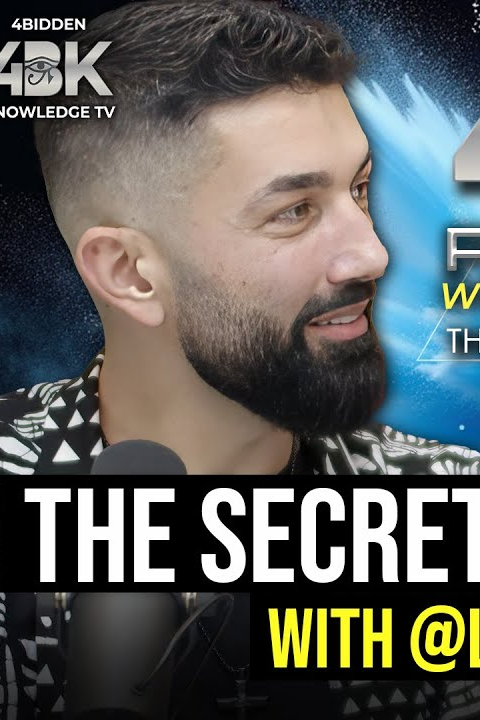
Billy Carson frames manifestation as the deliberate focus of consciousness within a reality he describes as holographic and fractal, so that thought, feeling and action are inputs to the system a person lives in. His book Manifestation Codes: Unlocking Reality with Thought, Frequency & Action and his video "The Secret Steps to Manifest Anything You Want" set out the sequence as he teaches it: name the desire in specific terms, hold the feeling of it as achieved, align thought, emotion and action, practise gratitude, and keep acting until the result arrives. The chapter-by-chapter discussion on the podcast episode Living as the Master Architect, from Manifestation Codes walks through that approach in his own words.
The wider frame draws on the idea that the universe behaves like an informational or holographic system, explored in the site's explainer on [whether the universe is a hologram](/is-the-universe-a-hologram-holographic-principle-explained), and on the Hermetic principle that "The All is Mind", covered in [the Kybalion and the seven Hermetic principles](/the-kybalion-and-the-seven-hermetic-principles-explained). These are metaphysical positions, and Carson presents them as his interpretation of the sources he works with rather than as settled physics.
Read through that framework, the 369 schedule is a timetable for focus rather than a power in itself. The repetition keeps the intention in view, while Carson's teaching puts its weight on the alignment of thought, feeling and action, including the action step the basic 369 method leaves out. That is an editorial reading of how the two fit, and readers can adopt the schedule with or without the metaphysics.
Watch, read and go deeper
For Carson's wider teaching on awareness and the nature of reality, the 4BK TV series [Awaken Zone](/watch/awaken-zone) runs to 31 episodes on consciousness and awakening. The podcast episode Living as the Master Architect covers the manifestation chapter of his book, and Manifestation Codes is available with the rest of his titles on the books page. The [consciousness topic hub](/topics/consciousness) gathers the related articles on mind and awareness, and the [manifestation hub](/topics/manifestation) collects everything on intention, focus and practice.
Frequently asked questions
Does the 369 method work?
No controlled study has tested the 369 method specifically, so there is no evidence that the numbers or the schedule have any special effect. Research on related habits suggests that writing a specific goal and planning concrete actions can improve follow-through. Positive affirmation on its own, without a plan or attention to obstacles, is the part the evidence supports least.
Did Nikola Tesla invent the 369 method?
No. The method was popularised on TikTok in 2020, decades after Tesla's death in 1943. The quotation about "the magnificence of the 3, 6 and 9" has no known source in his writings or interviews, although his biographers do record a lifelong fixation on the number three.
Should I do the 369 method for 33 days or 45 days?
Both durations are common and neither has a documented basis beyond numerology. Thirty-three days is the more widely cited version. Choose the length you can complete without skipping, because consistency is the part of the practice that does the work.
What should I write for the 369 method?
Write one short, specific, present-tense statement about something within your own influence, such as a skill, habit or project. Avoid statements that depend entirely on other people or on a sum of money appearing. Adding one planned action to each session makes the practice more useful than the affirmation alone.
Can I use the 369 method for more than one goal?
Most teachers recommend one intention per cycle, since the method's value lies in concentrated focus. Running several at once dilutes that focus and makes it harder to see what changed. Finish one cycle, review the notebook, then start the next.
Sources and further reading
- Nikola Tesla, My Inventions (1919), serialised in Electrical Experimenter.
- Marc J. Seifer, Wizard: The Life and Times of Nikola Tesla (1996).
- W. Bernard Carlson, Tesla: Inventor of the Electrical Age (2013).
- Neville Goddard, Feeling Is the Secret (1944).
- Peter M. Gollwitzer, "Implementation Intentions: Strong Effects of Simple Plans", American Psychologist (1999).
- Edwin A. Locke and Gary P. Latham, "Building a Practically Useful Theory of Goal Setting and Task Motivation", American Psychologist (2002).
- Gabriele Oettingen, Rethinking Positive Thinking: Inside the New Science of Motivation (2014).
- James W. Pennebaker and Joshua M. Smyth, Opening Up by Writing It Down (2016).