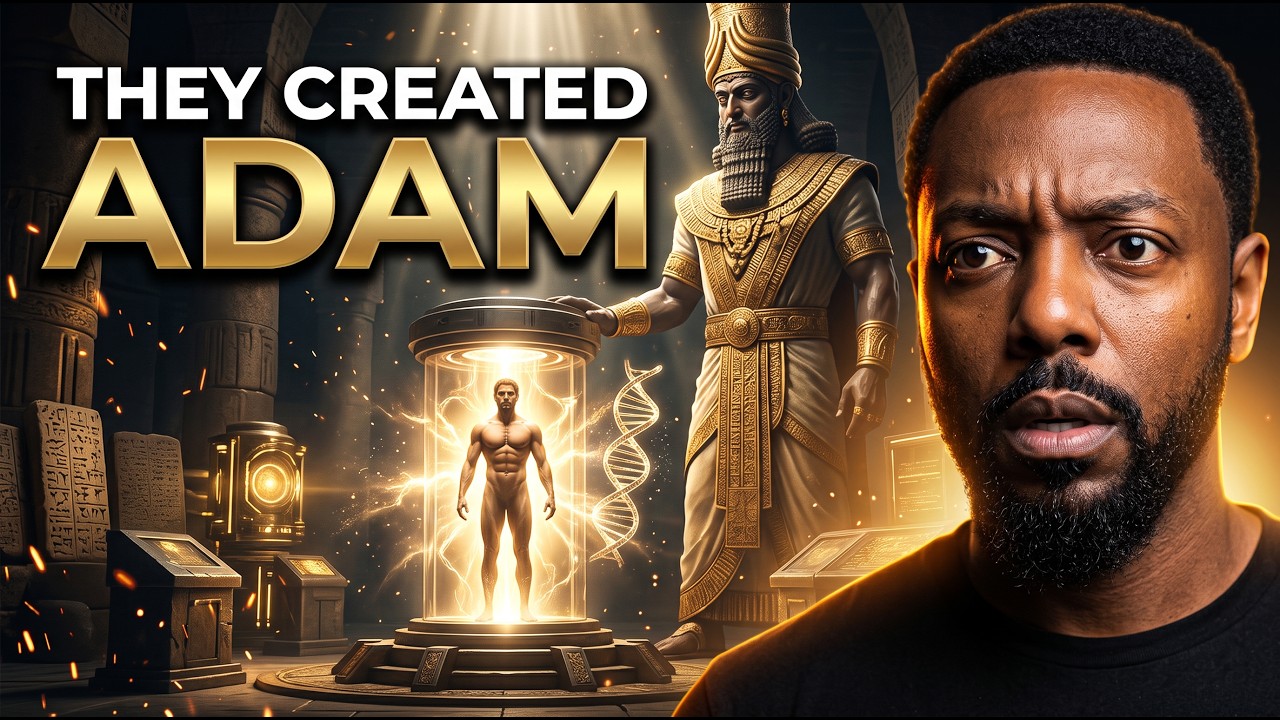
The Sumerian gods were the deities worshipped in southern Mesopotamia in the third millennium BCE, headed by An (Akkadian Anu), the sky; Enlil, god of the wind and king of the gods; Enki (Ea), god of fresh water and wisdom; and the mother goddess Ninhursag. Below them stood Inanna (Ishtar), the moon god Nanna (Sin), the sun god Utu (Shamash) and hundreds of lesser gods, each tied to a city, a temple and a sphere of the world.
This pantheon matters because it is the oldest one preserved in writing, and it did not die with Sumer. The Akkadians, Babylonians and Assyrians kept the same gods under new names for another two thousand years, and the same figures sit at the centre of today's debate about the Anunnaki. Anyone trying to judge the Anunnaki claims needs to know first who these gods were in the texts themselves.
How the Sumerian pantheon was organized
The Sumerian pantheon was organized like a network of city-states with a royal court on top. Each major god was the owner of a city and lived in its temple, which the Sumerians called the god's "house" (é): Enlil in the E-kur at Nippur, Enki in the E-abzu at Eridu, Inanna in the E-anna at Uruk. The god's cult statue was fed, clothed and consulted, and the city's ruler governed as the god's steward.
Above the cities sat a divine assembly. Major decisions, such as granting kingship, punishing a city or sending the flood, were taken by the gods in council, with An presiding and Enlil carrying out the verdict. The Sumerian word for god, dingir, was written with a star-shaped cuneiform sign, and scribes compiled long lists of divine names; the later Babylonian list known as An = Anum catalogues around two thousand of them.
Scholars read this system in different ways. Samuel Noah Kramer, working from the tablets excavated at Nippur, described four leading creator gods: An, Enlil, Enki and Ninhursag. Thorkild Jacobsen, in The Treasures of Darkness (1976), traced a slow change in how the gods were imagined, from powers dwelling in nature in the fourth millennium, to rulers and warriors in the third, to personal protectors in the second. The literature behind all of this is surveyed in [the Sumerian tablets explained](/the-sumerian-tablets-explained-what-they-are-and-what-they-say).
An, Enlil, Enki and Ninhursag: the four leading gods
The four gods who stood at the top of the Sumerian hierarchy were An, Enlil, Enki and Ninhursag. In the Akkadian Atrahasis epic the three male gods cast lots for the universe: Anu takes heaven, Enlil takes the earth and Enki goes down to the Abzu, the fresh water beneath it.
An (Anu)
An is the sky and the father of the gods. His name is the Sumerian word for heaven, and his main cult centre was Uruk. He is the source of authority rather than its day-to-day user: in the myths he presides over the assembly, confirms decisions and rarely acts on his own.
Enlil
Enlil, usually translated "Lord Wind" or "Lord Air," was the working king of the gods. His temple, the E-kur ("Mountain House") at Nippur, made that city the religious centre of Sumer, and rulers across Mesopotamia sought his approval there. Several texts give him the Tablet of Destinies, which fixed the fates of the world; in the Anzu myth the bird-monster Anzu steals it and Enlil's son Ninurta wins it back. Enlil is also the god who, in the Atrahasis epic, tries to reduce the noise of humanity with plague, famine and finally the flood.
Enki (Ea)
Enki, known in Akkadian as Ea, ruled the Abzu, the underground fresh water that fed springs and rivers, and with it wisdom, magic and the crafts. His temple, the E-abzu, stood at Eridu. In Atrahasis it is Enki who proposes creating humans to take over the gods' labour, shaping them from clay mixed with the flesh and blood of a slain god, and it is Enki who warns Atrahasis to build a boat before the flood. His rivalry with Enlil is covered in detail in [Enki and Enlil: the two brothers of Sumerian myth](/enki-and-enlil-the-two-brothers-of-sumerian-myth).
Ninhursag
Ninhursag, "Lady of the Mountain Slopes," is the great mother goddess, also known under names such as Ninmah and Nintur. She is the midwife of gods and humans; in "Enki and Ninmah" she and Enki shape human beings together, and in "Enki and Ninhursag" she heals Enki after he eats forbidden plants in the land of Dilmun. Some texts pair An with Ki, the earth, as the first couple, and Kramer argued that Ki and Ninhursag were closely linked.
Inanna, Nanna and Utu: the gods of the heavens
The astral gods of Sumer were Nanna, the moon; Utu, the sun; and Inanna, the planet Venus. In the most common genealogy Nanna is the son of Enlil and Ninlil, and Utu and Inanna are his twin children.
Nanna (Akkadian Sin) was the patron of Ur, where the great ziggurat was his house. Around the 23rd century BCE Enheduanna, daughter of Sargon of Akkad, served as his high priestess at Ur and composed hymns to Inanna; she is often described as the earliest author known by name. Utu (Shamash) was the sun who saw everything, and so the god of justice, with temples at Sippar and Larsa. The top of Hammurabi's law stele shows the king standing before the enthroned sun god.
Inanna (Ishtar) was the most complex figure in the pantheon: goddess of sexual love and of war, of Venus as morning and evening star, and patron of Uruk's E-anna. Two myths define her. In "Inanna and Enki," she visits Enki at Eridu, drinks with him, and leaves with the me, the divine powers and decrees that made civilization work, loading them onto her Boat of Heaven and carrying them to Uruk. Kramer counted more than a hundred me in the text, from kingship and priestly offices to crafts and music. In the Descent to the Underworld she enters the realm of her sister Ereshkigal, is stripped at each of seven gates and killed, and is revived only through Enki's help, a story retold in [Inanna's Descent into the Underworld](/inanna-s-descent-into-the-underworld-a-sumerian-tale-of-injustice).
The underworld gods: Ereshkigal, Nergal and Dumuzi
The Sumerian underworld was ruled by Ereshkigal, "Queen of the Great Earth," in a dark land from which the dead did not return. In the Descent she sits in judgment over Inanna and hangs her corpse on a hook. In the later Akkadian myth "Nergal and Ereshkigal," the warrior god Nergal, lord of plague and patron of the city of Kutha, comes down to her realm and becomes her husband and co-ruler.
Dumuzi (Tammuz) is the shepherd god and Inanna's husband. At the end of the Descent Inanna must provide a substitute to take her place below; she finds Dumuzi feasting instead of mourning her and hands him to the demons. His sister Geshtinanna agrees to share his fate, so each spends half the year in the underworld. The mourning for Dumuzi lasted a very long time; the Book of Ezekiel (8:14) describes women "weeping for Tammuz" at the Jerusalem temple. Nineteenth- and twentieth-century writers, following James Frazer, made him a model "dying and rising god," a category many scholars now treat with caution.
The wider pantheon and the rise of Marduk
Beyond the leading figures, the Sumerian gods included hundreds of specialists and local patrons. A few recur often enough to know:
- Ninlil, Enlil's wife and mother of Nanna, whose union with Enlil is told in the myth "Enlil and Ninlil."
- Ninurta, Enlil's son, a warrior who defends the gods against monsters and also a god of farming and the plough.
- Nisaba, goddess of grain and of writing; scribes ended their compositions with the phrase "praise be to Nisaba."
- Nanshe, a goddess of the Lagash region linked with justice and the interpretation of dreams; in the Gudea cylinders she explains the ruler's dream about building a temple.
The biggest change came in the second millennium BCE, when Babylon rose to power and its city god Marduk rose with it. The Babylonian creation epic, the Enuma Elish, tells how Marduk defeats the sea goddess Tiamat, takes the Tablet of Destinies from her champion Kingu, builds the world from her body and is made king of the gods. In tablet VI of the epic he organizes the Anunnaki into 300 in heaven and 300 in the underworld. The older order of Anu, Enlil and Ea is not erased but placed beneath the newcomer, a political reshaping that is explained in full in [the Enuma Elish explained](/the-enuma-elish-explained-seven-tablets-of-creation). Marduk's son Nabu, the scribe god of Borsippa, rose alongside him in the first millennium.
Anunnaki, Igigi and the ancient-astronaut reading
In the Sumerian texts the Anunna, later Anunnaki, are not a separate race but a collective name for the great gods, the members of the divine family and assembly. The name is often understood as "offspring of An" or "princely offspring." In Akkadian literature a second group, the Igigi, appears; in Atrahasis the Igigi are the gods forced to dig the rivers and canals while the senior Anunnaki rule, and their revolt against that labour is what leads Enki to propose making humans.
The same literature places kingship itself among the gifts of the gods. The opening line of the Sumerian King List says that kingship "descended from heaven" to Eridu, then records a series of antediluvian kings with reigns tens of thousands of years long, as discussed in [the Sumerian King List explained](/the-sumerian-king-list-explained).
The modern ancient-astronaut reading comes largely from Zecharia Sitchin's The 12th Planet (1976), which recast these gods as a ruling family of astronauts from a planet called Nibiru. In the cuneiform sources Nibiru is an astronomical term associated with Marduk, not an inhabited world, and Assyriologists reject Sitchin's translations and conclusions. The full comparison of the tablets and the theory is laid out in [who were the Anunnaki](/who-were-the-anunnaki-sumerian-texts-vs-ancient-astronaut-theory).
Billy Carson's reading
Billy Carson's position is that the Sumerian gods preserve memories of real beings, the Anunnaki, rather than purely symbolic personifications of sky, wind and water. In his reading the family politics recorded on the tablets reflect actual history: Enki as humanity's ally, the god who made humans and then warned them of the flood, and Enlil as its overlord, the ruler who imposed labour and tried to wipe humanity out when it grew too loud.
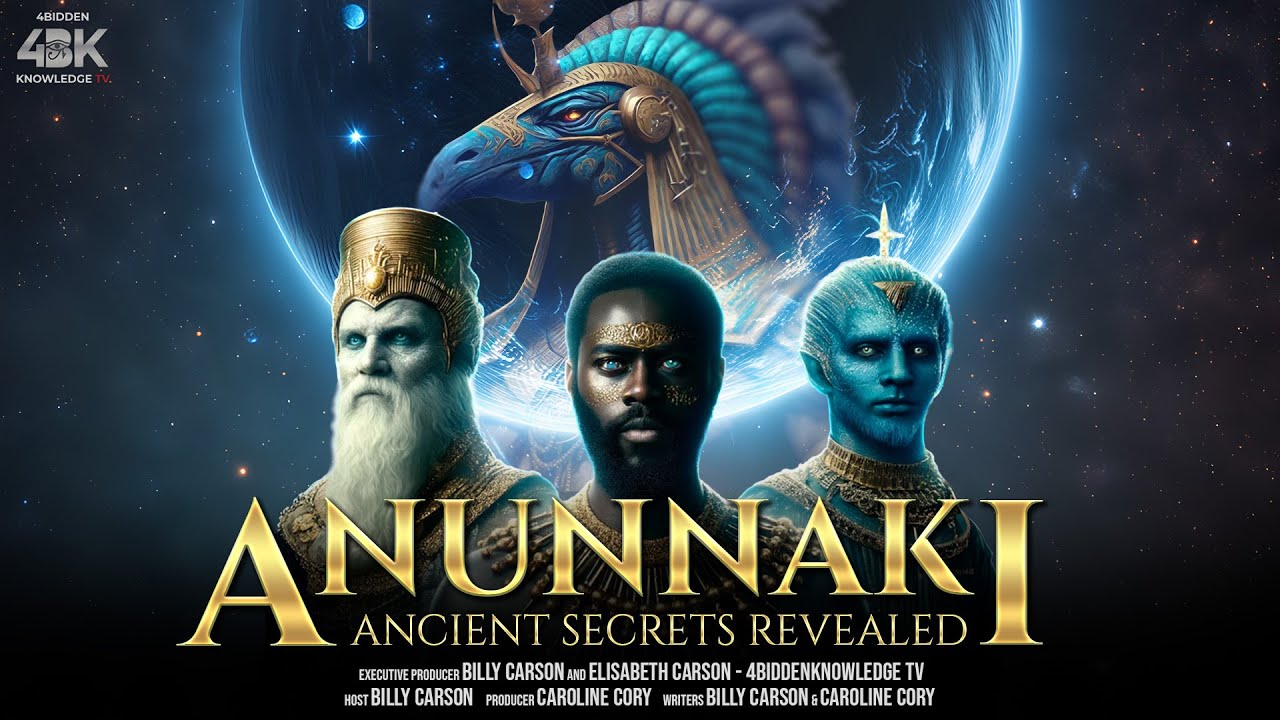
Carson builds that case across his [Anunnaki: Ancient Secrets Revealed](/watch/anunnaki-ancient-secrets-revealed) series on 4BK TV, and he returns to Enlil's role on the 4biddenknowledge Podcast. It is an interpretation, not the scholarly consensus: Assyriologists read the same texts as religious literature produced by temple scribes, in which gods were worshipped through statues, offerings and hymns. What the two approaches share is the source material, and readers can check the myths he cites, including Atrahasis and the Descent of Inanna, in standard translations.
Watch, read and go deeper
The clearest way into Billy Carson's view of the pantheon is the [Anunnaki: Ancient Secrets Revealed](/watch/anunnaki-ancient-secrets-revealed) series, which walks through the gods episode by episode. For his take on Enlil in particular, listen to What Is Enlil's All-Seeing Eye? on the 4biddenknowledge Podcast. The [Anunnaki topic hub](/topics/anunnaki) collects every article on Sumer, the tablets and the creation myths in one place, including the companion pieces on Enki and Enlil and the Enuma Elish.
Frequently asked questions
Who was the most powerful Sumerian god?
An was the highest in rank as the sky god and father of the gods, but Enlil held effective power as king of the gods, decider of fates and master of the E-kur at Nippur. In Babylonian times Marduk took over that kingship, as the Enuma Elish describes.
Are the Anunnaki the same as the Sumerian gods?
In the Sumerian texts, yes: Anunna or Anunnaki is a collective name for the great gods of heaven and earth. Later Akkadian texts sometimes distinguish them from the Igigi, and the Enuma Elish divides them between heaven and the underworld. The idea of the Anunnaki as extraterrestrials comes from modern authors, chiefly Zecharia Sitchin, not from the tablets.
What is the difference between Inanna and Ishtar?
Inanna is the Sumerian name and Ishtar the Akkadian name of the goddess of love, war and the planet Venus. Over time the two were fully identified, and Ishtar absorbed Inanna's myths, including the descent to the underworld, which survives in both Sumerian and Akkadian versions.
How many Sumerian gods were there?
There was no fixed number. Scribal god lists name hundreds of deities, and the later Babylonian list An = Anum catalogues around two thousand names, many of them local gods, spouses, servants or alternative names of major deities.
Where can you read Sumerian myths in translation?
The Electronic Text Corpus of Sumerian Literature (ETCSL) at Oxford offers free English translations of hundreds of Sumerian compositions, including Inanna and Enki and the Descent. Stephanie Dalley's Myths from Mesopotamia covers the major Akkadian texts, including Atrahasis, the Epic of Gilgamesh and the Enuma Elish.
Sources and further reading
- Samuel Noah Kramer, Sumerian Mythology (1944)
- Samuel Noah Kramer, History Begins at Sumer
- Thorkild Jacobsen, The Treasures of Darkness: A History of Mesopotamian Religion (1976)
- Jeremy Black and Anthony Green, Gods, Demons and Symbols of Ancient Mesopotamia (1992)
- Stephanie Dalley, Myths from Mesopotamia: Creation, the Flood, Gilgamesh, and Others (Oxford World's Classics)
- W. G. Lambert, Babylonian Creation Myths (2013)
- Diane Wolkstein and Samuel Noah Kramer, Inanna, Queen of Heaven and Earth (1983)
- The Electronic Text Corpus of Sumerian Literature (ETCSL), University of Oxford