Cuneiform is the wedge-shaped script of ancient Mesopotamia, made by pressing a cut reed stylus into damp clay; the name comes from the Latin cuneus, "wedge". It began as a bookkeeping tool at Uruk in southern Iraq around 3300 BCE, became the writing system of the Sumerians, Babylonians, Assyrians and many of their neighbours, and stayed in use for more than three thousand years. Cuneiform is a script, not a language: the same family of signs was used to write at least a dozen different tongues.
It matters because almost everything known about Sumer, Babylon and Assyria, from tax receipts to the flood story, survives on clay. Those tablets are also the source texts behind every modern debate about the Anunnaki, including Billy Carson's. Understanding how the script works, and how nineteenth-century scholars cracked it, is the first step in judging any claim about what the tablets say.
What is cuneiform, exactly?
Cuneiform is a writing system built from wedge-shaped strokes, combined into signs that can stand for whole words, for syllables, or for categories of meaning. A scribe held a reed cut to a sharp edge and pressed it into a tablet of moist clay, leaving a triangular head with a tail. Horizontal, vertical and diagonal wedges, plus a small hook-shaped mark, were arranged in clusters to form each sign. Dried or baked, a clay tablet could survive for millennia.
Because it is a script rather than a language, cuneiform worked much as the Latin alphabet does today. Over its long history it was used for Sumerian, Akkadian (in both its Babylonian and Assyrian forms), Eblaite, Elamite, Hittite, Hurrian, Urartian, Luwian and others. Two later systems borrowed the wedge look while working very differently. The Ugaritic alphabet, used on the Syrian coast from roughly 1400 to 1190 BCE, had 30 letters. Old Persian cuneiform, created under the Achaemenid kings, was a simple semi-syllabary of 36 phonetic signs plus a handful of word signs.
Where and when did cuneiform begin?
Cuneiform began at Uruk, one of the first true cities, in the late fourth millennium BCE. The earliest tablets, known as proto-cuneiform, come from the Uruk IV phase, about 3350 to 3200 BCE, and the script developed further through the Uruk III or Jemdet Nasr phase, to about 3000 BCE. Roughly 5,000 proto-cuneiform tablets are known, and around 85 percent of them are administrative records: rations, livestock, grain, land and labour. Most of the rest are lexical lists, organised word lists that scribes copied to learn their signs.
The early signs were drawn more than pressed, and many were recognisable pictures: a head, a stalk of grain, a jar. Numbers were a large share of them. Over the following centuries the pictures were simplified into abstract clusters of wedges. The sign inventory shrank too, from around 1,500 signs in the earliest phase to about 600 in the later Sumero-Akkadian system.
Did writing grow out of clay tokens?
The best-known theory of where cuneiform came from is the token theory of the archaeologist Denise Schmandt-Besserat, set out in her two-volume Before Writing (University of Texas Press, 1992). In her account, small clay counters shaped as cones, spheres, discs and other forms were used across the Near East from about 8000 BCE to keep track of goods. In the fourth millennium, administrators sealed groups of tokens inside hollow clay envelopes, called bullae, and pressed the tokens into the outside so the contents could be read without breaking the seal. Eventually, she argued, the impressions alone were enough, the envelope flattened into a tablet, and the tokens fell away.
The theory is influential and appears in many textbooks, but it is contested. In a 1993 review in the Journal of Field Archaeology, Paul Zimansky criticised the way the tokens were classified and questioned how closely the complex tokens actually match early written signs. Most specialists accept a real link between counting devices, sealed envelopes and the first numerical tablets, while doubting that every token type maps neatly onto a later sign.
How does cuneiform work?
Cuneiform works by mixing three kinds of sign. Logograms stand for whole words: one sign could mean "god", "king" or "house". Syllabic signs stand for sounds, such as ba, ki or mur, and can spell words out. Determinatives are silent markers placed before or after a word to show what category it belongs to, for example a divine name, a city, a wooden object or a person.
The complication is polyphony. A single sign can have several readings, both as a word and as a sound, and the reader decides from context. The sign for "god" in Sumerian, dingir, could also be read as the Akkadian word ilum, as the syllable an, or as the silent determinative that marks a deity's name. This is why careful scholars publish transliterations alongside translations, so others can check each reading.
As the script matured it moved far beyond accounts. It carried law codes, letters, contracts, hymns, omen collections, mathematics, astronomy and literature, including the Epic of Gilgamesh and its flood tablet.
How many cuneiform tablets exist, and when was the last one written?
Estimates put the number of cuneiform tablets excavated at between 500,000 and 2 million, and only about 30,000 to 100,000 of them have been read or published. The British Museum alone holds roughly 130,000 tablets and fragments. The backlog of unread material is one reason new texts and new fragments of known stories keep appearing. For an overview of the major texts and what they contain, see the Sumerian tablets explained.
Cuneiform died out slowly as Aramaic and then Greek took over daily writing. Astronomers kept it alive longest. An astronomical text of 75 CE was long cited as the last cuneiform document, and the latest securely dated tablet now known is another astronomical text, from 79/80 CE.
The Behistun inscription: the key to decipherment
The Behistun inscription is a royal monument of Darius I of Persia carved on a cliff at Mount Behistun (Bisotun), near Kermanshah in western Iran, and it is the text that made the decipherment of cuneiform possible. It was cut between Darius's accession in 522 BCE and his death in 486 BCE, and it tells, in his own words, how he defeated the rebels and pretenders who rose against him. A relief above the text shows the king with his foot on Gaumata, the man he presents as a usurper.
The panel is about 15 metres high and 25 metres wide, set roughly 100 metres up a limestone cliff above an ancient road. Its value lies in its three versions of the same text, each in a different cuneiform script: Old Persian (414 lines in five columns), Elamite (260 lines) and Babylonian Akkadian (112 lines). That made it for cuneiform what the trilingual Rosetta Stone was for Egyptian hieroglyphs; UNESCO, which inscribed Bisotun as a World Heritage Site in 2006, draws the same comparison. For how the Egyptian case played out, see hieroglyphs and the Rosetta Stone explained.
How was cuneiform deciphered?
Cuneiform was deciphered in stages between 1802 and 1857, starting with the simplest script, Old Persian, and working back to Babylonian.
Grotefend and the royal names. In 1802 the German schoolteacher Georg Friedrich Grotefend, working from copies of short inscriptions at Persepolis, guessed that the repeated formulas were royal titles of the form "X, great king, king of kings, son of Y". By matching the pattern to the known Persian dynasty he identified the names Darius, Xerxes and Hystaspes, and the words for "king". He correctly read only a handful of individual signs, fewer than ten by most counts, but he had shown the script could be cracked.
Rawlinson on the cliff. Henry Rawlinson, a British army officer posted in Persia, began copying the Behistun inscription in 1835. By 1847 a full and accurate copy of the Old Persian version had reached Europe, followed by work on the Babylonian text.
Hincks and the logic of the script. The Irish clergyman Edward Hincks, working largely from his parsonage, made the conceptual breakthroughs. By 1850 he had shown that Babylonian cuneiform was essentially syllabic, that its signs were polyphonic, and that it used determinatives. He also concluded that the script had been invented by an earlier, non-Semitic people, the population later identified by Jules Oppert as the Sumerians.
The 1857 test. In 1857, with doubts still voiced about the readings, the Royal Asiatic Society in London set a test. Four scholars, William Henry Fox Talbot, Edward Hincks, Henry Rawlinson and Jules Oppert, each translated the same inscription of the Assyrian king Tiglath-Pileser I independently and submitted their versions under seal. The examiners found the four translations in agreement on all essential points, with Hincks's and Rawlinson's very close indeed, and declared the decipherment settled.
How are cuneiform texts read today?
Today cuneiform is read by Assyriologists who work from photographs, hand copies and 3D scans, publishing a transliteration, a normalised text and a translation so that every reading can be checked.
Machine learning has entered the field as well. In May 2023 Gai Gutherz, Shai Gordin, Luis Sáenz, Omer Levy and Jonathan Berant published "Translating Akkadian to English with neural machine translation" in PNAS Nexus. Their model scored 36.52 BLEU4 translating directly from cuneiform signs and 37.47 from transliteration, performed best on short, formulaic texts such as administrative and divinatory documents, and was documented producing "hallucinations", fluent English that does not match the source. It is a tool for experts, not a replacement for them. The site covered that study when it was announced: an AI system that can translate ancient cuneiform texts.
The same standard of checkability applies to popular translations. Zecharia Sitchin's renderings of Sumerian texts, the basis of his Nibiru and Anunnaki books, are rejected by Assyriologists, who say his sign readings do not hold up; his claims remain contested, and the case for and against is laid out in who was Zecharia Sitchin.
Billy Carson's reading
Billy Carson presents cuneiform tablets as a record of humanity's forgotten history, a theme of his short video on five facts about ancient cuneiform texts embedded on this page. In his wider reading of the Sumerian material, the Anunnaki who appear in those texts are real beings whose dealings with early humans were later turned into myth, rather than purely religious figures. As the site's Sumerian tablets guide puts it, Carson and the Assyriologists are working from the same tablets and largely the same translations; what differs is whether the gods in them are read as figures of religious imagination or as memories of real beings.
Mainstream scholarship reads the same corpus as the religious, literary and administrative output of a human civilisation, and that is the consensus position. Carson's interpretation sits outside it, and readers can weigh the two side by side. He explores the tablet collections themselves in the podcast episode on the Library of Ashurbanipal and the cuneiform tablets with researcher Matthew LaCroix, which covers the library's discovery at Nineveh, George Smith's translations, Gilgamesh and the myth of Adapa.
Watch, read and go deeper
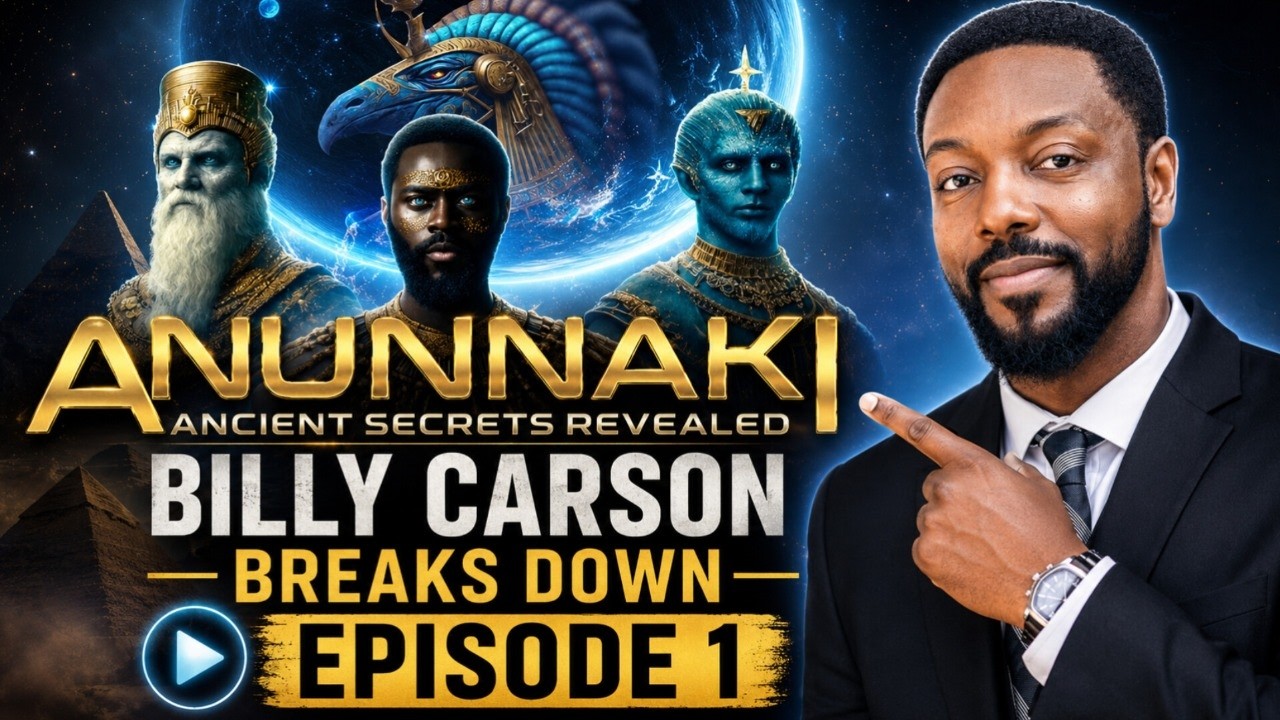
For Billy Carson's full treatment of the Mesopotamian gods on screen, watch the 4BK TV series Anunnaki: Ancient Secrets Revealed. The Library of Ashurbanipal episode of the 4biddenknowledge Podcast, linked above, goes into how the Nineveh tablets were found and first read. To see how the decipherment of cuneiform fits with the Sumerian creation and flood texts, the Sitchin debate and the rest of the Mesopotamian material, start at the Anunnaki and Sumer topic hub.
Frequently asked questions
Is cuneiform the oldest writing in the world?
Cuneiform is one of the two oldest known writing systems, with proto-cuneiform tablets from Uruk dated to about 3300 BCE. Egyptian hieroglyphs appear at around the same time, and scholars still debate which came first. Most consider the two to be independent inventions.
Is cuneiform a language?
No. Cuneiform is a script, a way of writing, not a language. It was used to write Sumerian, Akkadian, Hittite, Elamite, Hurrian, Urartian and several other languages, much as the Latin alphabet is used for English, French and Turkish today.
Why is the Behistun inscription called the Rosetta Stone of cuneiform?
The Behistun inscription repeats one text in three cuneiform scripts: Old Persian, Elamite and Babylonian. Once Old Persian had been read, scholars could use it as a key to the other two, just as the Greek on the Rosetta Stone opened Egyptian hieroglyphs. UNESCO makes the same comparison in its World Heritage listing.
Who deciphered cuneiform?
No single person did. Georg Friedrich Grotefend made the first breakthrough with Old Persian royal names in 1802, Henry Rawlinson copied and translated the Behistun inscription, and Edward Hincks worked out how Babylonian cuneiform functioned. A 1857 test by the Royal Asiatic Society, in which Talbot, Hincks, Rawlinson and Oppert translated the same text independently, confirmed that the script had been deciphered.
Can anyone read cuneiform today?
Yes. Trained Assyriologists read Sumerian and Akkadian cuneiform, and a number of universities teach it. Machine translation models now produce rough drafts of formulaic texts, but their output still has to be checked by specialists.
Sources and further reading
- Denise Schmandt-Besserat, Before Writing, 2 vols. (University of Texas Press, 1992)
- Paul Zimansky, review of Before Writing, Journal of Field Archaeology 20 (1993)
- Hans J. Nissen, Peter Damerow and Robert K. Englund, Archaic Bookkeeping: Early Writing and Techniques of Economic Administration in the Ancient Near East (University of Chicago Press, 1993)
- Irving Finkel and Jonathan Taylor, Cuneiform (British Museum Press, 2015)
- Rüdiger Schmitt, The Bisitun Inscriptions of Darius the Great: Old Persian Text (Corpus Inscriptionum Iranicarum, 1991)
- Kevin J. Cathcart, ed., The Correspondence of Edward Hincks (University College Dublin Press, 2007–2009)
- Gai Gutherz, Shai Gordin, Luis Sáenz, Omer Levy and Jonathan Berant, "Translating Akkadian to English with neural machine translation", PNAS Nexus 2:5 (2023)