The Epic of Gilgamesh is an ancient Mesopotamian poem about Gilgamesh, a king of Uruk who loses his closest friend, Enkidu, and sets out to escape death, only to learn from the flood survivor Utnapishtim that immortality is not meant for him. Its best-known version, written in Akkadian on eleven clay tablets with a twelfth appended, contains a flood story so close to Noah's that its decipherment in 1872 changed how the West read the Book of Genesis.
The epic matters because it sits at the crossroads of nearly every question people ask about Sumer: who the gods of Mesopotamia were, whether the kings on the Sumerian King List were real people, and why a Mesopotamian flood narrative exists in writing centuries before the biblical one. Whether a reader approaches it as literature, as history or as something more, it helps to know what the tablets actually say.
Who was Gilgamesh?
Gilgamesh was a king of the city of Uruk, in what is now southern Iraq, whom later tradition turned into the greatest hero of Mesopotamian literature. The Sumerian King List names him as the fifth king of Uruk's first dynasty and credits him with a reign of 126 years, a figure typical of that document's early sections (see [how the Sumerian King List works](/the-sumerian-king-list-explained)). Many historians consider a real ruler of Uruk named Gilgamesh, around 2700 BCE, plausible, but no inscription from his own lifetime has been found, so his historical existence remains unproven.
In the epic he is described as two-thirds god and one-third man. His mother is the goddess Ninsun and his father is Lugalbanda, an earlier king of Uruk who was himself remembered in legend.
How the Epic of Gilgamesh came together
The epic was not written at one sitting; it grew over more than a thousand years. The earliest material is a set of five separate Sumerian poems about Gilgamesh, whose name appears in Sumerian as Bilgames. They date to the Ur III and Old Babylonian periods, roughly 2100 to 1800 BCE:
- Gilgamesh and Huwawa
- Gilgamesh and the Bull of Heaven
- Gilgamesh, Enkidu and the Netherworld
- Gilgamesh and Agga
- The Death of Gilgamesh
Around 1800 BCE, Babylonian scribes wove several of them into a single Akkadian poem, now called the Old Babylonian version, which opens with the words “Surpassing all other kings.”
The version most people read today is the Standard Babylonian version, which tradition attributes to the scholar Sin-leqi-unninni, who is thought to have worked sometime between about 1300 and 1000 BCE. It runs to eleven tablets and opens with a new first line, “He who saw the Deep” (sha naqba imuru), shifting the emphasis from Gilgamesh the warrior to Gilgamesh the man who gained hard-won wisdom. A twelfth tablet was later appended. It is an Akkadian translation of part of the Sumerian poem Gilgamesh, Enkidu and the Netherworld, and because Enkidu is alive again in it, scholars treat it as an appendix rather than part of the main plot. For how these clay texts were written, stored and recovered, see [the Sumerian tablets explained](/the-sumerian-tablets-explained-what-they-are-and-what-they-say).
The story in brief
The Epic of Gilgamesh tells how a tyrant king becomes a wiser man by losing his friend and failing to conquer death. The main events of the Standard Babylonian version run as follows.
Gilgamesh and Enkidu
Gilgamesh rules Uruk with unchecked energy, and the people cry out to the gods about his oppression. In answer, the goddess Aruru shapes Enkidu from clay, a wild man who lives among the animals on the steppe. Shamhat, a woman of Ishtar's temple in Uruk, is sent to meet him; after his time with her, the animals run from him and he begins to live as a human, eating bread and drinking beer. He comes to Uruk, confronts Gilgamesh, and after a violent wrestling match the two become inseparable friends.
Humbaba and the Bull of Heaven
Seeking lasting fame, the pair travel to the Cedar Forest and kill its guardian, Humbaba, whom the god Enlil had appointed to protect it. Back in Uruk, the goddess Ishtar proposes marriage to Gilgamesh. He refuses her and lists the grim fates of her earlier lovers. Enraged, she persuades her father Anu to release the Bull of Heaven against Uruk, and Gilgamesh and Enkidu kill it.
The death of Enkidu
The gods decide that one of the two friends must die for killing Humbaba and the Bull, and the lot falls on Enkidu, who sickens and dies. Gilgamesh's grief turns into terror of his own death. He abandons the city and wanders the wilderness, passing the scorpion-people at the mountains of Mashu, the tavern-keeper Siduri, and finally the ferryman Urshanabi, who takes him across the Waters of Death to Utnapishtim, the one man the gods made immortal.
The failed search for immortality
Utnapishtim tells Gilgamesh the story of the flood, then sets him a test: stay awake for six days and seven nights. Gilgamesh falls asleep at once. As a parting gift, Utnapishtim reveals a plant that restores youth, which Gilgamesh retrieves from the deep, but while he bathes on the way home a snake carries it off and sheds its skin. Gilgamesh returns to Uruk with Urshanabi and shows him the city's great walls, and the poem ends by repeating the lines of praise for those walls with which it began.
What the flood tablet says
The flood tablet is Tablet XI of the Standard Babylonian epic, in which Utnapishtim tells Gilgamesh how he survived a deluge sent by the gods. Utnapishtim, the man of Shuruppak, explains that the gods resolved to send a flood and that Ea, bound by the gods' decision, conveyed the warning by speaking to the reed wall of Utnapishtim's house: tear down the house, build a boat, abandon wealth and save life.
Utnapishtim builds the vessel, loads it with his family, craftsmen, animals and the seed of all living things, and seals it. The storm rages for six days and seven nights, so violent that the gods themselves cower like dogs and Ishtar cries out in grief for her people. When the waters calm, the boat grounds on Mount Nimush (read as Nisir in older translations). On the seventh day Utnapishtim releases a dove, then a swallow, and both return; then a raven, which finds somewhere to settle and does not come back.
He makes an offering, and the gods smell the sweet savour and gather over the sacrifice like flies. Enlil is furious that any human escaped. Ea rebukes him for sending the flood without discrimination, arguing that he should have punished only the guilty, or sent a lion, a wolf, famine or plague instead. Enlil then grants Utnapishtim and his wife the life of gods and settles them far away, at the mouth of the rivers.
George Smith and the 1872 discovery
The flood tablet reached the modern world through George Smith, a British Museum assistant who identified it in 1872. The best-known copies of the epic come from the library of the Assyrian king Ashurbanipal at Nineveh, assembled in the seventh century BCE and excavated in the mid-nineteenth century by Austen Henry Layard and Hormuzd Rassam, who sent thousands of tablets and fragments to London. Smith presented his findings to the Society of Biblical Archaeology on 3 December 1872, and the reaction was immediate, because here was a flood narrative on a tablet older than any surviving manuscript of Genesis. He later published the material in The Chaldean Account of Genesis (1876).
The text is still being recovered. In 2014, Farouk Al-Rawi and Andrew George published a newly identified fragment of Tablet V held by the Sulaymaniyah Museum in Iraqi Kurdistan, adding about twenty lines to the description of the Cedar Forest. In 2021, the United States returned the so-called Gilgamesh Dream Tablet to Iraq after it was seized from Hobby Lobby, which had acquired it for display at the Museum of the Bible.
Gilgamesh and Genesis: parallels and differences
The Gilgamesh flood and the story of Noah in Genesis 6 to 9 share a clear sequence of details. In both, one man is warned of a flood, builds a vessel, brings animals aboard, survives, sends out birds to find dry land and offers a sacrifice that the deity or deities smell with pleasure.
The differences matter just as much. Gilgamesh has a quarrelling council of gods; Genesis has one God. The birds differ: a dove, a swallow and a raven in Gilgamesh; a raven and a dove in Genesis. The boat lands on Mount Nimush rather than the mountains of Ararat. And the Mesopotamian survivor is made immortal, whereas Noah lives out a human lifespan.
The flood episode in Gilgamesh is itself borrowed. The Atrahasis epic, from around 1700 BCE, tells a fuller version: humans are created from clay mixed with the flesh and blood of a slain god to relieve the gods of their labour, their growing numbers and noise disturb Enlil, and after other attempts to reduce them fail, he sends the flood. A Sumerian account names the survivor Ziusudra. Utnapishtim, Atrahasis and Ziusudra are the same figure under different names. For how other cultures tell comparable stories, see [flood stories across ancient cultures](/the-deluge-many-ancient-cultures-have-a-flood-story), and for a longer discussion of the Noah comparison, the 4biddenknowledge Podcast episode on the Sumerian tablets, Noah's Ark and Genesis.
Archaeology adds context rather than a verdict. Excavators have found thick flood deposits at several Mesopotamian cities, including Ur and Shuruppak, but they date to different periods and point to repeated river floods on the plain rather than one event that covered the earth.
Why the Epic of Gilgamesh still matters
The epic still matters because it is among the oldest surviving works of literature to ask how a person should live knowing they will die. Its answer is not escape. In the Old Babylonian version, Siduri tells Gilgamesh to fill his belly, enjoy each day, cherish the child who holds his hand and let his wife delight in his embrace. The Standard Babylonian version closes on the walls of Uruk, suggesting that what endures is what people build and pass on.
Alongside the Enuma Elish, it is also a primary window into Mesopotamian religion, showing Anu, Enlil, Ea and Ishtar as characters with competing interests; [the Enuma Elish explained](/the-enuma-elish-explained-seven-tablets-of-creation) covers the creation side.
Billy Carson's reading
Billy Carson reads the flood in the Epic of Gilgamesh as the memory of a real event from the era of the Anunnaki, not as fiction. In his interpretation, Ea's warning to Utnapishtim is Enki breaking ranks with Enlil to save humanity: the council of gods decided to let the flood destroy people, and Enki, whom Carson sees as sympathetic to the humans the gods created, found a way around that decision. He connects this to the wider pattern of rivalry between the two brothers that runs through the Sumerian and Akkadian texts; the [guide to Anu, Enlil, Enki, Inanna and the pantheon](/sumerian-gods-and-goddesses-explained-anu-enlil-enki-inanna-and-the-pantheon) sets out how those gods relate to one another.
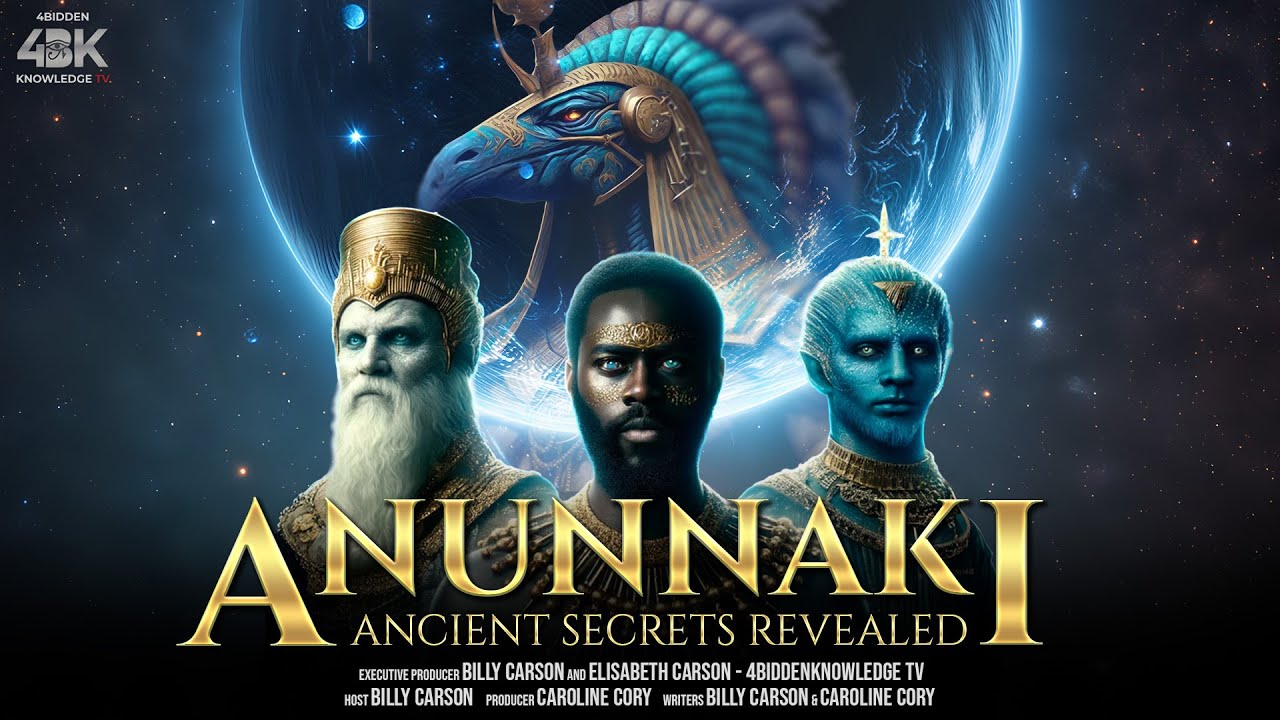
The tablets themselves supply the details that make this reading possible: Ea delivers the warning indirectly, through a reed wall, and afterwards openly challenges Enlil for sending the flood at all. Mainstream scholars read the same scenes differently. For them, the epic is literature that draws on real memories of catastrophic Mesopotamian floods and on the older Atrahasis tradition, and the quarrel between Ea and Enlil is a literary portrait of divine politics rather than a historical record. Carson develops his case at length on 4BK TV in [Anunnaki: Ancient Secrets Revealed](/watch/anunnaki-ancient-secrets-revealed).
Watch, read and go deeper
For Billy Carson's full treatment of the Anunnaki and the flood, watch [Anunnaki: Ancient Secrets Revealed](/watch/anunnaki-ancient-secrets-revealed) on 4BK TV. The podcast episode on the Anunnaki flood story and human origins walks through the flood tablets and the creation of humans described in Atrahasis. To see how Gilgamesh fits with the rest of the Sumerian material, from the King List to the creation epics, start at the [Anunnaki and Sumer topic hub](/topics/anunnaki).
Frequently asked questions
How old is the Epic of Gilgamesh?
The oldest Gilgamesh poems, written in Sumerian, date to roughly 2100 to 1800 BCE. The first connected Akkadian epic, the Old Babylonian version, dates to around 1800 BCE. The eleven-tablet Standard Babylonian version is attributed to Sin-leqi-unninni, who worked sometime between about 1300 and 1000 BCE, and its best-known copies come from seventh-century BCE Nineveh.
Was Gilgamesh a real person?
Possibly. The Sumerian King List names Gilgamesh as the fifth king of Uruk's first dynasty, and a real king of Uruk around 2700 BCE is considered plausible. No inscription from his own lifetime has been found, however, so his existence is not proven.
Who is Utnapishtim?
Utnapishtim is the flood survivor of the Epic of Gilgamesh, the man of Shuruppak whom the god Ea warned to build a boat. After the flood the gods granted him and his wife immortality. The same figure is called Atrahasis in the Akkadian Atrahasis epic and Ziusudra in the Sumerian flood story.
Is the Gilgamesh flood older than Noah's flood?
As written texts, yes. The Mesopotamian flood accounts, including Atrahasis from around 1700 BCE, are older than the earliest surviving manuscripts of Genesis. Scholars agree the stories share a tradition, and most see the Mesopotamian accounts as the older form of it.
Sources and further reading
- Andrew George, The Epic of Gilgamesh (Penguin Classics, 1999)
- Andrew George, The Babylonian Gilgamesh Epic: Introduction, Critical Edition and Cuneiform Texts (Oxford University Press, 2003)
- Benjamin R. Foster, The Epic of Gilgamesh (Norton Critical Edition)
- Stephanie Dalley, Myths from Mesopotamia: Creation, the Flood, Gilgamesh, and Others (Oxford World's Classics)
- Sophus Helle, Gilgamesh: A New Translation of the Ancient Epic (Yale University Press, 2021)
- W. G. Lambert and A. R. Millard, Atra-hasis: The Babylonian Story of the Flood (1969)
- George Smith, The Chaldean Account of Genesis (1876)
- The Book of Genesis, chapters 6 to 9