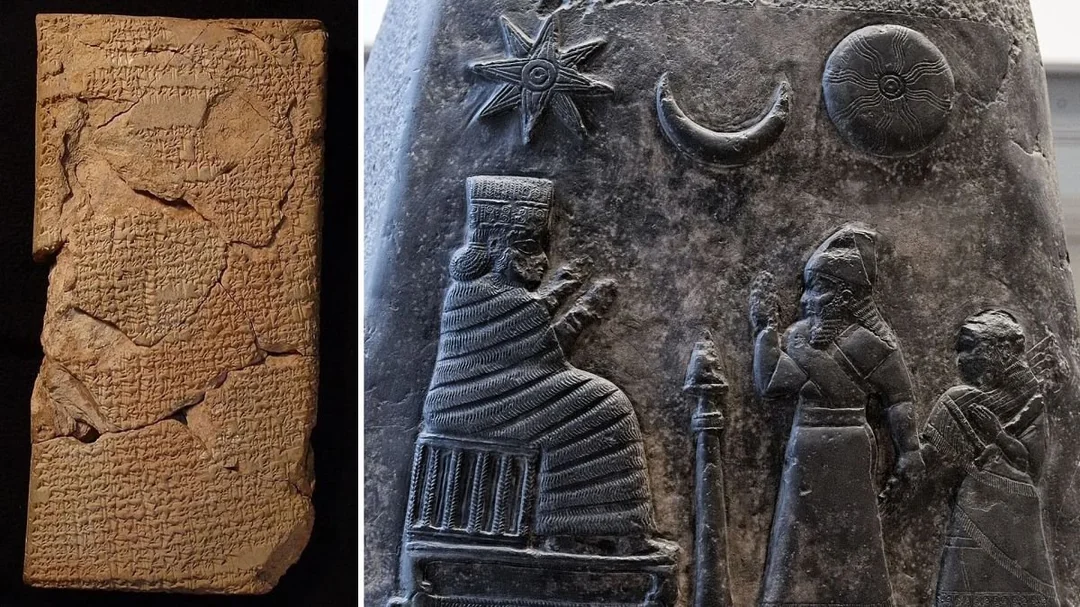
The Anunnaki were the great gods of ancient Mesopotamia. The name comes from the Sumerian a-nun-na(k), usually translated "offspring of An" (the sky god), and in Sumerian and Akkadian literature it is a collective term for the senior deities of the pantheon, An, Enlil, Enki, Ninhursag and their circle, rather than the name of a single race. The ancient-astronaut theory, popularized by Zecharia Sitchin in The 12th Planet (1976), reinterprets these gods as visitors from a planet called Nibiru who engineered humans as a labor force; mainstream Assyriology rejects that reading, while acknowledging that the texts really do describe humans being created to relieve the gods of work.
It matters because these are the oldest written accounts of where humans came from, and they are stranger and more specific than most people expect. Whether you read them as theology, as literature or, as Billy Carson does, as a garbled memory of real events, you should know what the tablets say before you decide. This article sets the sources, the scholarly consensus and Carson's interpretation side by side; the [Anunnaki topic hub](/topics/anunnaki) collects everything else on the site.
What does "Anunnaki" mean in the Sumerian and Akkadian texts
In the texts themselves, Anunnaki (also Anunna or Anunnaku) is a collective noun for the great gods, not a personal name. Sumerian scribes used it for the assembly of deities descended from An, the god of heaven, the ones who decree fates; Akkadian texts inherited the word. By the later second millennium BCE it is often contrasted with the Igigi: in Atrahasis the Igigi are the junior gods who do the digging while the Anunnaki give the orders, and some later Babylonian texts assign the Anunnaki to the earth and underworld and the Igigi to heaven. Translators such as Stephanie Dalley flag the shifting sense in their glossaries.
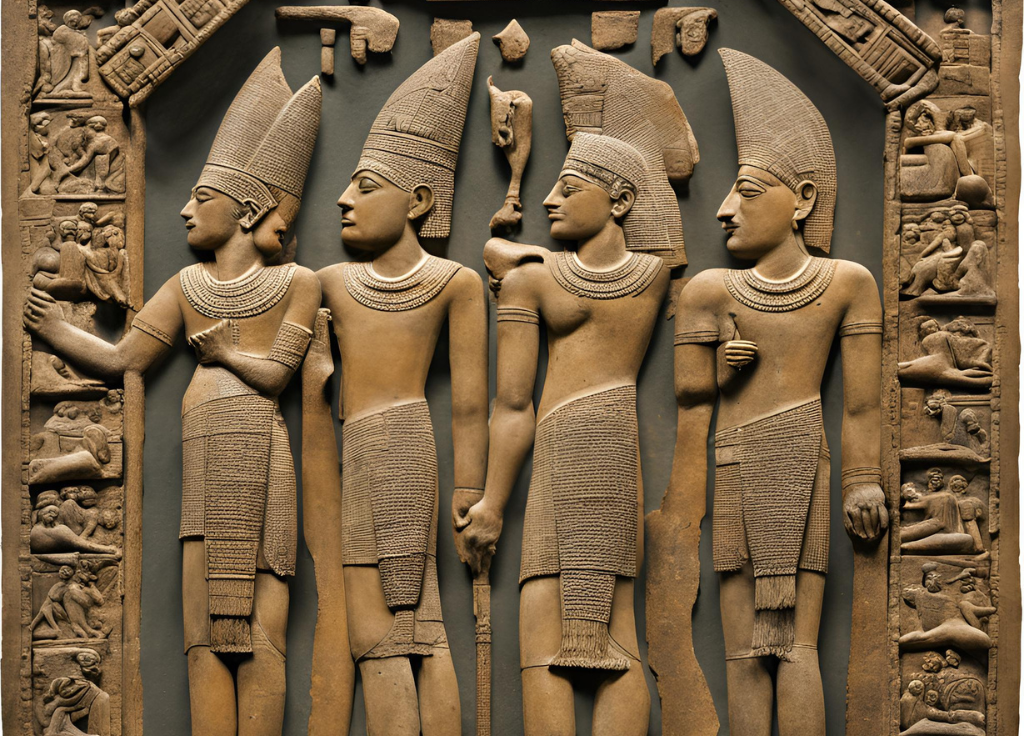
The figures who matter are An (Akkadian Anu), the remote sky god; Enlil, lord of the air and effective ruler of the pantheon, whose temple stood at Nippur; Enki (Ea), god of fresh water, wisdom and craft, at home in Eridu; Ninhursag, the mother goddess; Inanna (Ishtar), goddess of love and war; Nanna (Sin), the moon; Utu (Shamash), the sun; and, in Babylon, Marduk, promoted to king of the gods when Babylon rose to power. The site's [Anunnaki 101 guide](/anunnaki-101-the-ancient-gods-of-sumer) introduces the cast.
Who were the Sumerians, and what did they leave behind
The Sumerians were the people of southern Mesopotamia, in what is now southern Iraq, whose city-states flourished from the fourth millennium BCE and who produced the earliest known writing, cuneiform, by around 3200 BCE. Their cities, among them Eridu, Uruk, Ur and Nippur, were organized around temples; the stepped towers later called ziggurats were the center of civic life, and much of the population worked land attached to the temple estates. They gave us the 60-minute hour, the earliest law codes and the earliest literature.
Sumerian gave way to Akkadian as a spoken language early in the second millennium BCE, but Babylonian and Assyrian scribes kept copying the old stories for another fifteen hundred years, which is why most Anunnaki literature survives in Akkadian, much of it from the seventh-century BCE library of Ashurbanipal at Nineveh. The "Sumerian texts" quoted in ancient-astronaut books are usually Babylonian compositions written long after Sumer's peak.
What the Enuma Elish actually says
The Enuma Elish is the Babylonian creation epic, written across seven tablets, and its central story is Marduk's victory over the sea goddess Tiamat and his creation of the world and of humanity. It opens with the fresh water Apsu and the salt water Tiamat mingling to produce the first gods. Their noise disturbs Apsu, who plots to destroy them; Ea (Enki) kills him first. Tiamat raises an army of monsters under her consort Kingu, and only Marduk, Ea's son, agrees to face her, on condition that the assembly make him king. In tablet IV he kills Tiamat and splits her body to form sky and earth. Tablet V arranges the stars and the calendar; in tablet VI Marduk proposes that "man" be created so the gods may rest, and Ea makes humanity from the blood of the executed Kingu. The Anunnaki, freed from labor, build Babylon and Marduk's temple Esagila.
The standard edition is W. G. Lambert's Babylonian Creation Myths (2013); Dalley's Myths from Mesopotamia is the accessible translation. Lambert argued the epic was composed late in the second millennium BCE as Babylonian political theology, explaining why Marduk, once a minor city god, outranks Enlil. The site's walkthrough of [the Enuma Elish and the seven tablets of creation](/the-enuma-elish-and-the-7-tablets-of-creation) goes tablet by tablet.
Atrahasis, Gilgamesh and the flood: were humans made to work
Yes. In the Mesopotamian texts humans are explicitly created to carry the workload of the gods, and the clearest statement is Atrahasis, an Old Babylonian poem from around 1700 BCE. It opens with the gods doing the work themselves: the junior Igigi dig the rivers and canals for the senior Anunnaki until they burn their tools and surround Enlil's house in revolt. Ea proposes a solution. The mother goddess, Nintu or Mami, mixes clay with the flesh and blood of a slain god (whose name is read differently by different translators) and produces the first humans, who take up the work. Later humanity multiplies, its noise keeps Enlil awake, and he sends plague, drought and finally a flood; Ea warns Atrahasis through the wall of a reed hut and Atrahasis builds a boat. Lambert and A. R. Millard's Atra-hasis (1969) is the reference edition.
Tablet XI of the Epic of Gilgamesh retells the flood with the survivor named Utnapishtim, again warned by Ea and again to Enlil's fury (Andrew George's translation is the standard one). An older Sumerian version, which Thorkild Jacobsen named the Eridu Genesis, has Ziusudra as its hero and survives in fragments. These texts are the raw material for every modern claim that "the gods made humans as slaves." The motif is real, but it sits inside a theology about why gods need temples and offerings.
What the Sumerian King List says about the reigns before the flood
The Sumerian King List is a scribal composition, known from copies of the early second millennium BCE, that records the cities and kings who held kingship from the moment it "descended from heaven," and it gives the kings before the flood reigns of tens of thousands of years. The best-known copy, the Weld-Blundell prism in the Ashmolean Museum, begins with kingship at Eridu and a king named Alulim who reigned 28,800 years; eight kings across five cities rule for a combined 241,200 years before "the flood swept over." After the flood, reigns shrink over successive dynasties to ordinary human lengths.
Assyriologists since Jacobsen's 1939 edition have read the antediluvian numbers as literary and mathematical conventions rather than records: they are built from sexagesimal units, so that 28,800 is eight shar (8 x 3,600), much as the long lifespans in Genesis 5 make the deep past feel vast. The ancient-astronaut school, by contrast, reads "kingship descended from heaven" and the enormous reigns literally, as evidence of non-human rulers.
Where the ancient-astronaut reading comes from
The ancient-astronaut reading of the Anunnaki comes almost entirely from Zecharia Sitchin, whose The 12th Planet (1976) and the Earth Chronicles series that followed built a complete alternative history out of the Mesopotamian texts. Erich von Däniken's Chariots of the Gods (1968) had already argued that ancient monuments and myths preserved memories of extraterrestrial visitors; Sitchin gave the idea a specific cast and source. In his account the Anunnaki came from Nibiru, a planet on a 3,600-year orbit that periodically passes through the inner solar system; they arrived on Earth roughly 450,000 years ago to mine gold; the Igigi revolt in Atrahasis was a real labor strike; and Enki and Ninhursag resolved it by genetically engineering a worker, the first human. Sitchin translated Anunnaki as "those who from heaven to earth came" and read the King List and cylinder seals as literal documentation.
Sitchin was trained in economics and self-taught in cuneiform. Later writers such as Michael Tellinger (Slave Species of God) have extended the framework. The site's article on [the Anunnaki as the alien gods](/the-anunnaki-the-alien-gods) sets the theory out in its own terms.
What do mainstream Assyriologists say about Sitchin
Scholars of cuneiform reject Sitchin's translations and the astronomy built on them; the most detailed public critique came from the late Michael S. Heiser, a scholar of Hebrew Bible and Semitic languages, on his site Sitchin Is Wrong. The objections are concrete. First, Anunnaki does not mean "those who came down from heaven"; nun means "prince" or "great," and the word is a title of rank. Second, Nibiru is a genuine term in Babylonian astronomy, appearing in tablet V of the Enuma Elish and in the star catalog Mul.Apin, but there it names Marduk's star, generally identified with Jupiter, or a crossing point in the sky; no cuneiform text describes a planet beyond Pluto or a 3,600-year orbit. Third, the Berlin cylinder seal VA 243, which Sitchin presented as a diagram of the solar system, is read by specialists as a conventional star symbol surrounded by dots. Fourth, no text dates the gods' arrival to 450,000 years ago; that figure is Sitchin's, not the scribes'.
What the scholars concede matters for fans and skeptics alike: the texts genuinely describe gods who live on Earth, quarrel, need labor, and manufacture humans from clay and divine blood to get it. The mainstream explanation is that this is how a temple economy justified itself; whether that fully accounts for the specificity of the stories is where the debate lives.
Billy Carson's reading
Billy Carson reads the Sumerian and Babylonian texts as a distorted but real record of an advanced group that intervened in early human development, and he lays that case out across seven episodes of his 4BK TV series [Anunnaki: Ancient Secrets Revealed](/watch/anunnaki-ancient-secrets-revealed) (2024–25). In Carson's telling, presented as his interpretation rather than settled history, the Anunnaki are connected to the Pleiades, and the making of humans in Atrahasis describes an engineering project, not a metaphor. The series opens with "Visitors from the Pleiades," moves through "Gods of War" (the gods as refugees whose conflicts seeded Earth's own) and "Ancient Encounters," on the Sumerians and the Anunnaki, then "From the Stars: the genesis of humanity" and a full episode on Enlil as "the tyrant god of the Sumerian pantheon."
That last title captures the moral shape of Carson's reading. He frames Enlil as a hard, punitive ruler, the god who sends the flood, and Enki as humanity's ally, the god who leaked the warning through the reed wall. Carson also argues that the intervention did not stop at Mesopotamia: the final two episodes, with Erich von Däniken, turn to the pyramids, a thread the [Ancient Egypt hub](/topics/ancient-egypt) picks up. Unlike Sitchin, Carson does not rest his case on disputed translations; it rests on the plain content of the stories, the King List's claim that kingship came from heaven, and the parallels he finds across cultures.
Watch, read and go deeper
Start with [Anunnaki: Ancient Secrets Revealed](/watch/anunnaki-ancient-secrets-revealed) on 4BK TV, then [The Anunnaki Series from 7th Planet Broadcasting](/watch/the-anunnaki-series-7th-planet-broadcasting) for a second treatment of the material. Carson's rel="noopener">YouTube discussion of the Anunnaki
Frequently asked questions
Were the Anunnaki real?
The Anunnaki were real in the sense that the Sumerians and Babylonians worshipped them for three thousand years, built temples to them and wrote their stories down. Mainstream Assyriology treats them as deities of the imagination; Sitchin and, in his own version, Billy Carson treat the myths as memories of actual beings.
What does Anunnaki mean?
Anunnaki comes from Sumerian a-nun-na(k), most often translated "offspring of An" or "those of princely seed." It is a collective term for the great gods whose exact scope shifts between texts. It does not mean "those who came down from heaven," which is Sitchin's rendering rather than a linguistic one.
Is Nibiru a real planet?
Nibiru is a real word in Babylonian astronomy, but not a rogue planet. In the Enuma Elish and the Mul.Apin star catalog it refers to Marduk's star, usually identified with Jupiter, or to a crossing point in the sky. The twelfth planet on a 3,600-year orbit is Sitchin's idea; no cuneiform source describes it.
Did the Anunnaki create humans?
According to the texts, yes: in Atrahasis humans are made from clay and the blood of a slain god so that the gods no longer have to work, and in the Enuma Elish Ea makes humanity from the blood of Kingu for the same reason. Scholars read this as theology; the ancient-astronaut reading takes it as a literal description of genetic engineering.
Who were Enki and Enlil?
Enki (Akkadian Ea) was the god of fresh water, wisdom and craft; Enlil was the god of the air and effective ruler of the pantheon. In the flood stories Enlil orders humanity destroyed and Enki secretly warns the survivor, which is why Billy Carson frames Enlil as the tyrant and Enki as humanity's ally.
Sources and further reading
- Stephanie Dalley, Myths from Mesopotamia: Creation, the Flood, Gilgamesh and Others (Oxford World's Classics)
- W. G. Lambert, Babylonian Creation Myths (Eisenbrauns, 2013)
- W. G. Lambert and A. R. Millard, Atra-hasis: The Babylonian Story of the Flood (1969)
- Andrew George, The Epic of Gilgamesh (Penguin Classics)
- Thorkild Jacobsen, The Sumerian King List (1939)
- The Electronic Text Corpus of Sumerian Literature (Oxford), for Inanna's Descent
- Zecharia Sitchin, The 12th Planet (1976)
- Michael S. Heiser, the Sitchin Is Wrong essays