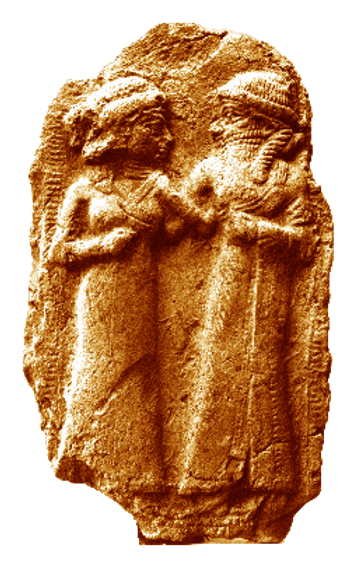
Anunnaki: Ancient Secrets Revealed episode 1 opens Billy Carson's 4BK TV docuseries and sets out his core case in under an hour: the Anunnaki of the Sumerian and Akkadian tablets were real, physical beings who arrived on Earth long before humans, made people to take over the labor of the Igigi, and then let themselves be worshipped as gods they knew they were not. His sharpest framing is that human religion may be a gigantic cargo cult built around visitors with technology, and that the texts point to a creator above the Anunnaki whom even they answered to.
The topic matters because the Anunnaki appear in the Atrahasis, the Enuma Elish and the Epic of Gilgamesh, some of the oldest literature in existence, and those texts shaped the creation and flood stories billions of people still read. This companion follows the episode in order, separates what Carson argues from what the tablets say, and notes where scholarship parts company.
What the video covers
A series, not a documentary, and the first translation (from about 0:45)
Carson introduces the project as "a synthesis of historical analysis, scientific rigor, and boundless imagination," a fair description of the method. It opens with the claim that Sumerian accounts describe the mass cloning of hominids before Adamu, the first man, and that the gods moved backwards and forwards in time, a phrase lifted from George Smith, whose The Chaldean Account of Genesis appeared in 1876; the time-travel reading is the episode's, not Smith's.
One point here holds up well: the Sumerian form of the name was Anunna, and Anunnaki is the later Akkadian term; both derive from An, or Anu, the sky god at the head of the pantheon. Carson adds that he has come to believe Anu is the source and creator of the universe, his own position rather than anything the texts state.
Gilgamesh, Enkidu and the sky over Taurus (from about 5:00)
The Epic of Gilgamesh is used to show that the gods could fashion beings. Gilgamesh, king of Uruk, is described as half human and half Anunnaki; Enkidu is made by the gods as his companion, born in the wilderness rather than from a mother. The episode then reads the story as a star map, with the Pleiades guarding Taurus and Gilgamesh, who owns Orion, forced to pass through it to reach them. Native American, Maya, Aztec and Aboriginal Australian star lore are cited for the claim that these peoples were seeded by Pleiadians, along with undeciphered glyphs at Kariong, near Gosford in New South Wales. Carson then weighs whether the Anunnaki were spiritual, multidimensional or physical and says the tablets give enough circumstantial evidence to treat them as physical and multiracial.
The Atrahasis, the Igigi and the river work (from about 10:00)
This is the strongest section because it stays close to a real text. The episode names the Epic of Atrahasis and the Enuma Elish and credits their recovery from the library of Ashurbanipal at Nineveh to Austen Henry Layard in 1849, putting the find at over 40,000 tablets. According to the Atrahasis, the Anunna were on Earth before humans and the lower gods, the Igigi, did the labor. Carson singles out the line that the Igigi had to clear the lifelines of the land, which he identifies as the Tigris and Euphrates: silted channels are useless for farming, so river clearing is what made agricultural civilization possible. The Igigi then refused to continue, and the gods agreed to create humans to take the work.
The chain and the co-creator idea (from about 13:30)
Carson says one passage has occupied him for years. In his telling, Enlil says to Enki, "Where you went, you were to undo the chain and set us free." His interpretation is that the gods had become bound, karmically, to the maintenance of this world, and that creating humans was the only way to break the chain and hand the responsibility on. He pushes further: the Anunnaki were raising humanity to become co-creators of reality, but the keys come only once humanity understands the responsibility attached.
A creator above the gods, and the cargo cult (from about 15:05)
The Sumerian tablets, Carson says, have the Anunnaki admit that a creator of all stood above them and that they would answer to that creator for crimes against humanity. On Earth, he says, they were "masquerading as gods with a lower case G." To show how that could work he tells the story of the Second World War cargo cults in the Pacific: islanders who had never seen aircraft received cargo, worshipped the newcomers and built imitation runways and wooden aircraft to call the sky gods back. He asks, "could our world today be a result of a gigantic cargo cult?" The implication he draws is personal: if the beings in the religious texts were not the creator, people should stop begging outside deities and look within.
Enki, Enlil and the eagle and the serpent (from about 19:15)
The two central gods of the Sumerian story are introduced through their symbols: in Carson's reading, Enlil's emblem is the eagle, seeing all from the higher realms, and Enki's is the serpent, representing Earth and the transformation of consciousness. The eagle and serpent on flags and crests throughout history, he argues, mark two tendencies that have clashed ever since, civilizations built on military power and civilizations built on knowledge. For the brothers' roles in the original texts, see Enki and Enlil, the two brothers of Sumerian myth.
The Pleiades and the wars in the sky (from about 20:50)
A long middle section argues that the Anunnaki came from the Pleiades, an open cluster in Taurus about 444 light-years away with more than 800 catalogued stars. After the Greek myth of the seven daughters of Atlas, the episode lists war narratives it reads as memories of a conflict there: the Mahabharata and Bhagavad Gita, the Battle of the Ten Kings in the Rigveda, the destruction of Tiamat in the Enuma Elish, and a galactic battle in the Terra Papers. Refugees from such a war, in Carson's view, fled in ships and founded breakaway civilizations. The episode then follows Zecharia Sitchin's Pyramid Wars, in which Marduk, identified with the Egyptian Amun-Ra, fights his brother Thoth until their father Enki sends Thoth to Mesoamerica.
Atlantis, the Apkallu and the wider evidence (from about 29:10)
Plato's Atlantis is summarized accurately from the Timaeus and Critias: a naval power beyond the Pillars of Hercules, laid out in concentric rings, defeated by Athens and sunk by earthquakes and floods more than 9,000 years before Plato's time. Carson's addition is that Poseidon, Atlantis's patron, parallels Enki, and that the gods of Atlantis and Sumer are the same Anunna in different roles. He links the Mesopotamian Apkallu sages to the Nommo of the Dogon of Mali and recounts his 2020 trip to see the Gosford glyphs and meet Aboriginal elders. The evidence list then widens to xenon on Mars, read as a byproduct of nuclear war, a crystal under the Bosnian Pyramid of the Sun said to carry a runic line about a stargate, sites from Stonehenge to Tikal and Göbekli Tepe claimed to align with the Pleiades, and the war in heaven of Revelation 12:7-9. The Plato material is covered in Atlantis explained.
VA 243, the plow and the Sumerian firsts (from about 39:45)
The episode closes with the cylinder seal VA 243, which Carson describes as Enki passing the plow to humanity beneath a field of stars. From there he lists what Sumer is credited with: agriculture, mathematics, metallurgy, animal husbandry, commerce, written law and the shekel. He argues the Sumerians knew the layout of the solar system before telescopes, that this knowledge was lowered to them as teaching, and that the Pleiades still mark modern culture, from the Subaru logo (Subaru is Japanese for the cluster) to the Sumerian name MUL.MUL. The episode ends on implications for religion, technology and readiness for contact.
Key takeaways
The episode mixes direct quotation from the Atrahasis and the Enuma Elish with Carson's conjecture, and the viewer is asked to weigh each.
The Atrahasis really does say the Igigi dug the rivers, revolted and were replaced by humans made to carry the gods' labor; that is the episode's best-attested claim.
Carson reads the chain passage as a transfer of stewardship: humans were created to free the gods from a bound responsibility and, in time, to become co-creators themselves.
The cargo-cult argument is the hinge of the episode: beings with technology were mistaken for the creator, and the texts themselves say they answered to someone higher.
The Pleiades, Pyramid Wars, Mars and Bosnia material comes largely from Zecharia Sitchin and later writers rather than from the tablets.
Billy Carson's reading
Carson's position has three parts. First, the Anunnaki were physical beings and the tablets are closer to history than to myth, the reading he develops in his broader work on who the Anunnaki were. Second, they were not the creator of the universe and said so; the worship they received was a misunderstanding of technology, which is why he reaches for the cargo cult. Third, the point for a modern reader is agency: if the gods of scripture were visitors answering to a higher source, that source is also available to the person in the room, and the care of the world the Igigi tried to shed is now ours. That is why he dwells on the Atrahasis; in his reading the creation of humans is a handover, and the chain is the obligation that came with it.
What mainstream scholarship says
Assyriologists read the Atrahasis as an Old Babylonian poem, best preserved in a copy from about 1640 BCE, in which the Igigi dig the rivers for 3,600 years, rebel, and are replaced by humans whom the mother goddess and Enki make from clay and the blood of a slain god. That matches the episode's outline; details diverge elsewhere. In the Gilgamesh epic the hero is two-thirds divine, not half, and Enkidu is created by the goddess Aruru at Anu's instruction, not by Enlil. Layard worked at Nineveh from the late 1840s, but the main body of Ashurbanipal's library was recovered by Hormuzd Rassam in 1852 to 1853, and the British Museum holds roughly 30,000 tablets and fragments from it. MUL.MUL is correct, and 444 light-years is close to current measurements.
The war and origins material rests on sources scholars do not accept as ancient. The Terra Papers were written by Robert Morning Sky in the 1990s. The Pyramid Wars and the planetary reading of Tiamat come from Zecharia Sitchin, whose translations Assyriologists reject, and no Egyptologist identifies Marduk with Amun-Ra. Specialists read VA 243 as a presentation scene with a conventional star symbol, not a solar-system map. Egyptologists regard the Gosford glyphs as a twentieth-century carving, geologists consider the Bosnian pyramids natural hills, and the excess of xenon-129 on Mars is explained by atmospheric escape. Historians treat Plato's Atlantis as a philosophical invention, and the Dogon-Nommo parallel rests on Marcel Griaule's fieldwork, which later anthropologists could not confirm.
Watch, read and go deeper
The full episode streams on 4BK TV in the series Anunnaki: Ancient Secrets Revealed, and Carson's live commentary on it has its own companion on the Pleiades, the Igigi and the cosmic wars. For the text at the center of the episode, read the Atrahasis epic explained, and for Uruk's king and his companion, the Epic of Gilgamesh explained. Everything on the site about the tablets and Sumer is collected in the Anunnaki and Sumer hub.
Frequently asked questions
What is Anunnaki: Ancient Secrets Revealed about?
It is Billy Carson's docuseries on the Anunnaki, the gods of the Sumerian and Akkadian tablets. Episode 1 introduces the Atrahasis, the Enuma Elish and the Epic of Gilgamesh and argues that the Anunnaki were physical beings from the Pleiades who created humans to take over the labor of the Igigi.
What does the Atrahasis say about the Igigi?
The Igigi are the lower gods who dig the Tigris and Euphrates and carry the gods' labor for 3,600 years before they revolt. The senior gods respond by having humans made from clay and the blood of a slain god to do the work instead; the poem then moves to the flood.
What is the cargo-cult argument in the episode?
Carson compares human religion to the Pacific cargo cults of the Second World War, in which islanders treated soldiers and their cargo as gods. His argument is that the Anunnaki were visitors with technology who were mistaken for the creator, and that the tablets have them admit to answering to a higher power.
Does mainstream scholarship accept that the Anunnaki came from the Pleiades?
No. Assyriologists read the Anunnaki as deities of the Mesopotamian pantheon, and the Pleiades, MUL.MUL in Sumerian, appear in astronomical and calendar texts rather than origin stories. The Pleiadian origin comes from Zecharia Sitchin and later writers.
Sources mentioned
The episode draws on the Epic of Atrahasis, the Enuma Elish, the Epic of Gilgamesh, George Smith's The Chaldean Account of Genesis, Plato's Timaeus and Critias, the Mahabharata, the Rigveda, Robert Morning Sky's Terra Papers, the Book of Revelation, the cylinder seal VA 243 and Zecharia Sitchin's The Wars of Gods and Men. Standard references include Stephanie Dalley's Myths from Mesopotamia, Andrew George's translation of The Epic of Gilgamesh, and W. G. Lambert and A. R. Millard's Atra-hasis.