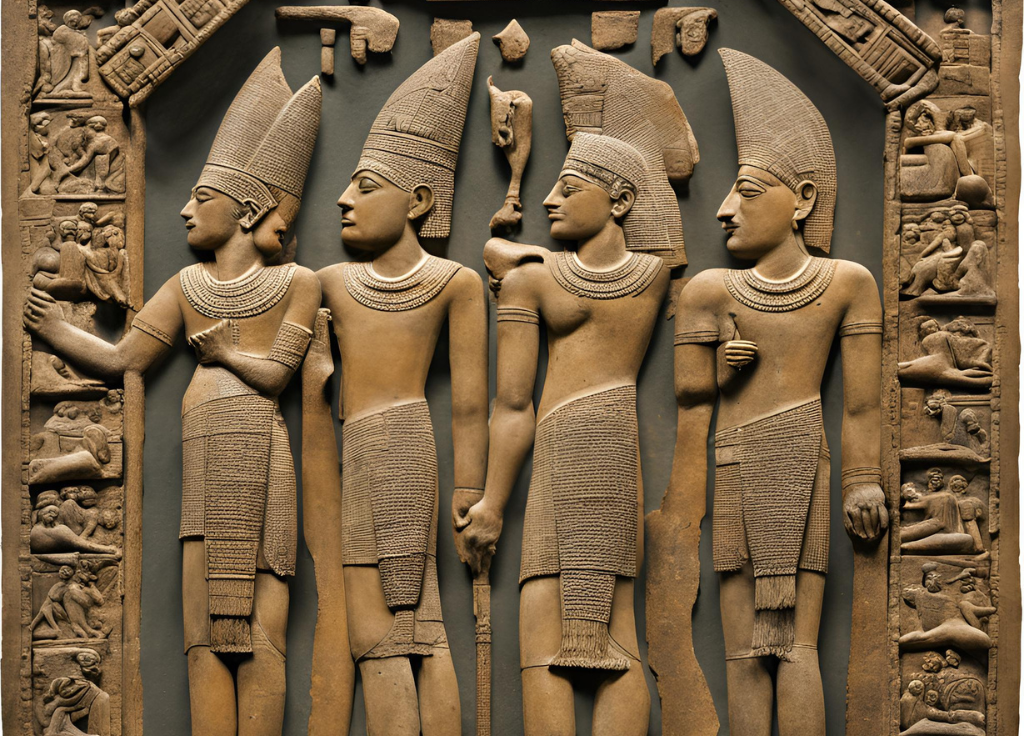
The Sumerian tablets are the clay documents, written in wedge-shaped cuneiform script, that survive from ancient Mesopotamia, the land between the Tigris and Euphrates rivers in what is now Iraq. Writing began there around 3200 BCE, and the roughly half a million cuneiform tablets now held in museums record everything from barley rations and land sales to creation myths, flood stories, king lists and hymns to the gods known as the Anunnaki. Most are receipts, letters and contracts; only a small fraction are the literary texts people usually mean when they talk about “the Sumerian tablets.”
That small fraction matters out of all proportion to its size. It contains some of the oldest written stories on Earth, including flood narratives copied down centuries before the Book of Genesis took its final form, and it is the source material for every modern debate about who the Anunnaki were. Billy Carson has built much of his work around these texts, and he reads them differently from most academics. To weigh that reading fairly, it helps to know what the tablets physically are, which ones matter, who translated them and what they actually say.
What are the Sumerian tablets?
The Sumerian tablets are inscribed clay objects produced by the scribes of southern Mesopotamia and their successors over roughly three thousand years. A scribe pressed a cut reed stylus into damp clay, leaving wedge-shaped marks; the name cuneiform comes from the Latin cuneus, “wedge.” Tablets range from thumb-sized receipts to large multi-column literary copies, and some important texts were also written on clay cylinders and prisms.
Strictly speaking, not every cuneiform tablet is Sumerian. Sumerian is a language isolate, unrelated to any other known language, while Akkadian, the Semitic language of the later Babylonians and Assyrians, borrowed the same script. Several of the most famous “Sumerian tablets,” including the Enuma Elish and the standard version of the Epic of Gilgamesh, are in fact written in Akkadian. Sumerian itself died out as an everyday spoken language by the early second millennium BCE but survived for many centuries afterwards as a language of scholarship and ritual, much as Latin did in medieval Europe.
How did cuneiform writing begin?
Cuneiform began as bookkeeping. The earliest tablets, from the city of Uruk around 3200 BCE, are lists of goods, workers and livestock written with pictographic signs and numerals. The archaeologist Denise Schmandt-Besserat has argued that these signs grew out of an older system of small clay counting tokens; whether or not that theory holds in every detail, the first writing clearly served administration, not storytelling.
Over the following centuries the pictures became abstract clusters of wedges, and signs came to stand for syllables as well as whole words. That shift let scribes write names, grammar and eventually literature. The script outlived Sumer itself by two thousand years: it was adapted for Akkadian, Hittite, Elamite and other languages, and the last datable cuneiform tablets are astronomical texts from the first century CE. For a closer look at the language itself, see the earlier 4BK piece on [the Sumerian tablets and the oldest recorded language](/sumerian-tablets-exploring-the-oldest-recorded-language).
Where were the tablets found, and how were they deciphered?
Most of the literary tablets come from a handful of excavated sites, above all Nippur, Ur and Nineveh. Nippur, the religious centre of Sumer and the city of the god Enlil, yielded tens of thousands of tablets to American expeditions from the late nineteenth century onward, including many school copies of Sumerian literature made by Old Babylonian scribes between roughly 1900 and 1600 BCE. Much of what survives of Sumerian myth reached us through those student exercises.
Nineveh supplied the other great archive. In the seventh century BCE the Assyrian king Ashurbanipal gathered tablets on religion, medicine, divination and literature in his palaces there. Austen Henry Layard and Hormuzd Rassam dug them out between 1849 and 1851, and the collection, now in the British Museum, runs to tens of thousands of fragments. Among them George Smith identified the flood tablet of the Gilgamesh epic, which he announced in 1872, and the creation epic he published in 1876.
None of this could have been read without decipherment. The key came from trilingual royal inscriptions such as Darius I's rock inscription at Behistun in Iran, copied by Henry Rawlinson. In 1857 the Royal Asiatic Society gave the same newly found Akkadian inscription to four scholars, Rawlinson, Edward Hincks, William Henry Fox Talbot and Jules Oppert, and their independent translations agreed closely enough to show that the script had been cracked.
What do the Sumerian tablets say?
The literary tablets tell a connected set of stories about the gods, the creation of humans, a great flood and the origins of kingship.
Creation and the purpose of humanity
Several texts agree that humans were made to take over the gods' labour. In Atrahasis, an Akkadian poem whose best-preserved copy dates to around 1700 BCE, the junior gods rebel against the endless work of digging canals, and Enki and the birth goddess create humankind from clay mixed with the flesh and blood of a slain god. The Sumerian poem Enki and Ninmah tells a similar story of humans shaped from clay to relieve the gods, followed by a contest between the two deities. The Babylonian [Enuma Elish](/the-enuma-elish-explained-seven-tablets-of-creation), a seven-tablet epic recovered from Ashurbanipal's library, has Marduk defeat the sea goddess Tiamat, build the cosmos from her body and have humans made from the blood of her general Kingu so that the gods can rest.
The flood
Three separate traditions describe a flood sent by the gods and a single man who survives it in a boat. In the Sumerian Eridu Genesis the hero is Ziusudra. In Atrahasis he is Atrahasis, warned by Enki after Enlil, angered by the noise of the growing human population, has already tried plague and famine. In tablet XI of the twelve-tablet standard Babylonian Epic of Gilgamesh he is Utnapishtim, who releases a dove, a swallow and a raven to look for dry land. The parallels with Noah in Genesis 6 to 9 are close enough that Smith's 1872 announcement caused a sensation in Victorian Britain.
Kingship and history
The [Sumerian King List](/the-sumerian-king-list-explained), best known from the Weld-Blundell prism in Oxford's Ashmolean Museum, states that kingship “descended from heaven,” lists eight kings before the flood with reigns of tens of thousands of years, and then continues with dynasties of more human length after it. City laments such as the Lament for Ur mourn real historical catastrophes, in that case the fall of Ur around 2004 BCE.
Gods, wisdom and the underworld
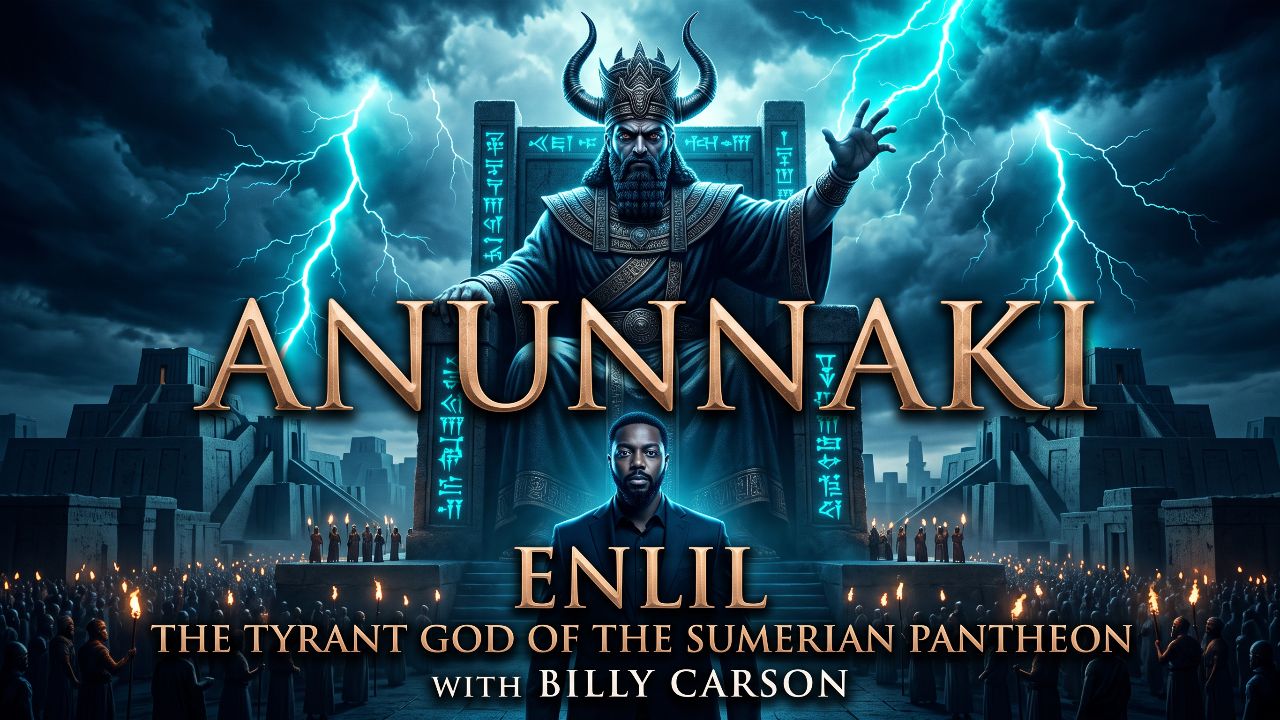
Other tablets fill out the world of the gods. Inanna's Descent to the Underworld follows the goddess through seven gates into the realm of her sister Ereshkigal. Enki and Ninhursag describes a pure land called Dilmun. The Instructions of Shuruppak, among the oldest surviving works of literature, give practical advice from a father to his son Ziusudra. The uneasy partnership between [Enki and Enlil](/enki-and-enlil-the-two-brothers-of-sumerian-myth) runs through many of these stories.
Who translated the Sumerian tablets?
Modern understanding of the tablets rests on a century and a half of specialist work. Samuel Noah Kramer, working largely on Nippur tablets, brought Sumerian literature to a general audience in History Begins at Sumer (1956). Thorkild Jacobsen's The Harps that Once… (1987) is a standard anthology of Sumerian poetry, and Stephanie Dalley's Myths from Mesopotamia (1989) collects Atrahasis, Gilgamesh and the Enuma Elish in one volume. W. G. Lambert's Babylonian Creation Myths (2013) is the reference edition of the Enuma Elish, and Andrew George's Gilgamesh (1999) is the standard English translation of the epic.
Many of these texts can now be read free online. Oxford's Electronic Text Corpus of Sumerian Literature (ETCSL) offers transliterations and English translations of several hundred Sumerian compositions, and the Cuneiform Digital Library Initiative (CDLI) catalogues hundreds of thousands of cuneiform objects, with photographs and transliterations for many of them. These resources matter because they let any reader check a claim about “what the tablets say” against the tablets themselves.
Who were the Anunnaki in the tablets?
In the tablets the Anunnaki are a collective of gods, generally understood as the offspring of the sky god An, who sit in assembly and decide the fates of gods and people. The term's meaning shifts over time: in some texts they are the great gods of heaven and earth, in others the gods of the underworld, and in Atrahasis they are the senior gods whose work is done by the junior Igigi until those gods revolt. For the full picture, text by text, see [who the Anunnaki were](/who-were-the-anunnaki-sumerian-texts-vs-ancient-astronaut-theory).
Mainstream Assyriology reads all of this as religious literature. On that view the tablets are the scriptures, hymns and school texts of a temple and palace culture, using gods to explain why the world is ordered as it is, why humans labour and why they die.
Where the ancient-astronaut reading comes from
The idea that the tablets describe visitors from another world entered popular culture mainly through Zecharia Sitchin's The 12th Planet (1976). Sitchin argued that the Anunnaki were extraterrestrials from a planet called Nibiru who came to Earth and engineered humans as workers. Assyriologists reject his translations, and the biblical scholar Michael Heiser, among others, published detailed critiques arguing that Sitchin's readings of key terms do not match the cuneiform evidence. In the texts themselves, Nibiru appears in tablet VII of the Enuma Elish as one of Marduk's names and in astronomical texts as a celestial marker, not as a hidden planet.
Billy Carson's reading
Billy Carson treats the Sumerian tablets as records of real events and real beings that later generations turned into myth. In his interpretation, the Anunnaki were not symbolic deities but an actual group whose dealings with early humans were remembered, recopied and gradually mythologised by scribes over thousands of years. He places particular weight on Atrahasis. Where scholars see a myth explaining why humans must work and why they die, Carson reads the mixing of a god's flesh and blood with clay, overseen by Enki and the birth goddess, as an account of genetic engineering, and the flood that follows as a deliberate attempt to undo that creation.
He develops that reading on the 4biddenknowledge Podcast, in an episode on how the Sumerian tablets relate to the Bible, Noah's ark and Genesis and another on the Anunnaki flood story and human origins, and in his Awaken Zone episodes. Carson and the Assyriologists are working from the same tablets and largely the same translations; what differs is whether the gods in those texts are read as figures of religious imagination or as memories of real beings. Readers can test the question directly by setting Dalley's translation of Atrahasis beside his commentary.
Watch, read and go deeper
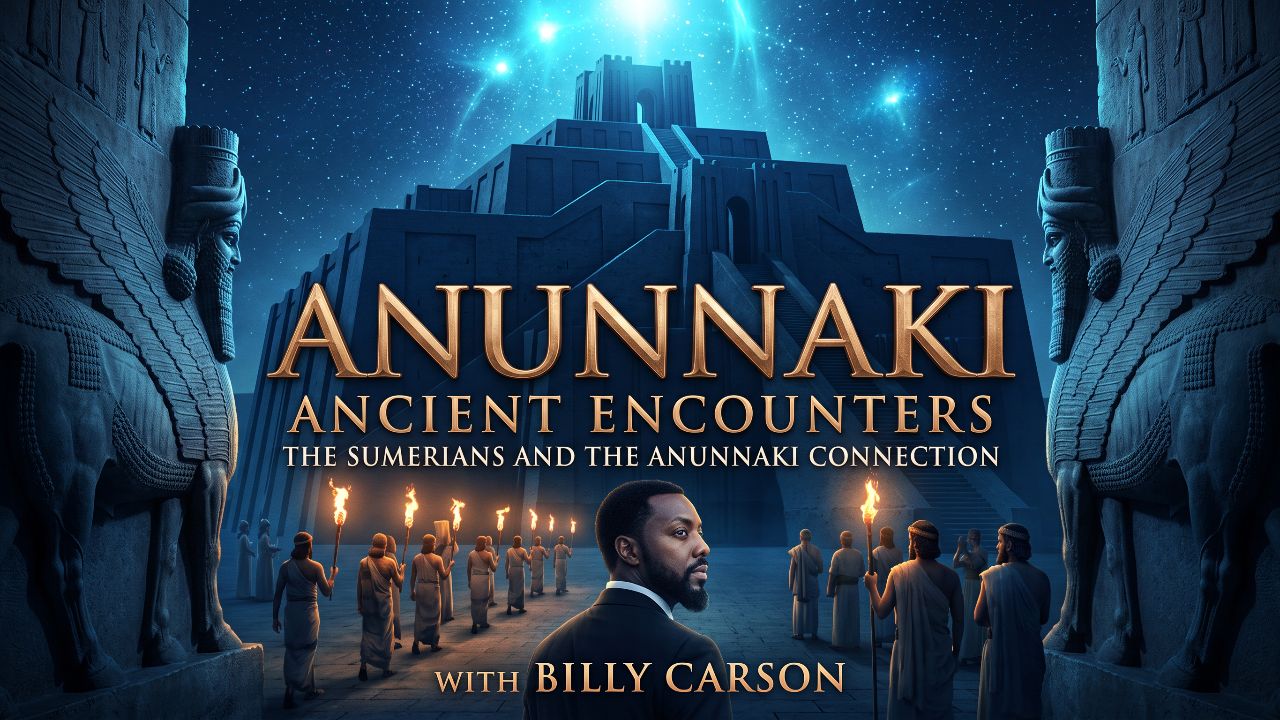
Billy Carson's 4BK TV series [Anunnaki: Ancient Secrets Revealed](/watch/anunnaki-ancient-secrets-revealed) walks through the creation and flood tablets on screen, episode by episode. The podcast episodes linked above cover the same ground in long-form conversation. For every article on Sumer, the Anunnaki and the texts behind them in one place, start at the [Anunnaki topic hub](/topics/anunnaki).
Frequently asked questions
How old are the Sumerian tablets?
The oldest cuneiform tablets come from Uruk and date to around 3200 BCE; they are administrative records, not stories. Most surviving copies of Sumerian literature were written by Old Babylonian scribes between about 1900 and 1600 BCE, and Ashurbanipal's library at Nineveh dates to the seventh century BCE. Cuneiform stayed in use until the first century CE.
How many Sumerian tablets are there?
Roughly half a million cuneiform tablets are held in museum collections around the world, and many have still not been fully published. The great majority are administrative documents such as ration lists, land records and trade accounts. Only a small fraction are literary texts like the creation and flood stories.
Is the flood story in the Sumerian tablets older than the Bible?
The Mesopotamian flood narratives survive on tablets from the early second millennium BCE, including a copy of Atrahasis from around 1700 BCE. Most biblical scholars date the written composition of Genesis to the first millennium BCE. Scholars debate whether Genesis borrowed from Mesopotamian sources directly or both drew on a shared older tradition.
Do the Sumerian tablets mention aliens?
No cuneiform text uses a word meaning extraterrestrial; the tablets speak of gods, including the Anunnaki. The ancient-astronaut reading is an interpretation popularised by Zecharia Sitchin, whose translations Assyriologists reject. Billy Carson reads the Anunnaki as real beings whose history was later mythologised, which is his interpretation rather than the scholarly consensus.
Where can I read the Sumerian tablets in translation?
The Electronic Text Corpus of Sumerian Literature at Oxford and the Cuneiform Digital Library Initiative both publish texts free online. In print, Stephanie Dalley's Myths from Mesopotamia, Andrew George's Gilgamesh and Thorkild Jacobsen's The Harps that Once… are reliable starting points.
Sources and further reading
- Samuel Noah Kramer, History Begins at Sumer (1956)
- Thorkild Jacobsen, The Harps that Once…: Sumerian Poetry in Translation (1987)
- Stephanie Dalley, Myths from Mesopotamia: Creation, the Flood, Gilgamesh, and Others (1989)
- W. G. Lambert and A. R. Millard, Atra-hasis: The Babylonian Story of the Flood (1969)
- W. G. Lambert, Babylonian Creation Myths (2013)
- Andrew George, The Epic of Gilgamesh: A New Translation (1999)
- The Electronic Text Corpus of Sumerian Literature (ETCSL), University of Oxford
- The Cuneiform Digital Library Initiative (CDLI)