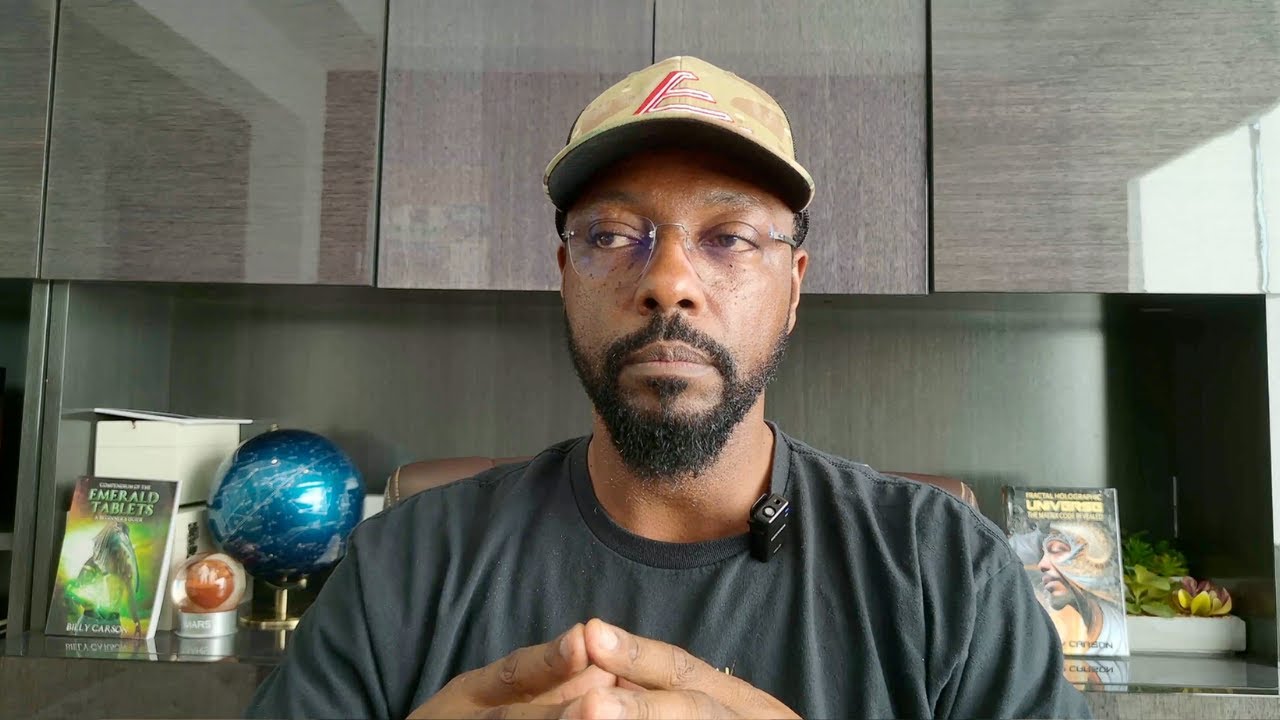
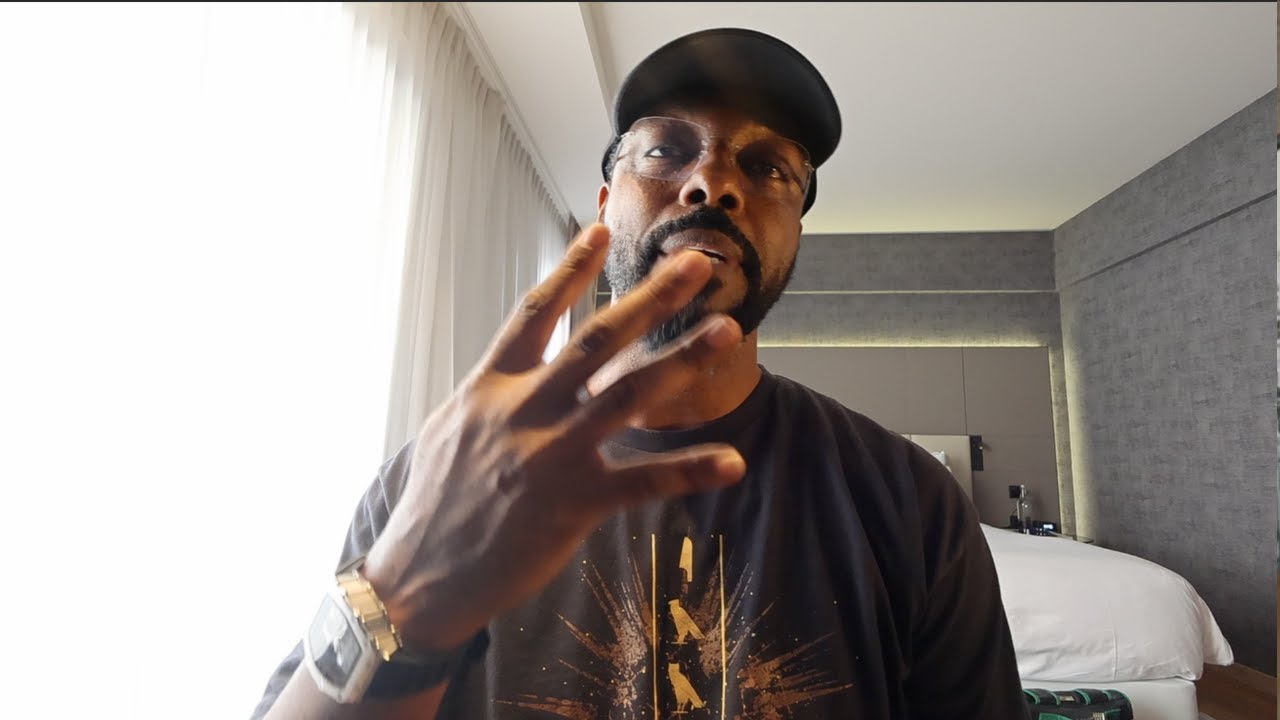
Billy Carson's case for changing your frequency is that your circumstances follow your emotional state, not effort alone, and that shifting that state is a daily discipline rather than a one-time breakthrough. In this video he makes the argument in two parts: the story of how he left a stable marketing business for web development in the late 1990s over the objections of the person closest to him, then the routine he prescribes, built on affirmations, timed self check-ins, processing hard experiences and journaling small good moments.
Why it matters: a lot of manifestation content stops at positive thinking. Carson's version is more procedural, and he uses his own career as the worked example of holding a direction under pressure. Several of his habits also overlap with methods psychologists study, so this piece sets out both his claims and what the research says.
What the video covers
A discount healthcare plan and a borrowed website (from about 1:18)
Carson says that in the late 1990s he owned a discount healthcare company: members paid around 60 to 70 dollars a month, by his account, for access to doctors' discounted cash-pay prices rather than insurance. His next-door neighbor, a university exchange student whose father was a prince in the Middle East, needed an internship and offered to build the company a website. Over about three weeks, using Microsoft FrontPage 98, the student built it to Carson's direction.
The email campaign that changed his direction (from about 3:25)
Once the site was live, Carson says he paid $50 for a month of access to an AOL email list of no more than about 30,000 addresses and sent a single campaign. He reports three to four thousand sign-ups that weekend and took it as proof the internet was the next big thing. When the student went home, he told Carson to duplicate it.
Teaching himself to code (from about 4:28)
Carson says he rented a Packard Bell with a two-gigabyte hard drive from Rent-A-Center for $19.95 a week and learned from books. He names five languages, including HTML, JavaScript, PHP and ASP, and at first built sites only to learn.
A mortgage template and the Yellow Pages (from about 5:33)
A friend who ran a mortgage company asked what a site would cost. Carson built it, then turned it into a template where only the colors, font, logo, services and contact-form routing changed. He cold-called mortgage companies from the Yellow Pages, sold sites in person, built them at home and repeated. He says this reached about $10,000 a week, at times $12,000, with no staff. Overhead was domains, DNS and hosting; he recalls paying HostGator about $9.95 a month.
The person who said it would fail (from about 8:06)
Before the money arrived, Carson says his partner at the time objected every day: he had left the work that paid the bills for something unknown, it would collapse, and they would end up homeless. He concedes the risk but frames it as a calculated one. He says he felt the potential in his gut and could see his street-marketing model of flyers, posters and classified ads being phased out by the internet. They were not struggling, he notes, with a new apartment and a new car. As he tells it, the choice was to stay on the path and risk the relationship, or leave it and risk his goals. He stayed. The relationship ended, which he describes as mutual; they had been together since they were very young and grew apart.
Building and selling the company (from about 13:40)
Carson says he started in 1997 and by 2004 had built a multi-million-dollar company in e-commerce and web development. A publicly traded company that put LCD advertising screens on city bus benches, quoted on the Pink Sheets over-the-counter market, wanted a cash-rich acquisition to strengthen its bottom line. A meeting at a Denny's on Palmetto Park Road led to the deal. He says he walked away with millions and spent roughly the next eight years with his kids.
The pivot to vibration and affirmations (from about 15:46)
Here the video turns to practice. Carson's premise is that your life is not simply responding to hard work: "It's responding to your vibration." He tells viewers to write down at least three high-vibrational affirmations and repeat them three times a day, phrased as simple present-tense statements of peace, abundance and joy. Fear, anxiousness and doubt are the low states he says creep in once a day gets going.
The timed self check-in (from about 16:47)
Set a timer on your phone, watch or tablet for morning, afternoon and evening. When it goes off, Carson says, name the emotional state you are in at that exact moment (fear, fight or flight, frustration, guilt, or a high state) and notice where in the body you feel it. He ties this to what he calls brain-heart coherence, the aim being to catch a low state early and correct it.
A lifestyle, not a switch (from about 18:03)
"A lot of people are wanting to vibrate higher, but not actively working on vibrating higher," he says. Correcting your frequency is, in his view, a job and a lifestyle. Anyone claiming they changed overnight and never slipped back is lying, he says; he still falls back himself. Accept that setbacks happen, correct quickly, and do not treat that acceptance as permission to dwell.
Process it, then say so honestly (from about 19:29)
Carson does not recommend ignoring hard experiences; he describes acknowledging what happened, briefly reliving it and consciously releasing it. He uses the wordplay of dis-ease for distress left buried, which is his metaphor, not a medical claim. He pairs it with honesty: on a bad day he tells people he is doing well but working through a couple of things, neither complaining nor pretending, and argues clear communication keeps others from misjudging you.
Journal the small moments (from about 21:34)
He recommends journaling dreams, plans and what actually happened, then deliberately noting positives: a nice plant in a corridor, fifteen minutes in the sunlight. Those entries become anchors to reread, a reminder that you did stop and smell the rose. Expecting disruption, he says, moves you from victimhood toward problem solving. He adds that people need support from someone who does not try to fix everything, and mentions his 4BK Academy as one such community.
Changing the reality tunnel (from about 25:40)
Many people, he says, live in 10-, 20- or 30-year reality tunnels of monotony. "If you don't shift your frequency, your reality will stay the same." His closing point is about identity: "It's not that you're changing who you are, it's that you're becoming the best version of yourself."
Key takeaways
- Carson presents his move into web development as a calculated risk he held to despite daily opposition from someone close to him.
- His core claim is that results track your emotional state, which he calls your frequency or vibration, more than effort alone.
- The daily practice is three affirmations repeated three times a day plus three timed check-ins that name your state and where you feel it.
- He insists slipping back is normal and that claims of a permanent overnight change are not honest.
- Hard experiences should be acknowledged and processed rather than buried, then communicated honestly.
- Journaling small positive moments creates anchors to return to when something blindsides you.
Billy Carson's reading
Carson treats frequency less as a mystical event and more as a set of habits. The story and the practice are one argument: building the business was, in his telling, an exercise in staying in a problem-solving state while someone close predicted failure. The affirmations, check-ins and journaling are his attempt to make that state repeatable for anyone.
That fits the framework in his method for manifesting what you want, where intention works only when paired with action and self-correction, and it is the territory of his book, covered in what Manifestation Codes teaches. See also tips to raise the frequency of your vibrational energy and the 369 manifestation method, another repetition routine with a three-times-a-day rhythm.
What mainstream scholarship says
Frequency and vibration are metaphors here; no established measurement of an emotional frequency exists, and psychologists would call this ground mood and emotion regulation. Affirmations have mixed evidence. In a 2009 Psychological Science study, Joanne Wood, Elaine Perunovic and John Lee found that repeating a positive self-statement helped people with higher self-esteem but left those with low self-esteem feeling worse.
The timed check-in closely resembles a real research tool. The experience sampling method developed by Mihaly Csikszentmihalyi and Reed Larson, and the related ecological momentary assessment, signal people at set or random times to log what they feel, because in-the-moment reports beat recollection. Brain-heart coherence is a term associated mainly with the HeartMath Institute; heart rate variability is well measured, but broader coherence claims remain debated.
Writing about difficult experiences has the strongest support of anything in the video: James Pennebaker's expressive-writing studies, beginning with Sandra Beall in 1986, found modest well-being benefits that vary across studies. Noting small positive events echoes the three-good-things exercise tested by Martin Seligman and colleagues in 2005. The idea that unprocessed stress is held in the body was popularized by Bessel van der Kolk's The Body Keeps the Score, and researchers still debate how literally to take it.
Watch, read and go deeper
New to the channel? Start with what forbidden knowledge means and why 4biddenknowledge exists. For everything Carson has published on intention and mindset, browse the manifestation topic hub. The talk is also on the 4biddenknowledge Podcast, and longer talks in the same vein are collected in Best of Billy Carson on 4BK TV.
Frequently asked questions
What does Billy Carson mean by changing your frequency?
He means shifting your habitual emotional state away from fear, doubt and frustration toward peace, joy and problem solving. In his view your circumstances respond to that state, so changing it comes first.
What daily practice does Billy Carson recommend for raising your vibration?
Write at least three high-vibrational affirmations and repeat them three times a day. Set timers for morning, afternoon and evening, and at each one name your emotional state and where you feel it in your body. Keep a journal of dreams, plans and small positive moments to reread later.
Is it normal to fall back into a low vibration?
Carson says yes. He calls slipping back a natural part of being human, says he still does it, and calls claims of a permanent overnight change dishonest. The goal is to notice quickly and correct without using setbacks as an excuse to dwell.
Do affirmations actually work?
The evidence is mixed. A 2009 study by Wood, Perunovic and Lee found positive self-statements helped people with higher self-esteem but could backfire for those with low self-esteem. Journaling and expressive writing have more consistent, if modest, support.
Sources mentioned
Carson's references in the video are the tools of his early business rather than texts: Microsoft FrontPage 98, an AOL email list, the Yellow Pages, a Packard Bell rented from Rent-A-Center and HostGator hosting. For the research above, see Wood, Perunovic and Lee, Positive Self-Statements: Power for Some, Peril for Others (Psychological Science, 2009); Pennebaker and Beall's 1986 study in the Journal of Abnormal Psychology; Csikszentmihalyi and Larson on the experience sampling method; and Seligman, Steen, Park and Peterson, Positive Psychology Progress (American Psychologist, 2005). Carson's own book on the subject is Manifestation Codes.