 Billy's Colloidal Silver + Starfire Gold duo —
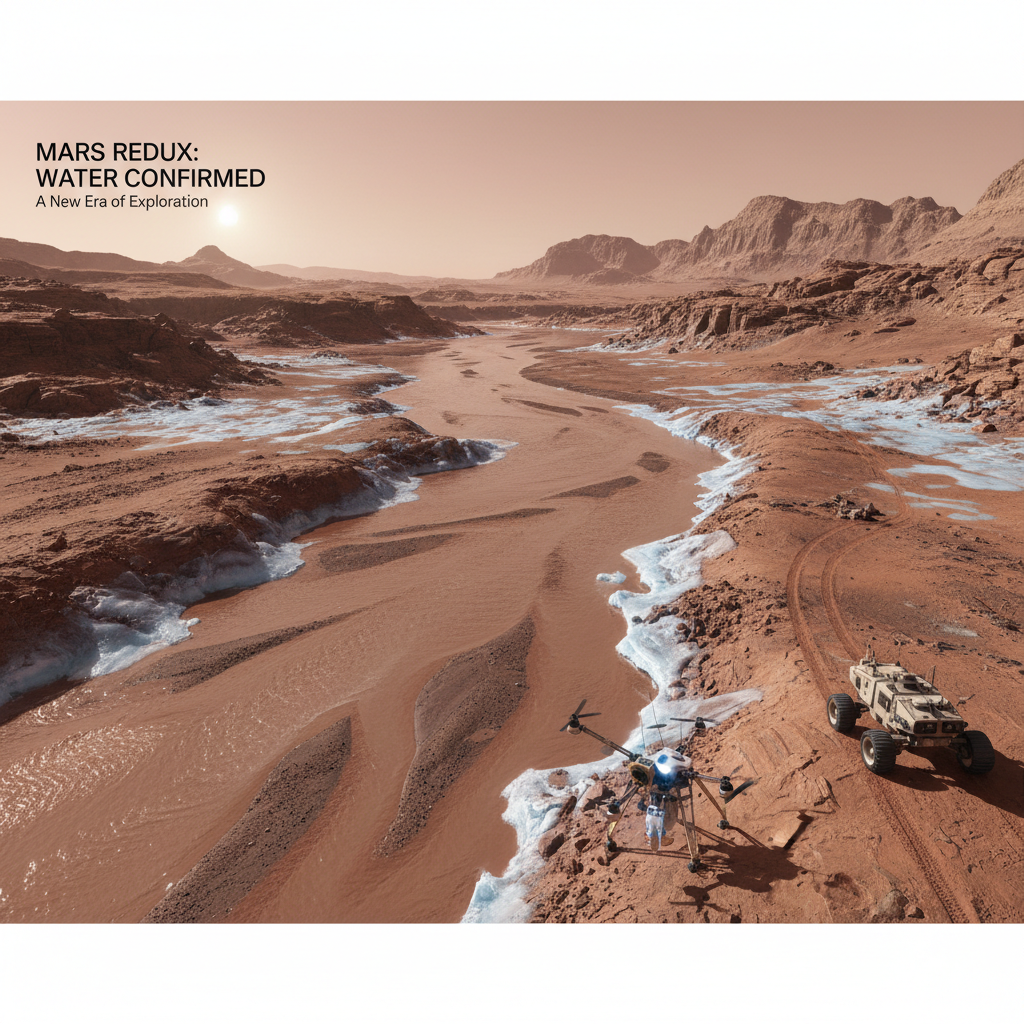
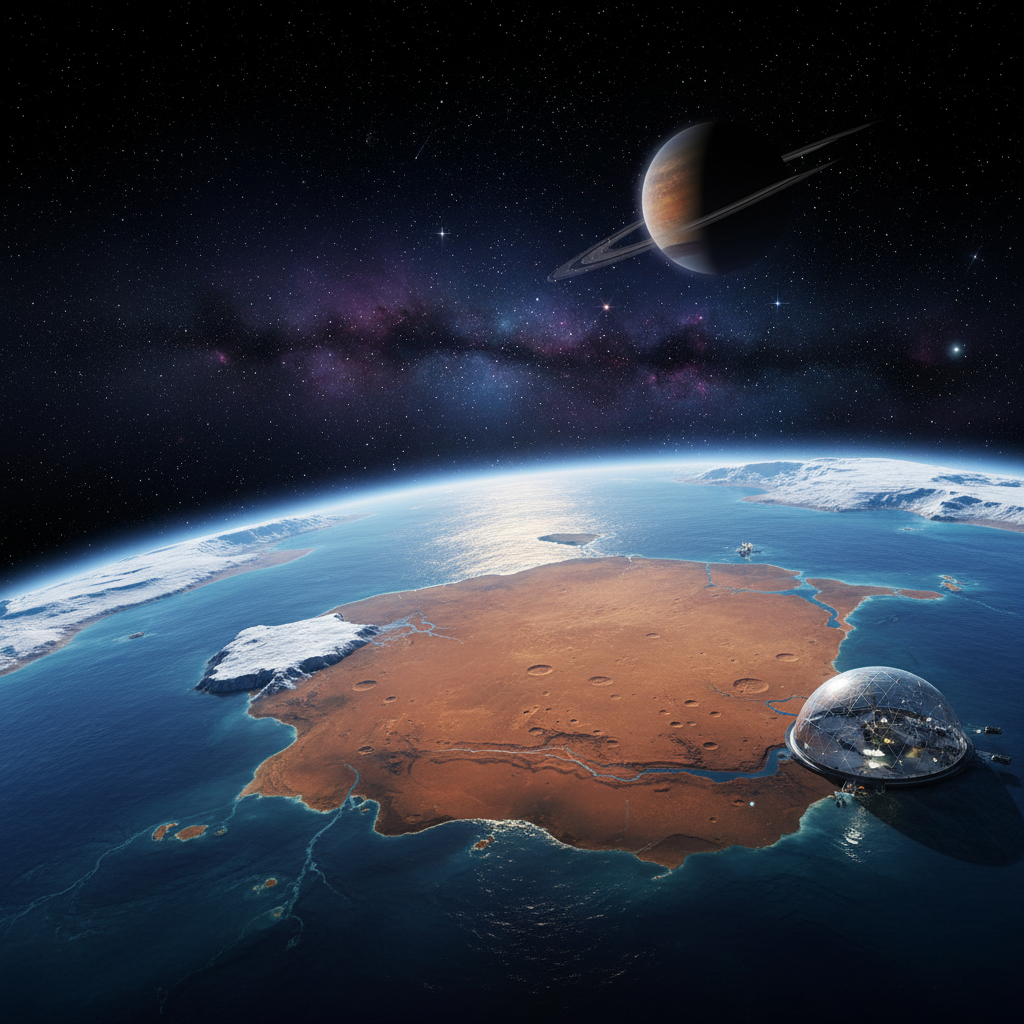
There’s something quietly poetic about this idea: a distant, rust-colored planet—cold, dry, and seemingly lifeless—may be helping to choreograph the deep freezes of our own world. It sounds like science fiction, but it’s grounded in real astrophysics.
Let’s break it down.
The Big Picture: Earth’s Climate Isn’t Acting Alone
Earth’s ice ages aren’t random. They follow long, predictable rhythms tied to how our planet moves through space. These patterns are known as orbital cycles, and they’ve been studied for over a century.
At the center of this understanding is Milutin Milankovitch
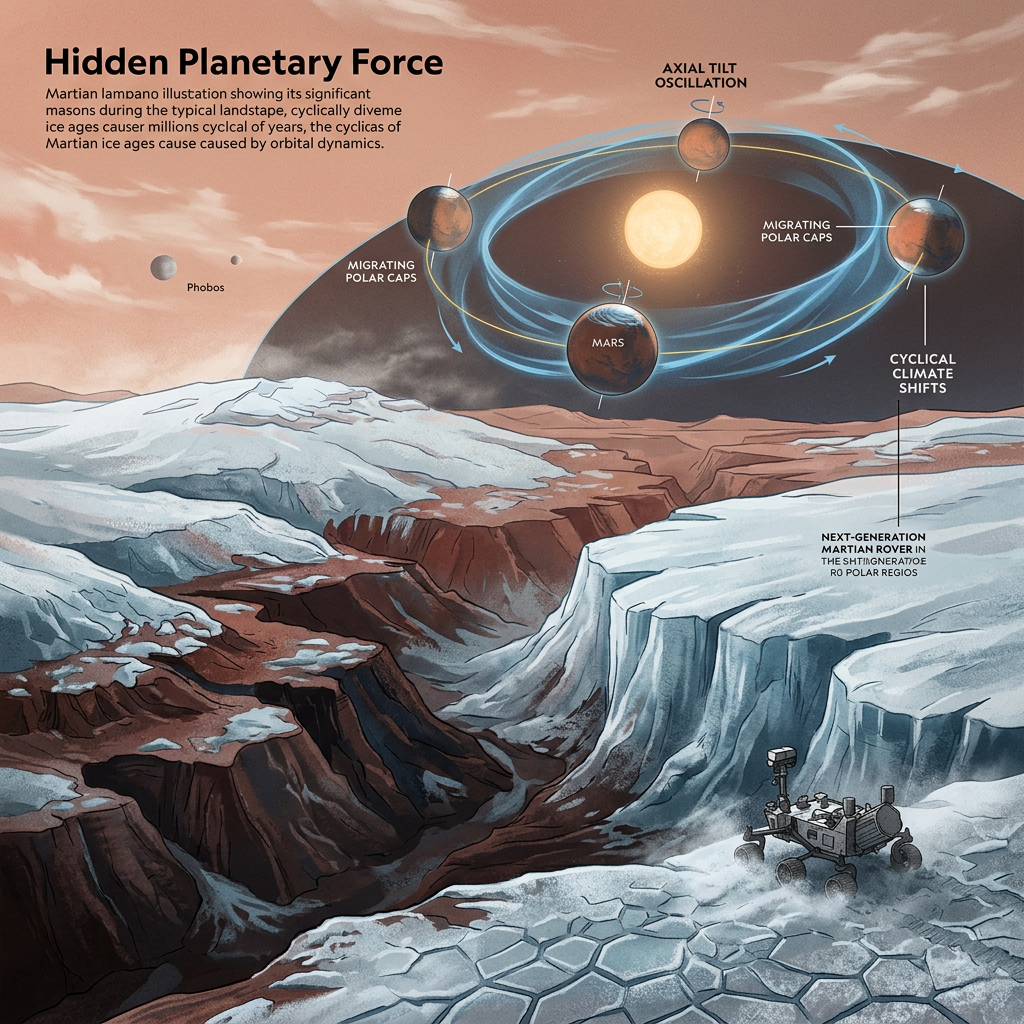
Milankovitch proposed that Earth’s climate is influenced by three key orbital variations:
→ Eccentricity (shape of Earth’s orbit) → Obliquity (tilt of Earth’s axis) → Precession (wobble of Earth’s axis)
These cycles determine how sunlight is distributed across the planet—and ultimately whether glaciers grow or retreat.
Where Mars Enters the Story
Mars isn’t just sitting quietly out there. It’s part of a gravitational dance with Earth and the rest of the solar system.
Even though Mars is smaller, its gravitational pull contributes to subtle but important shifts in Earth’s orbit over long periods of time.
Here’s how that influence plays out:
→ Mars interacts gravitationally with Earth and other planets, especially Jupiter, amplifying orbital variations → These interactions affect Earth’s eccentricity cycle, which operates on ~100,000-year timescales → Changes in eccentricity influence how much solar energy Earth receives during different seasons
In simple terms: Mars helps “tune” the rhythm of Earth’s climate cycles.
The 405,000-Year Pulse: A Cosmic Metronome
One of the most stable cycles in Earth’s climate history is the 405,000-year eccentricity cycle. Scientists often call it a “cosmic metronome” because of how consistent it is.
Research published in journals like Proceedings of the National Academy of Sciences has shown that this cycle is strongly influenced by gravitational interactions between planets—including Mars.
A key contributor to this research is Paul Olsen
Olsen and his team used ancient rock layers to track these cycles, finding that:
→ The 405,000-year cycle has remained stable for hundreds of millions of years → It is linked to gravitational interactions between Earth, Mars, and other planets → This cycle plays a role in long-term climate patterns, including ice age timing Why This Matters for Ice Ages
Ice ages don’t just depend on cold temperatures—they depend on how sunlight is distributed, especially in the Northern Hemisphere.
Mars influences this indirectly by affecting Earth’s orbit:
→ Slight changes in orbit alter summer temperatures → Cooler summers allow snow and ice to persist → Over thousands of years, this builds massive ice sheets
This aligns with the work of scientists like James Hansen who has emphasized how sensitive Earth’s climate system is to even small shifts in energy balance.
The Chain Reaction: Small Pull, Massive Consequences
Think of it like this:
→ Mars exerts a small gravitational nudge → That nudge subtly reshapes Earth’s orbit → The orbit changes how sunlight hits Earth → The sunlight distribution determines whether ice grows or melts
A tiny cosmic interaction… leading to mile-thick glaciers.
A System Bigger Than Earth
What this really reveals is something humbling:
Earth’s climate isn’t just an Earth problem.
It’s a solar system phenomenon.
We are part of a gravitational web where:
→ Planets influence each other across millions of miles → Climate cycles are written in orbital mechanics → Ice ages are not just geological—they’re astronomical Final Thought: The Quiet Power of Distance
Mars doesn’t roar. It doesn’t collide with Earth. It doesn’t even come particularly close most of the time.
And yet… it matters.
It tugs, ever so slightly, on the fabric of our orbit—just enough to help decide whether Earth becomes a frozen world or a temperate one.
That’s the kind of influence you don’t notice day to day. But over hundreds of thousands of years?
It reshapes the planet.