The ancient astronaut theory, also called the paleocontact hypothesis, is the idea that intelligent beings from beyond Earth visited the planet in the distant past and influenced human culture, religion, technology or even human biology. Its supporters read ancient myths, sacred texts and monuments as records of that contact, while mainstream archaeology holds that the same evidence is explained by human ingenuity and the religious imagery of the cultures that produced it.
Why does it matter? Because the question sits where some of the biggest stories about humanity meet: where our gods came from, how the first cities rose, and whether we are alone. The theory has shaped bestselling books, a long-running television series and a large share of online debate about the ancient world. Anyone who wants to evaluate it fairly needs to know three things: where the idea came from, which pieces of evidence its proponents rely on, and how scholars answer each one. This guide covers all three, and sets out where Billy Carson stands.
What is the ancient astronaut theory?
The ancient astronaut theory holds that ancient peoples encountered advanced visitors and remembered them as gods, and that some of this memory survives in myth, art and architecture. The claim comes in several strengths. The mildest version says contact is possible and worth investigating. A stronger version says specific texts, such as Sumerian cuneiform tablets or the Book of Enoch, describe real visitors. The strongest version says those visitors built monuments or altered human DNA.
It helps to separate the hypothesis from the evidence offered for it. The hypothesis itself is not absurd: if technological civilisations exist elsewhere, a visit at some point in Earth's long history cannot be ruled out in principle. The debate is about whether any particular artefact, text or site actually shows it. That distinction runs through everything below, and it is the reason the topic continues to attract both serious readers and serious critics.
Where did the ancient astronaut theory come from?
The idea grew out of twentieth-century writers who collected anomalies and asked whether they pointed beyond Earth. The American writer Charles Fort, in The Book of the Damned (1919), gathered reports that science of his day had set aside and hinted that Earth might be visited or even "owned" by outside intelligences. British author Harold T. Wilkins wrote about lost civilisations and strange sightings in the following decades, and Morris K. Jessup's The Case for the UFO (1955) tied flying saucers to ancient mysteries.
In the late 1950s and 1960s the idea spread in Europe. The Soviet mathematician and astronomer Matest Agrest proposed that the great stone platform at Baalbek in Lebanon might have served visitors from space. In France, Robert Charroux published a book in 1963 arguing for ancient visitors, and in Italy Peter Kolosimo wrote popular works on similar themes.
The idea also received a serious hearing from science. In Intelligent Life in the Universe (1966), Carl Sagan and Iosif Shklovskii treated paleocontact as a possibility worth considering, and Sagan discussed legends such as the Babylonian account of Oannes, the fish-like being who brought civilisation, as the kind of story that could be examined. They were clear that nothing they discussed proved contact.
How did Erich von Däniken and Zecharia Sitchin popularise it?
Erich von Däniken turned the theory into a mass phenomenon. His Chariots of the Gods? (1968) argued that sites and images across the world, from Peru to Egypt, recorded visits by astronauts, and his books have reportedly sold more than 70 million copies. Von Däniken's style was to pose questions rather than prove answers, which made the books easy to read and hard to pin down.
Zecharia Sitchin took a different route. In The 12th Planet (1976) he offered his own readings of Sumerian and Akkadian texts, arguing that the Anunnaki were beings from a distant planet he called Nibiru who came to Earth and shaped humanity. Sitchin's interpretations are rejected by Assyriologists, who read the Anunnaki as a group of Mesopotamian deities, but his books became the foundation for much of the modern conversation. The texts and the translations are compared in detail in [who were the Anunnaki](/who-were-the-anunnaki-sumerian-texts-vs-ancient-astronaut-theory), and the planet question is covered in [Nibiru and Planet X explained](/nibiru-and-planet-x-explained-sitchin-the-tablets-and-the-astronomy).
The same year, Robert Temple's The Sirius Mystery (1976) argued that the Dogon people of Mali held knowledge of Sirius B, a white dwarf invisible to the naked eye, and that it came from visitors from the Sirius system. From 2009 onward, the History Channel's Ancient Aliens, featuring Giorgio Tsoukalos, brought these arguments to a television audience of millions.
What evidence do ancient astronaut theorists cite?
Proponents point to a recurring set of artefacts and sites, and archaeologists have offered an explanation for each. Presenting both side by side is the fairest way to judge them.
Nazca lines, Peru
The giant figures and straight lines drawn on the Nazca desert are said to be runways or signals meant to be seen from the air. The German mathematician Maria Reiche, who studied and protected the lines for decades, and later researchers show they were made by clearing surface stones to expose lighter ground. Many are walkable paths linked to ritual, and many can be seen from the surrounding hills.
Pakal's sarcophagus lid, Palenque
Von Däniken read the carved lid of the Maya king K'inich Janaab' Pakal as a man at the controls of a rocket. Mayanists read it through Maya cosmology: Pakal at the base of the World Tree, poised between the world of the living and Xibalba, the underworld, at the moment of death and rebirth.
The Dendera "light bulb"
Reliefs in the Hathor temple at Dendera show an elongated form enclosing a snake, which some read as an electric lamp. Egyptologists identify it as a lotus flower producing a snake, part of the imagery of the birth of the god Harsomtus.
The Abydos "helicopter"
A carving in the temple of Seti I at Abydos appears to show a helicopter and other craft. Egyptologists explain it as a palimpsest: the original hieroglyphs were filled with plaster and recarved with a later royal title, and when the plaster fell away the overlapping signs produced the shapes.
Puma Punku, Bolivia
The precisely cut andesite and sandstone blocks at Puma Punku, including the famous H-blocks, are cited as too precise for ancient hands. Archaeologists attribute them to Tiwanaku masons who used standardised, modular designs, and see the repeated shapes as a sign of organised human workshops. The debate over megalithic engineering at Giza follows similar lines, as discussed in [how the Great Pyramid of Giza was built](/how-was-the-great-pyramid-of-giza-built-evidence-theories-and-open-questions).
Other frequently cited objects
The Saqqara bird, a small wooden model found in Egypt, is presented as a glider; most Egyptologists see a bird figure. The so-called Baghdad battery, a clay jar holding a copper cylinder and an iron rod, is presented as an ancient power cell; archaeologists generally consider it a storage vessel. The Piri Reis map of 1513 is said to show an ice-free Antarctica; historians of cartography read its southern coastline as a distorted South America.
The Dogon and Sirius B
Temple's case rested on earlier fieldwork among the Dogon. When the anthropologist Walter van Beek led a restudy published in 1991, his team found no Dogon tradition describing Sirius as a double star, which undercut the central claim.
What do critics say about the ancient astronaut theory?
Critics argue that the evidence does not hold up and that the theory rests on a troubling assumption. Ronald Story's The Space-Gods Revealed (1976), with a foreword by Carl Sagan, went through von Däniken's claims one by one. Sagan himself, despite his early openness to the hypothesis, became a sharp critic of von Däniken's use of evidence. The archaeologist Kenneth Feder, in Frauds, Myths, and Mysteries, uses ancient astronaut claims as a case study in how archaeological reasoning works and where popular writing goes wrong.
The methodological complaint is that the theory often argues from gaps: if we cannot yet explain how something was made, it is taken as a sign of outside help. The ethical complaint is sharper. Many of the showcase sites, from Nazca and Palenque to Puma Punku and Egypt, were built by non-European peoples, and crediting them to visitors can strip those cultures of their own achievements. Scholars also point out that the societies involved left extensive records of their tools, quarries and beliefs.
Supporters answer that mainstream explanations are sometimes incomplete, that sacred texts deserve to be read closely on their own terms, and that dismissing the question outright is itself unscientific. Both sides agree on one point: specific claims should be tested against specific evidence.
Billy Carson's reading
Billy Carson argues that the ancient astronaut question is best approached through the texts themselves. In his view, Sumerian accounts of the Anunnaki and the Enochian literature, including the Book of Enoch's story of the Watchers who descended and taught humanity forbidden arts, describe real beings and real technology rather than purely symbolic gods. Carson's position is that the "gods" of these traditions were flesh-and-blood visitors, and that later cultures mythologised what earlier ones recorded more literally.
That is his interpretation, and it is one that mainstream Assyriology and biblical scholarship do not share. Scholars read the Anunnaki as deities within Mesopotamian religion and the Watchers as part of Second Temple Jewish theology concerned with the origin of evil. Carson acknowledges the archaeological explanations and argues that the textual record still leaves room for his reading. He has explored the question in long-form interviews with researchers across the field, including Jason Martell and Erich von Däniken himself. His conversation with Martell is available as a 4biddenknowledge Podcast episode on ancient astronauts and modern discoveries, and his wider case is developed in the 4BK TV series [Anunnaki: Ancient Secrets Revealed](/watch/anunnaki-ancient-secrets-revealed).
How should readers evaluate ancient astronaut claims?
The most useful approach is to take each claim on its own and ask what the primary source actually says. For a text, that means checking a scholarly translation rather than a paraphrase. For an artefact, it means asking where it was found, how it was dated and what the culture that made it said about it. For a site, it means looking at the quarries, tool marks and construction evidence that archaeologists have documented.
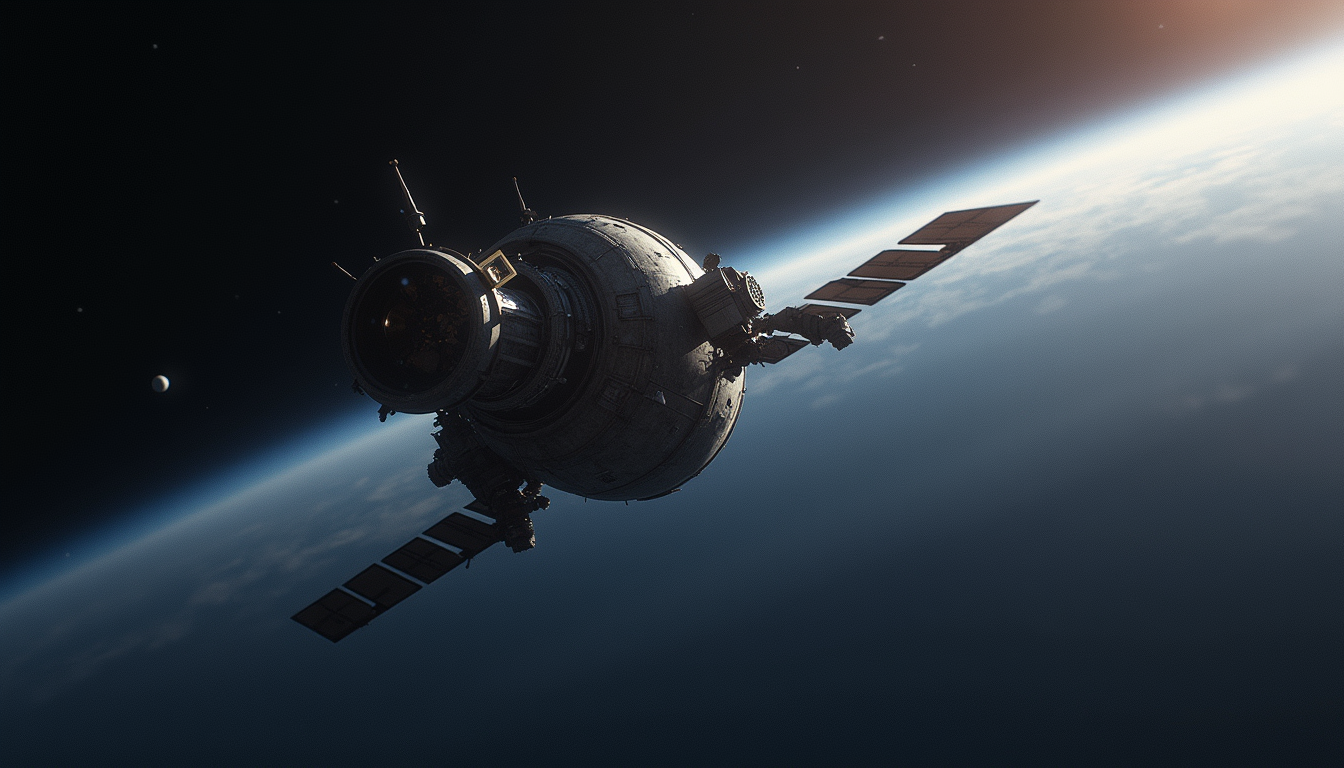
Readers can hold two things at once: the broader question of whether Earth was ever visited is open in principle, and most of the specific evidence offered so far has a well-supported human explanation. Modern cases work the same way. The [Black Knight satellite](/black-knight-satellite-explained) story, for example, shows how an intriguing image can become a legend when its documented origin is left out.
Watch, read and go deeper
For Billy Carson's own case, start with the 4BK TV series [Anunnaki: Ancient Secrets Revealed](/watch/anunnaki-ancient-secrets-revealed), then listen to his conversation with Jason Martell on the 4biddenknowledge Podcast. To see how the Sumerian sources and Sitchin's readings compare, read [who were the Anunnaki](/who-were-the-anunnaki-sumerian-texts-vs-ancient-astronaut-theory). The [Anunnaki topic hub](/topics/anunnaki) gathers every article, episode and reading guide on Mesopotamia and the ancient astronaut debate in one place.
Frequently asked questions
Who started the ancient astronaut theory?
No single person started it. Charles Fort hinted at outside intelligences in 1919, and writers such as Morris K. Jessup, Robert Charroux and Matest Agrest developed the idea in the 1950s and 1960s. Erich von Däniken's Chariots of the Gods? (1968) made it a worldwide phenomenon.
Is the ancient astronaut theory accepted by scientists?
No. Mainstream archaeologists and historians do not accept it, because the specific artefacts and sites cited have documented human explanations. Some scientists, including Carl Sagan in the 1960s, have said that contact in the past is possible in principle but unproven.
What is the difference between ancient astronaut theory and the Anunnaki theory?
Ancient astronaut theory is the general idea that visitors influenced early humans anywhere in the world. The Anunnaki theory is a specific version, popularised by Zecharia Sitchin, which claims the Mesopotamian Anunnaki were beings from another planet. Assyriologists read the Anunnaki as a group of gods in Sumerian and Akkadian religion.
Did the Dogon really know about Sirius B?
The claim comes from Robert Temple's The Sirius Mystery (1976), built on earlier French fieldwork. A 1991 restudy led by anthropologist Walter van Beek found no Dogon tradition of Sirius as a double star. Most researchers now regard the claim as unsupported.
What does Billy Carson believe about ancient astronauts?
Billy Carson argues that Sumerian and Enochian texts describe real beings and technology, and that the ancient "gods" were flesh-and-blood visitors. He presents this as his interpretation of the texts, alongside the archaeological explanations, and discusses it in 4BK TV series and podcast interviews.
Sources and further reading
- Carl Sagan and Iosif Shklovskii, Intelligent Life in the Universe (1966)
- Erich von Däniken, Chariots of the Gods? (1968)
- Zecharia Sitchin, The 12th Planet (1976)
- Robert Temple, The Sirius Mystery (1976)
- Ronald Story, The Space-Gods Revealed (1976)
- Walter E. A. van Beek, "Dogon Restudied: A Field Evaluation of the Work of Marcel Griaule," Current Anthropology (1991)
- Kenneth L. Feder, Frauds, Myths, and Mysteries: Science and Pseudoscience in Archaeology