Bob Lazar is an American businessman who, since 1989, has said he worked at a hidden site called "S-4" near Area 51 in Nevada, helping to reverse-engineer nine flying saucers he believes are extraterrestrial. Area 51 itself is a real Air Force facility at Groom Lake, Nevada, where the CIA tested the U-2 spy plane from 1955. Some parts of Lazar's background can be checked against records, but no physical evidence has been made public for S-4, the craft or the element 115 fuel he describes.
The story matters because it shaped how a generation imagines Area 51. Before 1989 the base was known mostly to aviation watchers and Cold War historians. After Lazar's interviews it became shorthand for crashed saucers and secret alien research, and the claims came back in 2019 with a documentary, a three-hour podcast appearance and an internet event that drew crowds to the Nevada desert. Sorting out what has been documented from what rests on one man's account is the only way to talk about the case honestly, whichever way a reader leans.
Watch the video
What is Area 51, and what has the government acknowledged?
Area 51 is a highly classified flight-test facility beside Groom Lake, a dry lakebed about 83 miles north-northwest of Las Vegas, inside what is now the Nevada Test and Training Range. In 1955 CIA project director Richard M. Bissell Jr. chose the site as a remote place to test Lockheed's U-2 reconnaissance aircraft, and the first U-2 arrived that July.
Later programmes followed. The A-12 OXCART, the CIA's high-speed reconnaissance aircraft and forerunner of the SR-71 Blackbird, began testing there in 1962. Lockheed's Have Blue stealth demonstrator first flew in December 1977, and the F-117 Nighthawk was tested at the base from the early 1980s.
The best-known official document is a CIA history written in 1992 by Gregory W. Pedlow and Donald E. Welzenbach, The Central Intelligence Agency and Overhead Reconnaissance: The U-2 and OXCART Programs, 1954–1974. A less-redacted version was released on 25 June 2013 in response to a Freedom of Information Act request filed by Jeffrey T. Richelson of the National Security Archive at George Washington University. Many news reports called this the first time the government admitted Area 51 existed. That was not quite right: it was the first official acknowledgement of specific activity at the site, naming it as the U-2 test location.
The same CIA history offers one documented link between Area 51 and UFO reports. It states that U-2 and later OXCART flights accounted for more than half of all UFO reports during the late 1950s and most of the 1960s, because observers on the ground did not believe any aircraft could fly that high. Project Blue Book, the Air Force's UFO investigation, checked U-2 flight records to explain many sightings it received. For an earlier case that set the pattern of secret programmes and saucer stories, see Roswell and Project Mogul.
Who is Bob Lazar and what does he say happened at S-4?
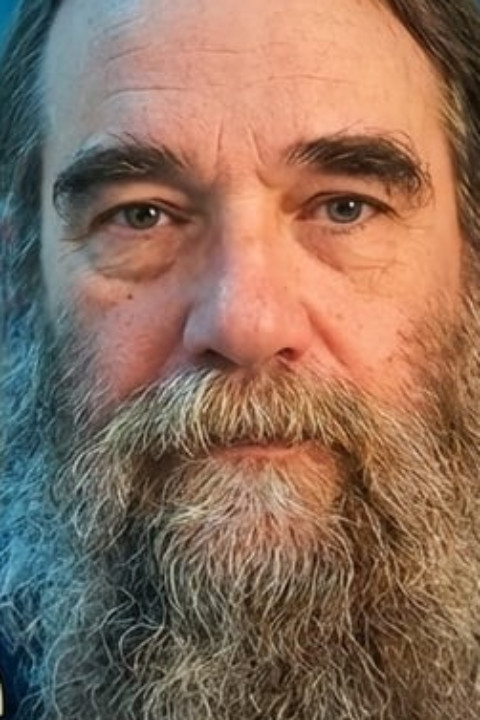
Bob Lazar is an American businessman, the owner of United Nuclear Scientific Equipment and Supplies, who first told his story on Las Vegas television in 1989. In May of that year investigative reporter George Knapp of KLAS-TV interviewed him with his face hidden under the pseudonym "Dennis". In a follow-up interview that November he appeared on camera under his own name.
According to Lazar, he worked in the late 1980s at a facility he calls S-4, which he places near Papoose Lake, a dry lakebed south of Groom Lake. His claims, as he has told them, include the following:
- He was hired to help reverse-engineer one of nine flying saucers kept in hangars built into the side of the Papoose Range.
- One craft, which he named the "sport model", was made of a material he compared in look and feel to liquid titanium.
- The craft generated their own gravitational field and were powered by a reactor that used a stable isotope of element 115, an element that had not been produced in any laboratory at the time.
- He says his job interview was with the defence contractor EG&G and that his employer was the US Navy.
He has said that his employment and education records were erased. These are his claims. No hardware, photographs of the craft, pay records from S-4 or samples of the fuel have been made public, and EG&G has said it had no records of him.
What has been verified about Bob Lazar's background?
Two pieces of documentary evidence show that Lazar was connected to Los Alamos, New Mexico, in the early 1980s. The first is a Los Alamos Monitor article dated 27 June 1982 by journalist Terry England, headlined "LA man joins the jet set – at 200 miles an hour". It profiled Lazar's jet-powered car and described him as "a physicist at the Los Alamos Meson Physics Facility". The second is a 1982 Los Alamos laboratory phone directory listing "Lazar Robert", which George Knapp showed on air after Los Alamos officials initially said they had no record of him.
Supporters cite these documents as proof of real technical credentials, but later inquiries clarified what the job was. Researchers who looked into his position found he worked as a technician for an outside contractor, not as a physicist and not directly for the laboratory, which is why the lab itself holds no personnel file on him. In 2021, England said he had taken Lazar's description of himself at face value and had not checked his credentials.
Summed up, the verified record is narrow but real:
- Area 51 exists and has been officially linked to the U-2 and OXCART programmes.
- Lazar was publicly interviewed by George Knapp on KLAS-TV in May and November 1989.
- He was associated with the Los Alamos Meson Physics Facility around 1982, as shown by the Monitor article and the phone directory.
- Element 115 has since been synthesised and named.
What has not been verified?
The central claims of the story have not been independently confirmed. There is no public record that S-4 exists, that alien craft are or were kept there, or that Lazar worked there. The US Air Force has rejected his account of working at the Nellis range.
His education is the most examined gap. Lazar has said he holds master's degrees in physics from the Massachusetts Institute of Technology and in electronics from the California Institute of Technology. Neither university has any record of him. Nuclear physicist and veteran UFO researcher Stanton T. Friedman, who was open to the idea of alien visitation, looked into the claim and found that Lazar had attended Pierce Junior College in Los Angeles. Friedman noted that Lazar was at Pierce during the same period he said he was at MIT, more than 2,500 miles away. Lazar has said these records were removed; Friedman and the authors Donald R. Prothero and Timothy D. Callahan considered that explanation implausible.
None of this proves or disproves what Lazar says he saw. It does mean that, beyond the Los Alamos connection, the account depends on his own testimony.
Element 115: what the discovery does and does not show
Element 115 is real: it was first produced in 2003 by a collaboration between the Joint Institute for Nuclear Research in Dubna, Russia, and Lawrence Livermore National Laboratory in California. The team bombarded americium-243 with calcium-48 ions and detected a handful of atoms. The IUPAC/IUPAP Joint Working Party recognised the discovery in December 2015, and on 28 November 2016 the element was officially named moscovium (symbol Mc), after the Moscow region where the Dubna institute is located.
Supporters often point out that Lazar talked about element 115 in 1989, fourteen years before anyone made it. That is accurate as far as it goes, but element 115 was not an unknown idea in 1989: it was an empty slot on the periodic table that physicists had been predicting for decades, and the "island of stability" theory had already suggested that some superheavy elements might be longer-lived than their neighbours.
The bigger problem is stability. Lazar described a stable isotope that could serve as fuel. The isotopes made so far, moscovium-286 to moscovium-290, are extremely short-lived; the most stable, moscovium-290, has a half-life of about 0.65 seconds. Supporters argue that a heavier, more neutron-rich isotope sitting in the predicted island of stability could behave differently. Physicists do think some undiscovered isotopes may last longer, but no stable form of element 115 has been produced or detected. The 2003 discovery therefore confirms the element exists; it does not confirm the fuel Lazar described.
How the story returned in 2019
Lazar's story reached a new audience through three connected events. The first was the documentary Bob Lazar: Area 51 & Flying Saucers by filmmaker Jeremy Corbell, made with George Knapp and distributed by The Orchard. Dated 2018, it played festivals in 2019 and premiered on Netflix that year. It gives a sympathetic account of Lazar's claims.
The second was Lazar and Corbell's appearance on The Joe Rogan Experience, episode #1315, released on 20 June 2019. The third followed a week later: on 27 June 2019 Matty Roberts, a Californian who had watched that episode, created a joke Facebook event called "Storm Area 51, They Can't Stop All of Us", set for 20 September 2019. More than two million people responded online. The Air Force discouraged anyone from approaching the base, and in the end roughly 1,500 people attended festivals in the nearby towns of Rachel and Hiko, with about 150 going to the base gates.
Interest has continued through the congressional hearings on unidentified anomalous phenomena; the background is covered in the UAP hearings from 2017 to 2026.
Billy Carson's reading
Billy Carson treats Area 51 as an open question rather than a closed file. In his video "Mystery of Area 51: Are there really UFOs and Aliens?" (embedded above) he asks whether the base hides non-human craft, the same question that made Lazar famous. In his wider teaching on UAPs versus UFOs, Carson holds that crash-retrieval and reverse-engineering programmes are real. He points to the witnesses gathered by the 2001 Disclosure Project and argues that recovered vehicles were reverse-engineered into what he calls alien reproduction vehicles, built inside black-budget programmes.
That is his position, presented beside the records rather than in place of them. The documented history he draws on is real: the CIA did hide aircraft at Groom Lake for decades, and those aircraft did generate UFO reports. Where Carson sees grounds to take whistleblower testimony seriously, skeptics see a pattern of secret human aircraft explaining sightings. His treatment of classified aerospace work overlaps with the secret space program, real projects versus conspiracy claims, and readers can weigh Lazar's account against both his reading and the official findings above.
Watch, read and go deeper
For long-form discussion of Area 51, crash-retrieval stories and the history of government secrecy, watch Richard Dolan's UFO Chronicles on 4BK TV. Billy Carson's own take on the terminology and the disclosure testimony is on the podcast episode Billy Carson breaks down UAPs vs UFOs. For another case where thousands of witnesses and official explanations collide, read the Phoenix Lights of March 1997. To follow the older question of non-human contact behind all of this, start at the Anunnaki topic hub.
Frequently asked questions
Is Bob Lazar's story true?
Parts of his background are documented, including his link to Los Alamos in 1982 and his 1989 television interviews with George Knapp. His central claims, that S-4 exists and that he worked on nine alien craft there, have not been independently confirmed, and no physical evidence has been made public.
Did Bob Lazar predict element 115?
He talked about element 115 in 1989, and it was first synthesised in 2003 and named moscovium in 2016. However, the element had been predicted by physicists for decades, and every isotope made so far decays in under a second. No stable isotope of the kind he described as fuel has been found.
What is S-4 at Area 51?
S-4 is the name Bob Lazar gave to a facility he says is built into the mountains near Papoose Lake, south of Groom Lake. He says alien craft were stored and studied there. The US government has never acknowledged a facility by that name, and no independent record of it has been published.
When did the government admit Area 51 exists?
A CIA history of the U-2 and OXCART programmes, released in 2013 after a Freedom of Information Act request by the National Security Archive's Jeffrey Richelson, officially named Area 51 as the U-2 test site. It was the first official acknowledgement of specific activity there, though not the first time the site had been acknowledged at all. The document does not mention alien craft.
What did Bob Lazar say on Joe Rogan?
Lazar appeared with filmmaker Jeremy Corbell on The Joe Rogan Experience episode #1315, released on 20 June 2019, and repeated his account of working on alien craft at S-4. The episode prompted the "Storm Area 51" Facebook event created a week later, which led to festivals near the base that September.
Sources and further reading
- Gregory W. Pedlow and Donald E. Welzenbach, The Central Intelligence Agency and Overhead Reconnaissance: The U-2 and OXCART Programs, 1954–1974 (CIA History Staff, 1992; released 2013)
- Annie Jacobsen, Area 51: An Uncensored History of America's Top Secret Military Base (2011)
- Stanton T. Friedman, UFOs: Real or Imagined? A Scientific Investigation (2012)
- Donald R. Prothero and Timothy D. Callahan, UFOs, Chemtrails, and Aliens: What Science Says (2017)
- Yu. Ts. Oganessian et al., "Experiments on the synthesis of element 115 in the reaction 243Am(48Ca,xn)," Physical Review C 69 (2004)
- IUPAC, announcement of the names nihonium, moscovium, tennessine and oganesson (28 November 2016)
- Jeremy Corbell (director), Bob Lazar: Area 51 & Flying Saucers (The Orchard, 2018)
- George Knapp, KLAS-TV interviews with Bob Lazar (May and November 1989)