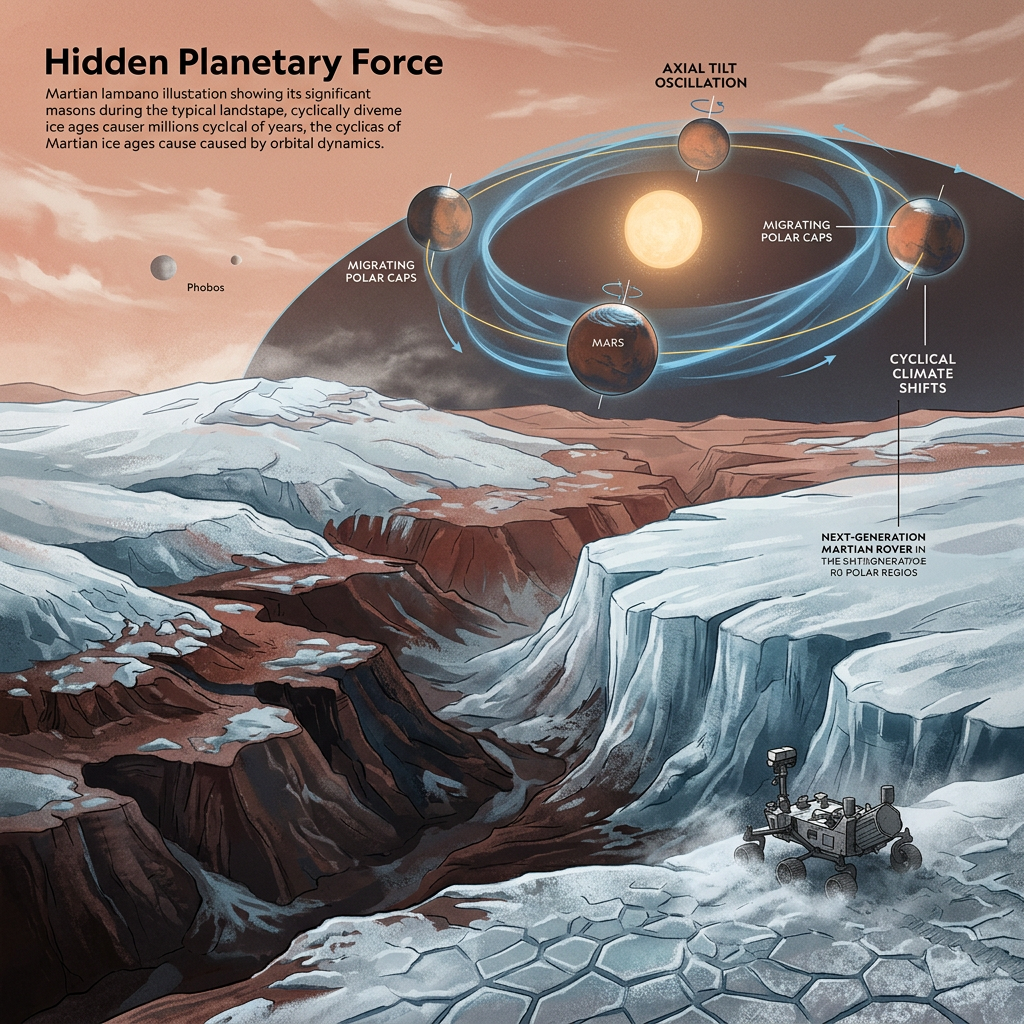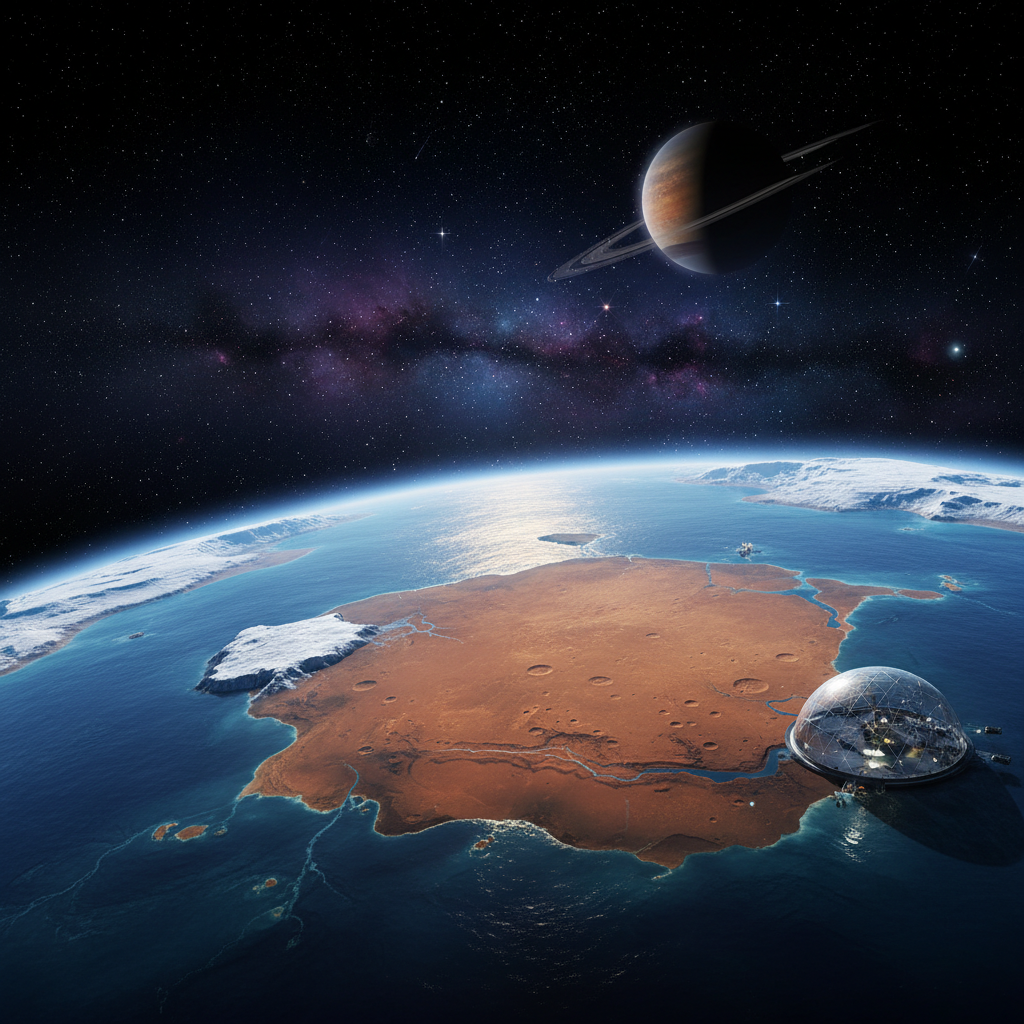
Mars wasn’t always the cold, dusty desert we picture today. Billions of years ago, it likely had rivers carving through valleys, lakes pooling in craters, and maybe even oceans stretching across its northern plains. The evidence is written all over its surface—like scars left behind by a life it no longer lives.
But here’s the unsettling part: When scientists try to account for all the water Mars once had… the math doesn’t add up.
Something is missing.
→ The Evidence: Mars Was Once Wet
Scientists didn’t just guess this. They’ve seen it.
Ancient river channels winding across the surface Delta formations in places like Jezero Crater (explored by NASA’s Perseverance rover) Minerals such as clays and sulfates that only form in the presence of water
According to planetary scientist Michael H. Carr, Mars likely had enough water to cover its entire surface in a global ocean hundreds of meters deep.
That’s not a damp planet. That’s a blue planet.
→ The Big Discrepancy: Where Did It All Go?
Here’s where things get strange.
Scientists expected Mars’ water to have disappeared in two main ways:
Atmospheric escape → water vapor broken apart, hydrogen drifting into space Freezing underground → trapped as ice beneath the surface
But recent studies—like those from NASA and researchers such as Bruce Jakosky—show that these explanations don’t fully account for the loss.
There’s a gap between how much water Mars had… and how much we can currently explain.
→ Up to 30–99% of Mars’ original water is unaccounted for, depending on the model used.
Let that sink in.
→ A New Theory: Water Locked in Stone
One of the most compelling ideas? Mars didn’t just lose its water—it absorbed it.
Water chemically bonded with minerals in the crust Became part of the rock itself Essentially “hidden” rather than lost
A 2021 study led by Eva Scheller suggests that a significant portion of Mars’ water may be trapped this way—locked into hydrated minerals.
→ Not gone. Just… buried in plain sight.
→ Why Mars Lost Its Grip on Water
Mars had one major disadvantage compared to Earth:
A weaker gravitational pull A thin atmosphere And most importantly… no long-lasting magnetic field
Without a magnetic shield, solar wind from the Sun slowly stripped Mars’ atmosphere away.
As NASA MAVEN Mission revealed, this process turned Mars from a potentially habitable world into the dry, exposed planet we see today.
→ No atmosphere = no pressure → No pressure = liquid water can’t survive
And just like that, rivers became memory.
→ Why This Mystery Still Matters
This isn’t just about Mars. It’s about us.
Understanding Mars’ missing water helps answer bigger questions:
Could Mars have supported life? Where should we search for ancient microbes? Could the same fate happen to Earth under extreme conditions?
As planetary scientist Bethany Ehlmann explains, Mars is a “natural laboratory” for studying planetary evolution—and possibly, planetary failure.
→ The Unfinished Story of a Dying Ocean
Mars isn’t just a dead planet. It’s a puzzle still missing pieces.
We can see the footprints of water. We can measure what should have existed. But we still can’t fully explain where it all went.
And maybe that’s what makes Mars so compelling.
It’s not just a world that lost its water— it’s a world that refuses to tell us how.