Ninhursag is the great mother and birth goddess of ancient Mesopotamia. Her Sumerian name means roughly "lady of the sacred mountain", from nin ("lady") and hursag, the rocky foothills east of the river plain. Over the centuries she absorbed several other birth goddesses, including Ninmah, Nintu, Aruru, Mami and the Akkadian Belet-ili, and she plays the leading role in three of the best-known myths about the making of life: Enki and Ninhursag, Enki and Ninmah, and the Babylonian Atrahasis epic.
She matters because modern talk of the Anunnaki "creating" humans runs through her. When writers say a goddess shaped the first people from clay and divine blood, or that a rib-goddess hides behind the story of Eve, they are talking about Ninhursag and her other names. Knowing what the tablets actually say, and where later readings depart from them, is the only way to judge those claims fairly.
What does the name Ninhursag mean?
The name Ninhursag means "lady of the hursag", the stony upland at the edge of the Mesopotamian plain, usually rendered "lady of the sacred mountain" or "lady of the foothills". The Sumerian poem known as Lugal-e, or Ninurta's Exploits, gives a mythic origin for it. After defeating his enemies in the mountains, the warrior god Ninurta piles up stones into a great heap and dedicates it to his mother, who until then had been called Ninmah. In the Oxford translation the heap is named Mountain (hursaj), she is to be its lady (nin), and "henceforth people shall speak of Ninhursaja."
The story explains the name rather than recording an event, but it shows how Sumerians saw her: a mother goddess tied to the wild uplands and their animals as well as to human birth.
Ninmah, Nintu, Aruru, Mami and Belet-ili: one goddess or several?
Ninhursag is best understood as the name under which several once-separate birth goddesses were merged. Ninmah means "great lady" or "exalted lady", Nintu (also Nintur) means "lady of birth", and Mami or Mama is a nursery word for "mother". Aruru appears as a creator of humans in Babylonian literature, Damgalnuna is another name linked to her, and in Akkadian she is Belet-ili, "lady of the gods". The great Babylonian god list An = Anum groups Ninhursag, Ninmah, Aruru and Nintur together, which shows that ancient scholars already treated them as aspects of one figure.
That merging explains why the same goddess turns up under different names in the myths below. It also explains why her family ties shift. At Lagash she is the wife of Enlil and the mother of Ningirsu, the city's warrior god who was later equated with Ninurta. Later traditions make her Enlil's elder sister instead, and in Enki and Ninmah Enki addresses her as "my sister". The well-attested consort in many cult texts is a minor god, Shulpae. Different cities and periods arranged the divine family to suit their own temples.
She should not be confused with Inanna (Akkadian Ishtar), the separate goddess of love, war and the planet Venus. For how the two fit into the wider family of An, Enlil and Enki, see the guide to Sumerian gods and goddesses.
Where was Ninhursag worshipped, and what was her symbol?
Her main cult centres were Kesh and Adab, where her temple was called the E-mah, the "exalted house". She also had shrines at Lagash, Ur, Mari and other cities. At Ur, the early king Aanepada recorded that he built a temple "for his lady Ninhursag". At Lagash, rulers spoke of her as the goddess who nursed them, describing themselves as nourished with her holy milk.
Her symbol is a sign shaped roughly like the Greek letter omega. Some scholars read it as a stylised womb or uterus, which suits a birth goddess. Others, including Joan Goodnick Westenholz and Julia Asher-Greve, argue that it is more likely a schematic representation of a woman's hair. The question remains open.
In the third millennium BCE she stood in the top rank of the pantheon, listed with An, Enlil and Enki as one of the great gods. Some Assyriologists argue that her standing slipped in the Old Babylonian period, when she lost her place among the four supreme deities of the pantheon. Others point out that her cult did not disappear but continued under the name Belet-ili, the "lady of the gods" who presides over birth.
What happens in Enki and Ninhursag, the Dilmun myth?
Enki and Ninhursag is a Sumerian poem set in Dilmun, a land described as pure and untouched by sickness or old age, where the lion does not kill and the raven does not caw. Dilmun lacks only one thing, fresh water, and Enki, the god of the sweet waters, makes it rise from the ground so that the land becomes fertile. Archaeologists identify the historical Dilmun with Bahrain and the nearby coast of eastern Arabia, a trading hub for Mesopotamia from the third millennium BCE.
The poem then turns to a chain of births. Enki fathers a daughter, Ninsar, with Ninhursag (called Nintud in this part of the text). He then fathers Ninkurra with Ninsar, and Uttu, the weaver goddess, with Ninkurra. When Enki sleeps with Uttu, Ninhursag removes his seed from Uttu's body, and from it eight plants grow. Enki has his minister Isimud name each plant, eats them one by one and decrees their destinies.
Ninhursag's response is a curse: "Until his dying day, I will never look upon him with life-giving eye." Enki falls ill, the Anunna gods sit down in the dust, and a fox offers to fetch her back if Enlil will reward it. Enlil promises it two standards in his city and renown. Ninhursag returns and asks Enki where he hurts. For each of the eight painful parts she brings forth a healing deity:
- Ab-u, for the top of the head
- Ninsikila, for the hair
- Ningiriudu, for the nose
- Ninkasi, for the mouth
- Nazi, for the throat
- Azimua, for the arm
- Ninti, for the ribs
- Ensag, for the sides
She then assigns each a role. Ninsikila becomes lord of Magan, Ninkasi is "to satisfy the heart" (she is also the goddess of beer), Ninti becomes "lady of the month", and Ensag becomes lord of Dilmun.
The text is in the Electronic Text Corpus of Sumerian Literature (ETCSL 1.1.1), and its most famous reader was Samuel Noah Kramer. In Sumerian the sign ti means both "rib" and "to live", so Ninti could be heard as "lady of the rib" and "lady who makes live". Kramer suggested that this pun might lie far behind the Genesis story in which Eve, whose name Genesis links to life, is made from Adam's rib. It remains a suggestion: no line of transmission from the Sumerian poem to Genesis has been shown.
Enki and Ninmah: the contest of making humans
Enki and Ninmah is a second Sumerian poem (ETCSL 1.1.2) that opens with the gods worn out from digging canals. Enki, woken by his mother Namma, arranges for humans to be made to take over the toil, with Ninmah's help. At the celebration afterwards, both gods drink beer and Ninmah boasts that whether a human body turns out good or bad depends on her will. Enki answers that he will counterbalance whatever fate she decides.
Ninmah then shapes six people with impairments, and Enki finds a place for each. A man with weak hands becomes a servant of the king, a man with afflicted eyes is given the musical arts, and a woman who cannot give birth joins the queen's household. Then Enki makes his own creature, Umul, so frail that it cannot speak, sit, stand or eat. Ninmah cannot find any role for it and says that the being "is neither alive nor dead". The poem ends with Ninmah conceding that she "could not rival the great lord Enki".
Scholars commonly read the poem as an explanation of human difference: why some people are born with impairments, and how a well-ordered society finds a role for everyone. The relationship between the two gods in this poem is explored further in Enki and Enlil: the two brothers of Sumerian myth.
Ninhursag in the Atrahasis epic
In the Babylonian Atrahasis epic, the birth goddess, called Nintu, Mami and Belet-ili, makes the first humans. The oldest substantial copy is an Old Babylonian manuscript whose colophon dates it to the reign of Ammi-saduqa, the great-grandson of Hammurabi, in the 17th century BCE. W. G. Lambert and A. R. Millard published the reconstructed text in 1969, and Stephanie Dalley's Myths from Mesopotamia is the standard accessible translation.
The story begins with the lesser gods rebelling against their forced labour. At Enki's suggestion, a god is slain, and the birth goddess mixes clay with his flesh and blood; his name is read differently in different editions, which is why translations vary. The gods spit upon the clay. Mami then pinches off fourteen pieces, sets seven on one side and seven on the other with a brick between them, and the womb goddesses bring forth seven human pairs. In recognition, the gods give her the name Belet-kala-ili, "Mistress of all the gods".
The flood that follows is covered in the Atrahasis epic explained.
Where the ancient-astronaut reading comes from
The ancient-astronaut reading of Ninhursag comes from Zecharia Sitchin. In The 12th Planet (1976) and later in The Lost Book of Enki (2002), Sitchin recast her, under the spellings "Ninharsag" and "Ninti", as the chief medical officer of the Anunnaki. In his account she and Enki engineered the first worker-humans, whom he calls the "Adamu" by combining Anunnaki and hominid material.
Assyriologists reject this reading. The myths describe divine making in the language of pottery, birth and ritual, not laboratories, and Sitchin's renderings of key terms do not match the editions specialists use. The context for that debate, and Sitchin's other claims, is set out in who was Zecharia Sitchin. For the long history of mother goddesses across cultures, see the earlier piece on goddess mythology throughout the ages.
Billy Carson's reading
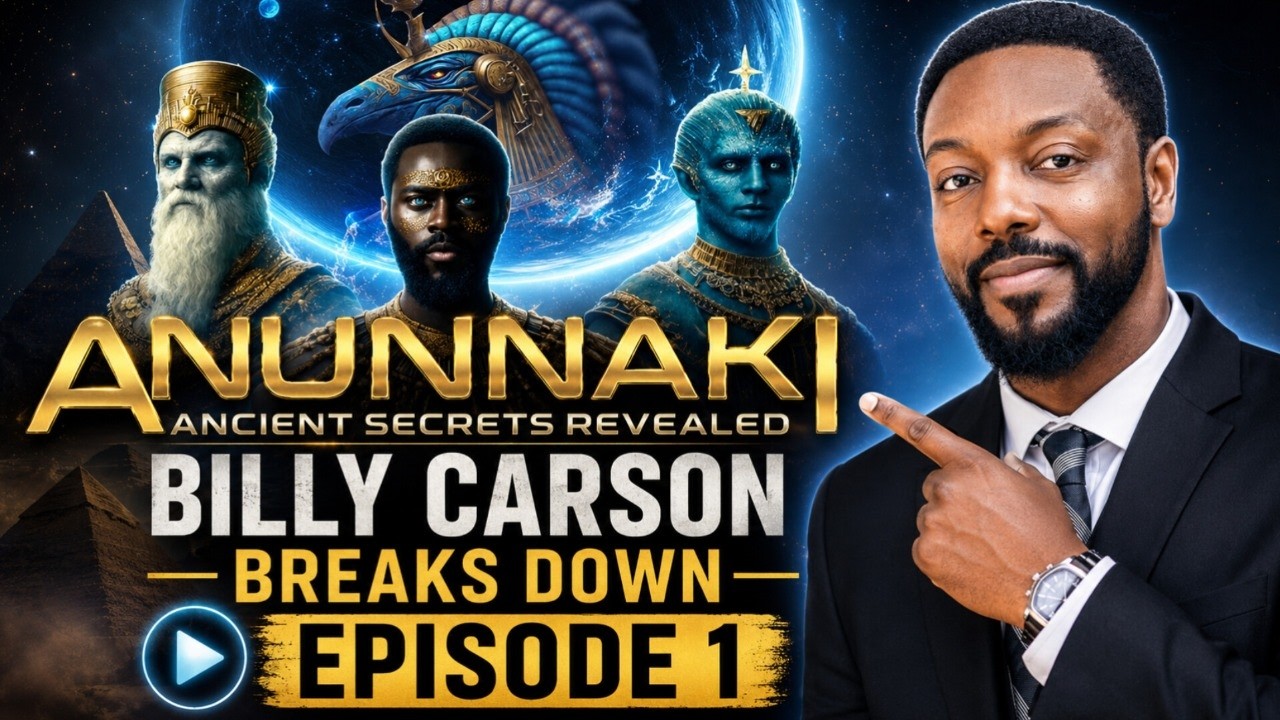
Billy Carson reads the creation of humanity as the work of the Anunnaki, and he places a sister of Enki and Enlil at the centre of it. In his podcast episode Anunnaki Created Adam & Eve? The REAL Garden of Eden Revealed (Season 10, Episode 88, 14 September 2026), he argues that Enlil built the Garden of Eden in Mesopotamia as an enclosed genetic laboratory, and that Adam was produced there through cloning and gene-splicing carried out by the sister of Enki and Enlil, whom Sitchin identifies as Ninhursag. In Carson's account Adam was carried to term by a human surrogate, and Eve was later made from Adam's cloned DNA.
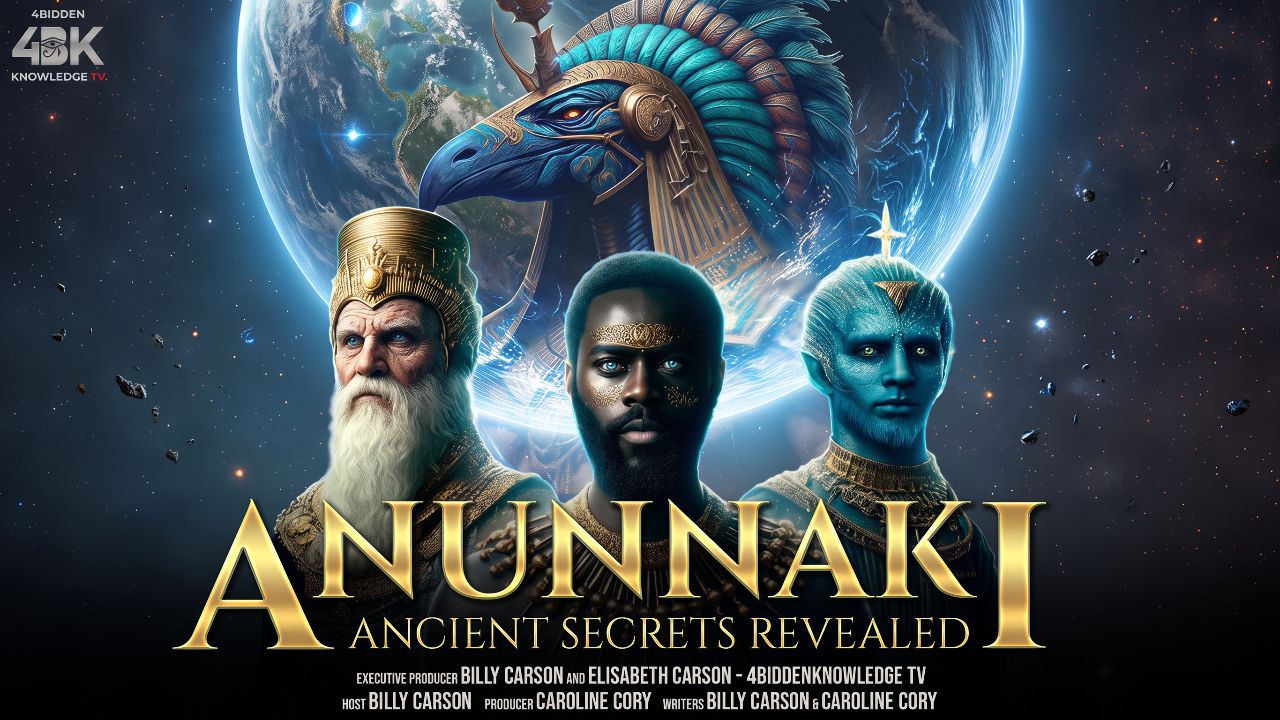
These are Billy Carson's interpretations, built on Sitchin's framework. The Sumerian and Babylonian texts themselves describe a goddess shaping humans from clay and divine blood, healing Enki through childbirth, and competing with him in a drinking-party contest. They do not describe cloning, gene-splicing or surrogacy, and mainstream scholars read them as myth. Carson's wider argument about the Anunnaki, from their arrival to their rule on Earth, runs through his series Anunnaki: Ancient Secrets Revealed.
Watch, read and go deeper
For Billy Carson's full argument, listen to the podcast episode on the Anunnaki and Adam and Eve. The 4BK TV series Anunnaki: Ancient Secrets Revealed gives the wider frame. To read the primary texts, the ETCSL translations of Enki and Ninhursag, Enki and Ninmah and Lugal-e are free online, and Dalley's Myths from Mesopotamia covers Atrahasis. The Anunnaki topic hub gathers every article on the site about the Sumerian gods, the flood and the creation stories.
Frequently asked questions
Who is Ninhursag in Sumerian mythology?
Ninhursag is the Sumerian mother and birth goddess, whose name means "lady of the sacred mountain" or "lady of the foothills". She was worshipped at Kesh, Adab and other cities, and she merged with other birth goddesses such as Ninmah, Nintu, Mami and Belet-ili. In early god lists she ranks alongside An, Enlil and Enki.
Is Ninhursag the sister of Enki and Enlil?
It depends on the text. At Lagash she is Enlil's wife and the mother of Ningirsu, later traditions make her Enlil's elder sister, and in Enki and Ninmah Enki calls her "my sister". In Enki and Ninhursag she is Enki's partner and the mother of his first daughter. Sitchin's family tree, which Billy Carson draws on, makes her the sister of Enki and Enlil.
Did Ninhursag create humans?
In the myths, yes, in her various names. In Atrahasis the birth goddess Nintu or Mami mixes clay with a slain god's flesh and blood and, with the womb goddesses, brings forth seven human pairs. In Enki and Ninmah she shapes humans in a contest with Enki. These are creation myths; the claim that they record genetic engineering comes from Sitchin and later ancient-astronaut writers, not from the texts.
Is Ninti the origin of Eve?
Samuel Noah Kramer suggested that the Sumerian pun on ti, meaning both "rib" and "life", might lie behind the story of Eve being made from Adam's rib. It is a suggestion, not a proven derivation, and no direct line of transmission from Enki and Ninhursag to Genesis has been demonstrated.
Where was Dilmun?
Dilmun was a real place as well as a mythic one. Archaeologists identify it with Bahrain and the nearby Gulf coast of eastern Arabia, which traded copper and other goods with Mesopotamia from the third millennium BCE. In the myth it is a pure land that lacks only fresh water until Enki provides it.
Sources and further reading
- The Electronic Text Corpus of Sumerian Literature (ETCSL), University of Oxford: "Enki and Ninhursaja" (1.1.1), "Enki and Ninmah" (1.1.2) and "Ninurta's exploits" (Lugal-e, 1.6.2)
- Jeremy Black and Anthony Green, Gods, Demons and Symbols of Ancient Mesopotamia (British Museum Press, 1992)
- W. G. Lambert and A. R. Millard, Atra-hasis: The Babylonian Story of the Flood (Oxford, 1969)
- Stephanie Dalley, Myths from Mesopotamia: Creation, the Flood, Gilgamesh, and Others (Oxford World's Classics)
- Samuel Noah Kramer, History Begins at Sumer (1956) and Sumerian Mythology (1944, revised 1961)
- Julia M. Asher-Greve and Joan Goodnick Westenholz, Goddesses in Context (2013)
- Zecharia Sitchin, The 12th Planet (1976) and The Lost Book of Enki (2002)