 Compendium of the Emerald Tablets —
 The me (Akkadian parṣu) are, in Sumerian thought, the divine decrees or divine powers that make civilised life work: the offices, institutions, rites, crafts, skills and even emotions and evils that the gods established as the order of the world. A god or city that held a me held the authority it conferred, which is why the best-known story about them, the Sumerian poem Inanna and Enki, is about a goddess taking the me from Eridu to Uruk on the Boat of Heaven.
The me matter because they are as close as Sumerian literature comes to a definition of civilisation. Kingship, priesthood, writing, metalworking, music, judgement, lamentation and war are all on the list. They also sit at the centre of a modern debate: because the me are handed over, loaded on a boat and carried down a river, ancient-astronaut writers ask whether they were knowledge or technology. This article sets out what the texts say, what Assyriologists make of them, and where Billy Carson's questions fit. For the wider context, start at the Anunnaki topic hub.
What are the me in Sumerian thought?
The me are the god-given norms and powers behind every institution and activity of Sumerian life. Translators render the word as "divine powers", "divine decrees", "offices" or "arts of civilisation", and none of these captures it alone, because a single me can be a title (the office of en priest), an object (the royal throne), a skill (the craft of the scribe), a ritual (holy purification rites) or a state of mind (attentiveness, reverent silence).
What unites them is that they were decreed by the gods and confer authority on whoever holds them, which is why the texts can describe them as things that are gathered, given, carried and installed. Samuel Noah Kramer, the American Sumerologist who did most to bring these poems to a general audience, discussed the me at length in The Sumerians (1963), and the standard study of the list is Gertrud Farber-Flügge's Der Mythos "Inanna und Enki" unter besonderer Berücksichtigung der Liste der me (Studia Pohl 10, 1973).
What the myth of Inanna and Enki actually says
Inanna and Enki is a Sumerian poem, catalogued as 1.3.1 in the Electronic Text Corpus of Sumerian Literature (ETCSL) at Oxford and known from Old Babylonian copies of the early second millennium BCE. Kramer, in Sumerian Mythology (1944), titled his treatment of it "the transfer of the arts of civilization from Eridu to Erech", Erech being the biblical name of Uruk. The tablets are damaged and long passages are missing, but the plot is clear.
Drinking in the Abzu
Inanna, the goddess of Uruk, decides to visit Enki in the Abzu, his temple at Eridu. Enki, "who knows the divine powers in heaven and earth", knows her plan before she arrives and tells his minister Isimud to receive her well. In the ETCSL translation she is given butter cake, cool refreshing water and beer "in front of the Lions Gate" and is welcomed "at the holy table, at the table of An". Enki and Inanna then drink together and begin a drinking competition from bronze vessels.
The drunken Enki starts handing over the me in batches. After each batch comes the same formula: "In the name of my power, in the name of my abzu, I will give them to holy Inana, my daughter." Inanna gathers the powers, embarks on the Boat of Heaven and sets out for Uruk.
The chase down the river
When the beer wears off, Enki looks around his temple and asks Isimud where the me are. For each item the answer is the same: "My master has given them to his daughter." Enki then sends Isimud after the boat with a series of agents to seize it at stopping points along the way: the enkum creatures, the fifty giants of Eridu, the fifty lahama of the subterranean waters, all the great fish, the guardians of Uruk, and others. The stops named in the surviving text include a quay, the UL.MA hill, the Field Hill and the Id-surungal.
Each time Isimud delivers Enki's order, Inanna answers that her father swore "by the name of his power and by the name of his abzu" and asks whether he spoke falsely. Each time she calls on her own minister, Ninshubur (spelled Nincubur in the ETCSL translation), and the boat and the me are recovered.
Arrival at Uruk
The boat reaches "the Gate of Joy" at Unug Kulaba, the Sumerian name for Uruk and its district Kulaba. Inanna announces a festival with sacrifices and music, the boat passes "magnificently along the street", and the me are installed in her city while a long passage lists everything she has brought. The ending is broken; fragments mention both Uruk and Eridu, but how the dispute is settled cannot be read with confidence.
What is on the list of me?
The list mixes offices, objects, crafts, rites, emotions and moral qualities without separating them. A selection from the ETCSL translation gives a sense of its range:
- Offices and rule: the office of en priest, divinity, the great and good crown, the royal throne, the noble sceptre, the staff and crook, shepherdship, kingship.
- The underworld and cult: going down to the underworld, coming up from the underworld, the kur-jara priest, holy purification rites, the hierodule of heaven, the holy tavern.
- War: the sword and club, the standard, the quiver, heroism, power, the plundering of cities.
- Crafts: the craft of the carpenter, the coppersmith, the scribe, the smith, the leather-worker, the fuller, the builder and the reed-worker.
- Mind and society: wisdom, attentiveness, respect, awe, reverent silence, counselling, judging, decision-making, the assembled family, descendants.
- Fire and labour: the kindling of fire, the extinguishing of fire, hard work.
- Emotions and evils: making lamentations, rejoicing, wickedness, deceit, deceitful speech, strife.
- Music and life stages: loud musical instruments, the art of song, venerable old age.
The full list is repeated several times in the poem. Kramer estimated that it originally held more than a hundred items, but because the tablets are damaged only a little over sixty can be read, so no exact total can be given.
The me in other Sumerian texts
Inanna and Enki is not the only text in which the me change hands. In Enki and the World Order (ETCSL 1.1.3), Enki says that his elder brother, "the king of all the lands", meaning Enlil, "gathered up all the divine powers and placed them in my hand". Enki then organises the world, assigning roles to cities, regions and gods. Near the end of that poem Inanna comes to him weeping, "lacking any functions", and complains that every other goddess has received a domain. The two poems share a theme, though nothing in the texts says that one continues the other.
The me should not be confused with the Tablet of Destinies. That is a single object, known from the Akkadian Anzu poem, in which the bird-monster Anzu steals it from Enlil, and from the Babylonian Enuma Elish, in which Tiamat gives it to Qingu and Marduk takes it from him. Its holder rules the gods; the me, by contrast, are many separate powers spread across the order of the world. For how these deities relate to one another, see the guide to the Sumerian gods and goddesses.
What scholars read in the story
Most Assyriologists read Inanna and Enki as a myth about the rise of Uruk and its goddess. Eridu was remembered as the oldest city in Sumer and the home of Enki's ancient cult; Uruk became the larger and more powerful centre. A story in which Uruk's goddess carries the arts of civilisation away from Eridu, with Enki's own oath protecting her, explains and celebrates that shift in prestige.
The poem is also a portrait of Inanna herself: ambitious, quick-witted and unafraid of older gods. The same character sets out to claim another realm in Inanna's Descent into the Underworld, and pays a price for it.
The contents of the list matter to the interpretation. Because the me include deceit, strife, wickedness, lamentation and the plundering of cities alongside kingship and crafts, scholars take them to be the whole order of the world as the gods decreed it, good and bad together, rather than a set of useful inventions. In this view civilisation, for the Sumerians, included its sorrows and crimes as well as its skills.
The ancient-astronaut reading of the Boat of Heaven
Writers in the ancient-astronaut tradition point out that the me in this poem behave like physical things. They are handed over in batches, loaded onto a vessel, chased by Enki's agents and unloaded in another city. On that basis some read the me as objects that stored knowledge or as technology of some kind, and the Boat of Heaven as a craft rather than a river barge.
Mainstream scholars reply that this is how Sumerian poetry routinely treats abstract powers. Offices and rights are described as things that can be given, taken or carried, much as English speakers "hand over power". The list itself is the strongest counter-argument: no device could contain "making lamentations", "deceit", "respect" or "venerable old age".
Billy Carson's reading
No Billy Carson video specifically on the me has been identified, so his position on them should not be overstated. His documented "technology" reading concerns a related but separate object, the Tablet of Destinies. In the live stream discussed in What Is Enlil's All-Seeing Eye?, Carson argues that the Tablets of Destinies held by Enlil were technology: crystal tablets with communication and display capability that, in his words, would have had the "capability of seeing images on the screen that let them see things happening on the planet". He compares them to a modern iPad or cell phone and argues that whoever held them commanded great power, which in his view is why they were stolen.
The cuneiform texts do not describe the Tablet of Destinies as crystal or as a screen, and that reading is Carson's interpretation. They also treat the Tablet of Destinies and the me as different things. Where the me are concerned, the question Carson's approach raises is the one this poem invites: whether "divine powers" that can be counted out, loaded onto a boat and fought over were knowledge, institutions or something more tangible. Assyriologists read that language as poetic metaphor for authority; Carson's wider work asks readers to consider whether ancient descriptions of the gods' tools were more literal.
Watch, read and go deeper
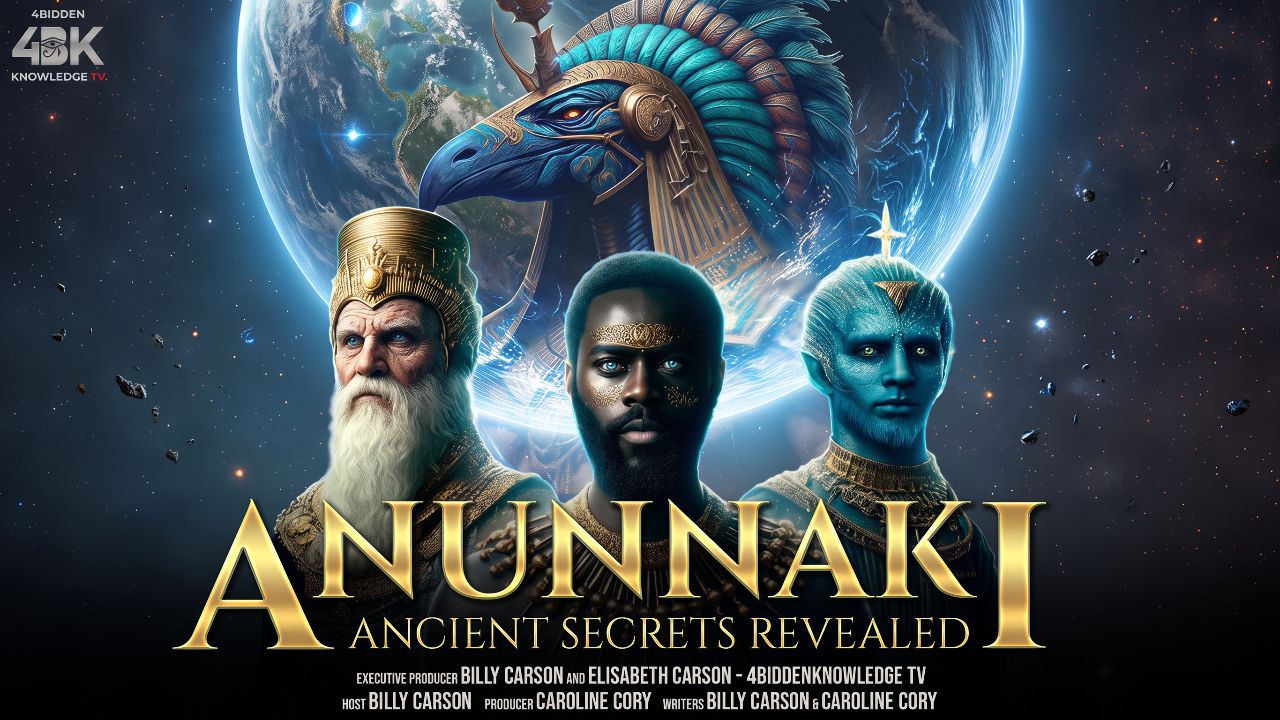
Billy Carson's case for reading the Sumerian gods as real beings with real technology is set out in the series Anunnaki Ancient Secrets Revealed on 4BK TV. His argument about the Tablet of Destinies is in the companion post on Enlil's all-seeing eye linked above, and the guides to Eridu, Inanna and Enki cover the cities and gods in this story. Everything else on Sumer is collected at the Anunnaki topic hub.
Frequently asked questions
What does "me" mean in Sumerian?
Me is the Sumerian word for the divine powers or decrees behind every institution of civilised life, from kingship and priesthood to crafts, rituals and emotions. Its Akkadian equivalent is parṣu.
How many me are there?
No exact number can be given. Samuel Noah Kramer estimated that the list in Inanna and Enki originally held more than a hundred items, but the tablets are damaged and only a little over sixty are legible. The list is repeated several times in the poem, which helps scholars restore some of the gaps.
What is the Boat of Heaven?
The Boat of Heaven is Inanna's vessel in Inanna and Enki, on which she carries the me from Enki's temple at Eridu to her city of Uruk. Enki's agents try to seize it at several stops and each time Inanna's minister Ninshubur rescues it. Ancient-astronaut writers read it as a craft; scholars read it as the goddess's sacred barge.
Are the me the same as the Tablet of Destinies?
No. The Tablet of Destinies is a single object, known from the Akkadian Anzu poem and the Enuma Elish, whose holder rules the gods. The me are many separate powers, offices and arts that together make up the order of the world. Billy Carson's technology argument concerns the Tablet of Destinies, which he compares to a modern tablet or phone.
Why did Enki give the me to Inanna?
In the poem Enki hands them over while drunk during a drinking contest, swearing each time by his power and his abzu, and tries to recover them once he is sober. Because he swore an oath, Inanna can refuse to return them. Scholars read the story as a mythic explanation of Uruk's rise in prestige at the expense of Eridu.
Sources and further reading
- Inana and Enki (ETCSL 1.3.1) and Enki and the World Order (ETCSL 1.1.3), translations in the Electronic Text Corpus of Sumerian Literature, University of Oxford.
- Samuel Noah Kramer, Sumerian Mythology (American Philosophical Society, 1944).
- Samuel Noah Kramer, The Sumerians: Their History, Culture, and Character (University of Chicago Press, 1963).
- Gertrud Farber-Flügge, Der Mythos "Inanna und Enki" unter besonderer Berücksichtigung der Liste der me (Studia Pohl 10, Biblical Institute Press, 1973).
- Gertrud Farber, "Inanna and Enki", in William W. Hallo and K. Lawson Younger (eds.), The Context of Scripture, vol. 1 (Brill, 1997).
- Diane Wolkstein and Samuel Noah Kramer, Inanna, Queen of Heaven and Earth (Harper and Row, 1983).
- Stephanie Dalley, Myths from Mesopotamia (Oxford University Press, 1989), for the Anzu poem and the Enuma Elish.