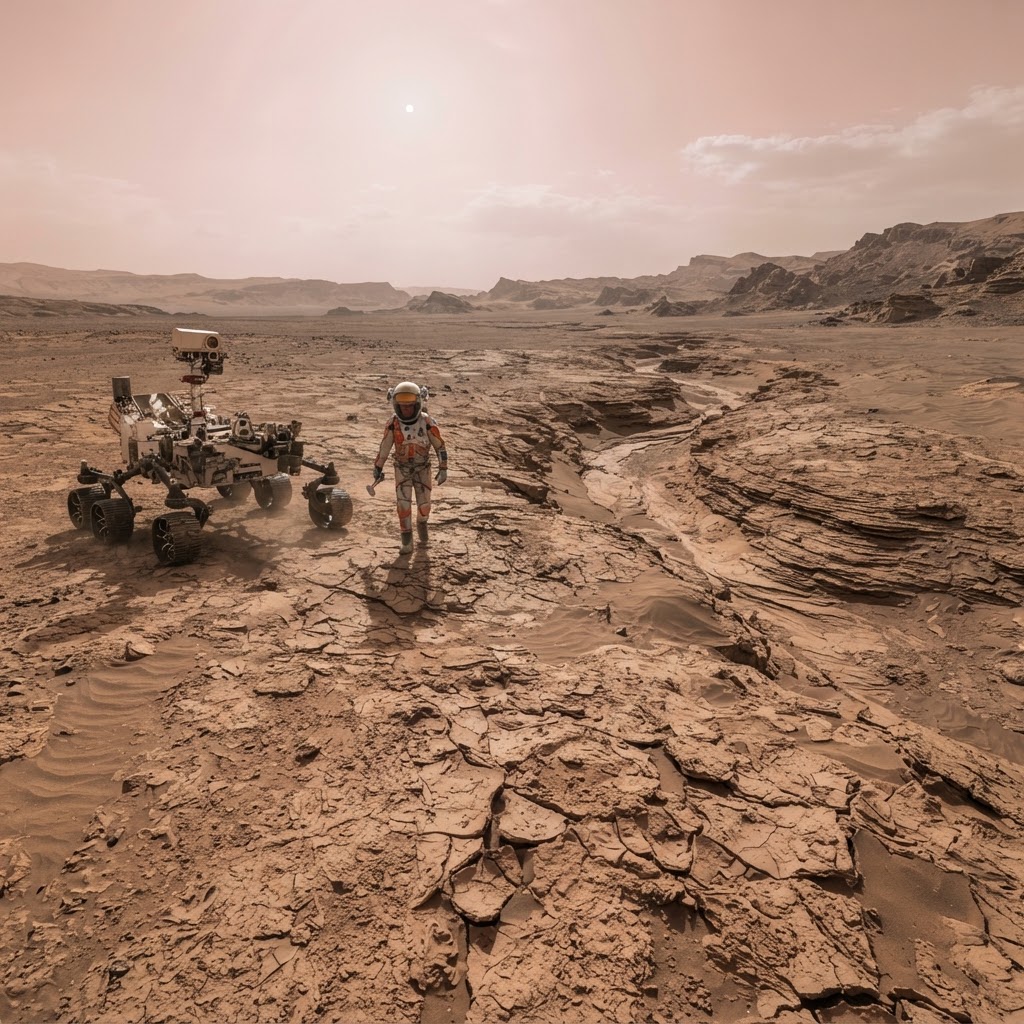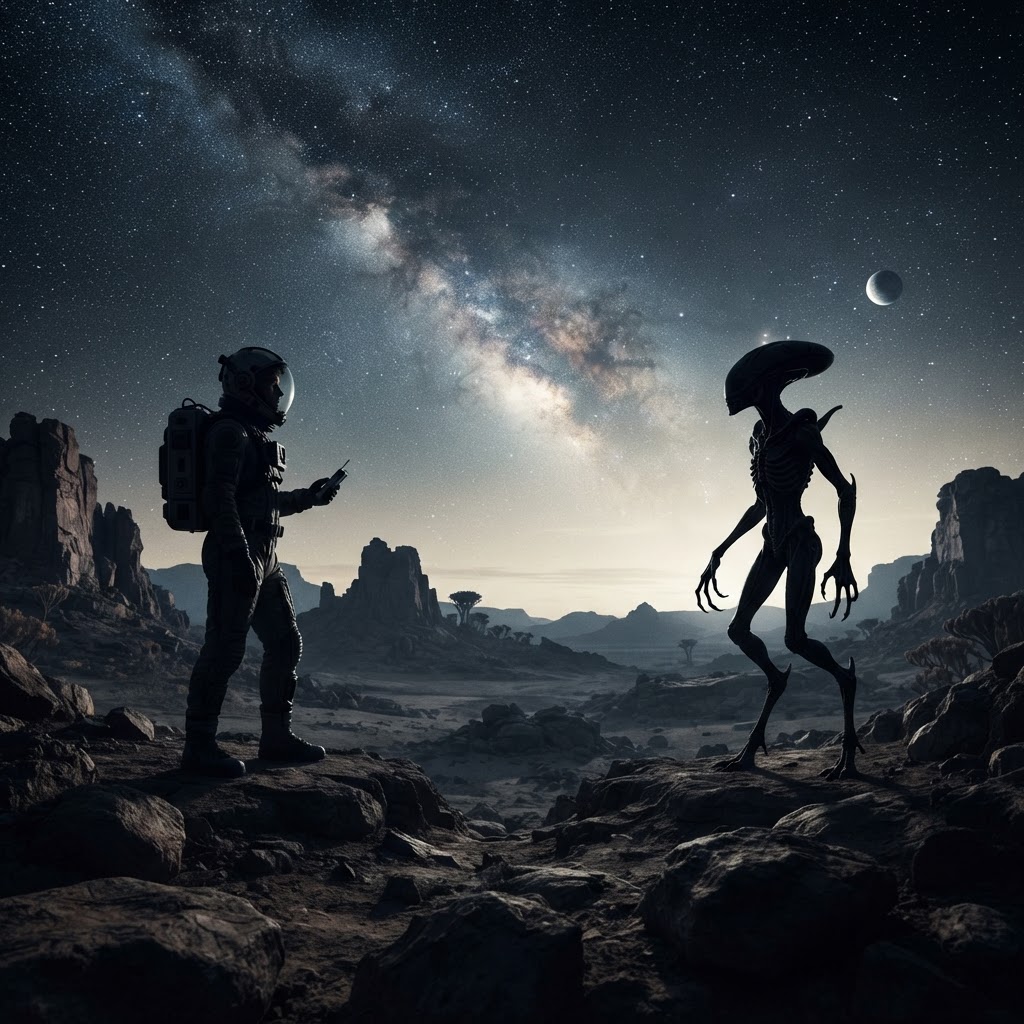
For centuries, humanity has assumed that science is universal.
Gravity pulls. Light travels. Atoms exist. Mathematics explains reality.
But what if that's only true from a human perspective?
It's a question that sounds like science fiction until you realize some of the world's leading physicists are taking it seriously.
If an intelligent civilization evolved on another planet—under a different sky, with different senses, different brains, and an entirely different history—would they discover Newton's Laws? Would they invent calculus? Would they even recognize what we call physics?
Or would they build an entirely different understanding of reality?
These aren't just fascinating questions about aliens.
They're questions about us.
We Assume Science Is Universal... But Is It?
Most of us grow up believing science is simply the discovery of objective truths waiting to be uncovered.
Water freezes. Stars burn. Gravity exists whether humans are here or not.
The universe doesn't change because we observe it.
But the way we describe it might.
Physicist Daniel Whiteson, a professor at the University of California, Irvine, argues that while reality itself may be objective, our explanations are deeply influenced by what it means to be human. He asks whether another intelligent species might organize knowledge so differently that our scientific "truths" wouldn't even resemble theirs.
That idea turns a comfortable assumption upside down.
Maybe physics isn't just discovered.
Maybe it's also interpreted.
Imagine Experiencing Reality With Completely Different Senses
Humans understand the universe through five familiar senses, enhanced by technology.
But evolution could have taken countless other paths.
Imagine an alien species that can:
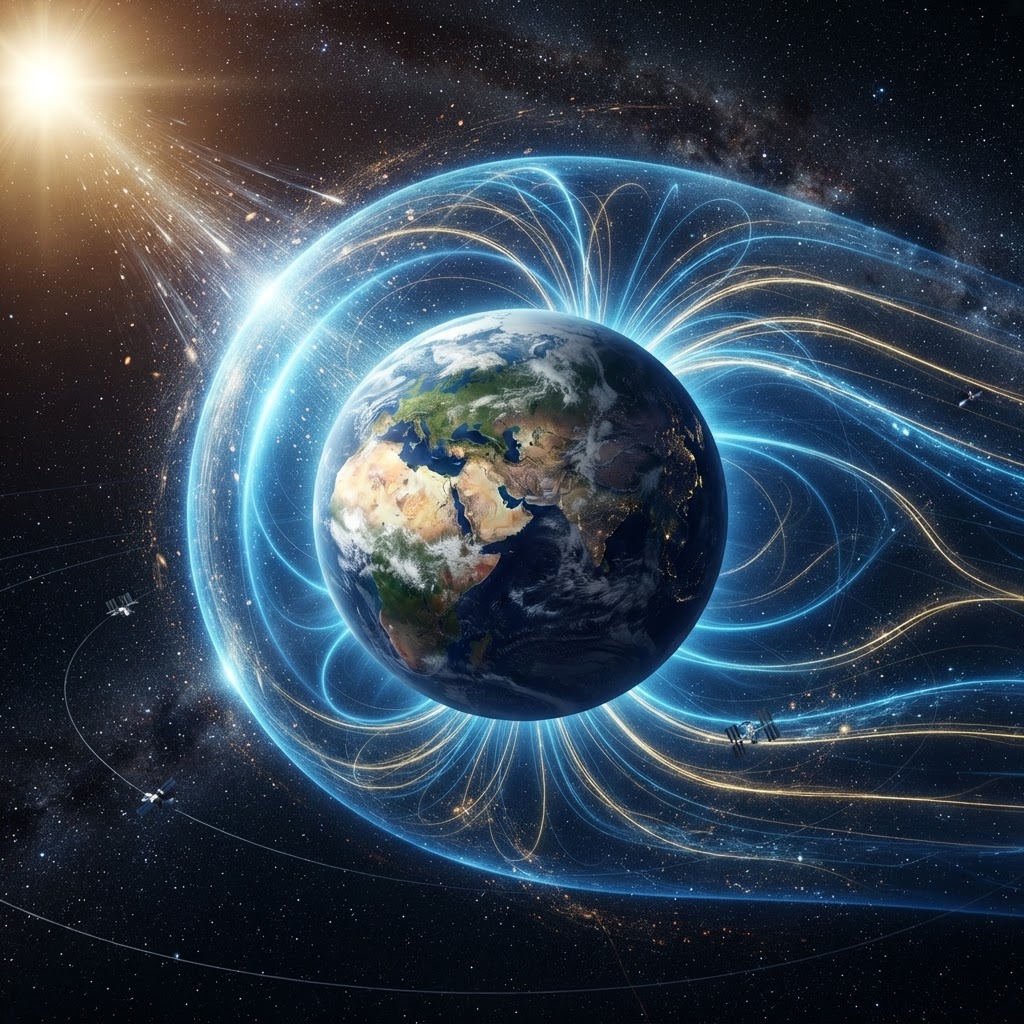
→ Detect magnetic fields as naturally as birds.
→ Perceive ultraviolet and infrared light without instruments.
→ Sense quantum fluctuations directly.
→ "Taste" electromagnetic radiation.
→ Navigate through gravity the way fish move through water.
Their everyday experience of reality would be radically different from ours.
If their perception is different, their questions about the universe would also be different.
And science always begins with questions.
Culture Shapes Science More Than We Realize
Biology isn't the only influence.
Culture matters too.
History shows that scientific breakthroughs often depend on language, philosophy, economics, religion, technology, and collaboration.
Different civilizations ask different questions because different problems matter to them.
An alien civilization might never separate chemistry from biology.
They might never invent our idea of mathematics.
Their understanding of reality could emerge through patterns we cannot even imagine.
That doesn't necessarily mean either civilization is wrong.
It simply means both may be looking at the same universe through entirely different lenses.
Would Mathematics Still Be Universal?
One of the strongest arguments for universal science is mathematics.
After all...
2 + 2 = 4 anywhere in the universe.
Right?
Perhaps.
But even mathematics raises philosophical questions.
Nobel Prize-winning physicist Eugene Wigner famously described the astonishing ability of mathematics to explain nature as "the unreasonable effectiveness of mathematics."
Why should abstract symbols invented by human minds describe galaxies, black holes, and quantum particles so accurately?
No one has a definitive answer.
Some philosophers argue mathematics is discovered.
Others argue it's invented.
If another civilization evolved entirely differently, would they invent numbers?
Would they rely on geometry?
Would algebra even exist?
Or would they create an entirely different symbolic language that predicts reality just as effectively?
Einstein Showed Us That Perspective Changes Everything
Albert Einstein permanently changed physics by demonstrating that observations depend on the observer's frame of reference.
Space and time themselves aren't fixed.
They depend on motion.
That lesson extends beyond relativity.
Perhaps intelligence itself creates different frames of reference.
Maybe alien minds would reveal aspects of reality humans simply cannot perceive.
Not because our science is false.
But because it may be incomplete.
Carl Sagan Had a Different View
Astronomer Carl Sagan believed mathematics and physics could become a universal bridge between civilizations.
His reasoning was simple.
No matter where life evolves:
Gravity behaves consistently. Stars form in predictable ways. Atoms follow the same fundamental laws.
If those laws are universal, eventually any advanced civilization might uncover them.
It's one reason projects searching for extraterrestrial intelligence have often assumed mathematical patterns would be the best way to communicate across the stars.
Yet Whiteson challenges that confidence.
Even if aliens observe the same universe, they may organize knowledge in ways humans wouldn't immediately recognize.
Could Advanced Technology Exist Without Physics?
Here's perhaps the most surprising possibility.
What if an alien civilization became technologically advanced without developing anything resembling modern physics?
Humans often assume technology follows theory.
But history suggests otherwise.
People used fire long before understanding combustion.
Metalworking existed before chemistry.
Navigation existed before orbital mechanics.
An alien civilization might master technologies through experimentation across millions of years without ever building mathematical theories resembling ours.
Technology doesn't necessarily require identical explanations.
It only requires reliable outcomes.
What This Teaches Us About Ourselves
Whether aliens exist or not, this thought experiment reveals something profound.
Science is one of humanity's greatest achievements.
But it's also a human activity.
We choose which questions to ask.
We invent languages to describe nature.
We develop models that improve over time.
As Daniel Whiteson often reminds readers, today's "complete" theories may one day seem as outdated as ancient astronomy appears to us now.
The universe hasn't changed.
Our understanding has.
Perhaps the Greatest Discovery Isn't About Aliens
Maybe one day we'll detect another intelligent civilization.
Maybe we'll exchange mathematics.
Maybe we'll discover they solved mysteries we've struggled with for centuries.
Or perhaps the biggest surprise will be realizing they never invented anything we recognize as physics at all.
If that happens, the encounter won't simply teach us about aliens.
It will force us to ask one of the deepest questions humanity has ever faced:
Is science the language of the universe... or merely humanity's translation of it?
And perhaps the answer lies somewhere in between.
The universe may be objective.
But every civilization that seeks to understand it writes its own story.