Every time we think we've mapped the universe a little better, it reminds us just how much remains hidden.
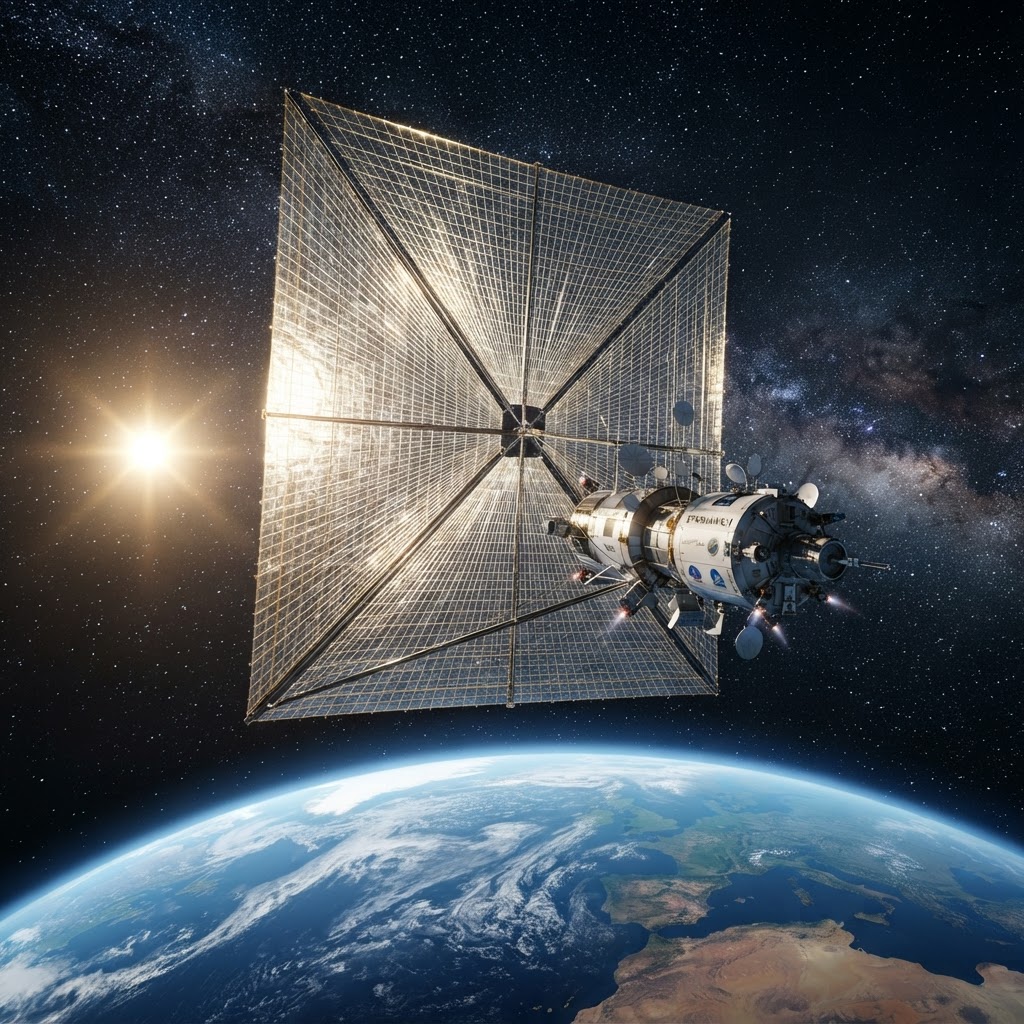
Since its launch in 2018, NASA's Transiting Exoplanet Survey Satellite (TESS) has transformed our understanding of worlds beyond our solar system. Originally designed to scan nearby stars for the tiny dips in brightness caused by orbiting planets, TESS has already helped astronomers confirm hundreds of exoplanets and identify thousands more candidates.
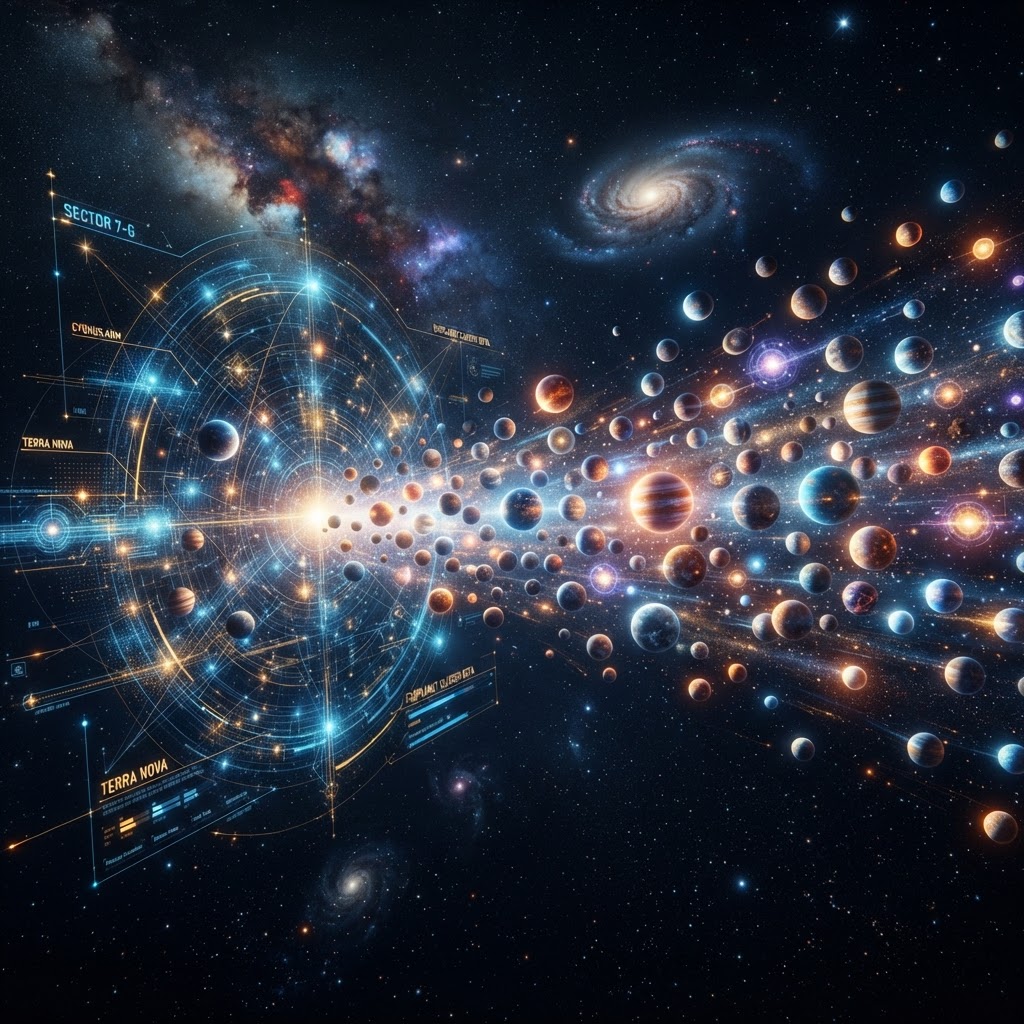
Now, thanks to a new generation of data analysis powered by machine learning, researchers have uncovered more than 10,000 previously unknown exoplanet candidates hidden within TESS observations.
The remarkable part?
The telescope didn't collect new data.
The planets were hiding in data we already had.
A Treasure Chest Hidden in Plain Sight
Think of TESS as a photographer that has spent years taking billions of snapshots of the night sky.
Every image contains enormous amounts of information.
For years, astronomers focused primarily on the brightest stars because they produced the clearest signals. But many dimmer stars were simply too difficult to analyze using traditional techniques.
A research team behind the T16 Planet Hunt decided to revisit that enormous archive using improved data-processing methods and machine learning algorithms.
The result was extraordinary.
→ More than 83 million stellar light curves were analyzed.
→ Researchers identified 11,554 planetary candidates.
→ 10,091 of those appear to be entirely new discoveries.
If confirmed, this single project would more than double the number of exoplanet candidates discovered by TESS.
How Does TESS Actually Find Planets?
Unlike science fiction, TESS doesn't photograph planets directly.
Instead, it watches stars continuously.
When a planet passes between its star and Earth, the star briefly becomes slightly dimmer.
This technique is called the Transit Method.
Imagine watching a lighthouse from miles away.
If a bird flies across the beam, the light flickers ever so slightly.
That's essentially what TESS is measuring.
By recording:
→ How much the light dims
→ How often the dimming repeats
→ How long each transit lasts
Scientists can estimate:
Planet size Orbital period Distance from its star Possible surface temperatures Whether additional planets may exist in the same system Why Were These Planets Missed Before?
Not because NASA overlooked them.
Because astronomy has a data problem.
TESS continuously records an astonishing amount of information.
Some planetary signals are so incredibly faint that they become buried beneath:
Instrument noise Stellar activity Background interference Random brightness fluctuations
For years, these weak signals blended into the background.
Modern machine learning algorithms can now recognize incredibly subtle patterns that would be almost impossible for humans to identify manually.
In many ways, astronomers aren't discovering new data.
They're learning to read old data better.
Artificial Intelligence Is Becoming Astronomy's New Microscope
One of the biggest breakthroughs isn't just the number of possible planets.
It's how they were found.
Machine learning systems can rapidly compare millions of stellar light curves, separating genuine planetary signals from false alarms with increasing accuracy.
NASA has also expanded its own AI initiatives through projects like ExoMiner++, an open-source system designed to help identify hidden exoplanets within Kepler and TESS observations.
Rather than replacing astronomers, AI is becoming another scientific instrument.
Just as telescopes expanded human vision centuries ago, machine learning is expanding our ability to interpret overwhelming amounts of cosmic data.
Not Every Candidate Will Become a Planet
This is one important distinction.
These are planet candidates, not yet confirmed planets.
Every candidate must still undergo additional verification using:
→ Ground-based telescopes
→ Spectroscopy
→ Radial velocity measurements
→ Independent observations
So far, one newly identified world from the project—TIC 183374187 b, a hot Jupiter—has already been confirmed, demonstrating that the discovery pipeline is working exactly as intended.
Why This Discovery Matters
Finding thousands of new planets isn't just about increasing a number.
Every newly discovered planetary system helps answer much larger questions.
Scientists are trying to understand:
How common are Earth-sized planets? How planetary systems form. Why some systems look completely different from our own. Whether habitable worlds are actually rare—or surprisingly common. How galaxies build planetary systems over billions of years.
As Nobel Prize-winning astrophysicist Didier Queloz, co-discoverer of the first exoplanet orbiting a Sun-like star, has often emphasized, every new exoplanet expands our understanding of planetary diversity and challenges assumptions based solely on our own solar system.
Likewise, Dr. Sara Seager of the Massachusetts Institute of Technology (MIT), one of the world's leading exoplanet researchers, has repeatedly noted that every new discovery brings scientists one step closer to identifying worlds that may possess the conditions necessary for life.
This Is Only the Beginning
The T16 Planet Hunt analyzed only TESS Cycle 1 observations.
Years of additional TESS data remain largely unexplored using these advanced techniques.
Future missions promise even greater discoveries.
NASA's upcoming Nancy Grace Roman Space Telescope is expected to discover approximately 100,000 additional exoplanets, many in regions of the Milky Way that have never been systematically explored before.
Meanwhile, TESS continues scanning the sky, adding new observations every day.
Final Thoughts
Perhaps the most inspiring part of this story isn't that scientists may have discovered over 10,000 new worlds.
It's that those worlds were hiding in data we already possessed.
Sometimes discovery doesn't require building a bigger telescope.
Sometimes it requires asking better questions.
As technology improves, the universe isn't necessarily becoming larger.
Our ability to see it clearly is.
And somewhere among those thousands of newly uncovered worlds may be planets unlike anything we've ever imagined—waiting patiently for humanity to notice they were there all along.