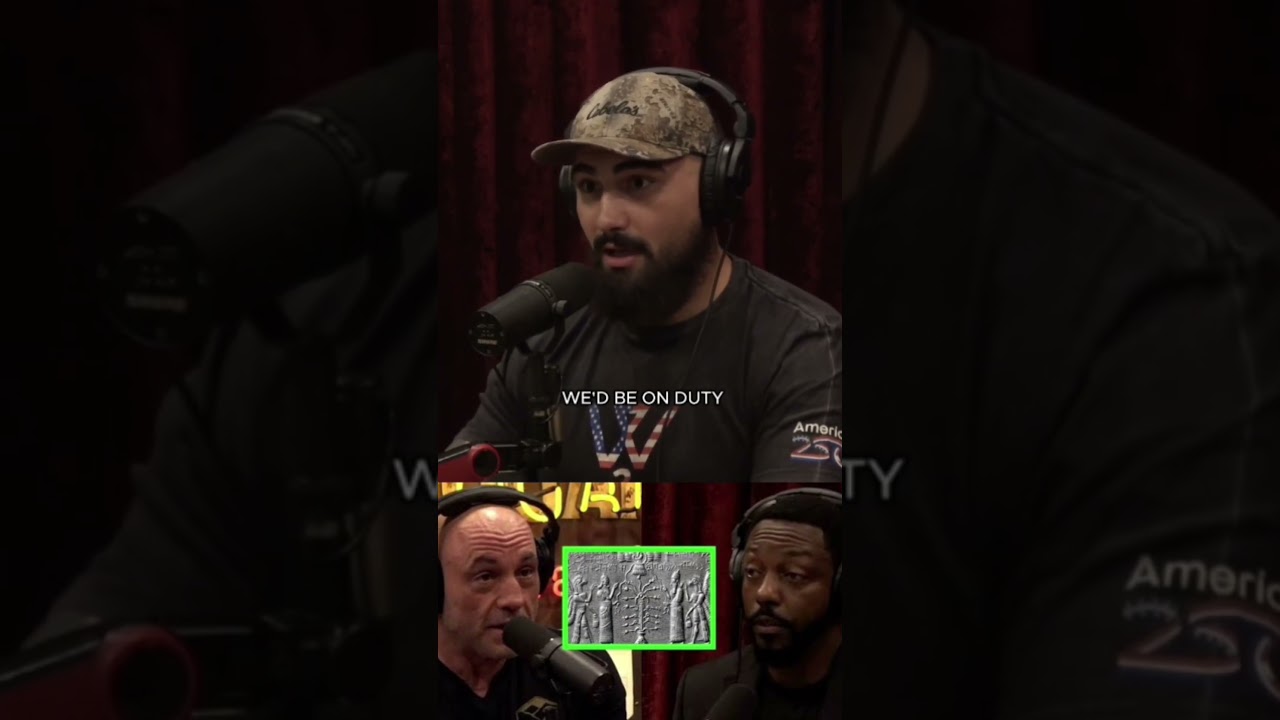
Sean Sharaf, the former U.S. Marine who knocked out Olympic gold medalist Gable Steveson in 12 seconds at UFC 331, told Joe Rogan that his approach to the mind came from studying the subconscious through Billy Carson, the author of Manifestation Codes and host of 4BK TV. The remark came on JRE MMA Show #186, about 28 minutes in, as Sharaf described listening to the podcast's guests during long shifts as an embassy security guard. He named Carson first, alongside 19 Keys and Joe Dispenza, and said the material "helped mold me into who I am."
The moment matters because it is a rare, unprompted account of a working framework meeting a hard test. Sharaf entered UFC 331 on a two-fight losing streak as a roughly +1000 underdog against a heavyweight who was favoured at -2500. Twelve seconds later he had the third-fastest heavyweight knockout in UFC history. Whatever one thinks of manifestation as a concept, the question of how an athlete prepares his mind for an outcome almost nobody expected is worth taking seriously, and Sharaf's answer points at a specific body of work.
What Sean Sharaf actually said on Joe Rogan
Sharaf's comment was about education, not mysticism. He told Rogan he had learned more from the podcast than from the entire public education system, and that during his years as a Marine security guard at a U.S. embassy he would stand post with episodes playing in the background. "I started learning about the subconscious mind through Billy Carson," he said, then added 19 Keys and Joe Dispenza, before crediting the whole stream of guests, including sleep and performance researchers, with shaping him.
The context is the chapter Rogan's team labelled "Navigating post-fight fame." Sharaf had just finished explaining that he had visualised the win so completely that he told his training partners beforehand he might walk away from the sport if it happened. He also described having no sponsors, no promotion and a six-figure debt going into the fight. The mindset material was not a luxury for him; it was the one resource he could use for free while standing guard.
Carson's own channel posted a 21-second clip of the exchange the same week with a thank-you to Sharaf and Rogan.
Who Sean Sharaf is
Sean Sharaf is a UFC heavyweight and former U.S. Marine. Before UFC 331 he was best known, if at all, as a prospect who had lost two fights in a row and was being offered to a debuting star as a safe first opponent. Gable Steveson won freestyle wrestling gold at the Tokyo Olympics, spent time in WWE, and was expected to run through the heavyweight division. Sharaf landed a left hook twelve seconds into the first round; referee Frank Trigg stopped the fight immediately.
In interviews after the fight Sharaf has been candid about the rest of his story: Marine service, embassy security postings, debts that ran into the hundreds of thousands, and a long stretch with no sponsor interest. He has also been open about considering retirement after the biggest night of his career. None of that is unusual for a fighter. What is unusual is how clearly he traced his mental preparation back to specific teachers.
What "the subconscious mind" means in Billy Carson's work
In Carson's framework, the subconscious mind is the part of you that runs on stored patterns, and manifestation is the practice of deliberately rewriting those patterns so that thought, feeling and action line up behind a single clear outcome. The spine of his book Manifestation Codes is in its subtitle, "Unlocking Reality with Thought, Frequency and Action," and those three words are the whole method.
Thought is clarity. Carson's starting instruction is to name the outcome specifically and concretely, not "be happy" or "win more," but a precise picture of the result. Frequency is the emotional state you hold while you pursue it; in his teaching the feeling of the outcome already achieved is what trains the subconscious to treat it as normal rather than impossible. Action is the non-negotiable third leg. Carson is blunt that manifestation without physical work is wishful thinking; the practice is meant to make the work consistent and fearless, not to replace it. [His full method is laid out in the How to Manifest What You Want pillar](/how-to-manifest-what-you-want-billy-carson-method), and the book itself is covered in [Manifestation Codes: What the Book Teaches](/manifestation-codes-by-billy-carson-what-the-book-teaches).
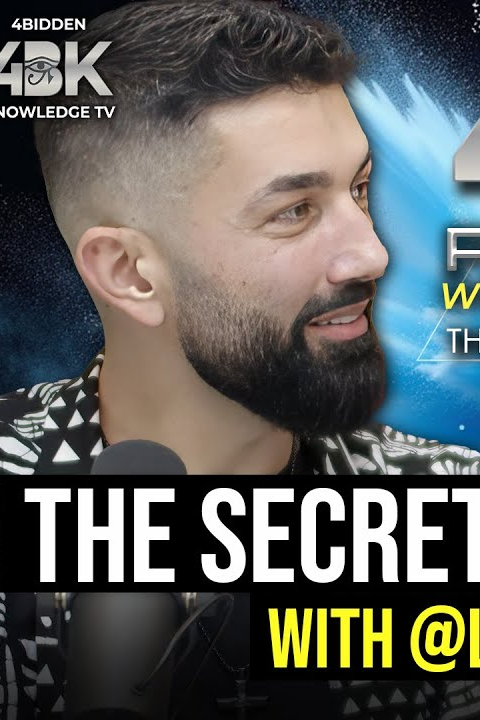
Carson's most-viewed teaching on the subject, the video "The Secret Steps to Manifest Anything You Want," has been watched more than 680,000 times on the 4biddenknowledge Podcast Network channel. The same material runs through his long-form interviews, including his own appearance on the Joe Rogan Experience in 2024.
How a fighter would use it
Read Sharaf's description of his camp against Carson's three principles and the overlap is obvious. He had a specific outcome: not "do well" but a knockout, visualised so completely that he had already decided what he would say afterwards. He held the feeling of it in advance; he told his coaches and training partners the result before it happened, which is exactly the "as if already achieved" state Carson describes. And he did the work, with no sponsor money and no promotional support, while carrying a debt most people would call a reason to quit.
This is also where the practice intersects with research that has nothing to do with Carson. Edwin Locke and Gary Latham's goal-setting studies show that specific, difficult goals outperform vague ones. Peter Gollwitzer's work on implementation intentions shows that deciding in advance when, where and how you will act makes follow-through far more likely. Lien Pham and Shelley Taylor's 1999 study found that visualising the process of preparing for an exam improved results, while visualising only the outcome did not. Sharaf's account fits the process-plus-outcome pattern: he pictured the win, and he trained as if it were already booked.
Carson would add a layer the studies do not test, the idea that the emotional frequency you hold shapes what you notice and attract. Readers do not have to accept that layer to see why the method works for athletes. The practical instructions are clarity, rehearsal and action, and those are well supported.
Why the moment landed the way it did
Sharaf was not promoting anything. He was answering Rogan's question about the week of his life and reached, unprompted, for the people who had taught him how to think. That is why the clip travelled: a fighter on the biggest podcast in the world, days after one of the sport's great upsets, named the teacher he used while guarding an embassy with no money and no backing.
It also illustrates something Carson has argued for years, that his audience is not a niche. The people who study the Emerald Tablets and the Anunnaki on his channel overlap with people trying to rebuild their lives, change careers, or walk into a cage against an Olympic champion. The subconscious-mind material is the part of his work that crosses those lines most easily, and Sharaf is a vivid example of where it ends up.
Billy Carson's reading
Carson's position on moments like this is consistent with everything in Manifestation Codes: the result is not magic and it is not luck. In his reading, Sharaf did the three things the method asks for. He got specific about the outcome, he held the feeling of it until his nervous system stopped treating it as a fantasy, and he put in the physical work that made the outcome possible. Carson has said many times that the subconscious cannot tell the difference between vivid rehearsal and memory, which is why he tells people to rehearse the result until it feels like something that has already happened. A twelve-second knockout, visualised in advance and then executed, is as clean a demonstration of that claim as he could ask for.
Carson's public response was a short thank-you to Sharaf and Rogan rather than a victory lap, which matches how he frames the material: the teacher's job is to hand over the tools, and the credit for using them belongs to the person who did.
Watch, read and go deeper
The full exchange is on JRE MMA Show #186 with Sean Sharaf, around the 28-minute mark. Carson's own method is in [How to Manifest What You Want: Billy Carson's Method, Explained](/how-to-manifest-what-you-want-billy-carson-method), and the book behind it is [Manifestation Codes](/manifestation-codes-by-billy-carson-what-the-book-teaches). The related journaling practice many people pair with it is covered in [The 369 Method Explained](/the-369-manifestation-method-explained-tesla-numerology-and-how-to-use-it). For the wider framework on consciousness and the mind, start at the [manifestation topic hub](/topics/manifestation) and the [consciousness hub](/topics/consciousness), and watch the [Best of Billy Carson](/watch/best-of-billy-carson) collection on 4BK TV, where the subconscious-mind teachings run through dozens of episodes.
Frequently asked questions
What did Sean Sharaf say about Billy Carson on Joe Rogan?
On JRE MMA Show #186, about 28 minutes in, Sharaf said he "started learning about the subconscious mind through Billy Carson," along with 19 Keys and Joe Dispenza, while listening to the podcast on duty as a Marine embassy guard. He credited that material with helping shape who he is.
Who did Sean Sharaf beat at UFC 331?
Sharaf knocked out Gable Steveson, the Tokyo Olympic freestyle wrestling gold medalist and former WWE performer, 12 seconds into the first round at UFC 331 on September 19, 2026, at Crypto.com Arena in Los Angeles. Steveson was a heavy favourite making his UFC debut.
What is Billy Carson's manifestation method?
Carson's method rests on three principles, thought, frequency and action: a specific, concrete picture of the outcome; the sustained feeling of that outcome already achieved; and consistent physical work toward it. He is explicit that the third principle is not optional. The full method is in Manifestation Codes and in his pillar article on the subject.
Is there any science behind visualising an outcome before a fight?
Yes, with caveats. Goal-setting research (Locke and Latham) and implementation-intention research (Gollwitzer) show that specific goals and pre-planned actions improve performance, and Pham and Taylor's 1999 study found that visualising the process of preparation helps while visualising only the outcome does not. Sharaf's account describes both the process and the outcome.
Where can I watch the Sean Sharaf clip?
The 4biddenknowledge Podcast Network posted the 21-second clip of the mention as a YouTube short titled "UFC Winner Sean Sharaf Credits Billy Carson for Mindset on Joe Rogan," and the full conversation is in JRE MMA Show #186 on the PowerfulJRE channel.
Sources and further reading
JRE MMA Show #186 with Sean Sharaf, The Joe Rogan Experience (PowerfulJRE), chapter "Navigating post-fight fame." ESPN, "Olympic champ Steveson KO'd by Sharaf in just 12 seconds at UFC 331." Athlon Sports, "Wildest UFC Reactions to Gable Steveson Getting Knocked Out Cold in 12 Seconds." Billy Carson, Manifestation Codes: Unlocking Reality with Thought, Frequency and Action. Billy Carson, "The Secret Steps to Manifest Anything You Want" (4biddenknowledge Podcast Network). Edwin Locke and Gary Latham, A Theory of Goal Setting and Task Performance (1990). Peter Gollwitzer, "Implementation Intentions: Strong Effects of Simple Plans," American Psychologist (1999). Lien Pham and Shelley Taylor, "From Thought to Action: Effects of Process- Versus Outcome-Based Mental Simulations on Performance," Personality and Social Psychology Bulletin (1999).