Shadow work is the practice of noticing, naming and taking back the parts of yourself that you have pushed out of awareness. The idea comes from the Swiss psychiatrist Carl Gustav Jung, who called those disowned parts "the shadow": not only the traits you are ashamed of, but also strengths and desires you were taught to hide.
It matters because what stays unseen still runs the show. Jung's view was that the shadow does not disappear when ignored; it shows up in sharp reactions to other people, in repeated relationship patterns and in the gap between who someone intends to be and how they actually behave. Knowing where self-reflection ends and clinical care begins is part of using it well. It sits at the heart of the consciousness topic hub, alongside work on habit, attention and the subconscious.
What is the shadow in Jung's psychology?
In Jung's psychology, the shadow is the part of the personality that the conscious ego does not recognise as its own. It forms as a child learns which feelings and behaviours earn approval and which earn punishment, and quietly files the rejected material away.
In the Terry Lectures he delivered at Yale in 1937, published the following year as Psychology and Religion (now in Collected Works, volume 11, paragraph 131), Jung wrote: "Everyone carries a shadow, and the less it is embodied in the individual's conscious life, the blacker and denser it is." In The Practice of Psychotherapy (Collected Works, volume 16, paragraph 470) he described the shadow as "the thing a person has no wish to be." And in Aion (1951; Collected Works, volume 9ii, paragraph 14) he stressed the cost of facing it: "The shadow is a moral problem that challenges the whole ego-personality, for no one can become conscious of the shadow without considerable moral effort."
Two points are often lost in popular summaries. First, the shadow is not simply "the dark side." Jungian writers describe a positive or "golden" shadow as well: talent, ambition, tenderness, anger that could be healthy, or creativity that a family or culture discouraged. Second, Jung did not treat the shadow as something to defeat. The aim was assimilation, bringing the material into conscious awareness so the person can choose what to do with it rather than being driven by it.
How does projection work, and why do strong reactions matter?
Projection is the habit of seeing your own disowned traits in other people, and in Jungian thinking it is the main way the shadow announces itself. A trait you cannot admit in yourself tends to appear, magnified, in a colleague, partner or public figure, and the emotional charge is out of proportion to what actually happened.
That is why shadow work treats strong reactions as clues. If someone's self-promotion produces real fury, the useful question is not only why they act that way but what you were taught about self-promotion, and what that lesson has stopped you from allowing yourself Sometimes the answer is a fault you share; sometimes it is a strength you were taught was arrogant. The reaction is information, not proof, and Jungian analysts are careful to say that not every irritation is a projection. Some people really do behave badly.
How did shadow work move from analysis into self-help?
Shadow work moved from the consulting room into popular culture through a handful of writers in the late twentieth century. In Jungian analysis, confronting the shadow is usually described as an early stage of the longer process Jung called individuation, worked through with dreams, active imagination (a deliberate, waking dialogue with images from the unconscious) and art-making, under the guidance of a trained analyst.
The poet Robert Bly gave the idea its best-known image in A Little Book on the Human Shadow (1988). Bly pictured each person dragging a long, invisible bag behind them, filled from early childhood with every part of themselves that parents, teachers and peers disapproved of, until by adulthood only a thin slice of the original personality remains in view. Connie Zweig and Jeremiah Abrams then collected essays by Jungian analysts, poets and psychologists in Meeting the Shadow: The Hidden Power of the Dark Side of Human Nature (1991).
The coach and author Debbie Ford (1 October 1955 to 17 February 2013) brought shadow work to a mass self-help audience. Her first book, The Dark Side of the Light Chasers (1998), became a bestseller after Oprah Winfrey discussed it on her show in late 2000. Ford later co-wrote The Shadow Effect (2010) with Deepak Chopra and Marianne Williamson, and for years she led "Shadow Process" workshops and trained coaches in her method. In the 2020s the idea found a new audience again through guided "shadow work journals" and a steady stream of TikTok videos, which often compress Jung's concept into a list of prompts.
Shadow work journaling prompts you can use
Journaling is the most common way people practise shadow work on their own, and good prompts turn vague self-criticism into specific, answerable questions. Work slowly, write by hand or in a private document, and stop if a prompt brings up more than you can comfortably hold.
Prompts about projection
- What irritates you most in other people, and where, even in a small way, do you do the same thing?
- Who do you judge quickly, and what quality in them would you never allow yourself?
- When did you last overreact? What did the situation remind you of?
Prompts about childhood rules
- What were you praised for as a child, and what were you punished or shamed for?
- Which emotions were welcome in your home, and which made adults uncomfortable?
- What did you decide, early on, that you had to be in order to be loved?
Prompts about the golden shadow
- Which compliments do you deflect or wave away, and why?
- What do you envy in other people, and what does that envy say you actually want?
- Who do you admire so much it feels slightly uncomfortable, and what would it mean to own some of that quality?
Prompts like these pair well with the practices in the guide to reprogramming the subconscious mind, which looks at journaling, repetition and mental rehearsal through the lens of behavioural research. Questions about childhood rules also overlap with the themes in healing your inner child.
What does the research say about shadow work?
There are no dedicated clinical trials of shadow work as a named method, and readers should be wary of any claim that it has been scientifically proven. What does exist is a large body of research on a related practice: expressive writing about emotionally significant experiences.
That research began with James Pennebaker and Sandra Beall's 1986 study in the Journal of Abnormal Psychology, in which students who wrote about traumatic experiences for a few short sessions later made fewer visits to the campus health centre than students who wrote about neutral topics. Hundreds of follow-up studies tested the idea. In 2006 Joanne Frattaroli published a meta-analysis in Psychological Bulletin that pooled 146 randomised studies of experimental disclosure and found a positive, statistically significant but small average effect (r = 0.075).
The honest summary is that structured writing about feelings appears to help some people a little, on average, and that shadow work borrows that format while adding Jung's interpretive framework. The framework itself is a psychological theory, not a tested treatment.
Shadow work versus therapy: what is the difference?
The difference is training, structure and safety. Shadow work done alone is self-reflection; therapy is a relationship with a licensed clinician who can assess what is going on, recognise when something is a diagnosable condition, and pace the work so that painful material is processed rather than simply reopened. Jungian analysis is itself one form of therapy, and analysts spend years in training precisely because confronting the shadow can be destabilising.
Self-guided prompts can be a useful complement to professional care or a reasonable starting point for everyday self-knowledge. They are not a substitute for treatment. Billy Carson's own conversation with psychiatrist Daniel Amen, covered in facing trauma: triggers, betrayal and the brain you bring to it, is a reminder that old wounds often surface through present-day triggers, and that clinical approaches exist for working through them.
When to stop and see a therapist
Stop self-guided shadow work and contact a licensed mental health professional if any of the following happen:
- Memories of trauma or abuse begin surfacing, especially ones that were not previously clear.
- Emotions become overwhelming, or do not settle within a day or two of a session.
- Thoughts of self-harm or suicide appear.
- You notice dissociation: feeling detached from your body, losing time, or the world seeming unreal.
- You recognise ongoing symptoms of depression, anxiety or post-traumatic stress, such as persistent low mood, panic, nightmares or flashbacks.
In a crisis in the United States, call or text 988 to reach the 988 Suicide and Crisis Lifeline. Outside the US, contact local emergency services or a national crisis line. None of this means shadow work failed; it means the material deserves a trained guide.
Billy Carson's reading
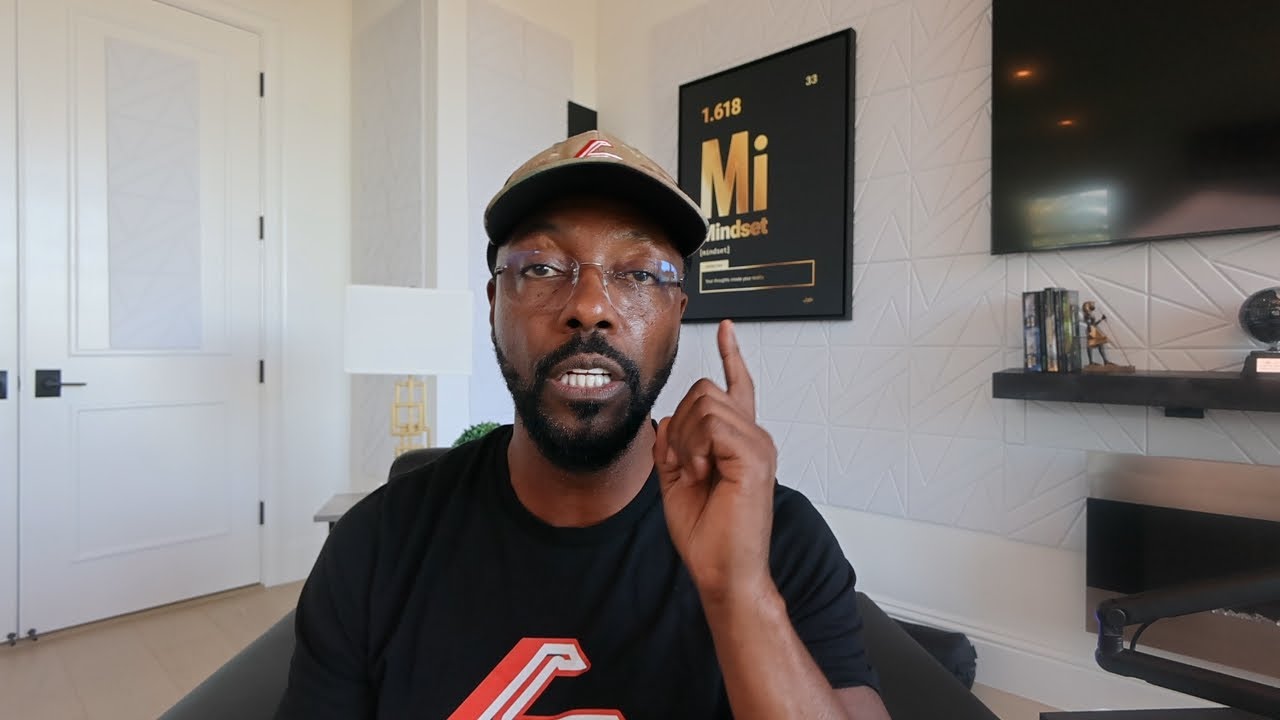
Billy Carson approaches shadow work through the lens of self-mastery and manifestation. In a live session with Tim Storey titled "Shadow Work, Manifestation Techniques, and Self Mastery," the two put shadow work side by side with manifestation and self-mastery, and the framing that runs through Carson's wider teaching is that unexamined inner patterns quietly block what people are trying to create.
That framing connects directly to two of his talks. In why you keep manifesting the same reality, Carson describes a "snapback" in which the subconscious, which he says is "really designed for safety, not success," pulls a person back toward familiar circumstances, and he argues that "it's your old identity trying to survive." In the universe isn't testing you, it's reflecting you, he puts it as "You're going to attract what you are, not what you want." Read alongside Jung, the overlap is clear: both treat what a person refuses to see in themselves as something that keeps returning in outer life. Carson's emphasis is on using that awareness to change identity and results; the clinical guidance above remains separate and applies regardless of the framework someone prefers.
Watch, read and go deeper
The Awaken Zone series on 4BK TV collects Billy Carson's talks on consciousness and personal transformation, and the Tim Storey session is embedded on this page. For the mechanics of habit change, read the companion piece on the subconscious snapback. For the wider map of related topics, from meditation to manifestation, start at the consciousness topic hub.
Frequently asked questions
What is shadow work in simple terms?
Shadow work is the practice of becoming aware of the parts of yourself you have pushed out of sight, including both unwanted traits and hidden strengths. It draws on Carl Jung's concept of the shadow and usually involves reflection, journaling or therapy. The goal is integration, not self-punishment.
Did Carl Jung invent shadow work?
Jung developed the concept of the shadow and described its integration as part of analysis, but the phrase "shadow work" as a self-help practice was popularised later. Writers such as Robert Bly, Connie Zweig and Jeremiah Abrams, and Debbie Ford carried the idea to general audiences from the late 1980s onward.
Is shadow work scientifically proven?
No clinical trials have tested shadow work as a specific method. Research on expressive writing, beginning with Pennebaker and Beall in 1986 and summarised in Frattaroli's 2006 meta-analysis of 146 studies, shows a small average benefit from structured writing about feelings. That supports journaling in general, not Jung's theory in particular.
Can shadow work be harmful?
It can be if it brings up trauma, overwhelming emotion or symptoms of a mental health condition without support. Anyone who experiences self-harm thoughts, dissociation, flashbacks or persistent distress should stop and contact a licensed therapist. In the US, call or text 988 in a crisis.
How often should you do shadow work journaling?
There is no evidence-based schedule. Many people use a single prompt for 15 to 20 minutes a few times a week, which mirrors the short sessions used in expressive-writing studies. Taking breaks, and discussing what comes up with a trusted professional, matters more than frequency.
Sources and further reading
- C. G. Jung, Psychology and Religion (Terry Lectures, Yale University Press, 1938; Collected Works, vol. 11)
- C. G. Jung, Aion: Researches into the Phenomenology of the Self (Collected Works, vol. 9ii)
- C. G. Jung, The Practice of Psychotherapy (Collected Works, vol. 16)
- Robert Bly, A Little Book on the Human Shadow (1988)
- Connie Zweig and Jeremiah Abrams (eds.), Meeting the Shadow: The Hidden Power of the Dark Side of Human Nature (1991)
- Debbie Ford, The Dark Side of the Light Chasers (1998)
- James W. Pennebaker and Sandra K. Beall, "Confronting a Traumatic Event," Journal of Abnormal Psychology (1986)
- Joanne Frattaroli, "Experimental Disclosure and Its Moderators: A Meta-Analysis," Psychological Bulletin (2006)
This article is educational and is not a substitute for care from a licensed clinician; anyone working through difficult material should consult a qualified mental health professional. These statements have not been evaluated by the Food and Drug Administration. This content is for information only and is not medical advice.