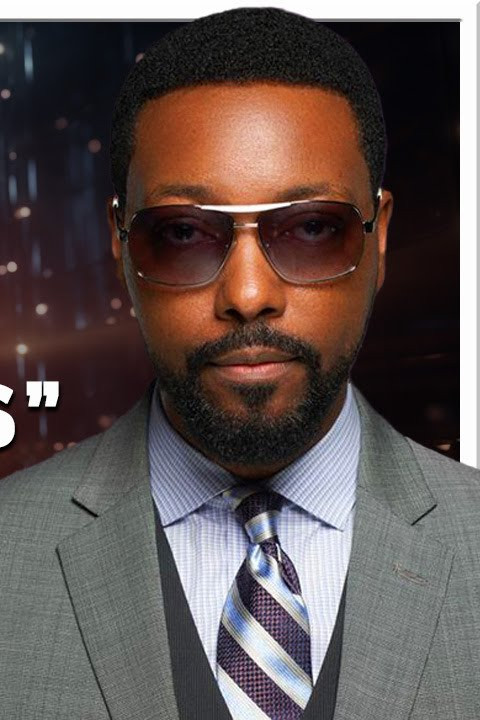
In Metaphysics: Behind the Veil, Billy Carson argues that the physical world is the last stage of a process that begins in thought, and that the vibration a person puts out through words, habits and company is the vibration that comes back. Recorded as a live podcast with musician, producer and herbalist Doctah B Sirius, the conversation works through two of the Hermetic principles, All Is Mind and the Principle of Vibration, and keeps returning to one practical point: knowledge only matters once it is applied.
The topic matters because these two ideas sit underneath much of modern self-development, from affirmations to the law of attraction, and are often repeated without any sense of where they come from. The episode shows how Carson and his guest turn them into daily routines, and gives readers a chance to separate what is ancient, what is early twentieth century and what is personal interpretation.
Watch the video
What the video covers
The "mystical Christmas" and wavecasting (from about 6:40)
Doctah B opens with a teaching he calls the original "mystical Christmas." In his account, the Christmas story grew out of far older observances tied to the sun, the moon and natural cycles, and there is one specific date on which an "oil" comes down the chimney and acts as a capacitor, taking on whatever information surrounds it. He compares it to garlic infusing olive oil left in a window, and calls the substance "black gold." He did not explain the date, the oil or its source on air, so the idea is presented here only as his teaching. He follows it with "wavecasting" (from about 8:40), his term for thought as energy cast into a field of possibilities, adding that most of what people think is inherited programming from parents and the wider culture.
Applied knowledge (from about 10:45)
Carson describes surrounding himself with people he can learn from and never treating success as the final peak. Reading a thousand books a year means little, he says, without action: "not just knowledge is power, but applied knowledge is power."
Missing the mark (from about 12:00)
Doctah B says he once taught a music-industry course at UCLA, and recalls proposing to wealthy peers that they start their own bank and distribute their own records, only to be told he was crazy. He offers a piece of wordplay: sin as an archery term for missing the mark. The Greek words hamartia and hamartanein do carry that sense, though the English word itself comes from Old English. He also uses the image of the falcon flying above the storm, which he connects to his study of Kemet. It works as a metaphor for rising above drama, not as a statement about bird behavior.
All Is Mind (from about 19:50)
Carson then turns to the first Hermetic principle, All Is Mind. He says the principles were "Kemetic" before they were Hermetic, taught by Thoth in Kemet before Egypt as such existed, and later passed to the Greeks and Romans, where Thoth became Hermes. His illustration is the computer mouse in his hand. Someone first imagined it, then drew it on paper in two dimensions, then refined it in computer-aided design, and finally sent it to an engineer who turned it into a three-dimensional object. From this he concludes that "everything that's in the third dimension that we consider to be real is actually coming from thoughts."
Conjuring a career (from about 22:40)
Doctah B tells how he arrived in Los Angeles as a conga player and printed business cards reading "Doc B, record producer" before he had produced anything. A call came from a family in Compton with $5,000 for a session; he learned the studio on the fly, more sessions followed, and a record reached the radio. He calls this conjuring and quotes an old saying: "to stumble is not to fall, but to move forward quickly." He then argues (from about 26:20) that language is the subconscious mind's operating system, and that a deliberate "language syntax" can reprogram it.
The Principle of Vibration (from about 30:35)
Carson's second principle is vibration: the frequency a person emits is the frequency drawn back. He stresses that the law of attraction is not only for good outcomes; a mindset of despair, anger or self-doubt attracts more of the same. That is why he limits contact with chronic complainers, whom he calls energy vampires, and why he treats negative self-talk, telling yourself you are no good at something, as spell-casting. In his view the cells of the body register every word spoken, and "the vibration you're putting out is the same vibration you're going to get back." He points to a board behind him reading legacy, which he says he looks at every day.
Simple, not easy (from about 41:05)
Doctah B urges listeners to forgive their families for their imperfections and to clear out clutter, from toxic thoughts to plug-in air fresheners and harsh cleaning products. His central line is "It's not easy. It's simple," meaning change happens one step at a time. He names two moments as the most important programming windows of the day: the first step out of bed in the morning and the thoughts repeated just before sleep.
The flat tire (from about 46:50)
Carson closes with a story from his early twenties. A friend had arranged a meeting with a company that had asked for him specifically. That morning he had a flat tire, rescheduled, and never got another appointment; the company concluded he did not think it important enough to find a taxi or a ride. His friend asked whether four flat tires would stop him if his job and home depended on getting to work. The lesson Carson draws is about priorities: where there is a will, there is a way. Doctah B's parting advice: travel light and say less until you reach your destination.
Key takeaways
- Carson presents All Is Mind as the starting point of metaphysics: every built object existed as a thought before it existed physically.
- He frames the Principle of Vibration as a two-way rule, so the law of attraction amplifies negative states as readily as positive ones.
- Self-talk, in his reading, is a form of spell-casting, which makes changing habitual language a practical first step.
- Both speakers insist that knowledge without action has no power; applied knowledge is the point.
- Carson's flat-tire story turns the discussion of mindset into a lesson about priorities and follow-through.
Billy Carson's reading
Carson treats the Hermetic principles as working laws rather than historical curiosities. All Is Mind means a person who controls their thinking takes part in shaping their reality. The Principle of Vibration explains, for him, why some lives stall in a loop of bad news, and why he guards his attention, his company and his own speech so closely. For a fuller account of the seven principles and the text they are usually drawn from, see The Kybalion and the seven Hermetic principles explained.
His claim that these principles are Kemetic before they are Hermetic rests on his view of Thoth as the original teacher behind the figure later called Hermes Trismegistus. That lineage, and the texts attributed to Hermes, are covered in Hermes Trismegistus and the Hermetica explained, and the wider Egyptian worldview he draws on is set out in Kemetic spirituality explained. Carson develops the same lineage at length in his book The Compendium of the Emerald Tablets.
What mainstream scholarship says
The seven Hermetic principles as they are usually listed (Mentalism, Correspondence, Vibration, Polarity, Rhythm, Cause and Effect, and Gender) come from The Kybalion, published in Chicago in 1908 by the Yogi Publication Society and credited to "Three Initiates." It is generally attributed to William Walker Atkinson, a New Thought writer. The list does not appear in that form in the ancient Hermetic writings, the Greek treatises of the Corpus Hermeticum and the Latin Asclepius, which scholars generally date to the first centuries CE.
Historians describe Hermes Trismegistus as a Greco-Egyptian figure who emerged in Ptolemaic and Roman Egypt, blending the Egyptian god Thoth with the Greek Hermes. Thoth was honored in Egypt as a god of writing and wisdom, so some link to Egypt is not in question, but a Kemetic source for these exact seven principles is Carson's interpretation, not something found in a surviving Egyptian text. Kemet itself was the ancient Egyptians' own name for their land, usually translated as "the black land," rather than a separate civilization that came before Egypt.
The law of attraction is likewise a New Thought idea, and claims that cells hear speech or that thoughts reshape reality directly are not supported by scientific evidence. There is a fair bridge, though. Research on self-talk, including a widely cited 2011 meta-analysis in Perspectives on Psychological Science, has found that deliberate, constructive self-talk can improve focus and performance on tasks. The mechanism is psychological rather than metaphysical, but the advice has real support.
Watch, read and go deeper
For the practices behind the vibration side of this conversation, read how to raise your vibration explained, and for the morning-and-night programming windows Doctah B describes, see how to reprogram your subconscious mind explained. More is collected in the Consciousness topic hub. The full audio is on the 4biddenknowledge Podcast episode page, and Carson's longer teaching on Egyptian wisdom traditions is on 4BK TV in Egyptian Mystery School.
Frequently asked questions
What does "All Is Mind" mean?
All Is Mind is the first of the seven Hermetic principles listed in The Kybalion (1908), also called the Principle of Mentalism. It holds that the universe is fundamentally mental in nature. Billy Carson applies it practically: everything people build began as a thought before it became a physical object.
What is the Principle of Vibration?
The Principle of Vibration states that nothing rests and everything moves and vibrates. In Carson's reading, a person's thoughts, words and moods are vibrations, and the frequency they put out is the frequency they attract back, for better or worse.
Are the Hermetic principles really from ancient Egypt?
The seven principles as usually listed come from The Kybalion, a book published in 1908. The older Hermetic texts, the Corpus Hermeticum and the Asclepius, are Greco-Egyptian writings from the early centuries CE associated with Hermes Trismegistus, a figure who combined Thoth and Hermes. Carson's view that the principles originated in Kemet is his interpretation rather than a documented source.
Does positive self-talk actually work?
Research in sport psychology has found that constructive, instructional and motivational self-talk can improve focus and task performance. That evidence concerns attention and motivation, not metaphysical effects, but it supports the habit both speakers recommend: notice what you say to yourself and change it deliberately.
Sources mentioned
In the video, Carson draws on the Hermetic principles All Is Mind and Vibration, which he traces to Thoth and Kemet, and on the law of attraction. Doctah B refers to the Christmas story and its older solar and lunar roots, the maxim "as above, so below," the Greek sense of sin as missing the mark, and the VHS tapes of producers Quincy Jones and George Duke he studied while learning production. Standard references are The Kybalion by Three Initiates (1908); Brian Copenhaver's translation Hermetica: The Greek Corpus Hermeticum and the Latin Asclepius (1992); Garth Fowden's The Egyptian Hermes (1986); and Hatzigeorgiadis, Zourbanos, Galanis and Theodorakis, "Self-Talk and Sports Performance: A Meta-Analysis" (2011). Billy Carson's own treatment of the Hermetic lineage is in The Compendium of the Emerald Tablets.
These statements have not been evaluated by the Food and Drug Administration. This content is for information only and is not medical advice.