The Gateway Process is the name popularly given to a 1983 US Army intelligence memo, "Analysis and Assessment of Gateway Process", in which Lt Col Wayne M. McDonnell tried to explain the Monroe Institute's Gateway Experience, a guided audio programme built on Robert Monroe's Hemi-Sync sound technology, in the language of physics. It is an Army document, not a CIA study; it is called the "CIA Gateway report" because the copy everyone reads sits in the CIA's online archive.
The memo matters because it is a rare primary source showing that a US intelligence command paid attention to meditation, altered states and out-of-body practice during the Cold War. It also attracts more myth than almost any declassified file, from claims that the CIA proved astral projection to theories about its missing page 25. Separating what the 29-page document actually says from what has been said about it is the only way to read it well.
What is the Gateway Process memo?
The memo is a report dated 9 June 1983 on the letterhead of the Department of the Army, US Army Operational Group, US Army Intelligence and Security Command (INSCOM), Fort George G. Meade, Maryland. It is addressed to the Commander of the US Army Operational Group and signed by Wayne M. McDonnell, "LTC, MI" (lieutenant colonel, Military Intelligence), as Commander of Det O.
The opening paragraph sets out the assignment: McDonnell had been tasked to assess the Gateway Experience "in terms of its mechanics" and its practicality. He explains that he took the Gateway training himself, together with a physician, and that answering the question properly forced him into biomedicine, quantum mechanics and a long detour through the nature of consciousness. He closes the cover letter hoping the study would be "a useful guide for other USAINSCOM personnel who are required to take the Gateway training or work with Gateway materials", a line that confirms Army personnel were going through the programme at the time.
Why is it called the CIA Gateway report?
It is called the CIA Gateway report because the public copy comes from the CIA's CREST database, part of the agency's Stargate collection, under document number CIA-RDP96-00788R001700210016-5. Every page carries the stamp "Approved For Release 2003/09/10". The CIA released and archived it; it did not write it, commission it or endorse its conclusions.
For years CREST could only be searched on a handful of terminals at the National Archives in College Park, Maryland. In January 2017 the CIA put the database online, close to 13 million pages, a release covered on this site in 13 million pages of declassified records released online by the CIA. From that point the Gateway memo was a search away, and by early 2021 it was circulating widely on TikTok and other platforms, where the "CIA" label stuck.
What is the Gateway Experience and Hemi-Sync?
The Gateway Experience is the Monroe Institute's training programme for deep relaxation, expanded awareness and attempted out-of-body states, and Hemi-Sync is the patented audio method it uses. Robert A. Monroe (30 October 1915 to 17 March 1995) was a radio executive and producer who reported his first out-of-body experience in 1958 and described his experiences in Journeys Out of the Body (Doubleday, 1971). He received the first of several Hemi-Sync patents in 1975. In 1977, the year his organisation took the name The Monroe Institute, it ran its first Gateway programme. The Institute is based in Faber, in Nelson County, Virginia.
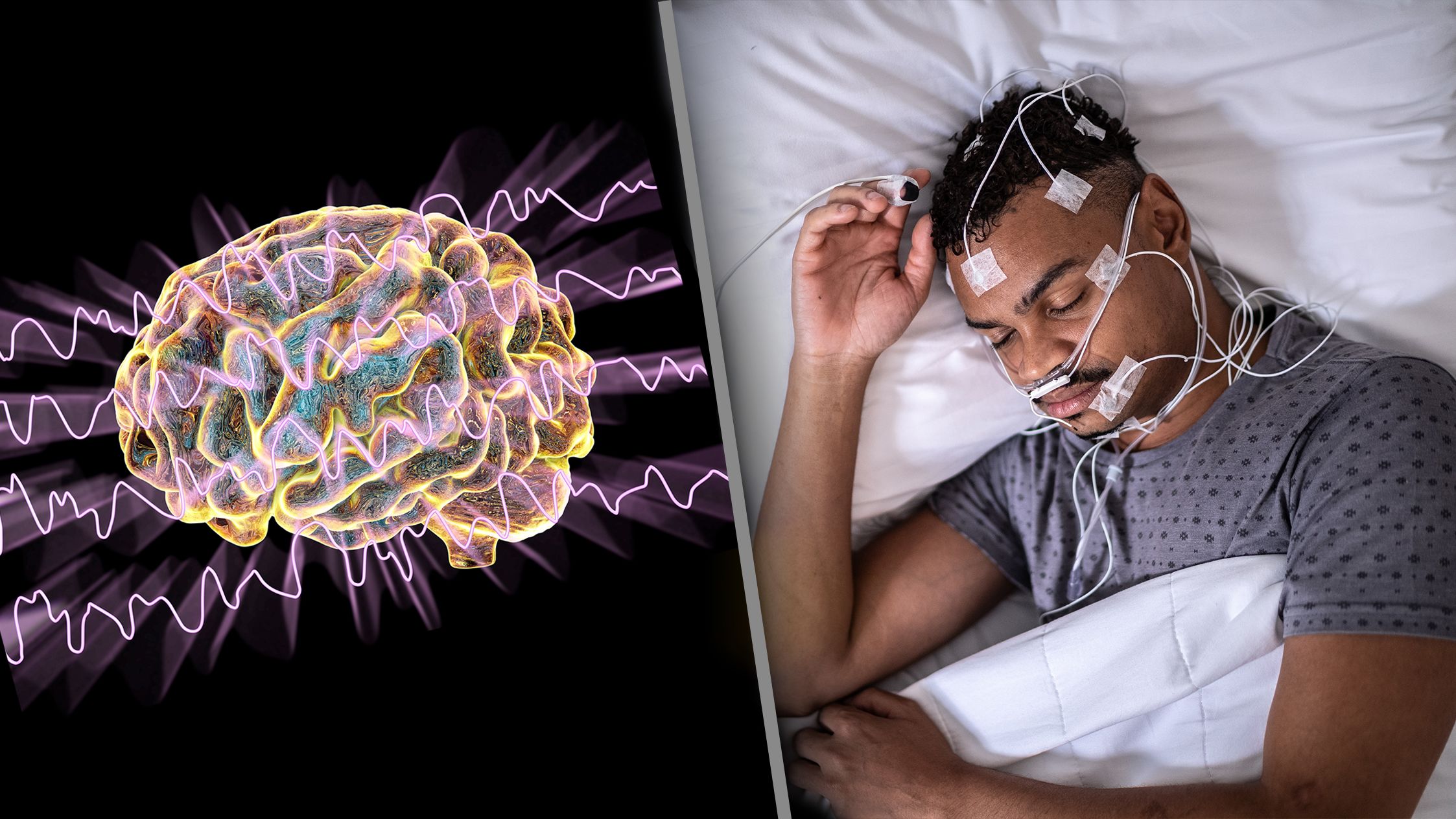
Hemi-Sync is built on binaural beats: two slightly different tones, one in each ear, which the brain perceives as a third, pulsing tone, combined with spoken guidance and other sounds. The theory behind it is the frequency-following response, the idea that brain rhythms drift towards the beat frequency. The memo quotes a monograph by Monroe Institute trainer Melissa Jager defining Hemi-Sync as "a state of consciousness defined when the EEG patterns of both hemispheres are simultaneously equal in amplitude and frequency."
That definition is the Institute's claim, not a settled finding. Binaural beats are a real auditory effect, but research reviews find inconsistent evidence that they entrain whole-brain rhythms; a 2023 systematic review in PLOS ONE found studies split between results that supported entrainment and results that did not. The details are in the pillar article binaural beats explained.
What does the Gateway memo actually say?
The memo argues that Gateway works by bringing the brain's two hemispheres into coherence, quieting the body and moving consciousness through a series of states beyond ordinary physical perception. McDonnell builds the case in stages.
The body and brain. He leans heavily on Itzhak Bentov's biomedical models from Stalking the Wild Pendulum (1977), including Bentov's account of resonance between the heart, the fluid-filled ventricles of the brain and the cortex. Several exhibits in the memo are reproduced from Bentov's book. He compares Gateway with hypnosis, transcendental meditation and biofeedback, and suggests those techniques can serve as entry points.
The holographic mind. Drawing on the neuroscientist Karl Pribram and the physicist David Bohm, he describes the universe as "one gigantic hologram of unbelievable complexity" and the human mind as a hologram that attunes itself to it. Readers who want the physics behind the modern version of this idea can compare it with the holographic principle explained, which is a different, mathematically defined proposal in black-hole and string theory.
The Absolute and the cosmic egg. The memo's most cited passages build a model of reality in which energy issues from "the Absolute", travels around a torus-shaped "cosmic egg" and is reabsorbed, generating the interference pattern McDonnell calls the universal hologram.
The Focus states. The memo walks through the Gateway levels. Focus 10, known at the Institute as "mind awake, body asleep", is the foundation. Focus 12 is a state of "expanded awareness" in which participants practise techniques such as "patterning", holding a desired outcome in mind. Focus 15 is described as "travel into the past", and Focus 21 as "the future", the most advanced state in the programme.
The conclusion and the recommendations
McDonnell's verdict, in paragraph 38, is the line most often quoted: "There is a sound, rational basis in terms of physical science parameters for considering Gateway to be plausible in terms of its essential objectives." He adds that intuitive insights of personal and professional value could come from the practice.
He then proposes how the Army might develop it further. The steps include using the Hemi-Sync tapes to induce hemisphere synchronisation, adding strong REM-sleep frequencies, providing hypnotic suggestion so a person could enter a deep self-hypnotic state at will, and moving more rapidly through Focus 12 exercises. To deal with what he calls the "major concern" of information distortion on out-of-body intelligence-gathering trips, he suggests sending three people out of body at once: one viewing a target in ordinary time-space, one at Focus 15 and one at Focus 21, then debriefing and comparing all three.
That last point is easy to miss. The memo's own author acknowledged that information gathered this way was unreliable, and his recommendations were proposals for further work, not reports of results.
Where the memo fits in the Army's remote-viewing history
The memo belongs to the history of the Fort Meade remote-viewing unit, which ran under a series of code names including Grill Flame, Center Lane, Sun Streak and, finally, Stargate. Its best-known viewer, Joseph McMoneagle, was sent to the Monroe Institute as part of his training.
The wider programme was evaluated in 1995 by the American Institutes for Research for the CIA, which concluded that remote viewing had not produced intelligence of operational value, and the programme was closed. The full story, including the laboratory debate, is in remote viewing explained. No released record shows the Gateway training producing verified operational results.
What happened to page 25?
The CIA's released copy has no page 25: page 24 ends mid-sentence and the text resumes on page 26. Researchers have filed Freedom of Information Act requests for it, and the CIA has said it could not locate the page; according to Vice, the agency has maintained it never had it.
In April 2021 Vice, in a report by Thobey Campion, published a page supplied by the Monroe Institute from its own archive in Faber, which it presented as the missing page. That page continues the discussion of "the Absolute", describes the universal hologram as a spiral and turns to the aphorism "Know Thyself", presenting the Gateway Experience as a means of self-knowledge. John Greenewald's The Black Vault, which has pursued the page through FOIA, notes that the Institute's copy is likely the original page but that this has not been officially confirmed.
There is no evidence that the page was deliberately withheld or censored. The surviving content reads as a continuation of the philosophical argument on either side of it, not as anything operationally sensitive.
How mainstream science reads the memo
The mainstream view is that the memo is one officer's personal assessment, not an Army or CIA finding that Gateway works. Its central physics, consciousness as a holographic energy field able to step outside time and space, is not accepted science, and many of its sources are popular, speculative books rather than peer-reviewed research. The claim that Hemi-Sync reliably synchronises the two hemispheres has not been established, and nothing in the released file documents a controlled test of the programme's outcomes.
That does not make the memo worthless. It is a genuine record of how seriously some Cold War intelligence officers took consciousness research, and of the intellectual climate that produced the remote-viewing programme. Proponents also deserve a fair hearing: many people use the Gateway recordings for meditation, relaxation and attempted out-of-body practice and describe the experiences as meaningful. For the distinctions between those experiences, see lucid dreaming and astral projection explained.
Billy Carson's reading
Billy Carson treats the declassified Gateway memo and Hemi-Sync as historical evidence that intelligence agencies took altered states of consciousness seriously as tools for expanding human perception. In his podcast episode CIA Gateway Process Explained: Hemi-Sync, Thoth and Higher Dimensions, released on 13 September 2026 and running about 100 minutes, he moves from the document into multiverse and simulation ideas and connects them to his reading of the Emerald Tablets and Thoth.
The episode description is explicit that he presents these connections as his own interpretation of the source material rather than settled science, and that is how they are best read: as one researcher's synthesis built on top of the historical record, not as claims the memo itself makes. Carson's interest in the subject also runs through his teaching on perception and intuition, including his remote viewing workshop.
Watch, read and go deeper
The video at the top of this page is Billy Carson's full talk on the Gateway memo, Hemi-Sync and higher dimensions, also available as a 4biddenknowledge Podcast episode (linked above). For the evidence on the sound technology itself, read the binaural beats pillar, and for the programme the memo sits inside, read the remote-viewing pillar. Related articles on meditation, awareness and altered states are collected in the consciousness topic hub.
Frequently asked questions
Did the CIA write the Gateway Process report?
No. The memo was written by Lt Col Wayne M. McDonnell of the US Army Intelligence and Security Command at Fort Meade and dated 9 June 1983. The CIA holds the public copy in its CREST archive, which is why it is widely called the CIA Gateway report.
Does the Gateway memo prove astral projection or time travel?
No. The memo is one officer's theoretical assessment arguing that Gateway's goals were plausible, built on speculative sources such as Itzhak Bentov's work and the holographic-mind ideas of Karl Pribram and David Bohm. It reports no controlled tests, and McDonnell himself flagged information distortion as a major concern in out-of-body information gathering.
What are Focus 10, 12, 15 and 21?
They are the Monroe Institute's names for stages of the Gateway training. Focus 10 is described as "mind awake, body asleep", Focus 12 as expanded awareness, and in the memo Focus 15 is linked to travel into the past and Focus 21 to the future.
Was page 25 found?
In 2021 Vice published a page supplied by the Monroe Institute from its archive, presented as the missing page 25. It continues the memo's discussion of the Absolute, the universal hologram and "Know Thyself". The Black Vault considers it likely genuine, but the CIA has not confirmed it and says it could not locate the page.
Is Hemi-Sync the same as binaural beats?
Hemi-Sync is the Monroe Institute's patented audio system, and binaural beats are its core ingredient, layered with guidance and other sounds. Binaural beats are a real auditory effect, but studies disagree on whether they synchronise brain rhythms in the way Hemi-Sync's definition describes.
Sources and further reading
- Wayne M. McDonnell, Analysis and Assessment of Gateway Process, US Army Operational Group, INSCOM, 9 June 1983 (CIA CREST, CIA-RDP96-00788R001700210016-5).
- Robert A. Monroe, Journeys Out of the Body (Doubleday, 1971).
- Itzhak Bentov, Stalking the Wild Pendulum: On the Mechanics of Consciousness (1977).
- Thobey Campion, reports on the Gateway memo and its missing page 25, Vice (February and April 2021).
- John Greenewald, "Stargate Collection: Analysis and Assessment of Gateway Process, 9 June 1983", The Black Vault.
- Ruth Maria Ingendoh, Ella S. Posny and Angela Heine, "Binaural beats to entrain the brain? A systematic review of the effects of binaural beat stimulation on brain oscillatory activity", PLOS ONE (2023).
- Michael Mumford, Andrew Rose and David Goslin, An Evaluation of Remote Viewing: Research and Applications, American Institutes for Research (1995).
- "Robert Monroe", Psi Encyclopedia, Society for Psychical Research.