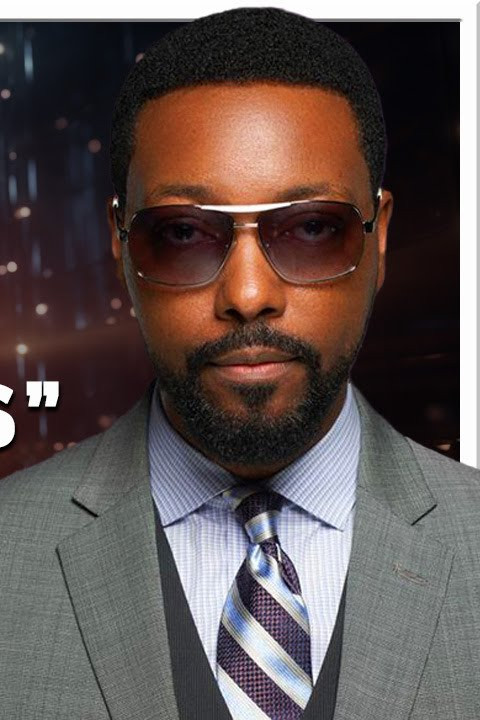
In Data Centers of the Gods, Billy Carson asks whether the angels, demons, archons and "principalities" of scripture are older names for higher-dimensional intelligence systems running a simulated reality. His answer is a qualified yes: the universe is a database in which every atom reports back to source, and modern data centres are humanity rebuilding that structure in silicon, an as-above-so-below fractal. The live episode with his guest, an author on eschatology, runs from the Gnostic archons to Psalm 82:6, The Matrix and the Serapeum of Saqqara.
The question joins three conversations: the Gnostic claim that the visible world is run by lesser powers, the philosophical argument that reality could be computed, and the physical build-out of AI server farms. Carson treats them as one pattern, and the episode shows both how he links scripture, Hermetic thought and technology and where those links run ahead of the evidence.
Watch the video
What the video covers
The episode question (from about 1:15)
Carson asks whether the Bible holds themes that mirror simulation theory, with unseen rulers and heavenly realms as layers of a coded reality. His starting point: "we are living in this fractal holographic matrix made of light."
Archons and the demiurge (from about 5:00)
Asked about the archons of the Nag Hammadi texts, his guest describes them as rulers serving the demiurge who keep humanity on a "prison planet" and feed on emotional energy, a Gnostic-inspired reading that goes well beyond the ancient sources. Carson agrees that such forces work behind the veil, stir division and war, and likens them to energy vampires.
Data centres as a mirror of the universe (from about 11:57)
In the episode's core idea, Carson argues that data centres are another fractal of the universe as a whole, because the cosmos itself runs on data transmission: "every individual atom is transmitting data back to source," so the universe knows each particle's location, spin rate and frequency. In his reading, mankind took that database model out of its own nature and rebuilt it as server halls. His guest casts data centres more darkly, as tools for harvesting human energy.
Co-creation and branching timelines (from about 17:30)
Carson's view of karma is about authorship: "We're inside this matrix, but we are also the programmers." Today's reality, he says, is code written earlier through thought and action, and conscious choices may fracture timelines, with the path not taken continuing as a parallel reality. His guest argued that love is the one frequency able to compromise the simulation, because it dissolves duality.
Gilgamesh and the hero's journey (from about 19:20)
Carson points to the Epic of Gilgamesh, the Mesopotamian tale of Gilgamesh and Enkidu, as one of the oldest hero's journeys. He reads it as a metaphor for every life: watchers observing each trial, and a hero who returns knowing who he really is.
The Vatican thread (from about 21:25)
Carson says he had just returned from the Vatican with an invitation to see its archives next time. He raises the Vatican's Arizona telescope, which he calls the Lucifer telescope, and its talk of baptising an alien, and asks whether churches are preparing for disclosure. The Vatican Observatory runs the Vatican Advanced Technology Telescope on Mount Graham; LUCIFER is a near-infrared camera on the neighbouring Large Binocular Telescope, not a Vatican instrument. The alien remark came from Vatican astronomer Guy Consolmagno, who said at the British Science Festival in 2010 that he would baptise an extraterrestrial "only if they asked", in interviews rather than an official press release.
What is God (from about 29:50)
His guest cites Psalm 82:6, "Ye are gods," as a statement of human creative power. Carson agrees and gives his own reading of the second coming: "I don't think there's a person coming back." For him, Christ consciousness is a state returning to humanity to help usher in a new golden age. Both stress consciousness and frequency, not any group of people.
Senses, neutrinos and AI (from about 42:00)
Carson describes the senses as data collectors, with the brain predicting a holographic projection of what lies outside the skull. From about 45:30 he says muons and neutrinos constantly pass through us and modify our DNA, and that neutrinos were only recently proven to exist. Trillions of neutrinos do pass through the body each second, but they interact so rarely that no effect on DNA has been established, and they were first detected in 1956 by Clyde Cowan and Frederick Reines. On AI (about 49:25), his guest urged reading, writing and thinking for yourself, using AI as a bridge.
Carson's simulation evidence (from about 52:00)
Carson says photons move pixel by pixel and that reality is pixelated. He then cites physicist S. James Gates Jr., saying Gates found codes in Dogon adinkra symbols identical to those that run search engines. In fact Gates and Michael Faux named their supersymmetry diagrams "adinkras" in 2004 after the symbols of the Akan people of Ghana, and the codes inside them are error-correcting codes of a kind used in digital communication, which Gates treats as a curiosity rather than proof of a simulation. No experiment has shown space to be pixelated; Fermilab's Holometer reported in 2015 that it found no sign of the predicted holographic noise.
The Matrix and the brain (from about 53:50)
Asked about The Matrix, his guest read Neo as the neocortex. Carson adds the claustrum, neurons that wrap the brain like a crown of thorns, and magnetite crystals as what lets spirit inhabit the body. The crown image echoes a 2017 Allen Institute finding of claustrum neurons encircling the mouse brain, and magnetite was found in human brain tissue in 1992; the spiritual role Carson gives them is his interpretation. The premise of the film Lucy, also raised, that humans use only 10 percent of the brain, is a myth.
Dendera, inner earth and Naica (from about 61:00)
Carson recalls a ceiling scene at the Temple of Hathor at Dendera that his guide read as a pharaoh travelling to a portal in the moon. From about 67:20 he says he does not believe in a fully hollow Earth, but in vast underground cavities with their own ecology. He cites Filippo Biondi and Armando Mei's 2025 satellite-radar claims beneath the Pyramid of Khafre (see Carson on the Khafre radar claims) and Mexico's Naica Cave of the Crystals, whose giant gypsum crystals are real; the heat there comes from magma below, not crystal friction.
The Serapeum as the Halls of Amenti (from about 75:15)
After his guest leaves, Carson shows footage from the Serapeum at Saqqara, which he identifies with the Halls of Amenti of the Emerald Tablets. Of one great box he says, "It is not a casket." He describes more than 20 diorite rejuvenation chambers, as he calls them, of close to 200 tons, with lids no one can open or close and two opened with dynamite, and links them to Thoth's account of moving his mind between bodies kept in sealed chambers.
Claims Carson says were borne out (from about 79:00)
Carson traces his research to 1977, web forums from 2008 and 4biddenknowledge from 2011, then lists claims he says were confirmed: the structures beneath the Giza plateau rendered on page 34 of The Compendium of the Emerald Tablets, the Active Denial System and matter made from light. The Active Denial System is a real millimetre-wave device that heats the skin, but it does not put voices in anyone's head. On matter from light, Brookhaven's STAR collaboration reported evidence of the Breit-Wheeler process in 2021.
Key takeaways
- Carson frames angels, demons and archons as possible descriptions of higher-dimensional intelligence systems in a simulated reality.
- His central image is the universe as a database, with data centres as humanity's fractal copy of it.
- He holds that people are both inside the matrix and its programmers, and that choices may branch timelines.
- He reads Christ consciousness as a state returning to humanity, not a person.
- Several supporting claims need correcting, from the origin of adinkras to the purpose of the Serapeum boxes.
Billy Carson's reading
Carson's position rests on the Hermetic principle of correspondence: if the universe is information, building data centres is the microcosm repeating the macrocosm. The archons of the Gnostic gospels found at Nag Hammadi name the forces that exploit that system, and he asks whether angels might be its administrators. It fits the fractal view set out in his case that the Anunnaki programmed the matrix.
Co-creation keeps it from being fatalistic: people write the code they later live through, which is why he pairs the simulation theme with Psalm 82:6 and a Christ consciousness anyone can reach. His Serapeum reading comes from the Emerald Tablets, where Thoth describes the Halls of Amenti.
What mainstream scholarship says
In the Gnostic texts found near Nag Hammadi in 1945, such as the Apocryphon of John, the archons are mythic rulers created by the demiurge Yaldabaoth to govern the material world. Scholars read them as theology, an ancient answer to the problem of evil, not as data systems. The angels-as-angles idea raised in the episode is wordplay; the Greek angelos simply means messenger.
Modern simulation theory comes from philosopher Nick Bostrom's 2003 argument, a probabilistic case with no direct physical evidence for or against it. The Serapeum, excavated by Auguste Mariette from 1850, holds 24 granite and basalt boxes of roughly 60 to 80 tonnes with lids, built for Apis bull burials and robbed in antiquity; Mariette used explosives on one sealed box and found it empty. The 2025 Khafre radar claims were announced at a press conference, not in a peer-reviewed paper, and have been rejected by Egyptologists; an earlier Biondi paper on the Great Pyramid was retracted in 2026. See the Saqqara guide for the site's history.
Watch, read and go deeper
For the philosophy behind the episode, start with simulation theory explained and the Nag Hammadi pillar above. The Holographic Universe topic hub gathers Carson's related talks and articles. The full conversation is on the 4biddenknowledge Podcast, and more long-form sessions are in Best of Billy Carson on 4BK TV.
Frequently asked questions
What are archons in Gnosticism?
Archons are the rulers of the material world in Gnostic texts such as the Apocryphon of John from the Nag Hammadi library, serving the demiurge Yaldabaoth. Billy Carson reads them as forces that feed on human emotional energy within a simulated reality.
Does Billy Carson think we live in a simulation?
Yes. Carson describes reality as a fractal holographic matrix made of light and the universe as a database in which every atom transmits data back to source. He also holds that people are its programmers.
What does Psalm 82:6 "Ye are gods" mean?
Psalm 82:6 reads "I have said, Ye are gods; and all of you are children of the most High," and Jesus quotes it in John 10:34. Many scholars read it as God judging divine beings or unjust rulers. Carson reads it as a statement of human creative power realised through Christ consciousness.
What is the Serapeum of Saqqara?
The Serapeum is an underground gallery at Saqqara, Egypt, where Apis bulls were buried in huge stone boxes until the Ptolemaic period; Auguste Mariette rediscovered it in 1850. Carson identifies it with the Halls of Amenti from the Emerald Tablets.
Sources mentioned
The episode draws on the Nag Hammadi texts, Psalm 82:6, the Epic of Gilgamesh, the Emerald Tablets of Thoth and Carson's The Compendium of the Emerald Tablets, S. James Gates Jr.'s adinkra work, the Biondi and Mei radar claims, and the films The Matrix and Lucy. Standard references: Marvin Meyer's The Nag Hammadi Scriptures, Elaine Pagels's The Gnostic Gospels, Nick Bostrom's "Are You Living in a Computer Simulation?" (2003) and Mariette's Le Sérapéum de Memphis.