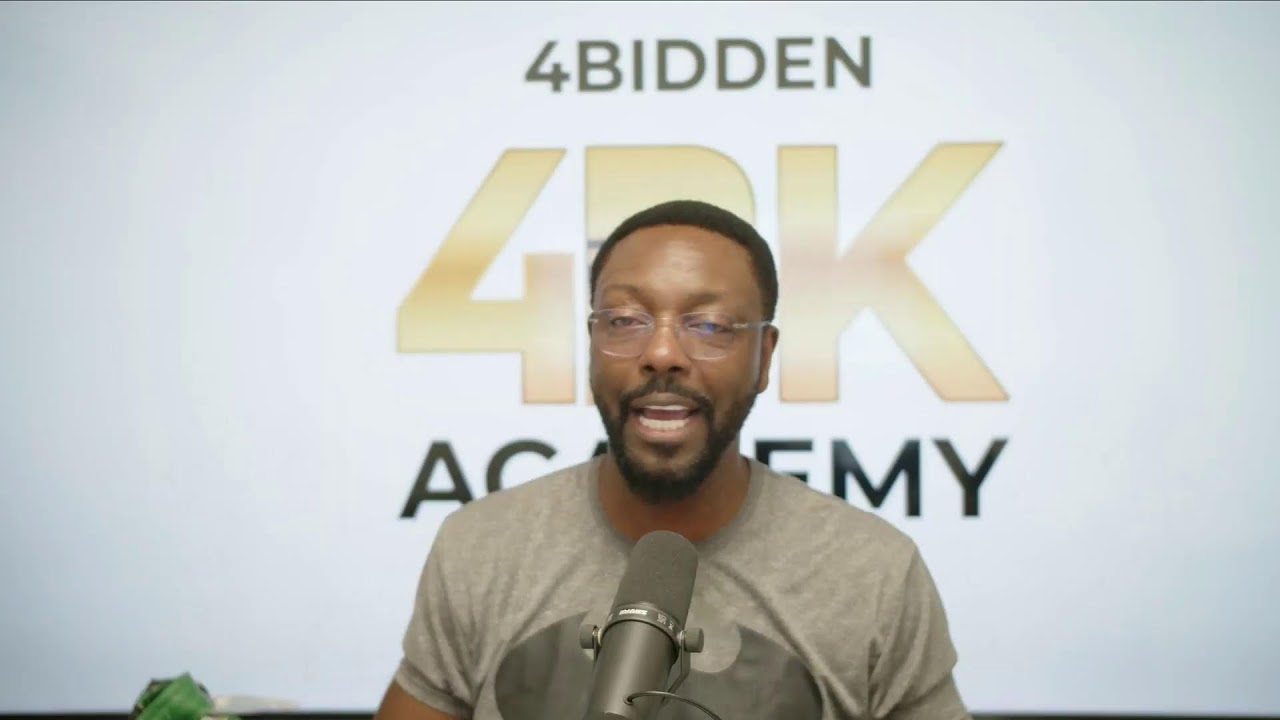
In this sit-down conversation, Billy Carson asks psychiatrist Dr Daniel Amen why a recent public conflict hit him so hard, and Amen's answer is that "it's the brain you bring into the trauma that often determines how you deal with the trauma." The video traces Carson's present-day reaction back to his Miami childhood, covers Amen's tools for handling triggers, shame and betrayal, and ends with Carson's near-death experience in hospital.
The topic matters because almost everyone gets triggered, and few people ask why one event lands harder than another. Carson talks openly about a moment when he did not respond the way he wanted to, which makes the episode a case study in how old experiences, illness and stress shape a reaction in the present, and what someone can do differently next time.
Watch the video
What the video covers
The setting and Amen's opening idea (from about 2:20)
Carson flew from Florida to meet Amen in California during the January 2025 Los Angeles fires, which had closed Amen's Encino clinic. Amen mentions the Serenity Prayer and his seven years as an Army psychiatrist. His central observation is that the state of a person's brain going into a traumatic event shapes how they come out of it. Because Carson grew up amid a good deal of chaos, Amen says, the past is part of the picture.
A podcast appearance that went badly (from about 4:35)
Carson describes a podcast appearance that went badly and the public fallout that followed. He says he felt ambushed and manipulated, and that the hardest part was not the content but what he experienced as a betrayal by someone he had considered a friend. The fallout grew into online harassment aimed at him, his wife and his son, including threats he says were reported to law enforcement and led to extra security for the family.
The live video made in fight-or-flight (from about 12:05)
Carson is candid about his own part. A few days after the footage spread, he went live on YouTube to respond, and he says something in his brain clicked and he was not his usual calm self. He admits he was boastful and said things he did not really mean. "In hindsight, I would have done a pre-recorded, had it looked at," he says. Amen's reading is that someone just out of illness and highly charged is in fight-or-flight mode, which rarely produces good decisions.
Going back to the first time (from about 19:00)
Amen then guides Carson through a recall exercise: close the eyes, notice the thoughts and feelings, and go back to the first time he felt that mix of rage, panic and betrayal. Carson lands on age nine in Miami, when his father, who Carson says struggled with alcohol and drugs, blamed the children for a missing cookie and put them out of the house to sleep in the front yard. He also describes a confrontation over rent at 16 that led him to move out. Later in the conversation he mentions his father's death after an injury and a subsequent seizure, and that end-of-life decisions for both parents, including his mother, who died of ALS, fell to him as the eldest.
Why the past can roar back (from about 25:20)
Amen frames what happened as a present event landing on a mountain of older stress. Carson's achievements, he says, do not mean the earlier stress left no imprint, and "when you feel betrayed in the present, it can roar back." He also points to Carson's physical state: Carson had recently been hospitalized with pneumonia after falling ill while leading a tour in Turkey, and Amen notes that pneumonia lowers oxygen to the brain, so a person is not thinking as they normally would.
Handling public shame (from about 26:00)
Amen's advice is plain. In the moment, the trick is not to say anything. If something has already made it worse, give it space to breathe. "These things have a life cycle," he says, and the people who love you will stay. He warns against numbing the pain with alcohol or drugs, and suggests Carson post nothing without first talking it through with his wife, Elizabeth.
EMDR and Havening (from about 28:08)
Amen names two approaches. The first is EMDR (eye movement desensitization and reprocessing), which he describes as a specific psychological approach for trauma. The second is Havening, developed by New York physician Ronald Ruden, which pairs a distressing memory with bilateral touch such as crossing the arms and stroking down from the shoulders. Amen's version is to go into the feeling, do the touch for about 20 seconds, then picture a place you love while continuing. He says people rating their distress on a 0 to 10 scale can drop from 10 to near zero in four or five minutes. That is Amen's clinical impression; the published evidence for Havening is limited.
The near-death experience (from about 33:45)
Asked about losing his fear of death, Carson describes his first night in hospital. With his eyes closed he found himself in a peaceful landscape of jungles, mountains and hills, free of pain. Opening and closing his eyes moved him between the two. The third time, he sensed a message: "You can stay here if you want, but if you go back, it's going to be very hard." He thought of Elizabeth, chose to return, and says he came away believing death is a transition and nothing to fear. Amen recommends the 2023 documentary After Death and says about 23 percent of near-death experiences are distressing.
Bridging, the shadow and other rules of thumb (from about 37:15)
Amen shares what he calls the 18/40/60 rule: at 18 you worry what everyone thinks of you, at 40 you stop caring, and at 60 you realize nobody was thinking about you much at all. He compares the right response to aikido, which redirects an attacker's energy, and says a team reads his comments, not him. Near the end he names the technique he used with Carson: bridging. When triggered, ask what you are thinking and feeling and when you first felt it, then let your adult self comfort and reparent the child. He also links Carson's boastful moment to what Carl Jung called the shadow.
Keeping it all (from about 42:20)
Carson closes by saying he would do things differently if he could go back, but then he would not be who he is, so he is keeping all of it and working on it.
Key takeaways
- The brain a person brings into a stressful event shapes how they handle it, in Amen's view.
- A present-day betrayal can stir up feelings from much earlier experiences, which is why some reactions seem out of proportion.
- Illness and fight-or-flight arousal are poor conditions for public statements; waiting, pre-recording and getting a second opinion are safer.
- Amen's advice for public shame is not to make it worse, give it time, and avoid numbing with alcohol or drugs.
- EMDR is an established trauma therapy, while Havening is newer and has only small studies behind it.
- Carson says his near-death experience left him with less fear of death.
Billy Carson's reading
Carson presents the episode as a lesson in self-awareness rather than a grievance. He concludes that the live video was a mistake made while sick and highly charged, and that the deeper issue was an old wound around betrayal that the situation reopened. He says he will try anything that helps him deal with trauma, and sees sharing the process as part of his work. His view of how stress and early experience shape the brain lines up with the editorial team's explainer on how trauma rewires the brain and the companion piece on neuroplasticity and recovery from trauma.
Drawing on his near-death experience, he describes death as a move from one density to another, a spiritual reading that sits alongside his broader interest in consciousness. For the practical side of changing old patterns, see the team's guide to reprogramming the subconscious mind, which separates what the science supports from what it does not.
What mainstream scholarship says
The idea that earlier adversity shapes later stress responses is well supported. The CDC-Kaiser Adverse Childhood Experiences study and later research link childhood adversity to higher rates of later health difficulties, though many people with difficult childhoods do well. EMDR is a recognized trauma therapy: the World Health Organization's 2013 guidance on stress-related conditions and the US VA/DoD clinical practice guidelines both list it among recommended psychotherapies for post-traumatic stress. Havening is a different case. It is a newer technique, and its published research consists mainly of case reports and small pilot studies without large randomized trials, so claims about rapid results should be treated as unproven.
Near-death experiences are well documented but not settled. Raymond Moody's Life After Life popularized the term in 1975, Bruce Greyson's NDE Scale gave researchers a standard way to measure them, and the AWARE studies led by Sam Parnia examined awareness during cardiac arrest. This work shows the experiences are common and often life-changing, but does not settle whether they reflect consciousness beyond the brain or brain processes under extreme stress. Estimates of how many are distressing vary from study to study. The team's guide to near-death experience research covers the debate in detail.
Watch, read and go deeper
Start with the trauma and neuroplasticity explainers above, then the near-death experience guide for the science behind Carson's hospital account. More on the brain, stress and wellbeing is collected in the biohacking topic hub. The audio version is on the podcast episode page, and more conversations like this one are on the 4biddenknowledge Podcast on 4BK TV.
Frequently asked questions
What does Dr Amen mean by the brain you bring into trauma?
Amen means that a person's existing state, including past trauma, illness and stress, shapes how they respond to a new hard event. In the video he applies it to Carson, whose recent pneumonia and difficult childhood both affected how he reacted.
What is EMDR?
EMDR stands for eye movement desensitization and reprocessing. It is a structured psychotherapy in which a person recalls a distressing memory during bilateral stimulation, usually eye movements. WHO and US VA/DoD guidelines list it among recommended therapies for post-traumatic stress, delivered by a licensed clinician.
What is Havening?
Havening is a technique developed by New York physician Ronald Ruden that pairs a distressing memory with gentle touch, such as stroking the upper arms, plus imagery or distraction. The research behind it is limited to small studies, so it is best seen as experimental.
What is bridging in this conversation?
Bridging is Amen's term for tracing a present trigger back to the first time you felt the same thought or feeling. Once the earlier memory is found, the adult self offers the younger self the comfort or validation that was missing.
Sources mentioned
The conversation draws on Dr Daniel Amen's clinical experience as an Army psychiatrist and on the Serenity Prayer. Amen names EMDR and the Havening Techniques developed by Ronald Ruden, refers to Carl Jung's concept of the shadow, cites his 18/40/60 rule and the martial art aikido, and recommends the 2023 documentary After Death. Standard references include Raymond Moody's Life After Life, Bruce Greyson's NDE Scale, the World Health Organization's 2013 Guidelines for the Management of Conditions Specifically Related to Stress, and the VA/DoD Clinical Practice Guideline for the Management of Posttraumatic Stress Disorder.
This article is for information only and is not medical advice. If you are struggling with trauma, talk to a licensed clinician; in the US you can call or text 988.
These statements have not been evaluated by the Food and Drug Administration. This content is for information only and is not medical advice.