Aphantasia is the inability, or near-inability, to form pictures in the mind's eye on purpose. Asked to imagine a sunset or a friend's face, a person with aphantasia knows what those things look like but sees nothing, and most have been that way all their lives. It is a variation in human experience, not a disease, and studies put it at roughly 1 to 4 percent of people depending on how strictly it is defined.
It matters because a huge amount of advice, from guided meditations to manifestation coaching, assumes everyone can "see it clearly". People who cannot often conclude they are doing the practice wrong, or that it is not for them. Neither is true. This guide covers what aphantasia is, how researchers measure it, what its opposite, hyperphantasia, looks like, and how to meditate and manifest with no pictures at all.
What is aphantasia?
Aphantasia is the absent or near-absent ability to call up visual images voluntarily. Most people with it have congenital aphantasia: they have never had a mind's eye and often discover only in adulthood that others were not speaking in metaphor when they talked about "picturing" something. A smaller group have acquired aphantasia, losing imagery after a brain injury, illness or medical procedure.
What people with aphantasia keep matters as much as what they lack. They recognise faces and places, describe how a room is laid out, solve spatial problems and know perfectly well what a horse looks like. The knowledge is there; the quasi-visual experience of it is not. Many also report weak imagery in other senses, such as imagined sounds or touch, though this varies.
Researchers describe it as a difference rather than a disorder; Zeman's team has compared it to synaesthesia, a variant of brain function. The site's archive piece exploring aphantasia and the range of mental visualization describes the same spectrum from the reader's side.
Who discovered aphantasia?
The phenomenon was first documented by Sir Francis Galton in 1880 and named in 2015 by the neurologist Adam Zeman and colleagues. Galton's paper "Statistics of Mental Imagery", published in Mind, asked respondents to think of their breakfast table as they sat down to it that morning and rate the brightness and detail of the image. He was surprised that "the great majority of the men of science" he first approached said mental imagery was unknown to them, and one respondent wrote that he could recollect the breakfast table "but do not see it".
The modern story begins with one patient. In 2010 Zeman and colleagues, including Sergio Della Sala, published a case study in Neuropsychologia titled "Loss of imagery phenomenology with intact visuo-spatial task performance: a case of 'blind imagination'". The patient, known as MX, was a 65-year-old man who lost his visual imagery after a coronary angioplasty. He still performed normally on standard visual memory and spatial tests, and brain scans suggested he was solving them by a different route.
After the science writer Carl Zimmer described the case in Discover magazine in 2010, people began contacting Zeman to say they had never had imagery at all. In 2015 Zeman, Michaela Dewar and Della Sala reported 21 of them in Cortex, in "Lives without imagery: Congenital aphantasia". They coined the term from the Greek phantasia, Aristotle's word for the faculty by which mental images are presented to us, with "a-" meaning without. Zeman's group at the University of Exeter has led much of the research since.
Can people with aphantasia dream in pictures?
Many can. In the 2015 study, 17 of the 21 participants reported visual imagery in their dreams, even though they could not summon images while awake. A much larger 2020 study by the same group found that 63.4 percent of people with aphantasia said they dreamed visually.
This shows that voluntary imagery, the kind you call up on purpose, and involuntary imagery, the kind that arrives in dreams, can come apart. Aphantasia mostly concerns the deliberate kind. It is one reason the site's guide to lucid dreaming and astral projection is worth reading for aphantasics: the dream state can be visual even when waking imagination is not.
How is aphantasia measured? The VVIQ
The standard measure is the Vividness of Visual Imagery Questionnaire, or VVIQ, developed by the British psychologist David Marks and published in the British Journal of Psychology in 1973. It has 16 items in four groups of four. Each asks you to imagine a scene, such as a relative's face or a rising sun, and rate how vivid the image is on a five-point scale.
In the scoring most current researchers use, 1 means no image at all and 5 means an image as clear as normal vision, giving totals from 16 to 80. Marks's original version ran the scale the other way; his expanded VVIQ2 of 1995, with 32 items, reversed it so higher scores mean more vivid imagery. Because it relies on self-report, the questionnaire measures how vivid people say their imagery is, not a reading taken from the brain.
In their 2020 Cortex paper, "Phantasia: the psychological significance of lifelong visual imagery vividness extremes", Zeman and colleagues used a VVIQ score of 16 to 23 to define aphantasia and 75 to 80 to define hyperphantasia. Other teams use a broader cut-off; a 2022 prevalence study counted 16 to 32, covering imagery that is absent or only dim and vague.
How common is aphantasia?
Somewhere around 1 to 4 percent of people, depending on whether you count only total absence or also very faint imagery. In the 2020 study, an unselected sample of 1,288 people, who had not volunteered because of their imagery, took the VVIQ: 0.7 percent gave the minimum score of 16, and 2.6 percent the maximum of 80.
The 2022 study by Dance, Ipser and Simner in Consciousness and Cognition tested 1,004 people. Using the 16 to 32 range, 3.9 percent met the criteria for aphantasia, and 0.8 percent reported a complete absence of visual imagery. An earlier single-question survey by Faw (2009), cited by those authors, found about 2.1 percent reporting no visual imagery at all.
What is hyperphantasia?
Hyperphantasia is the opposite extreme: mental imagery so vivid that people describe it as being as clear as real seeing. On the VVIQ it sits at the top of the scale, 75 to 80 in Zeman's definition.
The 2020 study, drawing on around 2,000 people with aphantasia and 200 with hyperphantasia, found clear differences. People with aphantasia more often reported poor autobiographical memory, the ability to relive past events, and significantly more difficulty recognising faces. They were overrepresented in science, mathematics and computing occupations, while people with hyperphantasia were more often in the arts, design, entertainment and media. These are group tendencies, not rules.
The archive essay on the four types of imagination draws on Zeman's broader point that imagination is not one skill. Visualisation is only one of its forms, and a person can lack it entirely while being highly imaginative in story, idea and possibility.
Does aphantasia change how people feel emotions?
The evidence suggests imagery amplifies emotion in response to imagined scenes, so aphantasics react less strongly to frightening stories but not to real images. In a 2021 study in Proceedings of the Royal Society B, Wicken, Keogh and Pearson at UNSW Sydney measured skin conductance, a physical marker of arousal, while 46 people read frightening stories and viewed frightening photographs.
As the stories grew more intense, skin conductance climbed in the 24 participants with typical imagery. For the 22 with aphantasia, it stayed essentially flat. Faced with frightening photographs, both groups reacted similarly. The authors concluded that imagery acts as an emotional amplifier linking thought and feeling. For practice, that is the key point: when an exercise relies on pictures to generate feeling, aphantasics need another route to the feeling, not a different capacity for emotion.
How to meditate and manifest with aphantasia
You do not need a mind's eye to meditate or manifest, because the core of both is attention, intention and feeling, not pictures. Scripts that say "see it clearly" can leave aphantasics feeling they are failing at step one. They are not failing; they are following instructions written for a different kind of mind. These alternatives need no imagery.
Write and speak it. Verbal scripting, present-tense journaling as if the goal were already done, and short spoken affirmations all work in language. Many aphantasics describe themselves as strongly verbal thinkers.
Feel it in the body. Felt-sense or kinaesthetic rehearsal means rehearsing posture, breath and the physical sensation of the wish fulfilled: how your shoulders sit, how relief or confidence feels in the chest. This is close to Neville Goddard's instruction to "assume the feeling of the wish fulfilled", covered in the guide to the law of assumption. His emphasis was on feeling, and feeling needs no picture.
Plan the process. Instead of imagining the outcome, list the steps. If-then plans of the kind studied by Peter Gollwitzer ("if it is 7 a.m., then I write for twenty minutes") tie actions to cues.
Use sound. Mantra, chanting, tuning forks and audio-guided sessions give the mind a non-visual focus. The explainer on binaural beats sets out what the evidence does and does not show for that tool.
Anchor on the breath. Breath-focused meditation, counting breaths or noticing air at the nostrils, has never depended on imagery.
Set an intention, then act. A sentence of intention each morning and a log of what you did about it each evening may be the most reliable practice of all, because it ends in action.
One caution: anyone who notices a sudden loss of mental imagery, particularly after a head injury, illness or new neurological symptom, should see a doctor. Lifelong aphantasia is a harmless variation; a new change is worth checking.
Billy Carson's reading
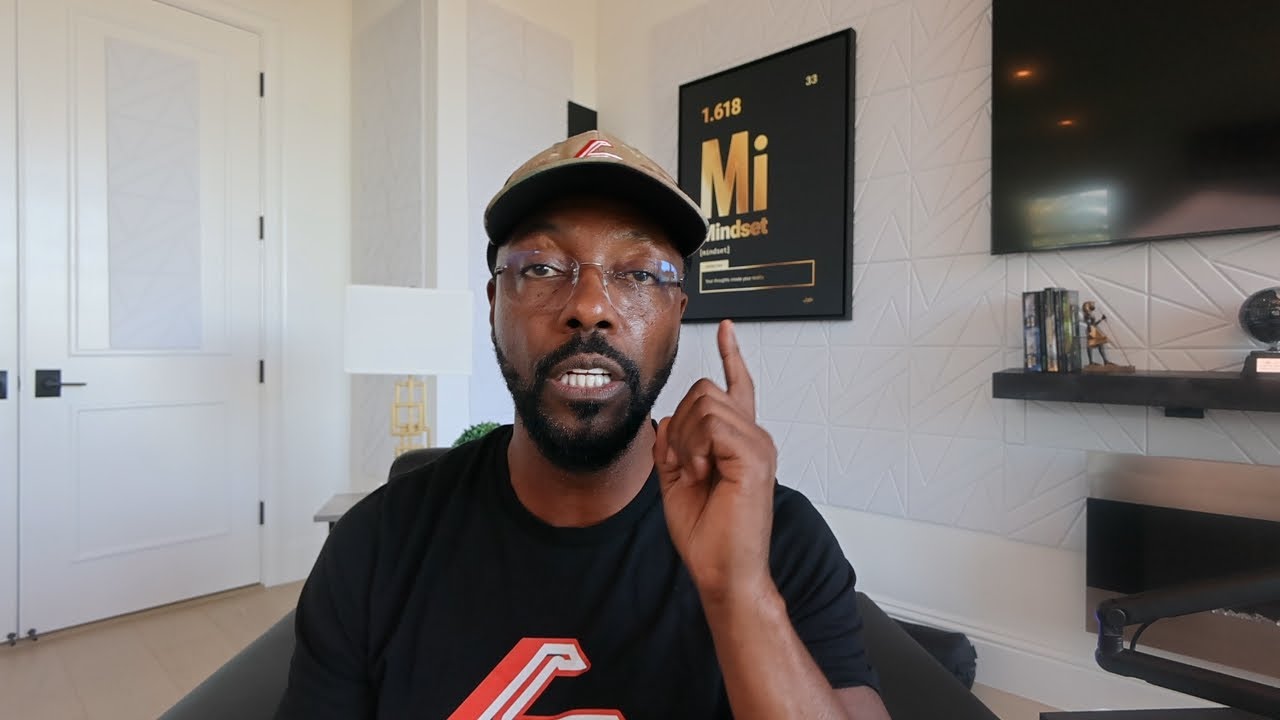
Billy Carson has not, as far as the site's archive shows, addressed aphantasia directly, so nothing here is his statement on it. What his teaching does make clear is where he puts the weight. In how to manifest what you want, Carson presents manifestation as three linked principles, thought, frequency and action, and describes "frequency" as the emotional state of already having the outcome. Visualisation is one tool he lists for reaching that state, alongside scripting and gratitude, but in his method it is the inner state, not the picture, that is decisive.
That emphasis lines up with the non-visual routes above. Carson treats committed physical action as non-negotiable, and that part of his method needs no mind's eye at all. His view that words alone do not manifest, and that the inner state behind them counts, puts him close to Neville's "feeling is the secret". For a reader with aphantasia, the practical upshot is that his framework can run on scripting, felt-sense rehearsal, gratitude and action, with visualisation simply left out.
Watch, read and go deeper
For guided practice that does not depend on visualisation, start with the Meditation series on 4BK TV, which collects Billy's guided and sound-based sessions, including his 432 Hz tuning fork meditation. Pair those sessions with his three-principle manifestation method and the guide to Neville's feeling-based practice, both linked above, and run them with the non-visual techniques in this article. The consciousness topic hub gathers the site's work on the mind and inner experience in one place.
Frequently asked questions
Is aphantasia a disorder?
No. Aphantasia is generally regarded as a variation in human experience rather than a disease. Most people with it live ordinary lives, and many only discover it in adulthood. The exception is imagery loss that appears suddenly after an injury or illness, which should be checked by a clinician.
How do I know if I have aphantasia?
The most widely used self-test is the Vividness of Visual Imagery Questionnaire (VVIQ), which asks you to rate 16 imagined scenes from no image at all to as vivid as normal vision. Zeman's group at the University of Exeter has used scores of 16 to 23 out of 80 to define aphantasia. It is a self-report measure, so treat the result as a description of your experience rather than a diagnosis.
Can you manifest if you can't visualize?
Yes. The parts of manifestation practice with the strongest research support, clear goals, rehearsing the process, planning and committed action, do not require mental pictures. Written scripting, felt-sense rehearsal, if-then plans, sound-based meditation and daily intention-setting all work without imagery.
What is the difference between aphantasia and hyperphantasia?
They are the two ends of one spectrum of visual imagery vividness. Aphantasia is absent or near-absent imagery; hyperphantasia is imagery so vivid it can feel like real seeing. In Zeman's 2020 study, 0.7 percent of an unselected sample scored at the very bottom of the VVIQ and 2.6 percent at the very top.
Sources and further reading
- Francis Galton, "Statistics of Mental Imagery", Mind 5 (1880)
- David F. Marks, "Visual imagery differences in the recall of pictures", British Journal of Psychology 64 (1973)
- Adam Zeman et al., "Loss of imagery phenomenology with intact visuo-spatial task performance: a case of 'blind imagination'", Neuropsychologia 48 (2010)
- Adam Zeman, Michaela Dewar and Sergio Della Sala, "Lives without imagery: Congenital aphantasia", Cortex 73 (2015)
- Adam Zeman et al., "Phantasia: the psychological significance of lifelong visual imagery vividness extremes", Cortex 130 (2020)
- C. J. Dance, A. Ipser and J. Simner, "The prevalence of aphantasia (imagery weakness) in the general population", Consciousness and Cognition 97 (2022)
- M. Wicken, R. Keogh and J. Pearson, "The critical role of mental imagery in human emotion: insights from fear-based imagery and aphantasia", Proceedings of the Royal Society B 288 (2021)