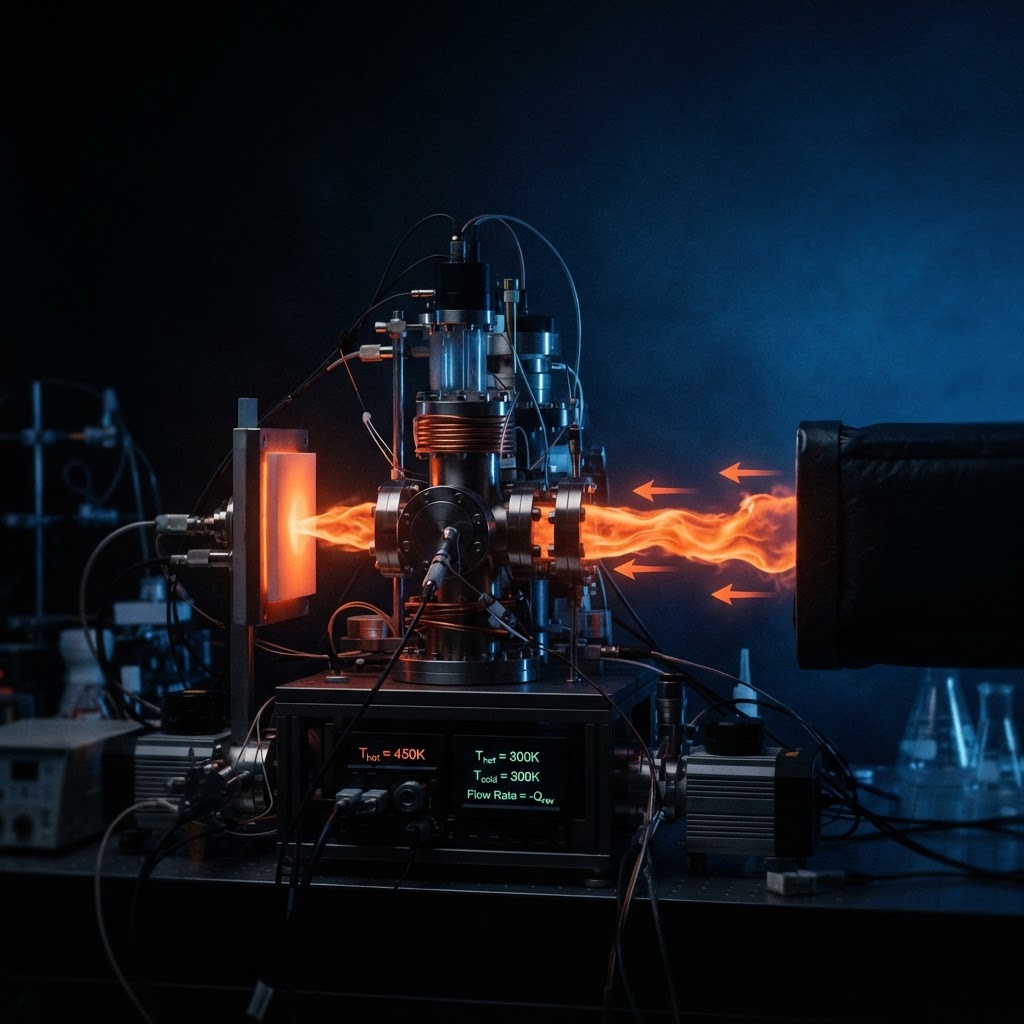
In the mid-1970s, a wealthy cotton farmer named David Hudson was analyzing the soil on his land near Phoenix, Arizona, when — by his own account — he ran into something his assayers could not explain. A material recovered from his soil seemed to defy the standard tests. It would not dissolve as expected, would not register as any known element, and, in one of the more theatrical details of his story, a sample allegedly flashed with light and lost a portion of its weight when heated. Hudson would spend years and, he claimed, millions of dollars pursuing the mystery, eventually declaring that he had discovered a previously unrecognized state of matter. He called the materials "orbitally rearranged monatomic elements" — ORMEs — and the wellness world would come to know the subject by a softer name: ORMUS.
Nearly fifty years later, ORMUS remains one of the strangest stories at the intersection of alchemy, fringe chemistry, and modern spirituality. It deserves to be told honestly — the claims, the history its proponents reach for, and what mainstream science actually says.
The Farmer's Tale
Hudson's account, delivered in a series of recorded lectures in the 1990s that still circulate widely online, goes roughly like this. Precious metals such as gold, platinum, rhodium, and iridium, he claimed, can exist in a form where individual atoms are separated from the metallic lattice — "monatomic" — with their electron orbitals rearranged in a way that makes them invisible to conventional spectroscopic analysis. In this state, he asserted, the elements cease to behave like metals at all: they become a fluffy white powder, exhibit superconductive properties at room temperature, and can even partially levitate in magnetic fields. He filed patent applications in the late 1980s describing methods for obtaining and using these "ORMEs" — filings that ORMUS proponents cite to this day as evidence the discovery was real, though a patent application documents a claim, not a scientific verification.
Hudson went further still, connecting his white powder to human consciousness. Drawing on the fact that biological systems contain trace elements, he suggested monatomic elements might play a role in the body's subtle energetics — a leap from soil chemistry to spirituality that made the lecture circuit far more receptive than the laboratory ever was.
The White Bread of the Pharaohs
What gave ORMUS its mythic depth was not the chemistry but the history Hudson and later proponents wove around it. Their central exhibit is ancient Egypt.
At Serabit el-Khadim, on a plateau in the Sinai Peninsula, stand the ruins of a temple to the goddess Hathor, associated with Egyptian turquoise-mining expeditions and excavated by Flinders Petrie at the turn of the twentieth century. Petrie's expedition documented quantities of a white ash-like material at the site. Egyptian texts, meanwhile, refer to something called mfkzt (a rendering of an Egyptian term whose translation scholars still debate — turquoise is the conventional reading) and depict offerings of conical "white bread" presented to pharaohs and gods. Proponents, most prominently the British author Laurence Gardner in his 2003 book "Lost Secrets of the Sacred Ark," assembled these fragments into a bold thesis: the white bread was not bread at all, but a sacred monatomic gold powder — Hudson's ORMEs — consumed by pharaohs to nourish the light body and heighten perception.
Egyptologists do not share this reading. The mainstream view is that mfkzt refers to turquoise or a similar prized mineral, that the white offerings were exactly what they appear to be — bread and ritual foodstuffs — and that the ash at Serabit el-Khadim has conventional explanations connected to centuries of burnt offerings. But the proponents' version undeniably resonates, because it slots into a much older and very real tradition: alchemy. For centuries, alchemists in Europe, the Islamic world, China, and India pursued transformed states of gold — potable gold, the philosopher's stone, elixirs of longevity. The idea that a perfected form of gold could perfect the human being who consumed it is one of the oldest dreams in recorded esoteric thought. ORMUS is, in a real sense, that dream retold in the vocabulary of twentieth-century physics.
What the Chemists Say
Here the honest account must slow down and give mainstream science its full say. No peer-reviewed study has ever confirmed the existence of Hudson's orbitally rearranged monatomic elements. No laboratory has reproduced a room-temperature superconducting white powder of gold. The claimed properties — mass that partially vanishes, matter that slips in and out of detectability — would overturn well-established physics, and claims of that magnitude attract intense scrutiny when credible evidence exists. In five decades, that evidence has not arrived.
Skeptical chemists who have examined ORMUS claims and commercial preparations offer a more prosaic reading. Genuine monatomic gold — single gold atoms — is real but fleeting; isolated metal atoms are highly reactive and promptly bond with their neighbors or surroundings. It cannot be scooped into a jar as a stable powder. Analyses of materials sold as ORMUS or "white powder gold" have generally found ordinary substances: mineral salts, magnesium and calcium compounds, sea-salt derivatives — with gold content ranging from trace to none. There is a certain irony that Hudson's defining claim, that the material cannot be detected by standard analysis, functions as a perfect shield: any test that finds nothing extraordinary is taken as confirmation rather than refutation. That is not how scientific claims earn acceptance.
None of this is stated to sneer. It is stated because a reader deserves the full picture, and because the ORMUS community itself is best served by knowing precisely where its story stands with respect to evidence.
How Modern ORMUS Is Actually Made
Whatever one concludes about the theory, ORMUS as a product category exists, and its manufacture is well documented within the community. The most common technique is the "wet method," and it is straightforward chemistry. The maker starts with a mineral-rich source — ocean water and Dead Sea salt are favorites — dissolves it in water, and slowly raises the pH by adding a lye solution while stirring, taking care (in traditional practice) not to exceed a pH around 10.78. As alkalinity rises, dissolved minerals precipitate out of solution as a soft white or off-white sediment, which is then repeatedly washed with distilled water. The community calls the precipitate "milk of ORMUS" or simply ormus; chemists call it a mix of magnesium hydroxide and other mineral hydroxides carrying whatever trace elements the seawater held.
Practitioners believe this precipitate concentrates the elusive ORMUS elements out of the source water. Chemistry sees a standard alkaline precipitation. Both descriptions refer to the same white slurry in the same jar — which is, in miniature, the entire ORMUS debate.
It should be said clearly: ORMUS preparations sold today are marketed as dietary supplements or spiritual tools, and any health-related claims made for such products have not been evaluated by the FDA. No such product is approved to diagnose, treat, cure, or prevent any disease.
Why Seekers Keep Reaching for It
The easy explanation for ORMUS's endurance — gullibility — is also the laziest one, and it misses what is actually going on. The people drawn to ORMUS are, in the main, drawn to a question that long predates David Hudson: is there a material bridge between matter and consciousness? Every alchemical tradition answered yes. The Egyptian offering scenes, the Vedic soma hymns, the Chinese elixir schools, the European philosopher's stone — all of them proposed that some perfected substance could elevate the person who received it. ORMUS gives that ancient intuition a modern costume stitched from superconductors and quantum language.
There is also something genuinely poetic in its central image: that the sea — the origin of life, in every tradition and in evolutionary biology alike — might carry hidden elements of illumination, waiting to be raised out of salt water by patient hands. Whether or not the chemistry supports the poetry, the poetry explains the appeal.
The disciplined position, and the one we hold to, is that fascination and evidence are different things and both deserve respect. The story of ORMUS is a remarkable piece of modern esoteric history — an Arizona farmer, a Sinai temple, a white powder, and a fifty-year echo of the oldest dream in alchemy. As history and as a window into how humans make meaning, it is rich territory. As chemistry, it remains unverified. A curious mind can hold both truths at once.
If these threads between ancient tradition and modern seeking interest you, explore the rest of our Consciousness hub, where we trace more of the ideas humanity keeps returning to.