The double slit experiment sends light or matter through two narrow openings and finds a striped interference pattern on the screen behind them, the signature of a wave, even when particles pass through one at a time. If any device records which slit each particle took, the stripes disappear and the particles land in two plain bands. That trade-off, between a wave-like pattern and knowledge of the path, is what physicists mean by wave-particle duality and what popular writing calls the "observer effect."
It matters because no experiment is quoted more often in arguments about the nature of reality. Richard Feynman, in volume III of The Feynman Lectures on Physics, described it as a phenomenon "impossible, absolutely impossible, to explain in any classical way, and which has in it the heart of quantum mechanics." It is also the experiment most often cited for the claim that consciousness creates the physical world, so separating what it has shown from what people read into it is the starting point for much of the consciousness topic hub.
Watch the video
Who first did the double-slit experiment?
Thomas Young, the English physician and polymath, gave the first convincing demonstration that light interferes like a wave. In his Bakerian Lecture, "Experiments and Calculations Relative to Physical Optics," read to the Royal Society on 24 November 1803 and published in the Philosophical Transactions in 1804, he split a narrow beam of sunlight with a slip of card about one-thirtieth of an inch wide and observed bright and dark fringes in the shadow. The two-slit arrangement Young also described became the standard textbook form later.
The result challenged Isaac Newton's particle theory of light. Where two waves meet crest to crest they reinforce, and where crest meets trough they cancel, producing alternating stripes; a stream of pellets would simply produce two bright patches.
What happens when you fire electrons and molecules through two slits?
Matter behaves the same way, which is where the experiment turns from optics into quantum mechanics. In 1961 Claus Jönsson at the University of Tübingen sent electrons through microscopic slits (two, and up to five) and recorded interference fringes, publishing the result in Zeitschrift für Physik.
The next step was to slow the beam until only one electron was in the apparatus at a time. Pier Giorgio Merli, Gian Franco Missiroli and Giulio Pozzi in Bologna did this in 1974 using an electron biprism, a fine charged wire that acts as the electron equivalent of two slits, and published in the American Journal of Physics in 1976. In 1989 Akira Tonomura and colleagues at Hitachi filmed the same build-up with near-perfect detection efficiency: each electron lands as a single point in an apparently random spot, and after thousands of arrivals the familiar stripes emerge.
In 1999 Markus Arndt, Anton Zeilinger and colleagues at the University of Vienna diffracted C60 "buckyball" molecules, sixty carbon atoms each, through a fine grating and reported the result in Nature. In 2019 Yaakov Fein, Arndt and collaborators from Vienna and Basel reported in Nature Physics that molecules of nearly 2,000 atoms, with masses above 25,000 atomic mass units, still showed quantum interference in a two-metre matter-wave interferometer.
What does the double-slit experiment actually show?
It shows that quantum objects are neither classical waves nor classical particles. They are detected as discrete particles at single points, but the probability of where they land is governed by something that spreads out, passes through both openings and interferes with itself. In the formalism this is the wave function.
What the experiment does not show is what the wave function is: a real field, a list of possibilities, or a record of knowledge. That is the question the interpretations of quantum mechanics answer differently.
What is the observer effect, really?
In physics the "observer effect" means which-path measurement: any physical interaction that records which slit a particle went through destroys the interference pattern. The "observer" is a detector, a scattered photon, a stray air molecule, anything that leaves a trace correlated with the path. No conscious person is required; in real laboratories the data are stored by instruments and read later.
This is Niels Bohr's principle of complementarity in practice: the more reliably the path can be known, even in principle, the weaker the fringes. Partial path information gives partially washed-out fringes.
The modern explanation of why the path record kills the pattern is decoherence. H. Dieter Zeh at Heidelberg laid out the idea in a 1970 paper in Foundations of Physics, and Wojciech Zurek developed it in a series of papers in Physical Review D from 1981 onward. When a particle interacts with a detector or its surroundings, the possibilities "went left" and "went right" become entangled with different states of the environment, and the interference leaks away into correlations nobody can track. That is why tables and people never show interference: they constantly interact with air, light and heat. It does not require a mind. One caveat: decoherence explains why interference disappears, but whether it explains why one definite outcome is experienced is still debated, and that is where the interpretations divide.
Does the delayed-choice experiment change the past?
No, although the name invites that reading. In 1978 John Archibald Wheeler proposed a thought experiment in which the decision to measure "which path" or "both paths" is made only after the particle has already passed the slits. If the particle decided in advance to act as wave or particle, a late choice should catch it out.
In 2007 Vincent Jacques, Alain Aspect, Jean-François Roch and colleagues in France carried out Wheeler's idea with single photons in an interferometer, publishing in Science. A quantum random number generator chose whether to close the interferometer, and that choice was relativistically separated from the photon's entry. The photons gave interference when the interferometer was closed and path information when it was open, exactly as quantum mechanics predicts.
The lesson most physicists draw is not that the future rewrites the past, but that the photon never had a classical "wave or particle" identity to begin with. Quantum mechanics predicts the statistics of the measurement actually made.
How does the quantum eraser work?
The quantum eraser shows that interference can be recovered if the which-path information is erased before it can be read. Marlan Scully and Kai Drühl proposed the scheme in Physical Review A in 1982. In 2000 Yoon-Ho Kim, Rong Yu, Sergei Kulik, Yanhua Shih and Scully published a delayed-choice version in Physical Review Letters.
In that experiment, pairs of entangled photons are created at one of two slits. One photon of each pair (the signal) strikes a detector screen. Its twin (the idler) travels further to one of several detectors, some of which reveal the slit and some of which scramble that information. Because the idler arrives later, the "choice" seems to be made after the signal photon has landed.
The crucial detail is that the signal photons, taken all together, never show interference. Their total pattern is a featureless blur every time. Fringes appear only after the data are sorted, using a coincidence counter, into the subsets that match the "erasing" idler detectors, and those subsets' complementary fringes add back up to the blur. Nobody looking only at the signal screen can tell what happened to the idlers, so no message can be sent backward in time. The eraser demonstrates entanglement, not retrocausality.
Does consciousness collapse the wave function?
Some physicists have argued that it does, but it is a minority interpretation, not what the experiments establish. John von Neumann, in his 1932 Mathematical Foundations of Quantum Mechanics, showed that the boundary between the measured system and the measuring apparatus can be placed anywhere along the chain from detector to the observer's brain. Fritz London and Edmond Bauer argued in 1939 that the observer's consciousness played a special role, and Eugene Wigner made the case most famously in his 1961 essay "Remarks on the Mind-Body Question," proposing that consciousness is where the collapse happens. This is now called the von Neumann–Wigner interpretation. Wigner himself moved away from it by the late 1970s, persuaded in part by Zeh's work on decoherence.
The mainstream interpretations do not give the mind a physical role. The Copenhagen view of Bohr and Werner Heisenberg treats the wave function as a tool for predicting measurements. Hugh Everett's 1957 relative-state formulation, later called many-worlds, says the wave function never collapses and every outcome occurs in a branching reality. David Bohm's 1952 pilot-wave theory, building on Louis de Broglie, gives each particle a definite path guided by a real wave. Objective-collapse models such as GRW (Ghirardi, Rimini and Weber, 1986) add spontaneous collapse to the equations, which large-molecule experiments help constrain. QBism, developed by Christopher Fuchs, Rüdiger Schack and Carlton Caves, treats the wave function as an agent's personal betting odds, without making consciousness a physical force.
The most cited attempt to test the consciousness reading directly came from Dean Radin and colleagues, who reported in Physics Essays in 2012 that people meditating on a double-slit apparatus produced a small shift in its interference pattern. A 2019 independent reanalysis of a later Radin dataset by Nicolas Tremblay in PLOS ONE found a flaw in the statistical method and concluded that the data did not contain evidence of mind-matter interaction. The effect has not been confirmed by independent physics laboratories.
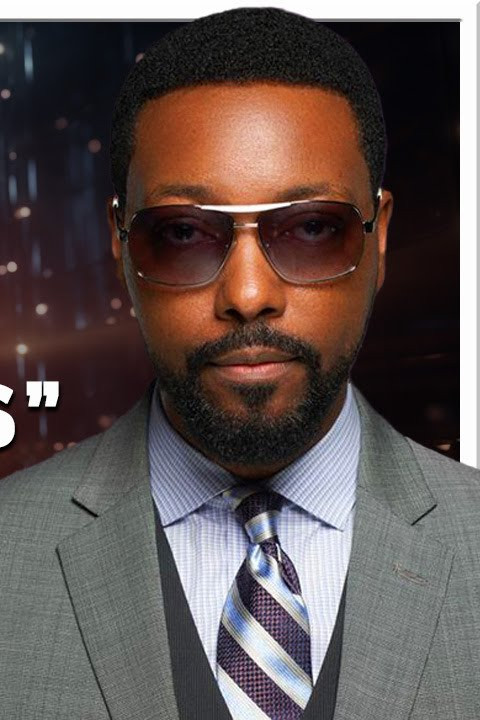
Billy Carson's reading
Billy Carson takes the consciousness-collapse reading and builds on it. In the Egyptian Mystery School episode "How Consciousness Collapses Waves Into Solid Matter," he presents the double-slit result as evidence that conscious observation is what turns a field of possibilities into the solid world people experience. For Carson, that reading fits his fractal-holographic model of reality, in which consciousness is the underlying substrate of the cosmos rather than a by-product of the brain, echoing the Hermetic principle that "The All is Mind."
He extends the theme in his conversation with Robert Edward Grant, Does Light Travel?, where the two discuss light as an excitation of a field and a holographic universe that renders what is observed, and in a podcast interview with Alexis Brooks of Higher Journeys on conscious light waves and humanity's link to the field. In his teaching the practical point follows: if consciousness is fundamental, intention and what he calls frequency shape a person's experience.
To be plain about it, Carson's position corresponds to the von Neumann–Wigner interpretation, a philosophical reading held by a minority of physicists, not the physics consensus. The experiments above are fully consistent with detectors and decoherence doing the work without any mind involved. Where Carson and mainstream physics agree is on the strangeness itself: what is measured shapes what is found, and quantum objects do not behave like the solid little balls of everyday intuition.
Watch, read and go deeper
Billy's episode on consciousness and wave collapse is embedded with this article, and more of his lessons are in the Egyptian Mystery School series on 4BK TV. His Conscious Light Waves interview is on the 4biddenknowledge Podcast. For the bigger cosmological picture, read Is the Universe a Hologram?, and Simulation Theory Explained. The holographic universe topic hub gathers every related article and video in one place.
Frequently asked questions
Does the double-slit experiment prove that consciousness creates reality?
No. The experiment shows that recording which-path information destroys interference, and that recording can be done by a machine with no one watching. The idea that consciousness causes collapse is one interpretation, associated with von Neumann and Wigner, and it is held by a small minority of physicists.
Does the pattern change if a person simply looks at the experiment?
Looking at the screen does not change the pattern, because the screen records where particles land, not which slit they used. What changes it is any interaction that marks the path, such as a detector at one slit.
Can the quantum eraser send information back in time?
No. In the delayed-choice quantum eraser the signal photons always form a featureless blur when viewed on their own. Interference only appears after their records are matched with their entangled partners using a coincidence counter, so nothing can be learned on the screen before that comparison is made.
What is the largest object shown to interfere with itself?
As of the 2019 Vienna and Basel experiment published in Nature Physics, molecules of nearly 2,000 atoms with masses above 25,000 atomic mass units have shown quantum interference.
Who invented the double-slit experiment?
Thomas Young demonstrated the interference of light in a lecture to the Royal Society on 24 November 1803, published in 1804, using a thin slip of card to split a sunbeam. The two-slit layout became the standard version later, and Claus Jönsson performed the first true double-slit experiment with electrons in 1961.
Sources and further reading
- Thomas Young, "The Bakerian Lecture: Experiments and Calculations Relative to Physical Optics," Philosophical Transactions of the Royal Society (1804)
- Richard P. Feynman, Robert B. Leighton and Matthew Sands, The Feynman Lectures on Physics, Volume III, chapter 1
- A. Tonomura et al., "Demonstration of Single-Electron Buildup of an Interference Pattern," American Journal of Physics 57 (1989)
- M. Arndt et al., "Wave-Particle Duality of C60 Molecules," Nature 401 (1999); Y. Y. Fein et al., "Quantum Superposition of Molecules Beyond 25 kDa," Nature Physics 15 (2019)
- V. Jacques et al., "Experimental Realization of Wheeler's Delayed-Choice Gedanken Experiment," Science 315 (2007)
- Y.-H. Kim, R. Yu, S. P. Kulik, Y. Shih and M. O. Scully, "Delayed 'Choice' Quantum Eraser," Physical Review Letters 84 (2000)
- Eugene Wigner, "Remarks on the Mind-Body Question" (1961), and Maximilian Schlosshauer, Decoherence and the Quantum-to-Classical Transition (2007)
- N. Tremblay, "Independent Re-analysis of Alleged Mind-Matter Interaction in Double-Slit Experimental Data," PLOS ONE (2019)