The gnostic gospels are early Christian writings, most of them outside the New Testament, that teach salvation through gnosis, a direct inner knowledge of the divine. The largest collection of them was found in December 1945 near Nag Hammadi in Upper Egypt: thirteen leather-bound papyrus codices holding 52 texts in Coptic, translated from Greek originals and copied in the mid-4th century CE. The best known is the Gospel of Thomas, a list of 114 sayings attributed to Jesus.
The find matters because it let modern readers hear, for the first time in some 1,500 years, voices that the early church had argued against and largely stopped copying. Before 1945, most of what was known about these groups came from their opponents. The Nag Hammadi library put their own words back on the table, and it reopened questions that still drive popular interest in [forbidden knowledge](/what-is-forbidden-knowledge-and-why-4biddenknowledge-exists): who decided what counts as scripture, what was left out, and why.
How were the Nag Hammadi codices discovered?
The codices were found by a local farmer, Muhammad Ali al-Samman, who dug up a sealed storage jar near the cliffs of the Jabal al-Tarif, close to the town of Nag Hammadi, in December 1945. Inside were twelve bound books and the loose leaves of a thirteenth, written on papyrus and wrapped in leather covers. After passing through dealers and private hands, the codices ended up in the Coptic Museum in Cairo, where they remain today.
Dating the books is unusually precise for an ancient find. Scraps of used papyrus pressed together to stiffen the covers, known as cartonnage, include dated documents from the years 341 to 348 CE, so the codices were bound no earlier than the 340s. The texts inside are older than the books themselves, since the Coptic versions were translated from earlier Greek writings, some of them from the 2nd century.
Publication was slow. The first complete English edition, The Nag Hammadi Library in English, edited by James M. Robinson, appeared in 1977. Two years later Elaine Pagels' The Gnostic Gospels (1979) brought the find to a general audience and remains the most widely read introduction.
What is actually in the Nag Hammadi library?
The library is a mixed collection, not a single "lost Bible." Only a handful of its 52 tractates are called gospels, several texts appear in more than one copy, and not everything in it is gnostic. Codex VI, for example, contains a short passage from Plato's Republic in Coptic and several Hermetic writings, including the Discourse on the Eighth and Ninth, which sit closer to the tradition discussed in [the Kybalion and the Hermetic principles](/the-kybalion-and-the-seven-hermetic-principles-explained) than to Christian theology.
The texts most often discussed are these:
- The Gospel of Thomas, a collection of sayings with no birth story, miracles, crucifixion or resurrection.
- The Gospel of Philip, a set of reflections on sacraments, including a rite called the "bridal chamber."
- The Apocryphon (Secret Book) of John, the fullest surviving version of the Sethian creation myth.
- The Gospel of Truth, a meditative sermon associated with the teacher Valentinus and his followers.
- The Hypostasis of the Archons and On the Origin of the World, two retellings of Genesis from a gnostic perspective.
- Thunder, Perfect Mind, a poem in the voice of a female divine figure who speaks in paradoxes ("I am the first and the last. I am the honored one and the scorned one").
- Trimorphic Protennoia, a revelation discourse in which divine Thought descends in three forms.
Three other important texts were found elsewhere. The Gospel of Mary survives in the Berlin Codex, acquired in Cairo in 1896. The Gospel of Judas comes from the Codex Tchacos and was published in 2006. The Pistis Sophia is preserved in the Askew Codex, held in London.
What does the Gospel of Thomas say?
The Gospel of Thomas is a list of 114 sayings, or logia, introduced as "the secret sayings which the living Jesus spoke and which Didymos Judas Thomas wrote down." It has no narrative at all. Roughly half of the sayings have close parallels in Matthew, Mark and Luke, while the rest are unknown from the New Testament.
The text was not entirely new in 1945. Three Greek fragments found at Oxyrhynchus in Egypt, catalogued as P.Oxy. 1, 654 and 655 and dated to around 200 CE, turned out to be pieces of the same work. Scholars disagree about when Thomas was composed: estimates run from about 50 to 140 CE, and whether it preserves sayings independent of the canonical gospels is one of the liveliest debates in the field.
Three sayings explain why Thomas is so often quoted. Saying 3 relocates the kingdom: "the kingdom is inside of you, and it is outside of you. When you come to know yourselves, then you will become known." Saying 70 makes inner realization the key to salvation: "If you bring forth what is within you, what you bring forth will save you." Saying 77 speaks of a presence in all things: "Split a piece of wood, and I am there. Lift up the stone, and you will find me there." Whether Thomas itself is fully "gnostic" is debated, since it lacks the elaborate creation myth found in other Nag Hammadi texts, but its emphasis on self-knowledge fits the wider movement.
Who was the demiurge in gnostic myth?
The demiurge is the lesser, ignorant creator of the material world in many gnostic systems, distinct from the true, transcendent God. The word comes from the Greek demiourgos, "craftsman," which Plato used in the Timaeus for the benevolent maker of the cosmos. Gnostic authors kept the term but turned the figure into a flawed or arrogant ruler.
The Apocryphon of John tells the fullest version of the story. It begins with the Monad, a perfect and unknowable God, from whom emanates Barbelo, the first Thought, and a series of divine beings. One of them, Sophia (Wisdom), acts without her partner and without the Father's consent, and produces a misshapen offspring, Yaldabaoth, described as a lion-faced serpent. Ignorant of the realm above him, Yaldabaoth creates rulers called archons, fashions the material world, and declares, "I am a jealous God and there is no other God beside me," a line that deliberately echoes the God of the Hebrew Bible.
The archons then create Adam, but their creation lies lifeless until Yaldabaoth is tricked into breathing into him the power he had taken from his mother. That stolen light, the divine spark, is what humans carry. The rest of the story tells how the archons try to keep people ignorant of it, and how revealed knowledge wakes them up. Readers who have followed the debate over [the plural Elohim of Genesis](/who-were-the-elohim-the-plural-god-of-genesis-and-the-anunnaki-question) will recognize how closely these authors read the same chapters and reached very different conclusions.
Who were the gnostics?
"Gnostic" is a label for a range of religious movements of the 2nd to 4th centuries CE that taught salvation through knowledge rather than through faith or ritual alone. The best-known teachers were Valentinus and Basilides, and scholars also group together a tradition called Sethian, after Seth, the third son of Adam, who is honored as the ancestor of an enlightened lineage. Common threads include a transcendent God far above the created world, a lesser creator, a divine spark trapped in the human being, and a redeemer who brings saving knowledge.
Irenaeus of Lyon wrote Against Heresies around 180 CE to refute Valentinian and other teachers, and Tertullian attacked them in the early 3rd century. The Nag Hammadi texts showed that some of these summaries were broadly accurate and others polemical.
Modern scholars also question the category itself. Michael Williams, in Rethinking "Gnosticism" (1996), argued that the term lumps together groups that did not see themselves as one movement, and Karen King's What Is Gnosticism? (2003) traced how the label was built largely by the early church's opponents and later historians. Many specialists still use "gnostic" as shorthand, but carefully.
Why were the gnostic gospels buried?
No one knows for certain who buried the codices or why, and every explanation is a hypothesis. The most widely cited one links the burial to Athanasius of Alexandria, whose Festal Letter of 367 CE listed the 27 books now in the New Testament and warned Egyptian Christians against apocryphal writings. On this reading, monks in the region, possibly connected to nearby Pachomian monasteries, hid books that had become suspect rather than destroy them. Other scholars propose different owners and motives, and the evidence does not settle the question.
What can be said with confidence is that the New Testament canon took shape gradually, not at a single meeting. Around 140 CE Marcion of Sinope assembled his own short canon of one gospel and ten letters of Paul, which pushed other churches to define theirs. The Muratorian fragment preserves an early list of accepted books. Athanasius' letter of 367 is the first surviving list that matches the 27-book New Testament exactly, and the regional councils of Hippo (393) and Carthage (397) affirmed a similar list. The Council of Nicaea in 325, often named in popular accounts, did not decide the canon.
So "buried" is literally accurate, and "suppressed" is fair in a narrower sense: these texts lost the argument, were denounced by influential bishops, and stopped being copied in the mainstream church. What the evidence does not support is a single coordinated cover-up. The same pattern of exclusion applies to other works outside the canon, as the story of [the Book of Enoch](/the-book-of-enoch-explained-the-watchers-nephilim-and-why-it-was-left-out) shows.
Why the demiurge sounds modern
The idea of a false creator ruling a counterfeit world has had a long afterlife in popular culture. Writers and filmmakers have borrowed the demiurge and the archons as a template for stories about artificial realities, and commentators have pointed to gnostic parallels in films such as The Matrix (1999). The same structure, a constructed world, controllers who keep its inhabitants unaware, and awakening through knowledge, runs through modern discussions of [simulation theory](/simulation-theory-explained-are-we-living-in-a-simulation).
These parallels are interpretive, not historical: ancient gnostic authors wrote about spiritual ignorance and the soul's return to God, not about computers. Their myth simply offers a vocabulary for the sense that the visible world is not the whole of reality.
Billy Carson's reading
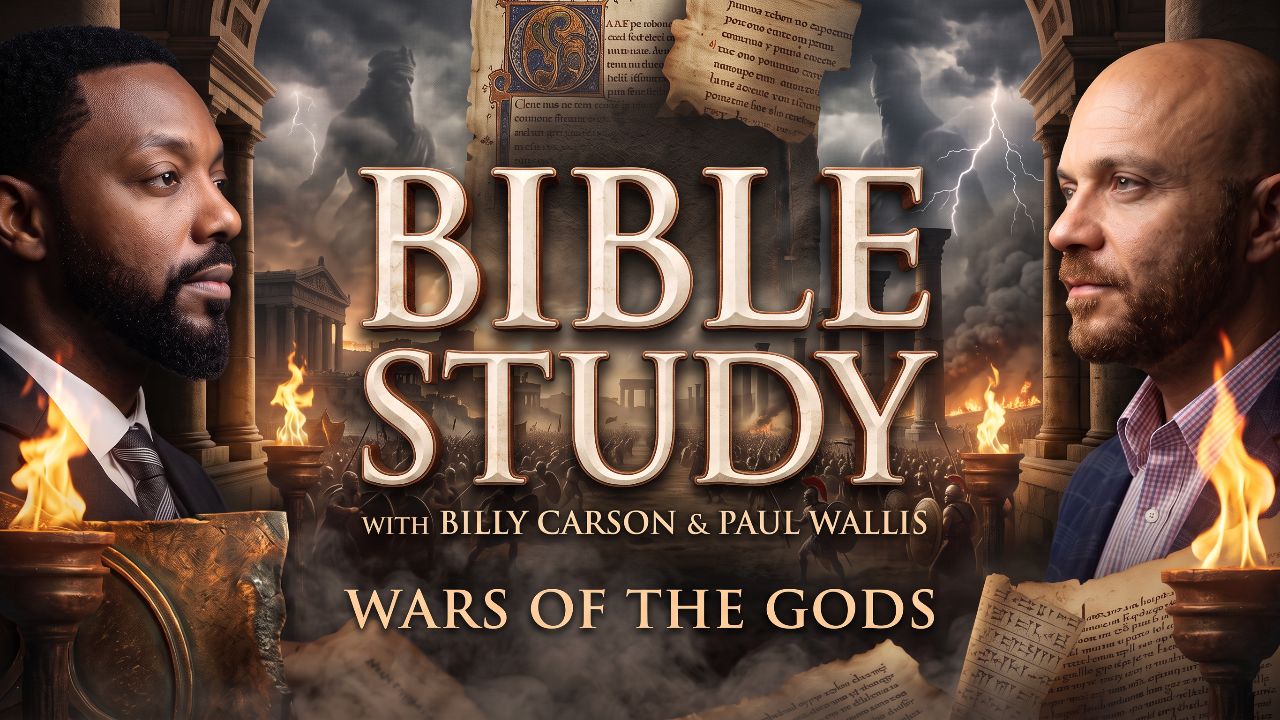
Billy Carson treats the gnostic texts as part of a larger pattern of knowledge that institutions set aside. In his reading, the demiurge and the archons are a close parallel to the Anunnaki "false gods" of his wider work: powerful beings who presented themselves as supreme while keeping humanity unaware of a higher source. Carson argues that the gnostic emphasis on the divine spark and self-knowledge preserves an older teaching about human potential, and that the texts' disappearance from the mainstream fits the suppressed-knowledge theme that runs through his work.
That is his interpretation rather than the position of academic scholarship, which reads the Apocryphon of John and related texts as philosophical and theological responses to Genesis and Platonism in the Roman period. Carson works through these passages alongside the canonical scriptures on the [Bible Study show on 4BK TV](/watch/bible-study), where viewers can hear his argument in full and weigh it against the texts themselves.
Watch, read and go deeper
The [Bible Study series](/watch/bible-study) on 4BK TV is the best starting point for Billy Carson's take on the gnostic gospels, the canon, and the gods of Genesis. For a wider sample of his lectures and interviews, [The Best of Billy Carson](/watch/best-of-billy-carson) collects standout moments across topics. To continue with related articles on self-knowledge, perception and the nature of reality, visit the [Consciousness topic hub](/topics/consciousness).
Frequently asked questions
Are the gnostic gospels older than the New Testament?
Generally not. The four canonical gospels are usually dated between about 65 and 100 CE, while most gnostic texts were written in the 2nd century or later. The Gospel of Thomas is the main exception under debate, with estimates ranging from about 50 to 140 CE.
Is the Gospel of Thomas in the Bible?
No. The Gospel of Thomas is not part of any major church's biblical canon. It survives complete only in the Coptic copy from Nag Hammadi, with earlier Greek fragments from Oxyrhynchus dated to around 200 CE.
Did the church burn the gnostic gospels?
There is no evidence of an organized campaign to burn the Nag Hammadi texts. Church leaders such as Irenaeus and Athanasius condemned them, and they stopped being copied in mainstream churches, which is why so few survived. The Nag Hammadi codices themselves survived because someone hid them rather than destroyed them.
What does "gnostic" mean?
"Gnostic" comes from the Greek gnosis, meaning knowledge. In religious history it describes movements that taught salvation through direct spiritual knowledge of the true God and of the divine spark within the self. Some modern scholars consider the term too broad and prefer to name specific groups such as the Valentinians or Sethians.
Sources and further reading
- James M. Robinson (ed.), The Nag Hammadi Library in English (1977; revised editions 1988 and later).
- Marvin Meyer (ed.), The Nag Hammadi Scriptures (2007).
- Elaine Pagels, The Gnostic Gospels (1979).
- Michael A. Williams, Rethinking "Gnosticism": An Argument for Dismantling a Dubious Category (1996).
- Karen L. King, What Is Gnosticism? (2003).
- Irenaeus of Lyon, Against Heresies (c. 180 CE).
- Athanasius of Alexandria, Festal Letter 39 (367 CE).
- Bruce M. Metzger, The Canon of the New Testament: Its Origin, Development, and Significance (1987).