Kemetic spirituality is the religious worldview of ancient Egypt, which its people called Kemet, built around the neteru (the gods), the principle of ma'at (truth, order and balance) and a detailed map of the human soul and its journey after death. The term is also used today for modern movements that revive or reinterpret that tradition. In short, it is the belief system that shaped Egyptian temples, kingship, ethics and burial for more than three thousand years.
It matters because Egyptian religion is one of the best-documented ancient belief systems on earth, with texts carved inside pyramids, painted on coffins and copied onto papyrus across three millennia. It influenced Greek and Roman religion, fed into the Hermetic writings behind Renaissance esotericism, and remains a living source of identity for many people today. Knowing what the Egyptians themselves wrote, as opposed to what later traditions attributed to them, is the starting point for any serious conversation about Kemet, including Billy Carson's. For the wider context, start at [the Ancient Egypt topic hub](/topics/ancient-egypt).
What does “Kemet” mean?
Kemet (written km.t) means “the black land”, the Egyptians' own name for their country, taken from the dark, fertile silt the Nile flood left along its banks each year. It stood in contrast to deshret, “the red land” of the surrounding desert. The word “Egypt” has a different origin: it comes through the Greek Aigyptos, which scholars trace to Hwt-ka-Ptah, “the house of the ka of Ptah”, the name of the great temple of Ptah at Memphis.
Modern practitioners often prefer “Kemetic” because it uses the ancient self-designation rather than a Greek label. Egyptologists generally say “ancient Egyptian religion”, but both terms describe the same beliefs, practised from around 3100 BCE, when Upper and Lower Egypt were unified, into the early centuries CE. The last dated hieroglyphic inscription was carved at the temple of Isis on Philae in 394 CE, and Philae itself remained a centre of Isis worship until it was closed in the sixth century CE.
Who were the neteru?
The neteru (also written netjeru; singular netjer) are the gods and goddesses of ancient Egypt, the powers the Egyptians believed animated the sky, the river, the sun, the dead and the social order. The word survived into Coptic, the last stage of the Egyptian language, as noute, the term Egyptian Christians used for God.
Some deities were local to a single town; others, such as Ra, Osiris, Isis, Horus, Hathor, Ptah, Amun and Thoth, were worshipped across the country. Several creation accounts existed side by side. At Heliopolis, the creator Atum brought forth the Ennead, a family of nine gods. At Hermopolis, the cult centre of [Thoth, the god of writing and wisdom](/who-was-thoth-egyptian-god-of-wisdom-hermes-trismegistus), priests told of the Ogdoad, eight primeval beings. At Memphis, a text known as the Memphite Theology, preserved on the Shabaka Stone from the late eighth century BCE, describes Ptah creating the world through the thought of his heart and the command of his tongue. For a guide to the major figures, see our [overview of the Egyptian gods and goddesses](/egyptian-gods-and-goddesses-explained-ra-osiris-isis-horus-thoth-and-more).
One and many
The Egyptians did not treat these accounts as contradictions. Erik Hornung, in Conceptions of God in Ancient Egypt: The One and the Many (English edition 1982), argued that Egyptian religion held unity and multiplicity together: a god could merge with another (Amun-Ra), appear in many forms, or be addressed as the sole creator in one hymn and as one god among many in the next. Jan Assmann, in The Search for God in Ancient Egypt (2001), traces how New Kingdom theology increasingly spoke of a single hidden god made manifest in all the others. Akhenaten's exclusive worship of the sun disc, the Aten, in the fourteenth century BCE was the one sharp break, and it was reversed after his death.
What is ma'at?
Ma'at is the Egyptian concept of truth, justice, order and cosmic balance, and it was also a goddess, shown as a woman wearing a single ostrich feather. It is the closest thing Kemetic spirituality has to a central principle: the right order established at creation, which had to be maintained constantly against isfet, the force of chaos, falsehood and disorder.
Ma'at operated on every scale. Cosmically, it kept the sun rising and the Nile flooding. Politically, upholding ma'at and repelling isfet was the king's first duty; temple scenes show pharaohs offering a small figure of Ma'at to the gods, a statement that the king had kept the world in order. Personally, it meant honesty, fairness, restraint and care for the vulnerable.
The wisdom literature spells this out. The Instruction of Ptahhotep, attributed to an Old Kingdom vizier, counsels humility, self-control and just speech. The Instruction of Amenemope, from the New Kingdom, is so close in places to Proverbs 22–24 that most scholars accept a direct literary connection. Maulana Karenga's Maat, the Moral Ideal in Ancient Egypt (2004) is the most thorough modern study of this ethical tradition. Its best-known expression is the list of declarations of innocence in the Book of the Dead, explored in detail in [our guide to the 42 laws of Ma'at](/the-42-laws-of-maat-ancient-egypt-moral-code).
How did the Egyptians understand the soul?
The Egyptians saw a person as a combination of several elements rather than a single soul. The main ones were:
- Ka: the life force, handed down from the gods and ancestors, which needed nourishment through offerings after death.
- Ba: the personality and power of movement, shown as a bird with a human head that could leave the tomb by day and return at night.
- Akh: the transfigured, effective spirit that a righteous person became after a successful passage through judgment.
- Ib, the heart: the seat of thought, memory, emotion and conscience. For the Egyptians it was the heart, not the brain, where a person's character lived.
The body, the name (ren) and the shadow (shut) completed the picture, and mummification, offerings and keeping the name spoken all served to hold these elements together. This is why Egyptian religion can look preoccupied with death: it was really preoccupied with continuing life. For how this model compares with modern ideas of mind, see [the Consciousness topic hub](/topics/consciousness).
Ra's daily journey and the Osirian afterlife
Two great cycles framed Egyptian thinking about time and renewal: the daily journey of the sun god Ra and the death and restoration of Osiris. Each day Ra sailed across the sky in his barque; each night he travelled through the Duat, the underworld, where he faced the serpent Apophis, the embodiment of isfet, before being reborn at dawn. Order had to be won again every night.
The Osiris myth supplied the human pattern. Murdered by his brother Set and restored by Isis, Osiris became king of the dead, and every justified person hoped to become “an Osiris” after death. The funerary texts show how this hope widened over time. The Pyramid Texts, first carved inside the pyramid of King Unas at Saqqara around 2350 BCE, were reserved for royalty. In the Middle Kingdom, adapted versions were painted on the coffins of officials, the Coffin Texts. From the New Kingdom onward, the collection known as the Book of the Dead, whose Egyptian title is usually rendered “Spells for Going Forth by Day”, was written on papyrus for anyone who could afford a copy.
Its most famous scene, Spell 125, shows the deceased in the Hall of Two Truths, declaring innocence of specific wrongs before 42 divine judges while the heart is weighed against the feather of Ma'at. A heart burdened by wrongdoing was devoured by Ammit; a balanced heart passed on to eternal life. The full sequence is covered in [our explainer on the Egyptian Book of the Dead](/the-egyptian-book-of-the-dead-explained-spells-judgment-and-the-afterlife).
Temples, priests and the House of Life
Egyptian religion centred on temples, where priests tended the god's statue daily on the king's behalf. The great temple complex at Karnak in Thebes and the later Ptolemaic and Roman-era temples at Edfu and Dendera are covered in inscriptions recording rituals, festivals, myths and theology, and they are among the richest primary sources that survive. Ordinary people approached the gods through festivals, household shrines, amulets and oracles.
Temples also housed the per-ankh, the “House of Life”, where scribes copied and studied religious, ritual and scientific texts. Later Greek writers, among them Herodotus, Plutarch in On Isis and Osiris, and Iamblichus in On the Mysteries, portrayed Egyptian priests as keepers of hidden wisdom, and that image fed the later idea of Egyptian mystery schools. Egyptologists point out that the Egyptian sources describe restricted priestly knowledge and secret temple rites, but not an initiatory school in the Greek or Masonic sense. The mystery-school framing is largely a Greek and later European lens on Egyptian practice.
Kemetic spirituality today
Today “Kemetic spirituality” also names a range of modern religious and cultural movements that draw on ancient Egyptian religion. Kemetic Orthodoxy, founded by Tamara Siuda in 1988, is a reconstructionist faith that works from Egyptological sources. The Ausar Auset Society, founded by Ra Un Nefer Amen in 1973, combines Kemetic themes with other African and esoteric traditions. Alongside them sits a broader Afrocentric intellectual tradition, with the Senegalese scholar Cheikh Anta Diop and the American scholar Molefi Kete Asante among its best-known voices, which reclaims Egypt as an African civilisation and a foundation of later thought.
On the question of who the ancient Egyptians were, the evidence from art, texts and ancient DNA, including a 2017 study of mummies from Abusir el-Meleq and a 2025 genome from an Old Kingdom burial at Nuwayrat, point to a population rooted in North-East Africa with ties to the neighbouring Near East. Egypt was an African civilisation that also traded, fought and exchanged ideas with its Levantine and Mesopotamian neighbours.
Billy Carson's reading
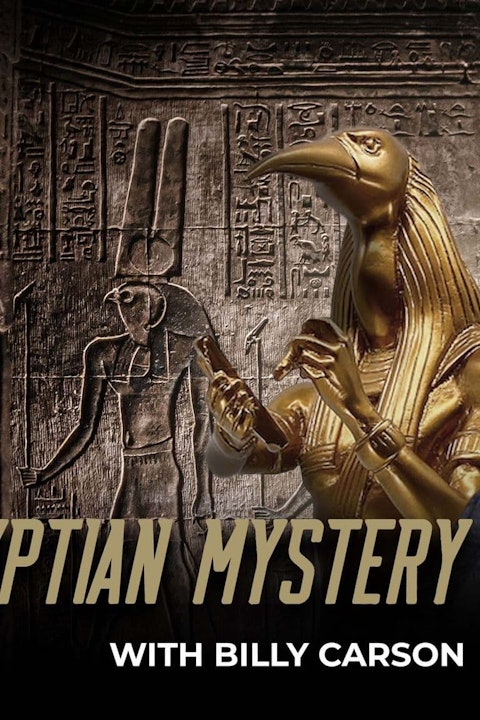
Billy Carson approaches Kemet as more than a historical religion. In his Egyptian Mystery School series on 4BK TV and on his Egypt tours, he presents Kemetic thought as a science of consciousness, a system for understanding the mind and the structure of reality, and argues that it is the root from which later Western esoteric traditions grew. His emphasis falls on the ideas that lend themselves to that reading: the heart as the seat of thought, ma'at as a law of balance, Thoth as the patron of sacred knowledge, and the Memphite account of creation through thought and word.
The strongest historical support for part of this position is the Hermetic tradition. The Greek texts attributed to Hermes Trismegistus, the Greek name under which Thoth was honoured, were written in Roman-period Egypt, and after Marsilio Ficino translated the Corpus Hermeticum into Latin in the fifteenth century they became a foundation of Renaissance magic, alchemy and later occultism. Garth Fowden, in The Egyptian Hermes, argues that these texts blend genuine Egyptian ideas with Greek philosophy. Where Carson goes further, reading the ancient texts as a deliberate technology of consciousness, he is offering his own interpretation rather than a finding of mainstream Egyptology.
Watch, read and go deeper
Carson's [Egyptian Mystery School series on 4BK TV](/watch/egyptian-mystery-school) is the fullest statement of his view. For a long-form conversation, listen to the Ancient Kemet Secrets episode of the 4biddenknowledge Podcast. Readers who want to stand in the temples themselves can see the current 4biddenknowledge Egypt tours. For more on the gods, the afterlife and Egyptian ethics, browse [the Ancient Egypt topic hub](/topics/ancient-egypt).
Frequently asked questions
Is Kemetic spirituality a religion?
Historically, yes: it was the religion of ancient Egypt for more than three thousand years, with temples, priesthoods, rituals and sacred texts. Today the term covers both reconstructed religions such as Kemetic Orthodoxy and looser spiritual or cultural practices inspired by Egyptian ideas.
What is the difference between the neteru and gods?
Neteru is the plural of netjer, the ancient Egyptian word usually translated as “god”. Modern Kemetic writers often prefer the Egyptian term because it avoids assumptions carried by the English word, and some interpret the neteru as principles or forces of nature as well as personal deities. In the ancient sources, the neteru were worshipped as divine beings with names, cults and temples.
What are the core principles of ma'at?
Ma'at stands for truth, justice, order and balance. In practice it meant honest speech, fair dealing, restraint, respect for the gods and care for the weak, as set out in the wisdom literature and in the declarations of innocence in Spell 125 of the Book of the Dead. Its opposite, isfet, is chaos and wrongdoing.
What did the ancient Egyptians believe happened after death?
They believed a person's ka, ba and heart survived death, and that after judgment a righteous person could become an akh, a transfigured spirit, living on with Osiris and in the cycle of the sun. The heart was weighed against the feather of Ma'at to decide the outcome.
Where does the word “Kemet” come from?
Kemet (km.t) means “the black land” and refers to the dark, fertile soil deposited by the Nile flood. It was the ancient Egyptians' own name for their country. “Egypt” comes from the Greek Aigyptos, which derives from Hwt-ka-Ptah, the name of Ptah's temple at Memphis.
Sources and further reading
- Jan Assmann, The Search for God in Ancient Egypt (2001) and The Mind of Egypt (2002)
- Erik Hornung, Conceptions of God in Ancient Egypt: The One and the Many (1982)
- Richard H. Wilkinson, The Complete Gods and Goddesses of Ancient Egypt (2003)
- Maulana Karenga, Maat, the Moral Ideal in Ancient Egypt: A Study in Classical African Ethics (2004)
- Raymond O. Faulkner (trans.), The Ancient Egyptian Pyramid Texts (1969)
- Miriam Lichtheim, Ancient Egyptian Literature, 3 vols. (1973–1980), for translations of Ptahhotep, Amenemope and the Memphite Theology
- Garth Fowden, The Egyptian Hermes (1986)