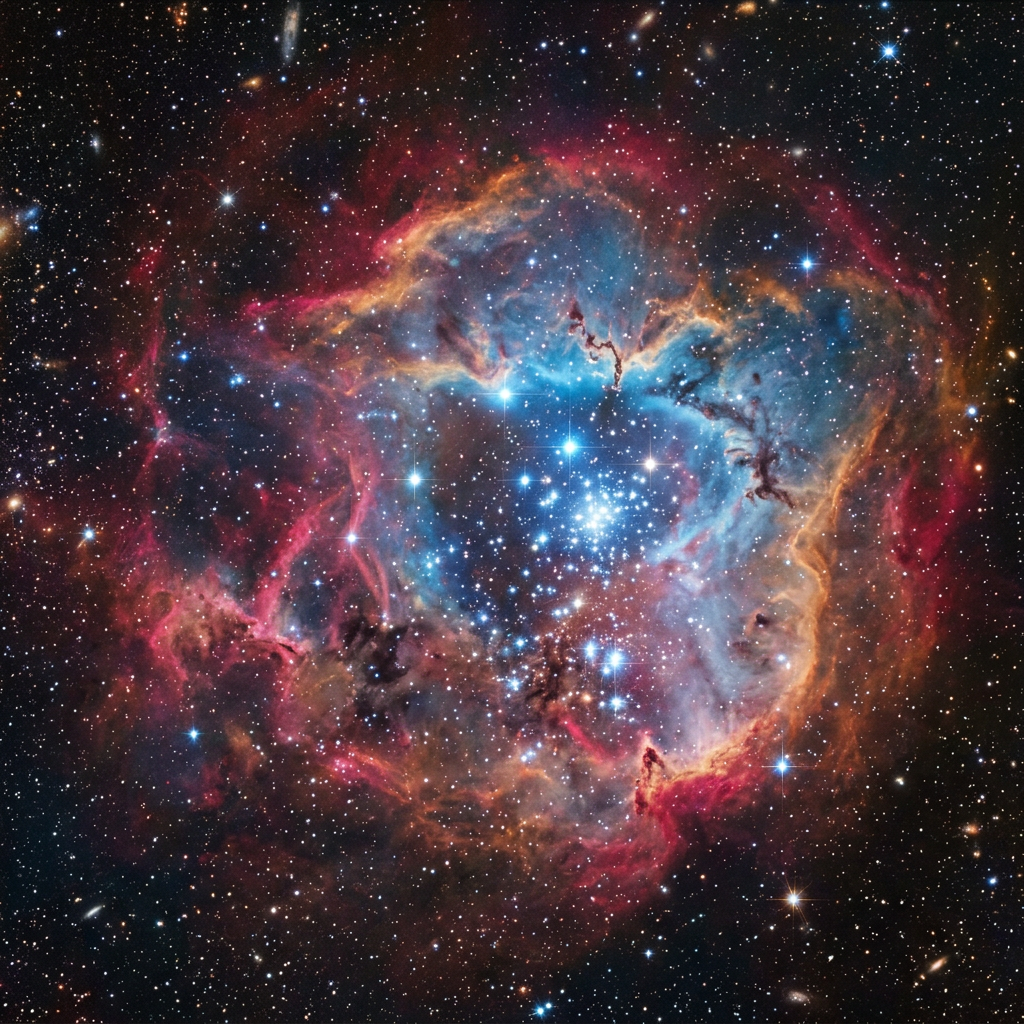
There are moments in science when a single idea feels like it might pull three loose threads together into one elegant knot. This is one of those moments.
A growing body of theoretical research suggests that a bizarre class of black holes—ones that convert matter into energy in unconventional ways—could help explain three of the most puzzling phenomena in modern cosmology:
→ The accelerating expansion of the universe (dark energy) → The missing information paradox → The origin and behavior of cosmic energy distribution
Let’s break this down without turning it into a physics lecture that makes your brain file a complaint.
The Traditional View of Black Holes (And Why It’s Not Enough) 4
For decades, black holes were thought of as cosmic vacuum cleaners—regions of space where gravity is so intense that nothing, not even light, can escape.
According to Albert Einstein’s theory of general relativity, black holes form when massive stars collapse under their own gravity, creating a singularity surrounded by an event horizon.
Later, Stephen Hawking introduced the idea of Hawking radiation, suggesting that black holes aren’t completely black—they slowly emit radiation and lose mass over time.
But here’s the problem:
→ Hawking radiation is extremely weak → It doesn’t fully explain how information escapes a black hole → It doesn’t account for the mysterious force driving the universe’s expansion
So scientists started asking a dangerous question: What if black holes are doing more than we think?
The New Contender: Energy-Converting Black Holes 4
Some researchers propose that certain black holes may not just consume matter—but transform it into usable energy and release it back into the universe in unexpected ways.
This idea touches on concepts like:
→ White holes (theoretical opposites of black holes) → Quantum gravity effects near the event horizon → Exotic energy emissions beyond Hawking radiation
Physicists like Carlo Rovelli have explored models where black holes could transition into white holes, effectively releasing stored information and energy back into spacetime.
Meanwhile, Sean Carroll has discussed how energy dynamics at cosmic scales could influence the expansion of the universe—hinting that black holes might play a deeper role than previously assumed.
Mystery #1: Dark Energy and the Expanding Universe
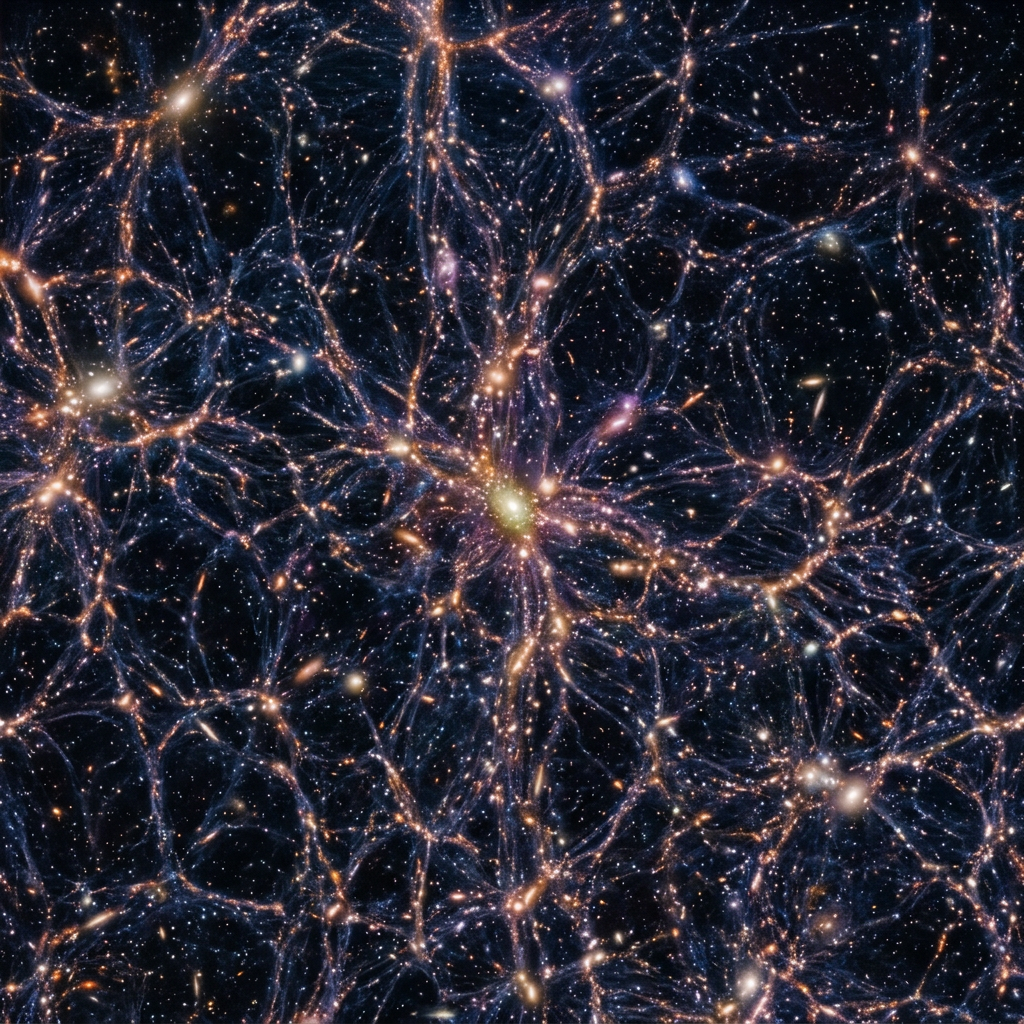
The universe isn’t just expanding—it’s accelerating. That acceleration is attributed to something we call dark energy, which makes up about 68% of the cosmos.
But no one really knows what it is.
Here’s where things get interesting:
→ If black holes convert infalling matter into energy → And release that energy into space → They could act as distributed sources of cosmic acceleration
Some theoretical models suggest that the cumulative effect of black holes across the universe could mimic dark energy behavior.
Astrophysicist Priyamvada Natarajan has emphasized that black holes are not passive objects—they actively shape galaxies and cosmic structure. Extending that idea, researchers are exploring whether they also influence expansion itself.
Mystery #2: The Information Paradox
One of the most unsettling problems in physics:
→ What happens to information that falls into a black hole?
Quantum mechanics says information cannot be destroyed. But classical black hole theory says it disappears.
That contradiction is known as the information paradox.
Physicist Leonard Susskind argued that information must somehow be preserved, possibly encoded on the event horizon.
Now, if black holes can convert and eventually release energy and information, the paradox starts to soften:
→ Information isn’t lost → It’s transformed and redistributed
Not destroyed—just… delayed.
Mystery #3: The Universe’s Energy Imbalance
There’s another lingering issue:
→ The universe’s energy accounting doesn’t quite add up
Where does all the energy go? How is it redistributed across cosmic scales?
If black holes are acting as cosmic converters, they could:
→ Absorb matter → Reprocess it under extreme conditions → Reinject energy into the universe in new forms
This could help explain irregularities in energy distribution across galaxies and intergalactic space.
Why This Idea Matters
This isn’t just theoretical curiosity—it’s a potential shift in how we understand reality itself.
If proven, it would mean:
→ Black holes are not endpoints, but transition points → The universe recycles matter and energy in ways we’re just beginning to understand → Three of physics’ biggest mysteries might share a single underlying mechanism
That’s not just elegant—it’s revolutionary.
The Skeptic’s Corner
Let’s stay grounded.
These ideas are still highly theoretical. There is currently:
→ No direct observational proof → Limited experimental validation → Ongoing debate within the physics community
Even researchers like Kip Thorne caution that while black holes are incredibly dynamic, extraordinary claims require extraordinary evidence.
Final Thought: The Universe Might Be More Efficient Than We Think
What if nothing in the universe is truly wasted?
What if even the most destructive objects we know—black holes—are part of a larger system of balance?
Not destroyers. Not endings.
But processors. Converters. Quiet architects of the cosmos.
And if that’s true, then the universe isn’t just expanding—it’s evolving in ways we’re only beginning to s