 Billy's Colloidal Silver + Starfire Gold duo —
There’s a quiet assumption most of us carry: I am who I’ve always been. But neuroscience tells a more fragile, fascinating story. The “self” isn’t fixed—it’s constructed, updated, and sometimes… rewritten.
When certain brain disorders enter the picture, they don’t just affect memory, mood, or movement. They can fundamentally alter identity—how a person thinks, feels, remembers, and even recognizes who they are.
Let’s break this down.
→ The Brain: Architect of Identity
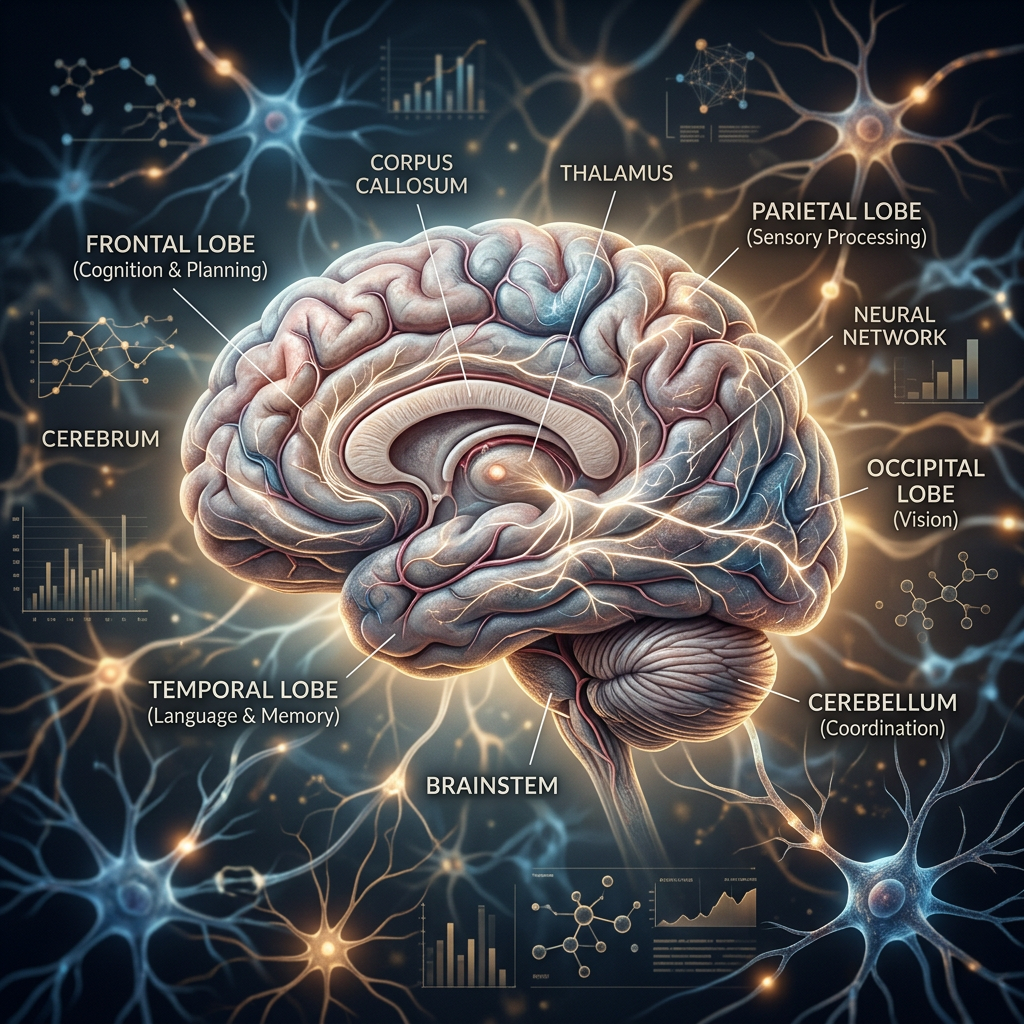
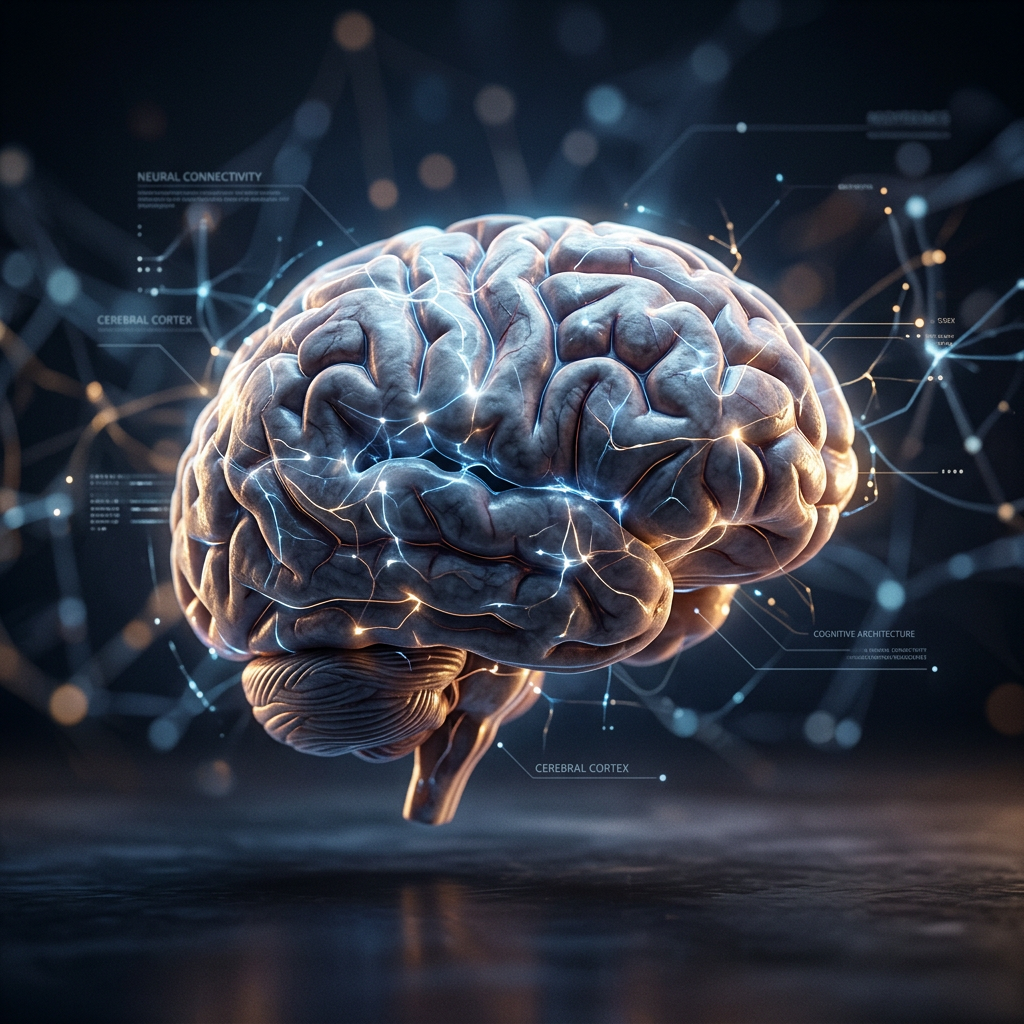
Your sense of self isn’t housed in one neat corner of the brain. It’s a network.
→ The prefrontal cortex helps shape personality, decision-making, and social behavior → The hippocampus stores autobiographical memory—your life story → The amygdala processes emotional meaning → The default mode network activates when you reflect on yourself
According to neuroscientist Antonio Damasio, the self is not a single structure but a process—a continuous integration of memory, emotion, and bodily awareness.
He describes identity as a “feeling of what happens”—a moment-to-moment construction rather than a permanent state.
→ When Memory Fades: Alzheimer’s and the Erosion of Self
In conditions like Alzheimer's disease, the hippocampus begins to deteriorate.
→ Personal memories disappear → Familiar faces become strangers → Life narratives fragment
Neurologist Oliver Sacks documented patients who could no longer recognize themselves in mirrors or photos.
Without memory, the thread that ties past to present begins to unravel. The question becomes: If you can’t remember your life, are you still the same person?
→ Personality Changes: The Frontal Lobe Effect
Damage to the frontal lobes can dramatically reshape personality.
The most famous case? Phineas Gage.
→ Before injury: responsible, disciplined → After injury: impulsive, erratic, socially inappropriate
Modern research confirms this pattern.
Neuroscientist Hannah Damasio has shown that frontal lobe damage disrupts emotional regulation and decision-making—core components of identity.
In other words, the brain doesn’t just influence personality. It is personality.
→ The Split Brain: Two Minds in One Body
In rare cases, patients undergo surgery severing the corpus callosum to treat severe epilepsy. This creates what’s known as a “split-brain.”
Research by Roger Sperry revealed something astonishing:
→ Each hemisphere can act independently → One hand may perform actions the other “disagrees” with → The brain may generate two separate streams of consciousness
This challenges a deep assumption: That the self is singular.
Instead, the brain suggests identity might be more like a collaboration—sometimes even a conflict.
→ Disorders of Identity: When Reality and Self Blur
Certain neurological and psychiatric conditions directly alter identity perception.
Dissociative Identity Disorder (DID)
→ Multiple distinct identity states → Memory gaps between identities → Often linked to trauma
Depersonalization Disorder
→ Feeling detached from one’s body or thoughts → Described as watching yourself from the outside
Capgras Syndrome
→ Belief that loved ones are impostors → Caused by a disconnect between recognition and emotional response
Neurologist V.S. Ramachandran studied Capgras patients and found that while visual recognition remains intact, emotional signaling is disrupted—leading the brain to conclude: “That looks like my mother… but it doesn’t feel like her. So it must not be her.”
Identity, it turns out, relies as much on feeling as on fact.
→ Neuroplasticity: The Brain’s Power to Rebuild the Self
Here’s where things shift from unsettling to hopeful.
The brain is not static—it’s adaptive.
This concept, known as Neuroplasticity, allows the brain to reorganize itself after injury or disease.
Research by Norman Doidge shows that:
→ New neural pathways can form → Functions can relocate to undamaged areas → Identity traits can partially recover or evolve
So even when the self is disrupted, it isn’t necessarily lost. It may simply be… rewritten.
→ So, Who Are You—Really?
Neuroscience leaves us with a paradox.
→ You are your brain → But your brain is constantly changing → Therefore, your “self” is always in motion
As Bruce Hood argues, the self may be less of a fixed entity and more of a “user illusion”—a story the brain tells to maintain coherence.
And yet, that story matters. It shapes relationships, choices, meaning.
→ Final Thought
Brain disorders don’t just disrupt function—they challenge identity at its core.
But maybe that reveals something deeper:
The self isn’t something you have. It’s something your brain continuously creates.
And even when parts of it are altered, fractured, or lost… there is still a process unfolding, adapting, becoming.
Not a fixed identity. But a living one.