 Billy's Colloidal Silver + Starfire Gold duo —
The Radical Theory That Could Rewrite Quantum Physics Forever
For more than a century, physics has been split into two worlds that refuse to fully cooperate.
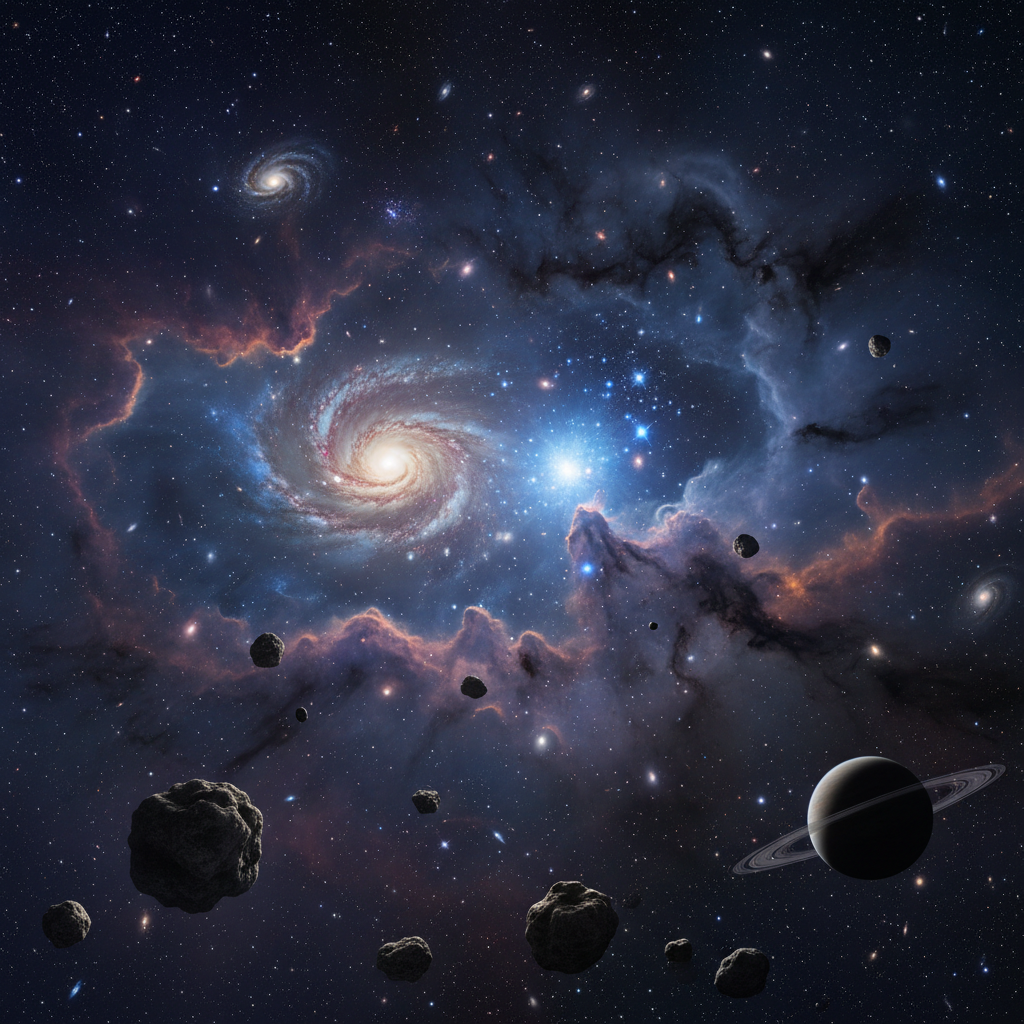
→ One explains the massive: Stars. Black holes. Galaxies. Gravity itself.
→ The other explains the microscopic: Atoms. Particles. Quantum uncertainty. The strange invisible machinery beneath reality.
The problem?
The universe runs on both systems at the same time — yet the equations behind them clash like two languages that were never meant to meet.
Now, a growing number of physicists believe gravity may not just shape reality…
It may actually create it.
And if they’re right, the consequences could change everything we think we know about time, consciousness, and the structure of existence itself.
The Greatest Problem in Physics
Modern physics rests on two pillars:
→ Einstein’s General Relativity → Quantum Mechanics
Einstein’s theory describes gravity as the curvature of spacetime. Massive objects bend the fabric of reality itself.
Quantum mechanics, meanwhile, describes a bizarre subatomic world where particles can exist in multiple states at once until observed.
Both theories work brilliantly on their own.
But when scientists try combining them, the math breaks down.
Physicist Albert Einstein spent the final decades of his life searching for what he called a “Unified Field Theory” — a single framework capable of explaining every force in nature.
He never found it.
Yet today, researchers may be closer than ever.
Quantum Mechanics Has a Strange Problem
At the heart of quantum mechanics lies something deeply unsettling:
→ Particles exist as probabilities, not certainties. → Reality appears “fuzzy” until measured. → Time itself may not be perfectly continuous.
This is known as quantum superposition.
A particle can exist in multiple possible states simultaneously until interaction forces a definite outcome.
Physicist Erwin Schrödinger famously illustrated this paradox with the thought experiment of Schrödinger’s Cat — a cat that is theoretically both alive and dead until observed.
For decades, scientists accepted this weirdness because the equations worked.
But some researchers think something fundamental is missing from the picture:
Gravity.
Could Gravity Collapse Reality Into Existence?
One of the most fascinating ideas comes from physicist Roger Penrose, who proposed that gravity itself may cause quantum uncertainty to collapse into a stable reality.
In other words:
→ Quantum possibilities remain “blurred” → Gravity forces the universe to choose → Reality becomes solid and measurable
Penrose argues that spacetime cannot sustain unlimited quantum fuzziness forever.
Eventually, gravity destabilizes the uncertainty and forces a definite outcome.
If true, this could explain one of quantum physics’ biggest mysteries:
Why do probabilities suddenly become reality?
Time May Not Be Smooth After All
Most people imagine time as flowing continuously — like water moving downstream.
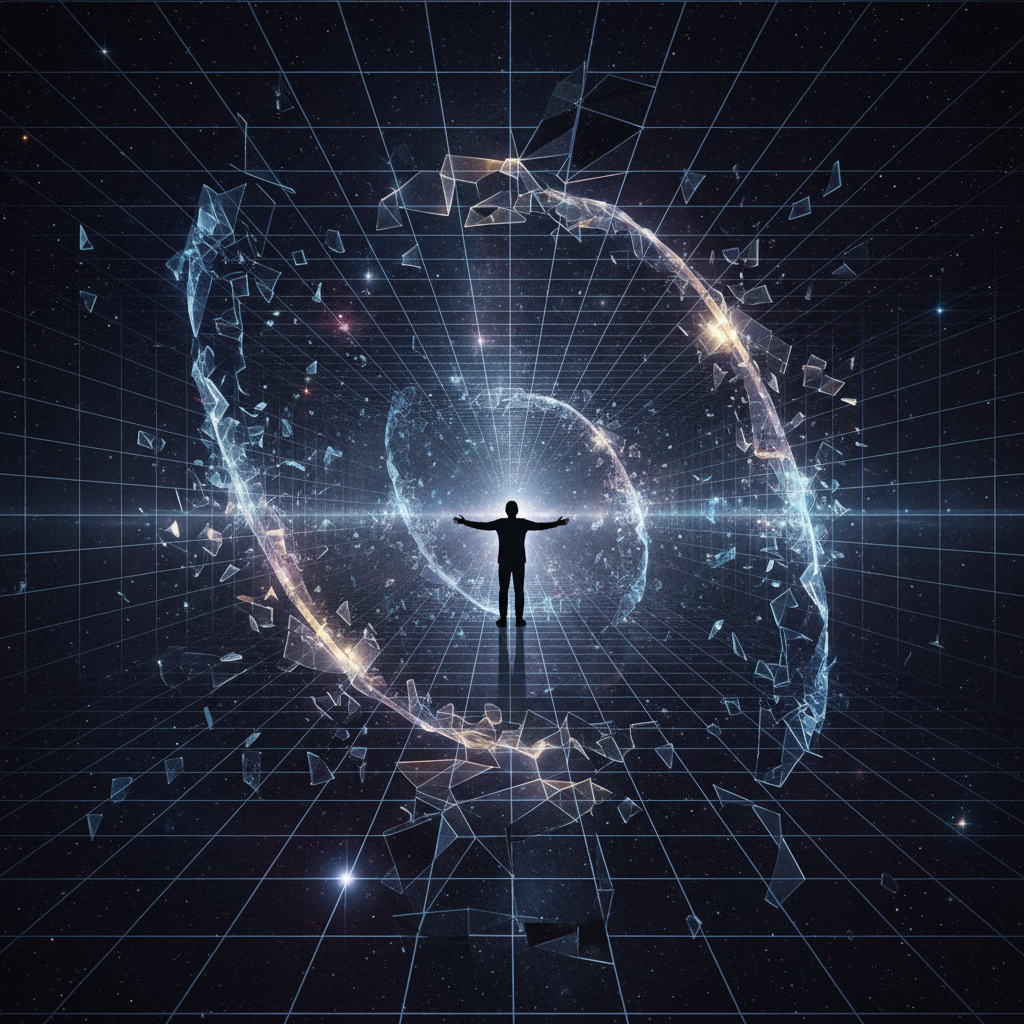
But some modern theories suggest time may actually come in tiny indivisible units.
Almost like pixels in a digital image.
This concept emerges in approaches to quantum gravity, including loop quantum gravity and spacetime quantization models.
Physicist Carlo Rovelli has argued that spacetime itself may not be fundamental at all.
Instead:
→ Time may emerge from deeper quantum interactions → Space may be built from microscopic chunks → Reality may be fundamentally discontinuous
That means the smooth world we experience could actually be an illusion generated by deeper structures beneath perception.
A cosmic rendering engine.
The “Theory of Everything”
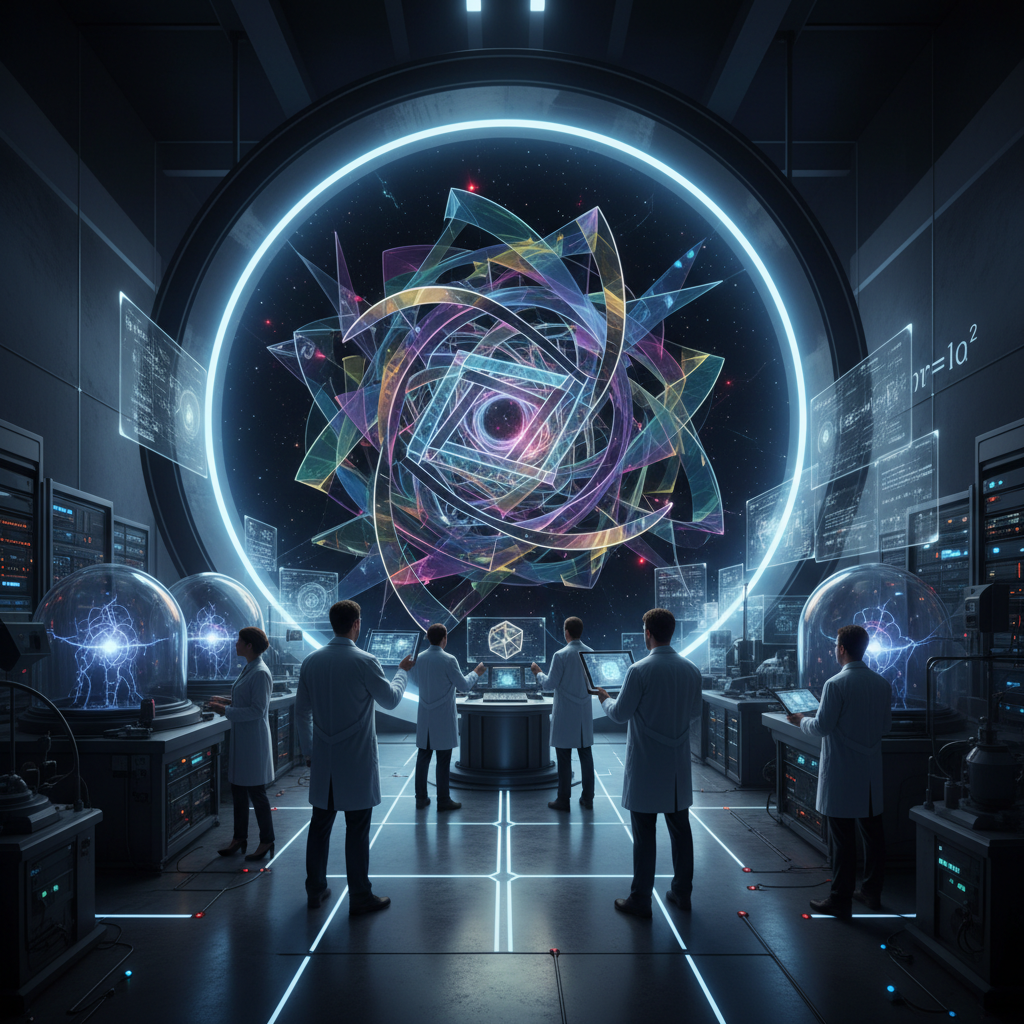
Physicists have long searched for a “Theory of Everything” — a framework capable of unifying:
→ Gravity → Electromagnetism → Strong nuclear force → Weak nuclear force
String theory once dominated this search, proposing that reality is built from tiny vibrating strings existing in higher dimensions.
But alternative theories involving quantum gravity are gaining renewed attention because they attempt to explain not only matter…
…but reality itself.
As theoretical physicist Stephen Hawking once said:
“What is it that breathes fire into the equations and makes a universe for them to describe?”
That question still haunts physics today.
What If Reality Is Less Solid Than We Think?
The deeper scientists look into the universe, the stranger it becomes.
Black holes distort time. Particles communicate through quantum entanglement. Empty space fluctuates with energy.
And gravity — the weakest known force — may secretly hold the key to stitching reality together.
Some researchers even suspect consciousness itself could be linked to quantum gravitational processes, though this remains highly controversial.
Still, one thing is clear:
Physics is approaching a crossroads.
The next breakthrough may not simply explain how the universe works.
It may explain why reality exists at all.
Final Thoughts
For centuries, humans believed reality was stable, predictable, and concrete.
Modern physics shattered that illusion.
Now, gravity may be revealing something even more unsettling:
→ Reality may emerge from uncertainty → Time may be fundamentally fuzzy → Space itself may not be continuous
The universe could be far stranger than science fiction ever imagined.
And somewhere between Einstein’s gravity and the quantum world…
…the true architecture of existence may finally be waiting to be uncovered.