Travis Walton is an Arizona man who says he was taken aboard a craft of unknown origin on 5 November 1975, after six co-workers on a Forest Service tree-thinning crew reported seeing him struck by a beam of light from a glowing object near Heber, Arizona. He was missing for about five days before he called his family from a payphone, and his account later became the book The Walton Experience and the 1993 Paramount film Fire in the Sky. Whether the event was a genuine encounter or something else has been argued for five decades, and the record contains strong claims on both sides.
The case matters because it is one of the few abduction reports with multiple named witnesses, a police search, polygraph tests and a missing-person file, rather than a single person recalling events under hypnosis. That makes it a useful test of how evidence is weighed in ufology. It also shows how a Hollywood film can replace the original testimony in public memory, and how statements made decades later can reopen a case without closing it.
What happened at Turkey Springs on 5 November 1975?
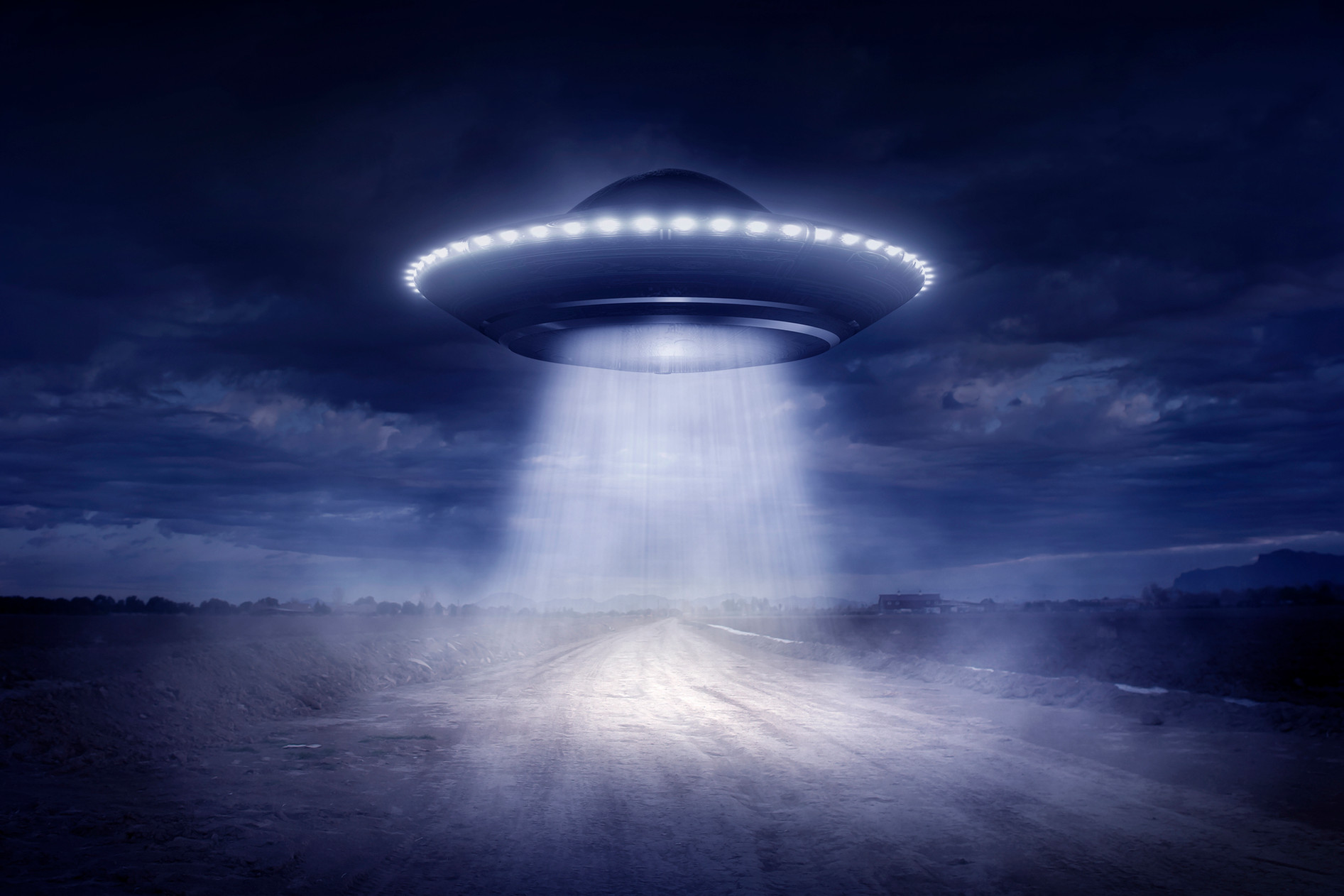
According to the crew's account, the seven men were driving out of a work site at dusk when they saw a glowing object hovering over a clearing. The site was Turkey Springs, in the Apache-Sitgreaves National Forest near Heber, Arizona. The crew came from the Snowflake area, which is why the event is often called the Snowflake case, although it did not happen in the town of Snowflake itself.
The crew boss was Mike Rogers, then 28, who held a US Forest Service contract to thin timber on the parcel. Travis Walton was 22. In the account the crew gave, Walton got out of the truck and walked toward the object, was hit by a beam of light and thrown backward. The others drove off in panic and, by their account, returned about 15 minutes later to find no trace of Walton or the light.
Rogers reported Walton missing to the Navajo County Sheriff's Office that evening, and officers including Sheriff Marlin Gillespie met the crew in Heber. A first search ran into the night. Over the following days dozens of volunteers combed the area, and a helicopter was later brought in. Nothing was found, and as the days passed, investigators began to consider whether something had happened to Walton at the hands of the people who were with him.
How did Travis Walton reappear?
Walton resurfaced after about five days missing. Late on 10 November, running into the early hours of 11 November by most accounts, he called his sister's home from a payphone in Heber. His brother-in-law, Grant Neff, and his brother Duane drove out and found him there. Walton said he remembered only fragments: waking in a room with short, hairless beings, seeing a human figure in a helmet, and then finding himself walking along a road.
News of the disappearance had already spread nationally by the time he returned, and the story quickly drew in UFO researchers and the tabloid press.
What did the polygraph tests show?
The polygraph record is mixed, and it has been reported both ways for decades. Around 10 or 11 November 1975 (sources differ by a day), Arizona Department of Public Safety examiner Cy Gilson tested six members of the crew at the sheriff's request. Five were judged truthful and the result for crew member Allen Dalis was recorded as inconclusive. Gilson's question set was short and focused mainly on whether the men had harmed Walton, with one question about whether they had seen an object.
Walton himself was tested on 15 November in a session arranged by the National Enquirer and the Aerial Phenomena Research Organization (APRO). The examiner, John J. McCarthy, concluded that Walton showed "gross deception" and said he appeared to be holding his breath in an attempt to influence the test. That result was not published at the time; it surfaced later through the work of skeptical investigators.
Later tests arranged by supporters of the case were reported as passed, including retests in the 1990s around the release of the film. A polygraph conducted for a television program in 2008 was reported as indicating deception. The honest summary is that no test settles the matter in either direction. The American Psychological Association states that there is little evidence polygraph tests can accurately detect lies, and the National Research Council's 2003 review of the science reached a similarly cautious conclusion about their use. Polygraph results in this case are statements about stress responses during a set of questions, not proof of what happened in the forest.
The National Enquirer, which had a standing prize offer for UFO evidence, gave Walton and the crew $5,000 as the year's best UFO case.
What is the difference between the book and Fire in the Sky?
The book is Walton's account; the film's alien sequences are not. Walton published The Walton Experience in 1978, and it was later reissued in an expanded edition under the title Fire in the Sky, including material on the investigations and the controversy.
The film Fire in the Sky was released by Paramount in March 1993. It was directed by Robert Lieberman from a screenplay by Tracy Tormé, with D. B. Sweeney as Walton and Robert Patrick as Mike Rogers. The studio reportedly found Walton's description of the craft's interior too vague and too close to other televised close-encounter stories, and asked for a more dramatic sequence. The resulting on-board scenes, with their cocoons, restraints and invasive procedures, were written for the screen and do not reflect Walton's own description. Many viewers know the case only through those scenes, which is one reason the case is often misremembered.
What do skeptics argue?
The best-known skeptical case comes from Philip J. Klass, the aviation journalist and UFO critic, who set it out in UFOs: The Public Deceived (1983). Klass argued that the polygraphs were poorly designed and administered, and he highlighted McCarthy's unpublished "gross deception" result. He pointed out that the thinning contract was running behind schedule and that such contracts could excuse delays caused by events beyond the contractor's control, often called an "Act of God" clause. He also noted that NBC had aired The UFO Incident, a television film about the Betty and Barney Hill case, on 20 October 1975, about two weeks before Walton disappeared.
The Hill case is relevant context: it was the template for the American abduction story, and the full history is covered in the article on the Betty and Barney Hill abduction. Klass's argument is that the cultural script was freshly in circulation. That is an argument about plausibility and motive, and it should be read as Klass's interpretation rather than a finding; no court or official inquiry has ruled that the event was staged.
What do supporters argue?
Supporters answer that six men told consistent stories under heavy pressure, at a time when suspicion of foul play had fallen on them. They note that five of the six crew polygraphs in 1975 were judged truthful by a state examiner with no stake in the UFO question, and that Walton has maintained his account for five decades, through books, interviews, conferences and repeated public scrutiny.
Researchers sympathetic to the case, including UFO historian Richard Dolan, describe it as one of the best-documented abduction reports on record and argue that skeptics leaned on the one adverse test while discounting the others. The disagreement often comes down to which test, and which examiner, a reader chooses to trust. For the broader backdrop of how the US government handled reports like this before 1975, see the history of Project Blue Book and the Condon Report.
What did Mike Rogers say in 2021, and what has happened since?
In 2021 Mike Rogers made a series of public statements that pulled in different directions. In March 2021 he posted on Facebook that he was "no longer to be considered a witness" to Walton's reported abduction. That summer, a recording of a phone call with a documentary producer was released in which Rogers can be heard saying "We were talking about creating a UFO hoax, okay?"
Rogers then gave a July 2021 interview in which, as reported by skeptic Robert Sheaffer, he said "Travis and I did not hoax this," while adding that he had not actually seen Walton taken. In 2021 he also posted a public apology to Walton "for anything negative I may have said," and the two men reconciled. Read together, those statements show a witness revising and then partly withdrawing his own remarks; they do not establish what happened in 1975.
Mike Rogers died in early 2026. Since then, further claims and counter-claims attributed to crew members and relatives have circulated online. They are disputed, none has been independently verified, and they should be treated with caution. Travis Walton continues to say that his experience was real.
Billy Carson's reading: how the case appears on 4biddenknowledge
Billy Carson has not published a documented personal position on the Walton case, and this article does not attribute one to him. The case appears on his platforms through guest researchers. The video embedded with this article comes from the 4biddenknowledge Podcast Network, published on 8 September 2025, and the speaker is UFO historian Richard Dolan, not Billy. Its description calls the Walton case "perhaps the most famous and well-documented alien encounter in modern history" and covers the 1975 sighting wave, reports of cattle mutilations and black helicopters, the polygraphs, and "how skeptics tried to discredit the case and why they failed." Those are Dolan's views.
What the network's approach does reflect is a consistent editorial habit across Billy's platforms: putting witness testimony and researcher arguments in front of the audience at length, alongside the record. Dolan's series Richard Dolan's UFO Chronicles on 4BK TV includes an episode on Walton, and the older 4biddenknowledge archive piece on true ufology, which draws on Stanton Friedman and Kathleen Marden, shows the same interest in how the official record and the witness record diverge.
Watch, read and go deeper
For Richard Dolan's full treatment of the case and the wider history of UFO reporting, watch Richard Dolan's UFO Chronicles on 4BK TV. To compare Walton's account with the case that shaped the modern abduction narrative, read the Betty and Barney Hill explainer. Arizona produced another widely reported event two decades later, covered in the Phoenix Lights explainer. For more on ancient contact and the wider themes Billy Carson writes about, start at the topic hub.
Frequently asked questions
Is the Travis Walton story true?
No one has proven it either way. Six crew members gave consistent accounts in 1975 and five passed a sheriff-requested polygraph, while a separate 1975 test of Walton was scored as deceptive and was not published at the time. Walton continues to say the experience was real, and skeptics such as Philip J. Klass argued it was not; there has never been a court or official finding.
Did Travis Walton pass a lie detector test?
He has been reported both as passing and failing. A November 1975 test arranged with the National Enquirer and APRO was scored "gross deception," later tests arranged by supporters were reported as passed, and a 2008 televised test was reported as indicating deception. The American Psychological Association says there is little evidence polygraphs can accurately detect lies, so none of these results settles the case.
How accurate is the movie Fire in the Sky?
The film follows the broad outline of the disappearance, the search and the suspicion that fell on the crew. The on-board alien scenes were created for the film after the studio reportedly found Walton's own description too vague, so they do not reflect his account. His book, The Walton Experience, later reissued as Fire in the Sky, is the source for what he actually described.
Where did the Travis Walton abduction happen?
It took place at Turkey Springs in the Apache-Sitgreaves National Forest, near Heber, Arizona. It is often called the Snowflake case because the crew lived in the Snowflake area, but the event did not happen in the town of Snowflake.
What did Mike Rogers say before he died?
In 2021 Rogers posted that he should no longer be considered a witness, was recorded saying the two had talked about "creating a UFO hoax," then said in a July 2021 interview, as reported by Robert Sheaffer, that "Travis and I did not hoax this." He later apologised publicly to Walton and the two reconciled. He died in early 2026, and claims about him that have circulated since are disputed and unverified.
Sources and further reading
- Travis Walton, The Walton Experience (1978), later expanded as Fire in the Sky
- Philip J. Klass, UFOs: The Public Deceived (1983)
- Philip J. Klass, UFO Abductions: A Dangerous Game (1989)
- National Research Council, The Polygraph and Lie Detection (2003)
- American Psychological Association, research summary on polygraph testing
- Brian Dunning, Skeptoid episode 94 on the Travis Walton case (2008)
- Robert Sheaffer, Bad UFOs blog coverage of the 2021 Mike Rogers statements