 Billy's Colloidal Silver + Starfire Gold duo —
 The Ariel School UFO encounter is a reported close encounter at a private primary school near Ruwa, Zimbabwe, on 16 September 1994, when 62 pupils aged roughly six to twelve said they saw one or more silvery, disc-shaped craft come down in the bush beyond the school grounds and small beings dressed in black come out. No adult saw the objects, and no physical evidence was collected. The case rests entirely on the children's testimony, which was recorded within days by a BBC correspondent and a local UFO researcher, and two months later by Harvard psychiatrist John E. Mack.
The case matters because it is one of the largest multiple-witness reports on record, and because the witnesses were children who had little reason to coordinate a story. That gives it real weight in the UFO literature; the ufologist Jerome Clark called it the most remarkable close encounter of the third kind of the 1990s. It is also a textbook example of how testimony can shift as it passes through playground talk, radio coverage and interviews by adults who already have a view. A fair account has to hold both of those facts at once.
What happened at the Ariel School on 16 September 1994?
According to the pupils, the event happened at about 10:00 a.m. on a Friday, during the mid-morning break, and lasted roughly 15 minutes. The Ariel School sat outside Ruwa, then a small agricultural centre about 22 km south-east of Harare. Most of the staff were inside at a meeting; the only adult nearby was the woman who ran the tuckshop, and she did not see the craft.
The children's descriptions, as later recorded, follow a common outline. One or more silver objects, usually described as disc-shaped, floated down into a patch of brush and small trees just outside school property. Between one and four small beings with large eyes, dressed in black, were said to have come out. Many of the younger children ran. Some, mostly older pupils, stayed at the edge of the grounds and watched until the beings went back and the craft left.
Teachers at first dismissed what they heard. The children told their parents, and many came back to the school the next day to talk to staff about it. From there the story moved quickly beyond the school.
Who investigated the case in 1994?
Three outside parties documented the case within its first few months: a national radio station, a BBC journalist and two UFO researchers. The story was carried on ZBC radio, which is how the Zimbabwe-based researcher Cynthia Hind heard about it.
Tim Leach, the BBC's correspondent in Zimbabwe, visited on 19 September 1994 and filmed interviews with pupils and staff. Leach, who had covered conflicts, later said that he could handle war zones but could not handle this. His footage is the earliest filmed record of the children's accounts.
Hind arrived on 20 September. She spoke with the children in groups of two to six, with other pupils able to listen, and asked them to draw what they had seen. She reported that the stories were consistent with one another, and the drawings have been reproduced widely since.
Why is John Mack central to the story?
John E. Mack (1929–2004) was a Harvard Medical School psychiatrist who had won the 1977 Pulitzer Prize for A Prince of Our Disorder, his biography of T. E. Lawrence, and who published Abduction: Human Encounters with Aliens in 1994. He travelled to Ruwa in November 1994, about two months after the event, and interviewed children individually.
Mack's interviews are the main source for the best-known element of the case: the claim that the beings communicated, without speaking, a message that humanity was harming the planet and its environment. That theme is largely absent from Hind's early account, although she reported it later.
Mack's standing matters to how the case is read. In May 1994 the dean of Harvard Medical School set up a committee of peers to review his clinical work with people who reported alien encounters. That review ran for about fourteen months and ended in 1995 with Harvard stating that it reaffirmed his academic freedom to study what he wished and that he remained a member in good standing of the Faculty of Medicine. Supporters cite his credentials; critics point to the committee's concerns about method. Mack was killed by a drunk driver in London on 27 September 2004, while visiting the city for a T. E. Lawrence Society conference.
What do the former pupils say now?
Most of the former pupils who have spoken publicly as adults stand by what they say they saw. Their recollections appear in three documentaries: The Phenomenon (2020); Ariel Phenomenon (2022), directed by Randall Nickerson and released in May 2022, which pairs the 1994 interview material with present-day interviews; and the Netflix series Encounters (2023).
The adult accounts are not uniform. At least one former pupil has given differing versions over the years, including one in which the episode began with a misread object on the horizon, and that version conflicts both with his own earlier interview and with other witnesses in the same series. Others describe the experience as something that shaped their lives and views. This spread is normal for memories of an event three decades old, and it cuts both ways: it is neither proof of a hoax nor proof of a landing.
What is the skeptical reading of the Ariel School case?
The skeptical reading is that the children sincerely reported an experience that was shaped, amplified and partly built by the conditions in which it was recorded. No mainstream researcher has to argue that anyone lied for that reading to work. It rests on four main lines.
Suggestion and cross-contamination
The first is suggestion. The children were interviewed days after the event, after radio coverage and after a weekend of playground and family conversation. Hind's group format let children hear each other's answers. The skeptic Brian Dunning, writing for Skeptoid, argues that this produced cross-contamination of the stories, and that the environmental message emerged in Mack's later interviews rather than in the first-week record. Research on child witnesses has long shown that repeated questioning by adults with expectations can shape what children report, without any intent to deceive on either side.
Group dynamics and contagion
The second is group behaviour. Several skeptics have proposed that the episode spread through a crowd of excited children in the way that episodes of mass psychogenic illness have spread in schools, including documented cases in African schools reviewed in the Malawi Medical Journal in 2011. This is a hypothesis, not a demonstration. No one studied the Ariel pupils with that question in mind at the time.
A primed misperception
The third is priming. Two days earlier, a bright fireball had been seen across southern Africa, and ZBC radio had invited listeners to call in with sightings, which fed a wave of UFO interest in Zimbabwe. Dunning identifies that fireball as the re-entering rocket stage from the launch of the Russian satellite Cosmos 2290. On this reading, children primed by talk of a UFO could have read something ordinary at the edge of the bush as a landing.
Other proposals
The fourth group is speculative. Some skeptics have suggested a prank; Gideon Reid has proposed that touring puppet shows used for public-information campaigns in the region were misremembered; Oliver D. Smith has argued in the skeptical newsletter SUNlite that a dust devil could have been misidentified. None of these has much direct support in the record.
Is there any physical evidence?
No. No ground traces, soil samples, photographs, radar returns or instrument readings were collected, and no adult saw the objects. Mainstream science therefore has no physical data to test in either direction. What exists is a body of testimony: Leach's footage, Hind's notes and drawings, Mack's recorded interviews and the adult witnesses' later statements.
That shapes the honest conclusion. The case's strength is the number of witnesses, their age and the early consistency Hind reported. Its weakness is that everything rests on children's recollections gathered by interested adults, in a setting where suggestion was hard to avoid. It does not prove that a craft landed, and it does not prove that nothing happened.
How does the Ariel case compare with other testimony cases?
The Ariel case belongs to the same family as other cases that rest on witness testimony rather than physical evidence. The Betty and Barney Hill case turned on memories recovered under hypnosis; the Travis Walton case on a crew of adult co-workers and contested polygraphs. Ariel differs from both in the number and age of its witnesses.
It also arrived after official interest had moved on. The US Air Force's Project Blue Book closed in 1969, and no government investigated Ruwa. For where the wider subject stands today, including what Pentagon offices and Congress have and have not confirmed, see the guide to the UAP hearings.
Billy Carson's reading
Billy Carson has not, as far as the 4biddenknowledge catalogue shows, devoted a video to the Ariel School case, and no specific claim about Ruwa should be attributed to him. His general position on cases of this kind is clear, though. In the live breakdown summarised in Billy Carson on UAPs vs UFOs, he argues that UFO should mean what witnesses have described for generations: physical craft not built by humans. He sees the newer UAP label as a way of making witness cases easier to dismiss, because calling something a phenomenon makes it sound less like an object.
On that view, a case with dozens of independent witnesses is exactly the kind of testimony that deserves serious attention rather than a quick explanation. That is Carson's position, not an established finding. Readers can set it beside the skeptical reading above and weigh both against what the record actually contains.
Watch, read and go deeper
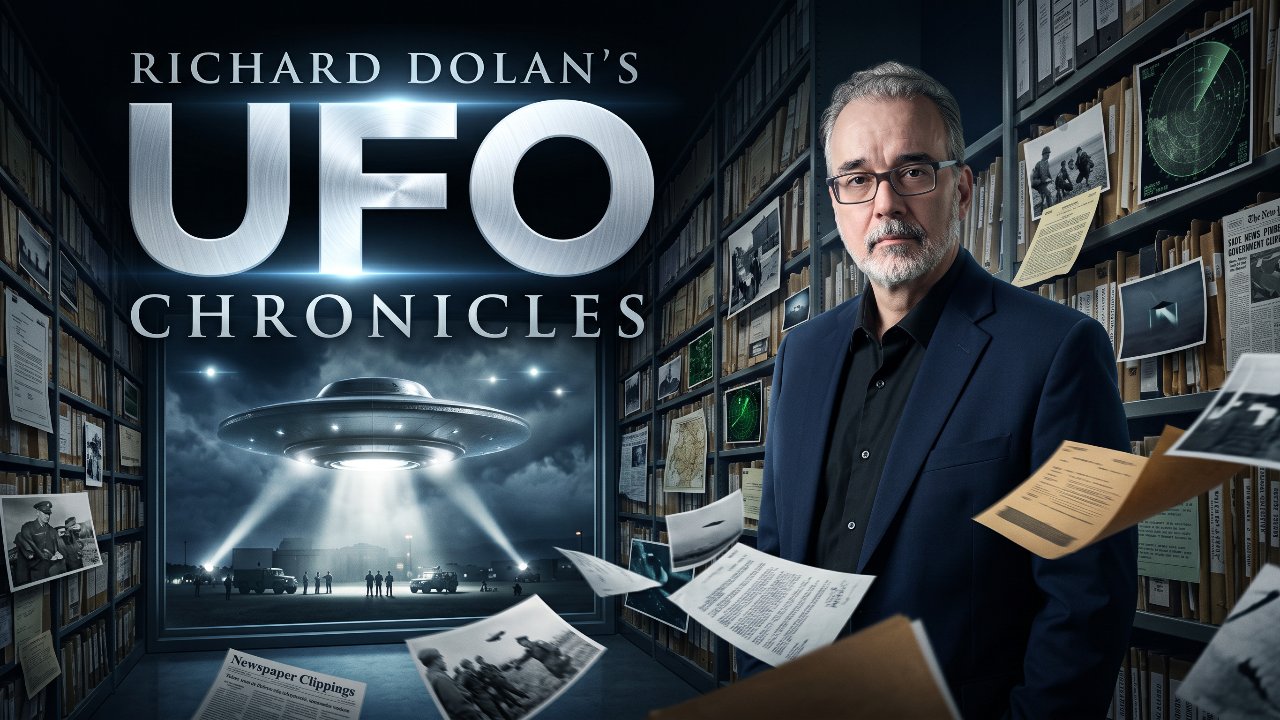
On 4BK TV, Richard Dolan's UFO Chronicles covers the strange alien visit to a school in Africa alongside cases such as Travis Walton and the Iran dogfight; the views in that series are Dolan's. For the terminology debate, read Carson's case for keeping the word UFO. For the broader question of non-human contact in the ancient and modern record, start at the Anunnaki topic hub.
Frequently asked questions
How many children saw the UFO at the Ariel School?
Sixty-two pupils, aged roughly six to twelve, reported seeing at least one craft on 16 September 1994. Not every child present said they saw something. No adult saw the objects; the teachers were in a staff meeting at the time.
Did John Mack prove the Ariel School encounter was real?
No. Mack, a Harvard psychiatrist and Pulitzer Prize winner, interviewed the children in November 1994 and took their accounts seriously, but interviews cannot prove a physical event. His sessions are also the main source of the environmental message, which skeptics argue may reflect his questioning.
What is the skeptical explanation of the Ariel School sighting?
Skeptics point to suggestion and cross-contamination from group interviews and media coverage, possible contagion among excited children, and priming by a bright fireball seen across southern Africa two days earlier. Brian Dunning of Skeptoid identifies that fireball as re-entering rocket debris from the Cosmos 2290 launch. None of these explanations has been demonstrated for this case.
Was there any physical evidence at Ruwa?
No. No photographs, ground traces or instrument data were collected. The case rests on testimony recorded by Tim Leach, Cynthia Hind and John Mack, and on later statements by former pupils.
Which documentaries cover the Ariel School case?
The Phenomenon (2020), Ariel Phenomenon (2022, directed by Randall Nickerson) and Netflix's Encounters (2023) all include interviews with former pupils. Ariel Phenomenon also draws on the 1994 interview footage.
Sources and further reading
- Brian Dunning, "The 1994 Ruwa Zimbabwe Alien Encounter," Skeptoid podcast.
- John E. Mack, Abduction: Human Encounters with Aliens (Scribner, 1994).
- Jerome Clark, Extraordinary Encounters (ABC-CLIO, 2000).
- Sean Christie, "Remembering Zimbabwe's great alien invasion," Mail & Guardian, 4 September 2014.
- BBC World Service, Witness History: "Zimbabwe's mass UFO sightings," 2021.
- Demobly Kokota, "Episodes of mass hysteria in African schools," Malawi Medical Journal, 2011.
- Oliver D. Smith, "The Ariel School UFO: A Dust Devil?" SUNlite, 2023.
- Ariel Phenomenon, directed by Randall Nickerson (2022).