The 1976 Tehran UFO incident is a military sighting from the early hours of 19 September 1976, when the Imperial Iranian Air Force sent two F-4 Phantom II jets after a bright light reported over northern Tehran. Both crews reported losing instruments or communications as they closed on the object, and the second crew said its weapons panel failed as the pilot tried to fire a missile. A US Defense Attaché cable describing the night reached the Defense Intelligence Agency, the CIA and the White House, which is why the case is still discussed nearly fifty years later.
The case matters because it combines trained military witnesses, radar, an official paper trail and a declassified evaluation, all from one night. That is why ufologists rank it among the strongest cases on record and why skeptics have worked hardest to explain it. The file shows what the crews reported. It does not show what the light was.
What happened over Tehran on 19 September 1976?
The night began with phone calls, not radar. According to the US Defense Attaché Office cable, at about 12:30 a.m. on 19 September the air force command post received four calls from residents of the Shemiran area in the north of the city who said they had seen strange objects in the sky.
The command post passed the reports to Brigadier General Yousefi, the assistant deputy commander of operations. Later accounts add that the air-traffic controller on duty at Mehrabad airport, Hossein Pirouzi, saw the light himself. The cable says Yousefi went out to look, saw an object "similar to a star" but bigger and brighter, and decided to scramble an F-4 from Shahrokhi Air Base, near Hamadan, roughly 275 kilometres west-south-west of the capital.
The first F-4: Lt. Yadollah Nazeri
The first jet, flown by Lt. Yadollah (Yaddi) Nazeri, took off at 1:30 a.m. The cable says the light was so brilliant it was visible from about 70 miles away. As the F-4 closed to around 25 nautical miles, the crew lost all instrumentation and communications, both UHF radio and intercom. Nazeri broke off and headed back toward Shahrokhi, and once the aircraft turned away the systems returned to normal.
That sequence, systems failing on approach and recovering on the way out, is the detail that first drew attention to the case, though the cable records what the crew experienced, not a diagnosis of why.
The second F-4: Maj. Parviz Jafari and the missile attempt
The second F-4 launched at 1:40 a.m., flown by squadron commander Maj. Parviz Jafari, later a general, with 1st Lt. Jalal Damirian as weapons officer in the back seat. The backseater acquired a radar lock at 27 nautical miles, at twelve o'clock high, with a closing speed of 150 knots. As the range fell to 25 miles, the object moved away and held that distance on the scope.
The cable describes the radar return as comparable in size to a 707 tanker. It adds that the visual size was hard to judge because of the light's brilliance, which came from "flashing strobe lights arranged in a rectangular pattern and alternating blue, green, red and orange in color", cycling so fast that all the colours could be seen at once.
Then a second, smaller bright object, estimated at a half to a third of the apparent size of the Moon, appeared to come out of the first and head straight for the F-4. The pilot tried to fire an AIM-9 Sidewinder missile. At that moment, the cable says, his weapons control panel went off and he lost all communications. Jafari turned and put the jet into a negative-G dive. The second object fell in behind him at three to four miles, turned inside his turn and then rejoined the primary object.
The object that appeared to land
Shortly afterwards another light seemed to leave the primary object and head straight down. The crew, by then with their weapons panel and radios back, expected an explosion. Instead, the cable says, the object appeared to come to rest gently and lit up an area about two to three kilometres across. The F-4 descended from 26,000 to 15,000 feet to mark the spot.
On the return to Mehrabad the crew reported further communication losses, and a civil airliner approaching the airport reported a radio failure in the same area, though it saw nothing.
In daylight, the crew flew by helicopter to the presumed landing site, a dry lake bed, and found nothing there. Circling to the west, they picked up a strong beeper signal near a small house, where the residents described a loud noise and a very bright light like lightning the night before. The cable says the aircraft and the area were to be checked for radiation; no results were ever reported. A memorandum by Lt. Col. Olin Mooy of the US Air Force in Tehran later noted that the beeping signal appeared to come from an American C-141 transport, a mundane source for one of the stranger details.
What the DIA report actually says
The US record is the reason the case has lasted. The Defense Attaché Office in Tehran filed it as intelligence report IR 6 846 0139 76, dated 22 September 1976 and transmitted the next day. The distribution list on the declassified teletype includes the Joint Chiefs of Staff, the Secretary of Defense, the Secretary of State, the CIA, the NSA, the White House and the Air Force, Army and Navy chiefs. The cable notes that its information came from a conversation with one of the F-4 pilots.
Attached to the file is a Defense Intelligence Agency evaluation sheet, which researchers attribute to Maj. Roland B. Evans. It rates the report's value as high and its reliability as confirmed by other sources, calls it "an outstanding report" and says the case meets the criteria "necessary for a valid study of a UFO phenomenon". It then lists why: multiple witnesses in different locations, both airborne and on the ground; high credibility among many witnesses, including an air force general, qualified aircrews and experienced tower operators; visual sightings confirmed by radar; similar electromagnetic effects reported by three separate aircraft; physiological effects on some crew, namely loss of night vision from the brightness; and "an inordinate amount of maneuver-ability" displayed by the objects.
That language is often quoted as if the DIA had concluded something about the object. It did not. The evaluation grades the quality of the report as a piece of intelligence reporting. It does not identify the light, and it does not say the object was a craft, foreign or otherwise. The documents became public when researcher Charles Huffer obtained a copy under the Freedom of Information Act in 1977, and they have since been reposted in declassified collections, including the NSA's.
What did Parviz Jafari say later?
Jafari told the story publicly many times, most prominently at a November 2007 news conference at the National Press Club in Washington, D.C., convened by the Coalition for Freedom of Information, alongside pilots and officials from several countries. Jafari recalled lights so intense he could not make out a body behind them, and his controls failing as he tried to fire. His fuller account appears in Leslie Kean's 2010 book on military and official UFO testimony.
Those recollections came decades later; the 1976 cable remains the earliest written record.
Was it Jupiter? The skeptical explanations
The most developed skeptical case comes from aviation journalist Philip J. Klass in his 1983 book UFOs: The Public Deceived. Klass argued that the bright light that started the alert was most likely the planet Jupiter, which was prominent in the sky that night. Space writer James Oberg reached the same view.
Klass then took the failures one at a time. He cited a technician who had worked at Shahrokhi as saying the jet involved had a long history of intermittent electrical faults and the base's repair shop a poor reputation. He also cited a McDonnell Douglas repair specialist who suggested the weapons officer's radar might have been in a manual track mode that could produce a false lock without the crew realising it. Klass argued that tired crews unused to night flying could mistake stars, meteors or reflections for objects and missiles, and noted that airliners carry backup radios because radio faults are common.
Skeptic Brian Dunning, in a 2012 Skeptoid episode, added that the night fell during several meteor showers, including the Southern Piscids, the Gamma Piscids and the tail of the Eta Draconids, so streaking lights would not have been unusual. He also noted that a radar return shows signal strength, not object size.
Why the case is still debated
Proponents reply that Jupiter explains a bright point of light but not the rest of the file. A planet does not produce a radar lock, does not appear to split into separate objects that follow a fighter through a turn, and does not account for failures that both crews reported at similar ranges, or for the weapons panel going dark at the moment of firing. The evaluation sheet itself lists three aircraft with similar effects, which sits awkwardly beside the claim that only one jet had problems.
Skeptics answer that the file is a secondhand summary built from a conversation with one pilot, and that a chain of ordinary events, a bright planet, meteors, a faulty jet, a misread radar mode and tired crews, can feel extraordinary in the moment.
The fair summary: the 1976 Tehran UFO incident is unusually well documented for its era, and its witnesses were trained observers taken seriously at the highest levels. But the documents record what the crews saw and experienced. They do not establish that the object disabled the jets, and nobody has shown what it was. The same gap runs through later military cases such as the 2004 Nimitz Tic Tac encounter, which also rests on pilot testimony and sensor data, and the 1980 Rendlesham Forest incident, where US Air Force personnel in England produced their own official memo. By 1976 the US Air Force had closed Project Blue Book, so no US programme existed to investigate.
Billy Carson's reading
Billy Carson has not published a dedicated statement on the Tehran case, and nothing here should be read as his words about it. His broader position, set out in his discussion of UAPs versus UFOs and the Disclosure Project testimony, is that the testimony of military personnel and pilots points to physical craft that were not built by humans. He uses "UFO" for those genuine non-human craft and argues that the government's newer label, "unidentified anomalous phenomena", is broad enough to blur that distinction by folding balloons, drones and classified human aircraft into the same category. He also argues that some sightings are human-built black-budget aircraft, so he does not treat every unexplained light as alien.
Read through that lens, a case like Tehran, with trained aircrews, radar and an official evaluation praising the reporting, is the kind of military testimony Carson considers serious evidence. The question of how official language frames such cases runs through his work and through the more recent record covered in the UAP hearings from 2017 to 2026.
Watch, read and go deeper
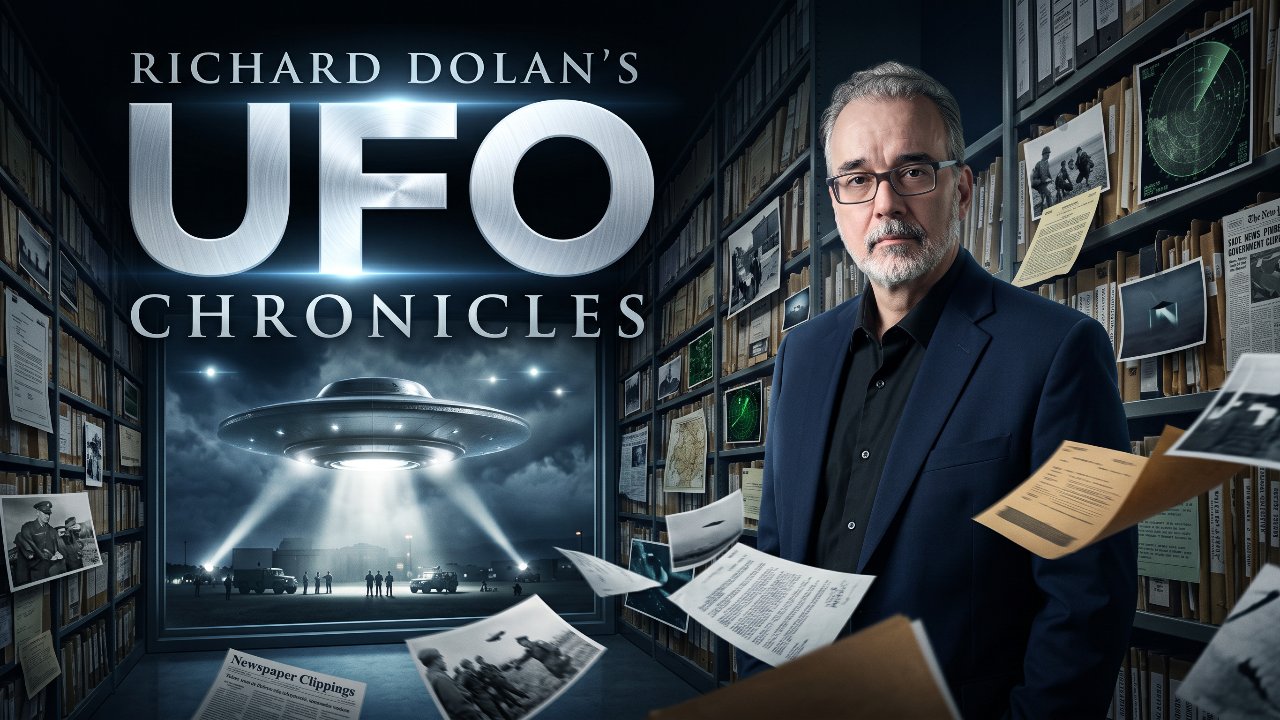
The video on this page, "1976 Tehran UFO Incident - Military Jets Chase UFO Over Iran", is from the 4biddenknowledge Podcast Network channel, but the speaker is UFO historian Richard Dolan rather than Billy Carson, and its framing of the case is Dolan's. Dolan's series Richard Dolan's UFO Chronicles on 4BK TV returns to what the show calls "the incredible UFO dogfight over Iran" in more depth. For Billy's wider work on non-human contact, start at the Anunnaki topic hub.
Frequently asked questions
Did the DIA say the Tehran object was a UFO from another world?
No. The DIA evaluation sheet called the cable "an outstanding report" and said the case met the criteria for a valid study of a UFO phenomenon, listing credible witnesses, radar confirmation and electromagnetic effects. It assessed the quality of the reporting, not the nature of the object, and it did not identify what the light was.
Who were the pilots in the 1976 Tehran UFO incident?
The first F-4 was flown by Lt. Yadollah (Yaddi) Nazeri. The second was flown by squadron commander Maj. Parviz Jafari, later a general, with 1st Lt. Jalal Damirian as weapons officer.
Could the Tehran UFO have been Jupiter?
Philip J. Klass and James Oberg argued that the bright light that started the alert was most likely Jupiter, which was prominent that night. Supporters argue a planet cannot explain the radar lock, the separating objects or the equipment failures.
Did the object really disable the F-4s?
The crews reported losing instruments, communications and, in the second jet, the weapons control panel as they approached. That is what the record shows. Whether the object caused those failures has never been established, and Klass pointed to a jet with a history of electrical faults and a possible radar setting error as ordinary explanations.
Sources and further reading
- US Defense Attaché Office Tehran, intelligence report IR 6 846 0139 76, "Reported UFO Sighting" (22 September 1976), with the Defense Intelligence Agency evaluation sheet, declassified.
- National Security Agency, "The U.S. Government and the Iran Case", in the NSA declassified UFO document collection.
- Philip J. Klass, UFOs: The Public Deceived (Prometheus Books, 1983).
- Brian Dunning, "The Tehran 1976 UFO", Skeptoid episode 315 (2012).
- Leslie Kean, UFOs: Generals, Pilots, and Government Officials Go on the Record (Harmony Books, 2010).
- Martin Bridgstock, Beyond Belief: Skepticism, Science and the Paranormal (Cambridge University Press, 2009).
- Captain Henry S. Shields, "Now You See It, Now You Don't", US Air Force MIJI quarterly newsletter, released under FOIA.