 Billy's Colloidal Silver + Starfire Gold duo —
There’s something quietly mind-blowing happening in astronomy right now—not with a new rocket launch or a flashy telescope reveal—but inside old data. The kind we already collected, stored, and almost moved on from.
Turns out… we may have been sitting on a cosmic goldmine.
What’s Really Going On?
Since its launch in 2018, the Transiting Exoplanet Survey Satellite (TESS) has been scanning the sky, searching for planets beyond our solar system—what scientists call exoplanets.
Its job is simple in theory but powerful in execution: watch stars and detect tiny dips in brightness when a planet passes in front of them.
But here’s the twist:
→ The telescope has gathered far more data than scientists can manually analyze in real time → New algorithms, AI tools, and reanalysis techniques are uncovering signals that were missed → This means thousands—possibly over 10,000—additional planets may be hidden in plain sight
Why Were These Planets Missed Before?
It’s not that scientists weren’t looking hard enough. It’s that the universe doesn’t exactly make things easy.
→ Planet signals can be incredibly faint → Stellar activity (like flares) can mimic planetary signatures → Early detection methods had limitations in filtering noise from real signals
As Natalie Batalha, a key scientist involved with TESS, has emphasized in multiple talks, “The challenge isn’t just finding planets—it’s proving they’re real.”
Now, with machine learning stepping in, those subtle signals are getting a second chance to speak.
The Role of AI and Advanced Analysis
Modern astronomy is no longer just telescopes and stargazing—it’s data science.
→ AI models can scan massive datasets faster than any human team → Pattern recognition algorithms detect repeating transit signals → Previously discarded “noise” is being re-evaluated as potential planets
Researchers at institutions like MIT and NASA have already demonstrated that neural networks can uncover planets that traditional methods overlooked.
In fact, Sara Seager has long advocated for combining computational power with observational data, noting that “the next wave of discovery will come from how we analyze the data we already have.”
What Kind of Planets Are We Finding?
Not all planets are created equal—and that’s where things get interesting.
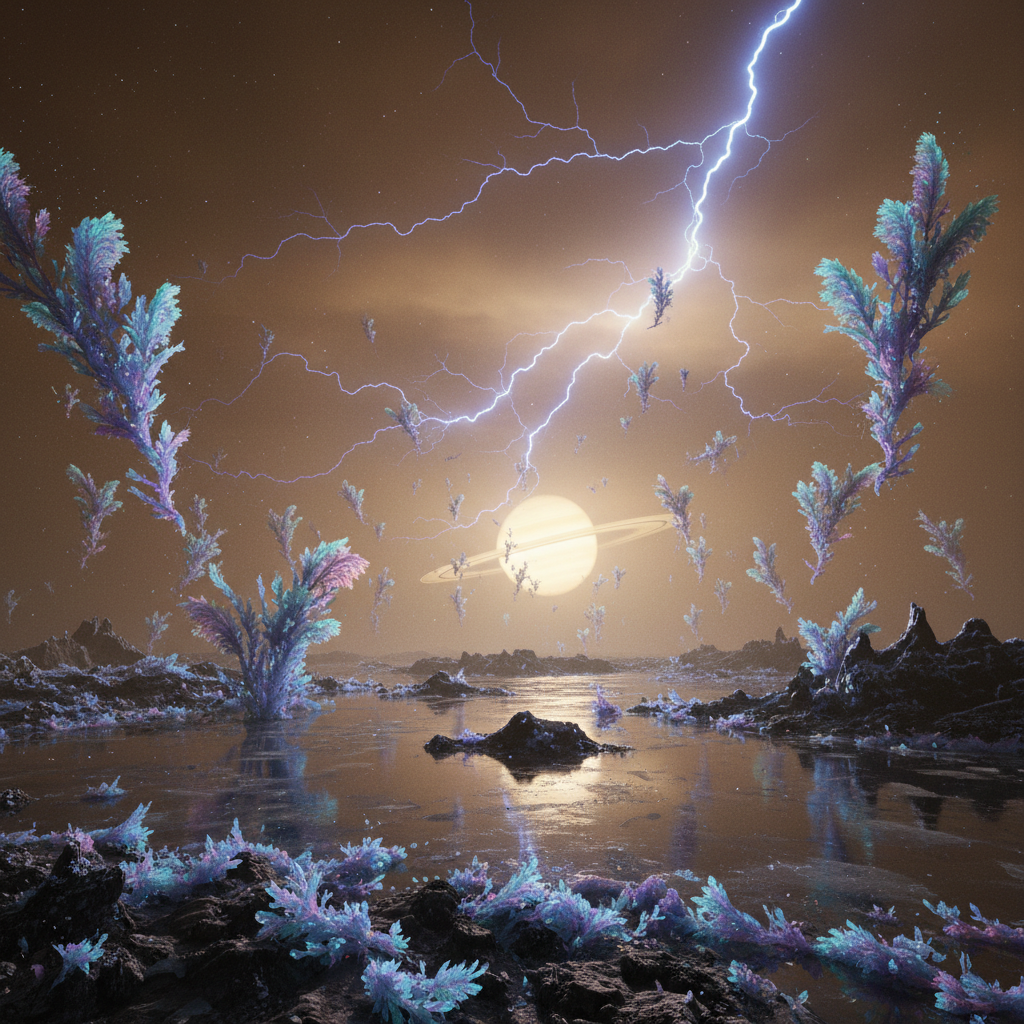
→ Earth-sized rocky worlds in habitable zones → Gas giants orbiting extremely close to their stars → “Sub-Neptunes” — a class of planets not found in our solar system → Potential ocean worlds with water-rich atmospheres
Some of these planets orbit within the so-called “Goldilocks zone,” where conditions might allow liquid water—and possibly life.
Why This Matters More Than You Think
This isn’t just about adding numbers to a cosmic checklist.
Every new planet shifts how we understand our place in the universe.
→ It increases the probability that life could exist elsewhere → It helps refine models of planetary formation → It challenges assumptions based solely on our solar system
As Carl Sagan famously said, “Somewhere, something incredible is waiting to be known.”
What’s wild is… it might already be known—we just hadn’t looked closely enough yet.
The Bigger Picture: A Universe Still Unfolding
NASA’s TESS mission isn’t just discovering planets—it’s revealing how much we’ve underestimated the universe.
→ We are not limited by what’s out there → We are limited by how well we can interpret what we already have
And that’s a powerful shift.
Because it means the next great discovery might not come from a new telescope…
…but from a fresh set of eyes on old starlight.
Final Thought
There’s something poetic about it.
Thousands of worlds, orbiting quietly in the dark, unnoticed—not because they were hidden, but because we weren’t ready to see them yet.
Now we are.
And the universe? It’s starting to answer back.
Fast-charging quantum battery built inside a quantum computer
An experiment with superconducting qubits opens the door to determining whether quantum devices could be less energetically costly if they are powered by quantum batteries