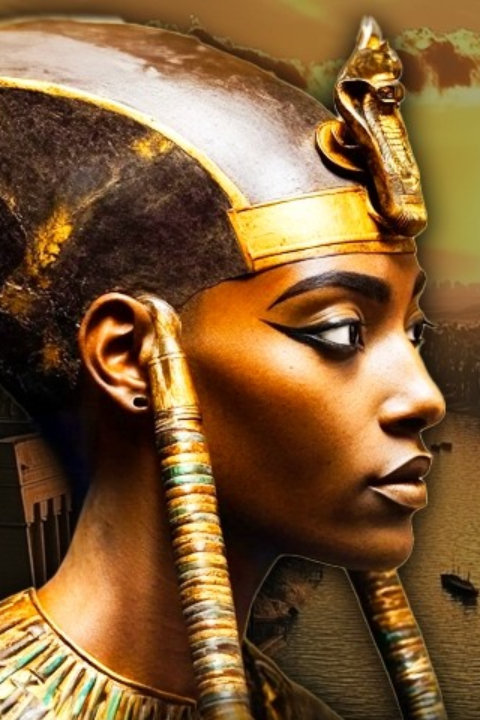
Imhotep was the chancellor and chief builder of King Djoser of Egypt's 3rd Dynasty (c. 2670 BCE), and he is credited with designing the Step Pyramid at Saqqara, the first monumental stone building in Egypt. More than two thousand years after his death, Egyptians worshipped him as a god of wisdom and healing, and the Greeks identified him with their healing god Asclepius. He is one of very few non-royal Egyptians whose name survived from the Old Kingdom to the Roman era.
Imhotep matters because he sits on the line between history and legend. A single contemporary inscription proves he was real and powerful, yet most of what people "know" about him, from physician to magician to the villain of Hollywood's mummy films, was added centuries later. Separating the two shows how ancient Egypt turned a gifted official into a saint, and why his story still anchors debates about where Egyptian knowledge came from.
Who was Imhotep, historically?
Historically, Imhotep was a senior official of King Djoser, known in his own lifetime by the Horus name Netjerikhet. Egyptologists date Djoser's reign to the early 27th century BCE, with published estimates clustering around 2670 to 2650 BCE, which places Imhotep in the late 27th century BCE.
The key evidence is a limestone statue base of Djoser, now in the Egyptian Museum in Cairo (JE 49889), found in the entrance colonnade of the Step Pyramid complex. Alongside the king's name it carries Imhotep's name and a string of titles. Translations vary slightly, but a standard rendering reads: Chancellor of the King of Lower Egypt, First after the King of Upper Egypt, Administrator of the Great Palace, Hereditary nobleman, High Priest of Heliopolis, Builder, Chief Carpenter, Chief Sculptor and Maker of Vases in Chief.
Two things stand out. First, a private person's name appearing on a royal statue was highly unusual, which signals how close Imhotep was to the king. Second, the titles describe an administrator, priest and master craftsman. Nothing on the statue base calls him a physician.
Later tradition gave him a mortal mother named Khereduankh and, as his cult grew, made him a divine son of Ptah, the creator god of Memphis and patron of craftsmen. That divine parentage belongs to his later legend, not to his lifetime.
What did Imhotep build?
Imhotep is credited with the Step Pyramid of Djoser at Saqqara, the necropolis of the capital Memphis. The attribution rests on his titles, the statue base found inside the complex and a long Egyptian tradition that named him as its architect.
The monument began as a square mastaba, a flat-topped tomb, and was enlarged in several stages until it became a pyramid of six stacked steps. It rises about 62.5 metres and measures roughly 109 by 121 metres at the base. It is widely described as the earliest large-scale cut-stone construction in the world. Earlier royal tombs used mud brick; this one translated brick, timber and reed architecture into limestone.
The pyramid stands inside a vast walled enclosure. The panelled wall stood about 10.5 metres high and ran for more than 1.6 kilometres, broken by a single true entrance and many false doors. Inside are courtyards, dummy chapels and a ceremonial court for the royal jubilee festival, all built in stone.
Below ground lies a network of shafts, corridors and chambers that totals nearly 6 kilometres; the figure usually given after the recent restoration is about 5.7 kilometres. Some underground rooms are lined with blue-green faience tiles set to imitate reed matting, a stone and ceramic copy of a palace interior. Egypt reopened the pyramid to visitors in March 2020 after a restoration lasting some 14 years. For the wider site, including the Serapeum, see our guide to Saqqara and the Step Pyramid.
The French architect Jean-Philippe Lauer spent much of the 20th century excavating and rebuilding parts of the complex, and the Imhotep Museum at the foot of the Saqqara plateau, opened in 2006, honours both men.
Why does the Step Pyramid matter for the pyramids that followed?
The Step Pyramid matters because it proved a king's tomb could be built entirely of stone at monumental scale, and every later Egyptian pyramid builds on that idea. Within roughly a century, the 4th Dynasty kings moved from stepped forms to true smooth-sided pyramids, culminating in Khufu's monument at Giza.
That rapid leap is one reason the Old Kingdom pyramids attract so many competing explanations. Our article on how the Great Pyramid of Giza was built sets out the archaeological evidence alongside the open questions.
Was Imhotep really a physician?
There is no contemporary evidence that Imhotep practised medicine. His reputation as a healer comes from texts written much later, and in a 2014 paper in Anatomy Research International, Patric Blomstedt notes that there are no sources within the first two thousand years after Imhotep that connect him in any way with medicine.
The healing role grew in stages. By the New Kingdom, scribes revered Imhotep as a patron of their profession. References to him as a healer appear from the 30th Dynasty (c. 380 to 343 BCE) onward. The Egyptian priest Manetho, writing in Greek in the 3rd century BCE, credits the king he calls Tosorthros (Djoser) with building in hewn stone and being remembered as Asclepius for his medical skill; modern scholars think those achievements originally belonged to Imhotep and were later attached to his king.
Did Imhotep write the Edwin Smith Papyrus?
No evidence links Imhotep to the Edwin Smith Papyrus. The papyrus is a surgical treatise describing 48 injury cases, arranged from the head downward, with examination, diagnosis and treatment for each. The surviving copy dates to about 1600 BCE, in the Second Intermediate Period, and its archaic grammar suggests it was copied from a much older original.
The Imhotep attribution traces to James Henry Breasted, who published the first translation in 1930. Breasted floated Imhotep as a possible author of the original but stressed that this was conjecture with no evidence behind it. Popular sources often repeat the guess as fact. The papyrus, bought in Luxor in 1862 by the American collector Edwin Smith, is held today by the New York Academy of Medicine.
How did Imhotep become a god?
Imhotep became a god gradually, through popular devotion that the priesthood eventually formalised. In the Late Period, more than two thousand years after his death, he received his own cult, temples and priests, first at Saqqara and then elsewhere. Worshippers left offerings asking him for healing, and bronze figurines show him as a seated scribe with a papyrus unrolled across his knees.
The Greeks who ruled Egypt after Alexander identified Imhotep with Asclepius, their god of medicine, and called him Imouthes. He was also linked with Thoth, the ibis-headed god of writing and wisdom. When the British archaeologist Walter Bryan Emery dug at North Saqqara from the 1960s, he found ibis mummies bearing images of both Imhotep and Thoth. Our profile of Thoth explains why that pairing made sense to Egyptian worshippers.
His cult spread far up the Nile. On the island of Philae, a small temple to Imhotep stands at the northern end of the colonnade near the main Temple of Isis, with reliefs showing Ptolemy V Epiphanes in his presence. For context on where he fits in the pantheon, see our guide to the Egyptian gods and goddesses.
The Famine Stela: a later legend
The Famine Stela is a Ptolemaic inscription, not a 3rd Dynasty record. Carved on a granite boulder on Sehel Island near Aswan and tentatively dated to the reign of Ptolemy V (c. 205 to 180 BCE), it tells how Djoser, troubled by seven years of low Nile floods, consulted Imhotep. Imhotep searched the temple archives, identified the god Khnum of Elephantine as controller of the flood, and the god promised Djoser in a dream that the waters would return. The king then granted land and revenues to Khnum's temple. Egyptologists generally read it as a text that legitimised the claims of Khnum's priests, using the prestige of Djoser and Imhotep some 2,500 years after their time.
Where is Imhotep's tomb?
Imhotep's tomb has never been found. Emery was convinced it lay in North Saqqara among other 3rd Dynasty tombs, reasoning that a heavily visited cult site would leave piles of votive offerings. He found exactly that kind of activity, the Sacred Animal Necropolis with catacombs of mummified ibises, baboons, falcons and the mothers of the Apis bulls, along with caches of bronze temple equipment. He suspected that a large mastaba numbered S 3518 might be Imhotep's, but he died in 1971 with the tomb still unidentified, and no later excavation has confirmed it.
How did Hollywood distort Imhotep?
Hollywood turned a revered sage into a monster. Universal's The Mummy (1932) cast Boris Karloff as Imhotep, a priest buried alive for forbidden love who returns from the dead, and the 1999 remake starring Arnold Vosloo kept the name for its cursed villain. Neither story has anything to do with the real chancellor of Djoser, and the Egyptians who prayed to Imhotep saw him as a healer and wise man, the opposite of a curse.
Billy Carson's reading
Billy Carson approaches Imhotep through the Egyptian mystery tradition he teaches. Saqqara is a stop on the 4BIDDEN Tour of Egypt, and Carson treats it as one of the strongest places in Egypt to examine the idea of an older, more advanced layer of civilisation. He reads the shaft and tunnel network beneath Djoser's pyramid as a sign that the site may hold an older layer than the 3rd Dynasty dating allows.
More broadly, Carson argues that dynastic Egypt inherited or restored something older rather than inventing it from nothing. In his reading of the Emerald Tablets, Thoth, whom he calls Tehuti, was a historical teacher who brought advanced knowledge to Egypt, and the later god is the memory of that teacher. Within that framework, Imhotep fits a lineage of priest-architects who preserved and applied knowledge handed down from much earlier, rather than a lone inventor who conjured stone architecture out of nowhere. His Egyptian Mystery School series on 4BK TV develops this priest-scholar tradition at length.
This is Carson's interpretation, and it should be read alongside the mainstream chronology. Egyptologists date the Step Pyramid to Djoser's reign on the basis of its inscriptions, seal impressions and building sequence, and they see the brick-to-stone transition inside the complex itself as evidence of innovation in the 3rd Dynasty.
Watch, read and go deeper
Billy Carson's Egyptian Mystery School on 4BK TV is the place to follow his reading of the priestly knowledge tradition behind figures like Imhotep. Our guide to Saqqara covers the Step Pyramid complex and the Serapeum in more detail, and the Ancient Egypt topic hub gathers every 4biddenknowledge article on the pyramids, the gods and the dynasties. If you want to stand in Djoser's enclosure yourself, the 4BIDDEN Tour of Egypt includes Saqqara on its route.
Frequently asked questions
What is Imhotep famous for?
Imhotep is famous as the architect credited with the Step Pyramid of Djoser at Saqqara, the first monumental stone building in Egypt, built around 2670 BCE. He served King Djoser as chancellor and high priest of Heliopolis. Centuries later he was worshipped as a god of wisdom and healing.
Was Imhotep a real person?
Yes. A statue base of King Djoser in the Egyptian Museum in Cairo (JE 49889) names Imhotep with his official titles, which confirms he was a real and high-ranking official of the 3rd Dynasty. Many later stories about him, however, are legend.
Is Imhotep the father of medicine?
The title is popular but not supported by contemporary evidence. Nothing from Imhotep's lifetime describes him as a physician, and the healing tradition appears more than two thousand years later. The idea that he wrote the Edwin Smith Papyrus was a conjecture by its translator James Henry Breasted, who admitted there was no evidence for it.
Why did the Greeks call Imhotep Asclepius?
By the Late Period, Egyptians worshipped Imhotep as a healing god, and the Greeks who settled in Egypt matched him with Asclepius, their own god of medicine. They rendered his name as Imouthes. The link reinforced his reputation as a healer in the Ptolemaic and Roman periods.
Has Imhotep's tomb been found?
No. Walter Bryan Emery searched North Saqqara from the 1960s until his death in 1971 and found the Sacred Animal Necropolis instead. He suspected mastaba S 3518, but no tomb has been confirmed as Imhotep's.
Sources and further reading
- James Henry Breasted, The Edwin Smith Surgical Papyrus (University of Chicago Press, 1930)
- Jamieson B. Hurry, Imhotep: The Vizier and Physician of King Zoser (Oxford University Press, 1926)
- Dietrich Wildung, Egyptian Saints: Deification in Pharaonic Egypt (New York University Press, 1977)
- Jean-Philippe Lauer, Saqqara: The Royal Cemetery of Memphis (Thames & Hudson, 1976)
- Miriam Lichtheim, Ancient Egyptian Literature, Volume III: The Late Period (University of California Press), for the Famine Stela translation
- Mark Lehner, The Complete Pyramids (Thames & Hudson, 1997)
- Patric Blomstedt, "Imhotep and the Discovery of Cerebrospinal Fluid," Anatomy Research International (2014)