The Book of Thoth is not a single book. The name covers at least five different things: a magical scroll written by the god Thoth in an ancient Egyptian story, a real Demotic wisdom text that modern scholars have titled The Book of Thoth, the sacred temple books that Greek writers credited to Thoth-Hermes, the Hermetic writings attributed to Hermes Trismegistus, and a run of modern esoteric works, from tarot decks to Aleister Crowley. The famous idea of a lost Book of Thoth holding the secrets of the universe comes from a Ptolemaic-era story about Prince Setne Khamwas, not from an archaeological discovery.
The distinction matters because these works are constantly blended together online, as if they were one recovered artifact. Each has a different date, language, author and purpose, and knowing which Book of Thoth a source means is the first step to reading any of them well, whether as a student of the mysteries or as a skeptic.
Who was Thoth, and why a book carries his name
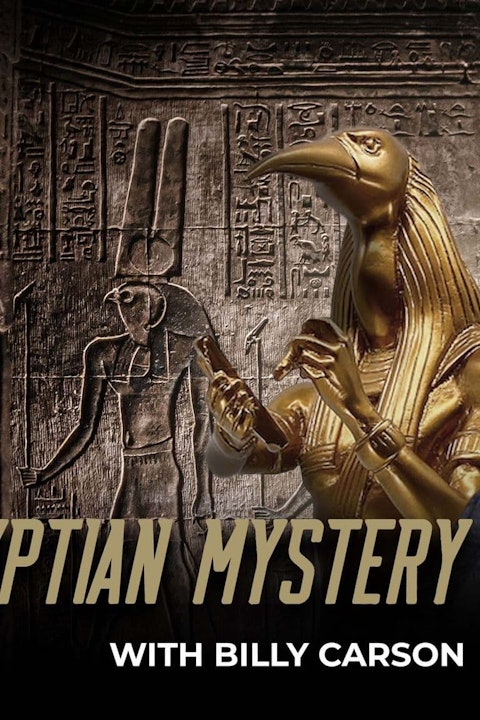
Thoth was the Egyptian god of writing, knowledge, reckoning and the moon, and in Egyptian tradition he was the divine scribe, so any book of supreme wisdom was naturally imagined as his. His Egyptian name was Djehuty. He was shown as an ibis-headed man or as a baboon, and his main cult centre was Khemenu, the city the Greeks called Hermopolis. For a full profile of the god, see [who Thoth was and how he became Hermes Trismegistus](/who-was-thoth-egyptian-god-of-wisdom-hermes-trismegistus).
Thoth appears throughout Egyptian religious literature as the keeper of records. In the judgment scene of the funerary texts he stands by the scales and writes down the verdict when the heart of the deceased is weighed, a scene described in [the Egyptian Book of the Dead explained](/the-egyptian-book-of-the-dead-explained-spells-judgment-and-the-afterlife). Among the wider family of deities, covered in [Egyptian gods and goddesses explained](/egyptian-gods-and-goddesses-explained-ra-osiris-isis-horus-thoth-and-more), he is the one most closely tied to scribes, calculation and sacred speech.
When Greeks settled in Egypt, they identified Thoth with their own messenger god Hermes. Over time that merged figure became Hermes Trismegistus, the thrice-great Hermes, a title that echoes Egyptian epithets calling Thoth “great, great”. That identification is why books credited to Hermes are, in the older tradition, books of Thoth.
The legend: Setne Khamwas and the book beneath the Nile
The best-known Book of Thoth is a fictional magical book in a Demotic story that scholars call Setne I, preserved on Papyrus Cairo 30646 and dating to the Ptolemaic period, roughly the third to second century BCE. It is literature, not a record of a real object.
The hero, Setne Khamwas, is modelled on a real man: Khaemwaset, a son of Ramesses II and high priest of Ptah at Memphis. Storytellers writing about a thousand years later turned him into a scholar-magician obsessed with ancient books.
In the tale, Setne learns of a book written by Thoth himself and goes to the tomb of an earlier prince, Naneferkaptah, to take it. The ghosts of the tomb tell him how Naneferkaptah first obtained it. The book lay at the bottom of the Nile at Coptos, sealed inside a series of nested boxes and guarded by serpents. It held two spells: one let the reader understand the speech of animals and command the natural world, and the other let the reader see the gods themselves. Naneferkaptah seized the book, and Thoth complained to Ra. As punishment, Naneferkaptah's wife and son drowned in the Nile, and he drowned as well.
Setne does not heed the warning. He takes the book from the tomb anyway, and soon falls into a disastrous episode with a mysterious woman named Tabubu that strips him of everything. Shaken, he returns the book to Naneferkaptah's tomb.
The moral is that knowledge belonging to the gods cannot simply be stolen. This story is the source of the modern motif of a lost, dangerous Book of Thoth hidden somewhere in Egypt. The standard English translations are F. Ll. Griffith's Stories of the High Priests of Memphis (1900), Miriam Lichtheim's in Ancient Egyptian Literature, volume III (1980), and Robert Ritner's in William Kelly Simpson's anthology The Literature of Ancient Egypt (2003).
The real Demotic text scholars call The Book of Thoth
There is also a genuine ancient Egyptian text that modern scholars have named The Book of Thoth, published by Richard Jasnow and Karl-Theodor Zauzich in 2005 (Harrassowitz). It is not the magical scroll of the Setne story, and it does not contain spells to command the universe.
The text is a dialogue between a master, called He-who-praises-knowledge and probably to be identified with Thoth, and a disciple who wants to learn. Its subject is knowledge itself: the scribal craft, the sacred learning of the temple, and what it means to be admitted into that learning. It survives in many fragmentary Demotic papyri of the Greco-Roman period, roughly the first century BCE to the second century CE, from Tebtunis in the Fayum and other sites.
The work is fragmentary and much debated, but it shows Egyptian priests, in their own language, writing teaching dialogues in Thoth's name. The editors present it as an Egyptian counterpart to the Greek Hermetic writings, which take a similar teacher-and-student form.
Temple libraries and the 42 books of Hermes
In a broader sense, the Book of Thoth was the whole body of sacred writing kept in Egyptian temples, which Greek authors described as the books of Hermes. Egyptian temples had a scriptorium and archive known as the House of Life, where priests copied and studied ritual, astronomical, medical and theological texts.
The clearest ancient description comes from Clement of Alexandria, writing around 200 CE. In Stromata VI.4, he describes a priestly procession in which different ranks of priests carry books of Hermes, and he gives the total as 42 books: 36 containing the philosophy of the Egyptians, learned by the priests, and six on medicine.
Clement describes a working library of priestly manuals, not a single secret volume, and no complete set of the 42 books survives.
Hermes Trismegistus, the Hermetica and the Emerald Tablet
The fourth Book of Thoth is the Hermetic tradition: writings in Greek, and later Arabic and Latin, attributed to Hermes Trismegistus, the Greek form of Thoth. The most famous group is the Corpus Hermeticum, a set of philosophical and religious treatises composed in Greek in the early centuries CE. Marsilio Ficino translated them into Latin for Cosimo de' Medici in 1463, and Renaissance readers took them for writings of great antiquity, from roughly the age of Moses. In 1614 the scholar Isaac Casaubon showed from their language and ideas that they belong to the Roman imperial period.
The Emerald Tablet, a short alchemical text beginning with the principle often summarized as “as above, so below”, is also credited to Hermes. Its earliest known versions are in Arabic, and it reached Europe through medieval Latin translations. The full story of that text is told in [the Emerald Tablets of Thoth explained](/emerald-tablets-of-thoth-explained). Readers should keep it separate from Maurice Doreal's much longer 1939 work, described below, which shares the name but not the history.
The modern Books of Thoth: tarot, Crowley and Doreal
The fifth Book of Thoth is modern: esoteric works from the eighteenth century onward that claim the name for new material. None is a translation of a recovered Egyptian book.
In 1781 the French scholar Antoine Court de Gébelin, in his multi-volume work Le Monde primitif, claimed that the tarot was the surviving Book of Thoth, Egyptian wisdom disguised as a deck of cards. There was no evidence for this. Tarot cards are documented in fifteenth-century Italy as a card game, centuries after Egyptian religion ended and long before hieroglyphs could be read. Even so, the occultist Etteilla issued tarot decks under the title Book of Thoth in 1788 and 1789, and the Egyptian tarot became a lasting theme in French and English occultism.
In 1944 Aleister Crowley published The Book of Thoth, a study of the tarot written to accompany the Thoth tarot deck, painted to his design by Lady Frieda Harris. It is a modern occult work built on Crowley's own system, not an ancient text.
In 1939 Maurice Doreal published The Emerald Tablets of Thoth the Atlantean, presenting Thoth as a priest-king of Atlantis whose teachings were recorded on tablets. Doreal said he had retrieved and translated the originals. No ancient manuscript or tablet of this text is known to scholars, who treat it as a twentieth-century composition. It is nonetheless the Emerald Tablets text most modern spiritual readers mean, and the one at the centre of the [Emerald Tablets topic hub](/topics/emerald-tablets).
How to tell the five apart
When a source mentions the Book of Thoth, one question usually settles which one it means: when was the text written, and in what language?
- The legend is the magical scroll in the Setne Khamwas story, a Demotic tale of the Ptolemaic period.
- The Demotic dialogue is the real wisdom text edited by Jasnow and Zauzich, Greco-Roman in date.
- The temple books are the 42 books of Hermes described by Clement of Alexandria around 200 CE.
- The Hermetica are the Greek Corpus Hermeticum and the Arabic and Latin Emerald Tablet, credited to Hermes Trismegistus.
- The modern books are Court de Gébelin's tarot theory (1781), Etteilla's decks (1788–89), Doreal's Emerald Tablets (1939) and Crowley's The Book of Thoth (1944).
Billy Carson's reading
Billy Carson reads Thoth as the keeper of knowledge from before the flood, a teacher whose wisdom was preserved and passed down, and he argues that those teachings survive in the Emerald Tablets. That is his interpretation, and he presents it as such, not as the consensus of Egyptology.
It is important to be exact about which text his work addresses. Carson's Compendium of the Emerald Tablets is a tablet-by-tablet commentary on Maurice Doreal's Emerald Tablets of Thoth the Atlantean. It is not a commentary on the Demotic Book of Thoth edited by Jasnow and Zauzich, and it is not a translation of the Setne papyrus. In his commentary, Carson connects Doreal's tablets to the Hermetic tradition, sacred geometry and his broader model of consciousness, treating Thoth as a real figure whose teaching took many written forms over the centuries. The book and its themes are covered in detail in [the Compendium of the Emerald Tablets explained](/the-compendium-of-the-emerald-tablets-billy-carsons-book-explained).
Mainstream scholars see the history differently: Thoth was a god whose authority attached to many texts written by priests and later writers, and the Doreal tablets are modern. Readers can weigh both positions once they know which Book of Thoth each side means.
Watch, read and go deeper
The 4BK TV series [Egyptian Mystery School](/watch/egyptian-mystery-school) explores Thoth, the temple tradition and the Egyptian roots of the mysteries in long-form episodes. Billy Carson's books, including the Compendium of the Emerald Tablets, are available on the 4biddenknowledge books page. For more on Egyptian religion, history and monuments, start at [the Ancient Egypt topic hub](/topics/ancient-egypt). For the Emerald Tablets themselves and Carson's work on them, the [Emerald Tablets hub](/topics/emerald-tablets) collects every related article.
Frequently asked questions
Is the Book of Thoth a real ancient book?
There is a real ancient Egyptian text that scholars call The Book of Thoth: a Demotic dialogue on knowledge, published by Jasnow and Zauzich in 2005. The magical Book of Thoth with spells to understand animals and see the gods, however, comes from a work of fiction, the Setne Khamwas story. No recovered artifact matches that legendary book.
What was in the Book of Thoth in the Setne story?
In Setne I, the book held two spells. The first let the reader understand the speech of animals and command the natural world, and the second let the reader see the gods. Its theft brought disaster on Prince Naneferkaptah and his family, and later on Setne himself.
Is Crowley's Book of Thoth the same as the Egyptian one?
No. Aleister Crowley's The Book of Thoth (1944) is a modern study of the tarot written to accompany the Thoth tarot deck painted by Lady Frieda Harris. It borrows the name from the eighteenth-century idea that the tarot preserved Egyptian wisdom, an idea with no historical evidence behind it.
Are the Emerald Tablets the Book of Thoth?
The name Emerald Tablet or Emerald Tablets refers to two different texts: the short Hermetic Emerald Tablet, known first from Arabic sources, and Maurice Doreal's Emerald Tablets of Thoth the Atlantean (1939). Both are credited to Thoth or Hermes, but neither is the Book of Thoth of the Setne story or the Demotic dialogue.
Why did Greeks connect Thoth with Hermes?
Both gods were associated with speech, writing, messages and the passage between worlds, so Greek settlers in Egypt identified Thoth with Hermes. The combined figure became Hermes Trismegistus, and writings credited to him were understood as the wisdom of Thoth.
Sources and further reading
- F. Ll. Griffith, Stories of the High Priests of Memphis: The Sethon of Herodotus and the Demotic Tales of Khamuas (Oxford, 1900).
- Miriam Lichtheim, Ancient Egyptian Literature, volume III: The Late Period (University of California Press, 1980).
- William Kelly Simpson, ed., The Literature of Ancient Egypt, third edition (Yale University Press, 2003), with Robert Ritner's translation of the Setne Khamwas stories.
- Richard Jasnow and Karl-Theodor Zauzich, The Ancient Egyptian Book of Thoth (Harrassowitz, 2005).
- Clement of Alexandria, Stromata, book VI, chapter 4.
- Brian P. Copenhaver, Hermetica: The Greek Corpus Hermeticum and the Latin Asclepius (Cambridge University Press, 1992).
- Aleister Crowley, The Book of Thoth (1944).