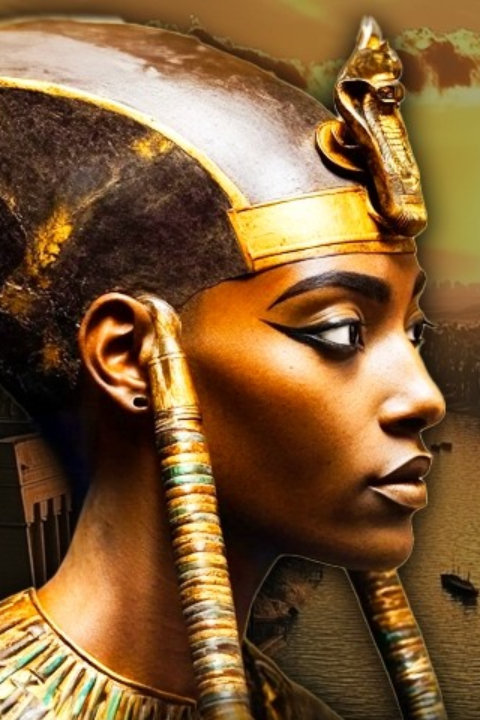
The "King Tut curse" is the legend that anyone who disturbed Tutankhamun's tomb, KV62 in Egypt's Valley of the Kings, would die by the pharaoh's vengeance. It took off when Lord Carnarvon, who funded Howard Carter's excavation, died in Cairo on 5 April 1923, but no curse inscription was ever found in the tomb, and a 2002 study in the BMJ found that people exposed to the opening lived no shorter lives than those who were not.
Why it still matters: KV62 is the only royal tomb in the valley found largely intact, and its 5,398 recorded objects remain the clearest single window onto how a New Kingdom king was buried. The curse story, meanwhile, is a case study in how a legend is built from newspapers, coincidence and selective memory. Separating the two lets readers enjoy the mystery without losing the history.
Who was Tutankhamun
Tutankhamun was an 18th Dynasty king of Egypt who ruled for about nine years, roughly 1332 to 1323 BCE. He came to the throne as a boy of about eight or nine and died at around 18 or 19, which is why later generations called him the "boy king."
He was born Tutankhaten, "living image of the Aten," a name that ties him directly to the Amarna period and the religious revolution of Akhenaten, the so-called heretic pharaoh. Early in his reign the court abandoned Akhenaten's city, the old gods were restored and the young king's name changed to Tutankhamun, "living image of Amun."
His family line was clarified in 2010, when a team led by Zahi Hawass published "Ancestry and Pathology in King Tutankhamun's Family" in the Journal of the American Medical Association. DNA from 16 mummies identified his father as the mummy from tomb KV55, which the team concluded was probably Akhenaten (some scholars still argue for Smenkhkare), and his mother as the mummy known as the "Younger Lady" from tomb KV35. The same study found the king's parents were siblings.
The JAMA team also found evidence of malaria tropica, the most severe form of the disease, and bone necrosis in his left foot. It named that combination as the most likely cause of death and suggested that a sudden leg fracture, like the left thigh break first noted on a 2005 CT scan, may have tipped him into crisis. The cause of death is still debated. What has largely fallen away is the old murder theory: the 2005 scan found no evidence of the blow to the head once suggested by a 1968 X-ray.
How Howard Carter found KV62
Howard Carter, a British archaeologist working under the sponsorship of George Herbert, 5th Earl of Carnarvon, found the first step of a staircase cut into the bedrock on 4 November 1922. The tomb lay low in the main eastern branch of the Valley of the Kings on Luxor's west bank, beneath workmen's huts and debris associated with the later tomb of Ramesses VI, which is one reason it escaped notice for so long.
Carter covered the stairway again and cabled Carnarvon in England. Carnarvon arrived in Luxor on 23 November, joined soon after by his daughter, Lady Evelyn Herbert. On the afternoon of 26 November, Carter made a small breach in the inner doorway and looked into the antechamber by candlelight. When Carnarvon asked whether he could see anything, Carter later wrote that he answered, "Yes, wonderful things."
The clearance took years. The sealed doorway to the burial chamber was opened on 16 February 1923 in front of government officials, revealing the gilded shrines around the sarcophagus. On 28 October 1925 the lid of the innermost, solid-gold coffin was lifted and the mummy, wearing its gold mask, was seen for the first time in more than three thousand years. The examination of the body began on 11 November 1925. Work in the tomb ended in November 1930, and the last objects were shipped to Cairo in February 1932.
None of it was a one-man effort. Carter's published thanks named his Egyptian foremen, including Ahmed Gerigar, Gad Hassan, Hussein Abu Awad and Hussein Ahmed, and dozens of local workers moved the spoil and shifted the heavy finds. Their role, long written out of popular accounts, is the subject of the 4biddenknowledge piece on the Egyptians finally being recognized for the discovery.
What was inside the tomb
KV62 is small for a royal tomb: four rooms off a short stairway and corridor. The measured dimensions are roughly:
- Antechamber: 7.9 by 3.6 metres
- Annexe: 4.4 by 2.6 metres
- Burial chamber: 4 by 6.4 metres
- Treasury: 4.8 by 3.8 metres
Into that space the burial party packed about 5,398 objects, recorded by Carter's team with numbered cards, plans and Harry Burton's photographs. They include the gold mask, three nested coffins, four gilded shrines, chariots, beds, thrones, weapons, clothing, food offerings, the canopic chest and 413 shabti figures meant to do the king's work in the afterlife. Two small coffins held the mummified remains of stillborn daughters. Several of the highlights are covered in the 10 most important treasures from Tutankhamun's tomb.
Many of the objects only make sense against the funerary texts of the period. The shrines carry religious compositions, and the whole assemblage was arranged to carry the king through judgment and into eternal life, the same journey laid out in the Egyptian Book of the Dead.
Where the "curse" came from
The curse began in the newspapers, not in the tomb. Carnarvon had sold exclusive coverage of the excavation to The Times of London, which left rival reporters without direct access and hungry for any story they could get. Commentators with no connection to the dig filled the gap.
In March 1923 Carnarvon fell ill in Cairo. He had been bitten by a mosquito, nicked the bite while shaving, and developed an infection that progressed to blood poisoning; the accounts describe erysipelas and then pneumonia. He was 57 and had been in poor health since a serious car accident in 1901.
About two weeks before he died, the novelist Marie Corelli wrote a letter, printed in the New York World and repeated elsewhere, quoting an obscure book to the effect that "dire punishment" would follow anyone who rashly entered a sealed tomb, and suggesting the tomb held secret poisons. When Carnarvon died on 5 April 1923, the press had its story.
What it did not have was a curse. Stories circulated of an inscription warning that death would come on swift wings to anyone who disturbed the king, sometimes placed over the door, sometimes on a statue. No such text appears in the tomb's records, which were exhaustive. The Griffith Institute archive of Carter's cards, diaries and photographs documents the contents object by object, and Egyptologists from Carter onward have pointed out that the inscription does not exist. Carter himself dismissed the curse talk.
Who actually died, and when
The deaths later folded into the legend are spread over years and have ordinary explanations. The key people at the opening mostly lived long lives.
Howard Carter, the man who led the excavation and worked in the tomb for the best part of a decade, died in London on 2 March 1939 of lymphoma, aged 64, more than 16 years after he first looked into the antechamber. Lady Evelyn Herbert, who was with him at the breach in November 1922, lived until 1980.
The names usually listed as victims include the American financier George Jay Gould, who visited the tomb and died in May 1923 after a fever; the radiologist Archibald Douglas-Reid, who died in January 1924; Arthur C. Mace, Carter's colleague from the Metropolitan Museum of Art, who died in 1928 of pleurisy and pneumonia; and Richard Bethell, Carter's secretary, who died in 1929. These deaths span six years and have documented, everyday causes.
One scientific-sounding version of the curse holds that mould spores, such as Aspergillus, lingering in sealed tombs could have sickened the excavators. The idea is regularly repeated but has never been tied to any death from KV62, and Carnarvon's documented infection is a sufficient explanation for his.
What the data says about the curse
The clearest test of the curse is a historical cohort study by Mark R. Nelson, published in the BMJ on 21 December 2002. Nelson took the 44 Westerners Carter identified as being in Egypt between February 1923 and November 1926 and divided them by whether they were present at one of the key openings.
Twenty-five of the 44 were potentially exposed. Their mean age at death was 70, compared with 75 for the 19 who were not exposed, and they lived an average of 20.8 years after exposure versus 28.9 years for the others. Neither difference was statistically significant. Nelson's conclusion was that there was no significant association between exposure to the mummy's curse and survival, and therefore no evidence that the curse existed.
Hidden chambers, the centenary and the Grand Egyptian Museum
KV62 is still producing headlines, and most of them are about records rather than revenge. In 2015 the Egyptologist Nicholas Reeves argued that lines visible in high-resolution scans of the burial chamber walls might mark sealed doorways, possibly leading to the burial of Nefertiti. Ground-penetrating radar surveys in 2016 and 2018 found no voids behind the walls, and the hidden-chamber theory is now considered unsupported.
The 2022 centenary shifted attention to the people behind the find. The Bodleian Libraries' exhibition "Tutankhamun: Excavating the Archive," at the Weston Library in Oxford from 13 April 2022 to 5 February 2023, drew on the Griffith Institute's records and set out to foreground the Egyptian team members whose part was long overlooked. In Luxor, "Transcending Eternity: The Centennial Tutankhamun Conference" opened on 4 November 2022 with Zahi Hawass as keynote speaker, and the American Research Center in Egypt, working with Egypt's Ministry of Tourism and Antiquities, restored Carter's dig house on the west bank.
On 1 November 2025 the Grand Egyptian Museum near the Giza pyramids held its official opening, displaying the full Tutankhamun collection together in one place for the first time. The king himself did not move: his mummy remains in KV62, in a climate-controlled glass case installed in 2007.
Billy Carson's reading
Billy Carson's interest in Tutankhamun runs through the king's bloodline rather than the curse. In his video "King Tut's Bloodline Revealed: Ancient DNA, Elongated Skulls & Origins of Monotheism," embedded on this page, Carson takes up the questions the boy king's family raises: what the 2010 DNA findings say about the Amarna royal line, why the royal family was shown with elongated skulls, and how Akhenaten's turn to a single god fits into the story of monotheism. As the title signals, he treats these as open questions worth pursuing, not settled answers.
Those threads connect to other 4biddenknowledge material. Carson reads Egypt through the Emerald Tablets and the Neteru, and in that frame Akhenaten's devotion to a single source of light belongs to an older esoteric tradition, a view explored in the Akhenaten companion. The skull question links to the Paracas elongated skulls, where the evidence for cranial shaping and the DNA claims are laid out side by side.
Readers weighing these questions should know where mainstream scholarship stands. The same JAMA study reported no signs of Marfan syndrome or other disorders in the royal mummies, and concluded that the elongated figures of Amarna art were a royally decreed style tied to Akhenaten's religious reforms. Carson's video does not address the curse, and on that subject this article sticks to the documented record above.
Watch, read and go deeper
Billy Carson's teaching on Egypt's temples, the Neteru and the Hermetic tradition is collected in the 4BK TV series Egyptian Mystery School. For the wider picture of the dynasties, sites and debates, start at the Ancient Egypt topic hub. The Akhenaten and Luxor companions fill in Tutankhamun's family and the landscape of the Valley of the Kings, and the Book of the Dead guide explains the afterlife his burial was built to secure.
Frequently asked questions
Is the curse of King Tut real?
No evidence supports it. No curse inscription was found in KV62, and Mark Nelson's 2002 BMJ study of 44 Westerners in Egypt during the excavation found no significant difference in survival between those exposed to the tomb's opening and those who were not.
How did Lord Carnarvon die?
He died in Cairo on 5 April 1923 after an infected mosquito bite, which he had cut while shaving, led to blood poisoning and pneumonia. He was 57 and had been in fragile health since a car accident in 1901.
How long did Howard Carter live after opening the tomb?
Carter died in London on 2 March 1939, of lymphoma, more than 16 years after first looking into the tomb in November 1922. He spent most of the 1920s working inside KV62 and outlived many of the people later counted as victims of the curse.
Where is Tutankhamun's mummy now?
The mummy remains in his tomb, KV62, in the Valley of the Kings, displayed in a climate-controlled glass case since 2007. The objects from the tomb are shown together at the Grand Egyptian Museum, which officially opened on 1 November 2025.
How did Tutankhamun die?
The cause is still debated. The 2010 JAMA study pointed to malaria combined with bone necrosis in his left foot, possibly worsened by a leg fracture, while the older theory that he was murdered with a blow to the head was undercut by a 2005 CT scan.
Sources and further reading
- Howard Carter and A. C. Mace, The Tomb of Tut.ankh.Amen, Volume I (1923)
- Nicholas Reeves, The Complete Tutankhamun (1990)
- Zahi Hawass et al., "Ancestry and Pathology in King Tutankhamun's Family," Journal of the American Medical Association 303, no. 7 (2010)
- Mark R. Nelson, "The mummy's curse: historical cohort study," BMJ 325 (2002)
- Roger Luckhurst, The Mummy's Curse: The True History of a Dark Fantasy (2012)
- Griffith Institute, University of Oxford, Tutankhamun: Anatomy of an Excavation (archive of Carter's records)