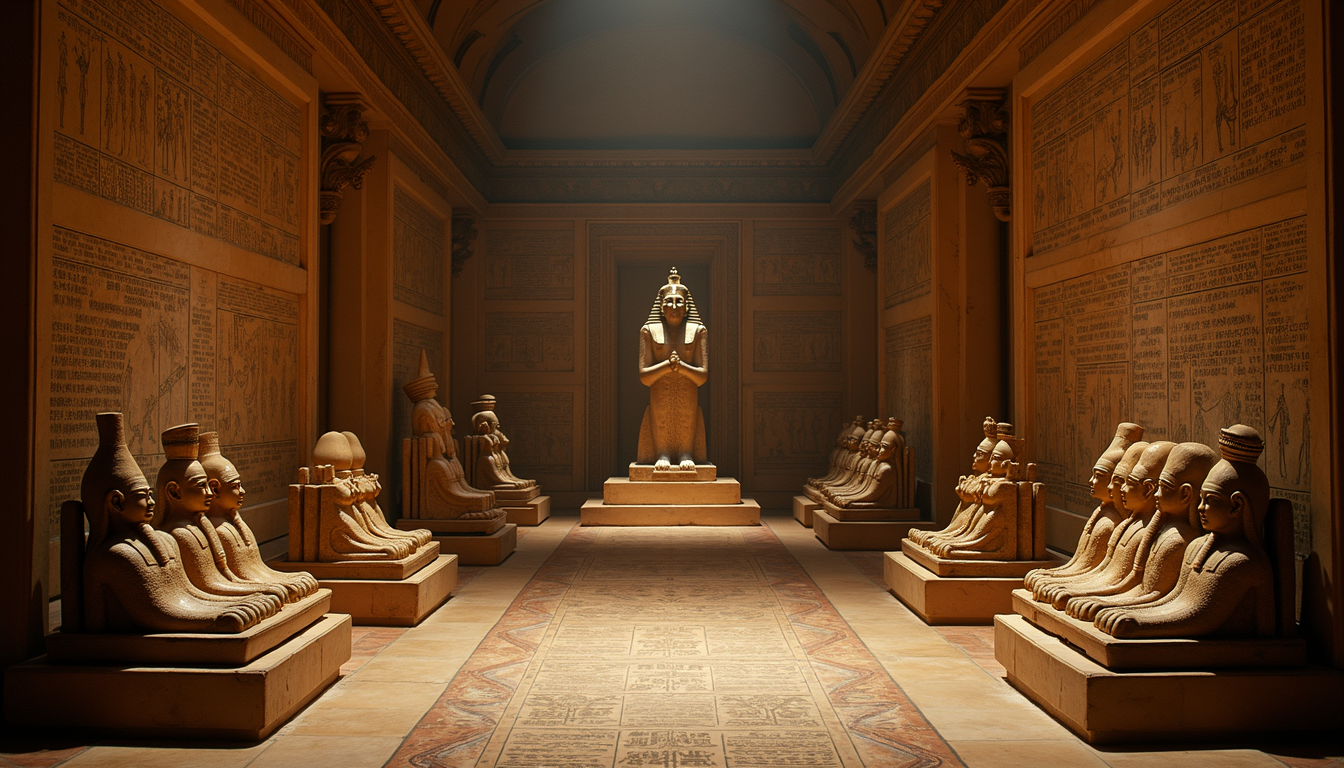
The 42 Laws of Ma'at are the modern name for the 42 declarations of innocence in Spell 125 of the ancient Egyptian Book of the Dead, in which the deceased stands before 42 divine assessors and denies, one by one, having committed a specific wrong: “I have not stolen,” “I have not killed,” “I have not told lies.” Ma'at itself is the Egyptian concept, and goddess, of truth, balance, order and justice, and these declarations were the standard against which a person's heart was weighed in the afterlife. The numbered list of positive “laws” that circulates online is a modern reconstruction of that ancient text, not a code found on any temple wall.
It matters because the Negative Confession is one of the oldest surviving lists of personal ethical standards in the world, written for ordinary people rather than kings. It sits at the root of a long argument about where Western moral codes came from, and it anchors the [Ancient Egypt topic hub](/topics/ancient-egypt) on this site.
What Ma'at meant to the ancient Egyptians
Ma'at was the principle that held the universe together: truth, justice, cosmic order and balance, personified as a goddess wearing a single ostrich feather on her head. The word is written with that feather as its hieroglyph, and the feather is what the heart of the dead is weighed against. Her opposite was isfet, a word that covers chaos, falsehood, violence and injustice at once.
Ma'at was not an abstract virtue reserved for priests. The sun rose and the Nile flooded on time because Ma'at was maintained, and a household ran well because its members lived by it. The pharaoh's central duty was described as establishing Ma'at in place of isfet, and kings are shown in temple reliefs offering a small seated figure of the goddess to the other gods as proof they had done so. Tomb autobiographies from the Old Kingdom onward repeat the same formula: the deceased spoke Ma'at and did Ma'at, gave bread to the hungry and clothed the naked. As a goddess she is usually described as a daughter of the sun god Ra and is often paired with Thoth, the god of writing, which is why Thoth holds the pen at the weighing of the heart.
Where the 42 laws actually come from
The source of every “42 Laws of Ma'at” list is Spell 125 of the Book of the Dead, the collection of funerary texts the Egyptians called the Book of Coming Forth by Day. Spell 125 is the judgment scene. It opens with the deceased entering the Hall of the Two Truths and addressing Osiris, ruler of the dead, with a first declaration of innocence. It then moves to the part everyone remembers: a second declaration addressed to 42 assessor gods, each named, each tied to a place in Egypt, and each receiving one denial of a specific sin.
Egyptologists call this section the Negative Confession or the Declaration of Innocence, because every line is phrased as something the speaker has not done. There is no command and no list of laws in the legal sense; the deceased is asserting, after death, that he lived correctly, in the hope that the scales will agree.
The best-known copy is the Papyrus of Ani, a lavishly illustrated scroll made for a Theban scribe named Ani around 1250 BCE and now in the British Museum. E. A. Wallis Budge's 1895 publication of it is the reason the Negative Confession became famous outside Egyptology; R. O. Faulkner's translation, first published in 1972, is the scholarly standard today.
What the Negative Confession says
The 42 denials cover theft, violence, sexual misconduct, dishonesty, religious offence, economic fraud and harm to the shared environment. In Faulkner's rendering the second declaration begins, “O Far-strider who came forth from Heliopolis, I have done no falsehood,” then continues, “O Fire-embracer who came forth from Kheraha, I have not robbed,” and, “O Dangerous One who came forth from Rosetjau, I have not killed men.” Each assessor has a title and a home town, and the deceased addresses them in turn.
Read together, the denials fall into four groups. Body and speech: no killing, no violence, no adultery, no lying, no slander, no losing one's temper. Property and fair dealing: no stealing, no cheating with the balance or the measuring cord, no encroaching on fields. Religion: no blaspheming a god, no stealing the offerings of the gods or the bread of the dead. And the commons, which surprises modern readers: no polluting water, no damming water when it should flow, no putting out a fire when it should burn. In a country whose whole economy ran on an irrigation calendar, misusing water was a moral offence on the same footing as murder.
The first declaration, spoken to Osiris, repeats many of the same themes and adds that the speaker has not caused pain, has not made anyone weep, and has not been deaf to words of truth.
Who the 42 assessor gods were
The 42 assessors are minor deities, most of them otherwise unknown, whose names read like a catalogue of things to fear: Breaker of Bones, Eater of Entrails, Swallower of Shades, Fiery Eyes. Each is attached to a place, and the traditional count of 42 corresponds to the 42 nomes, or provinces, of Egypt in its later reckoning, so the deceased was in effect demonstrating innocence before the whole country, province by province.
Copies of Spell 125 vary in the order and wording of the names, and the sins do not always line up with the same god from one papyrus to another. What stayed constant was the number and the structure, so scholars generally treat the 42 as a ritual device for making the judgment feel exhaustive rather than as evidence of 42 separate cults.
Are the 42 laws real, or a modern reconstruction
Both. The 42 denials are genuinely ancient, attested on dozens of papyri, coffins and tomb walls from the New Kingdom onward. The tidy numbered list of positive commandments on posters, in social-media threads and in some Kemetic and Afrocentric teaching is a modern rewrite: the denials were flipped into affirmations, the assessor gods were dropped, and the result was renamed the 42 Laws, Ideals or Principles of Ma'at.
The most serious scholarly treatment of Ma'at as an ethical system is Maulana Karenga's Maat, the Moral Ideal in Ancient Egypt: A Study in Classical African Ethics (2004), which argues that Ma'at should be read as a coherent moral philosophy comparable to the Greek or Confucian traditions. Karenga works closely with the primary texts and does not claim that a numbered code existed. The popular lists rarely cite a source and vary from site to site. They are a fair summary of what the ancient text values, but anyone quoting “Law 17 of Ma'at” is quoting a modern editor, not a papyrus.
Did the Ten Commandments come from the 42 laws
This is the most repeated claim about the Negative Confession, and it is contested. The case for a connection rests on real overlaps: both texts prohibit killing, stealing, adultery and false witness, Egypt and Israel were neighbours, and Spell 125 is centuries older than any surviving copy of Exodus.
Mainstream Egyptologists and biblical scholars are cautious. The genres differ: the Negative Confession is a statement by the dead to secure an afterlife, while the Decalogue is a set of commands from a god to the living. Most of the 42 denials have no biblical parallel, and those that do are prohibited in virtually every ancient law code, including Mesopotamian codes that predate both. There is, however, one Egyptian text with a widely accepted influence on the Bible: the Instruction of Amenemope, a wisdom book from the late New Kingdom whose sayings closely parallel Proverbs 22:17 to 24:22. So Egyptian ethical writing did reach the Hebrew scriptures, but the specific claim that the Ten Commandments were copied from the 42 laws is an inference, not a demonstrated fact.
Ma'at as a way of living, not only a way of dying
The Egyptians did not wait until death to think about Ma'at. A whole genre of wisdom literature, the Instructions, taught it to the living: the Instruction of Ptahhotep declares that Ma'at is great and its effect endures, and the Instruction of Amenemope tells the reader not to move boundary stones or falsify the scales, which is the Negative Confession restated as advice.
This is why modern readers, including Billy Carson, find the text so usable. Strip away the assessor gods and what remains is a daily audit: did I lie today, did I take what was not mine, did I lose my temper. The same ideas about conscience and self-examination run through the [consciousness topic hub](/topics/consciousness), where the weighing of the heart is often read as a metaphor for inner work rather than a literal afterlife event.
Billy Carson's reading of the 42 laws
Billy Carson teaches Ma'at as a practical code for daily conduct, and he presents the 42 declarations as one of the earliest complete ethical systems on record, a root from which later religious moral codes grew. In his Egyptian Mystery School series on 4BK TV, 43 episodes on the temples, texts and initiatory traditions of the Nile valley, Carson treats the declarations and the weighing of the heart as a curriculum rather than a museum piece, arguing that the priesthood used them to train initiates in self-mastery. He reads the feather on the scale as the standard of a light heart, one unburdened by guilt, and treats daily practice of the declarations as conscience-keeping anyone can adopt.
Carson also connects Egypt's moral tradition to what he sees as its roots in later scripture. In his post on why [Genesis really means the Genes of Isis](/genesis-really-means-the-genes-of-isis-or-generation-of-isis), he argues that the opening book of the Bible preserves an older Egyptian sidereal account taught to initiates in the Nile temples, an etymology mainstream philologists do not share but one that fits his view that mystery-school teaching is the substrate beneath Western religion. On the 42 laws specifically, his position is that they were the ethical floor of that curriculum, and that the later Hebrew commandments drew on this older Egyptian ethical tradition, a view he presents as his reading of the evidence rather than a settled scholarly finding. He presents this as his interpretation, to be weighed against the scholarly caution above, and the strongest version of his case rests on the texts themselves.
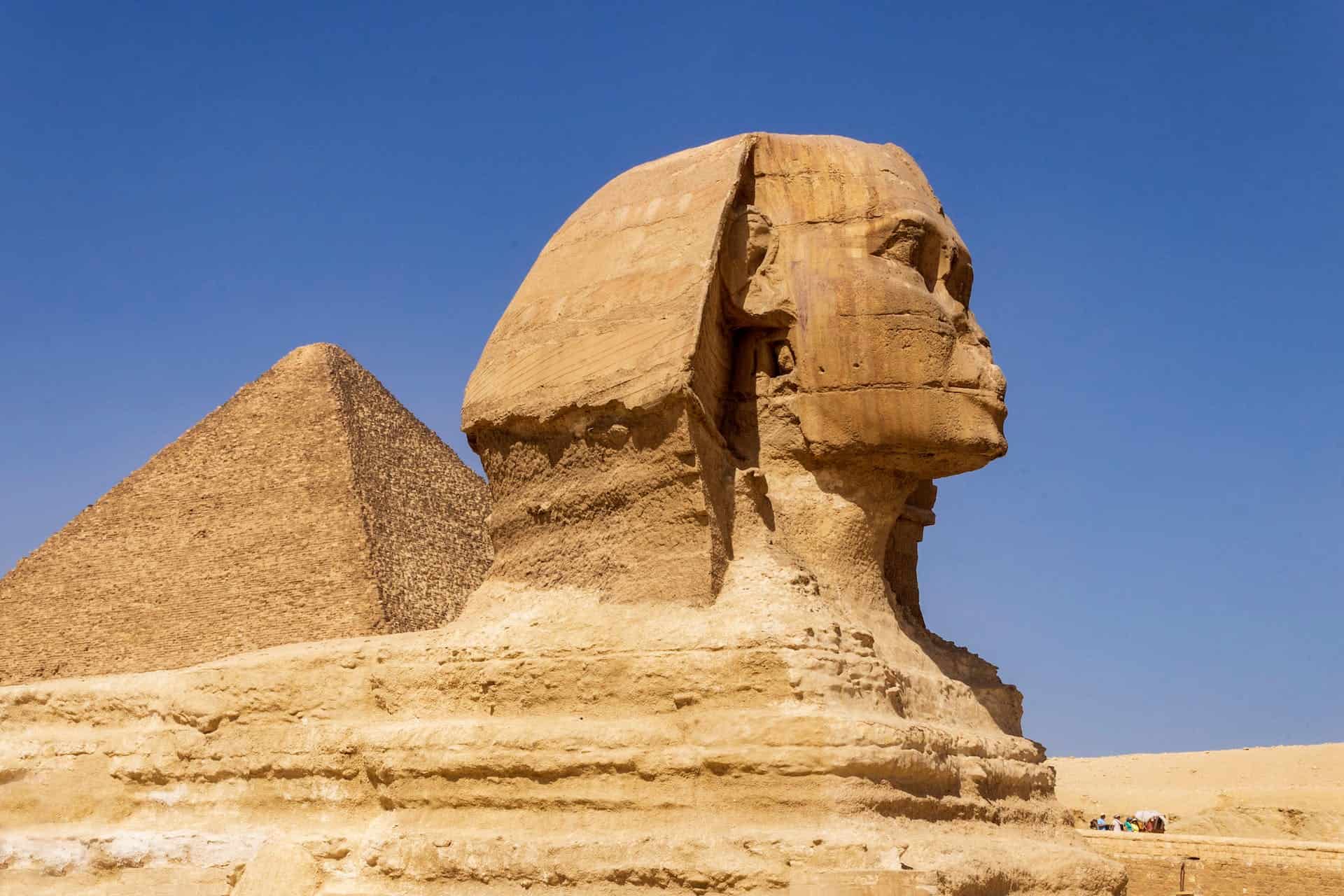
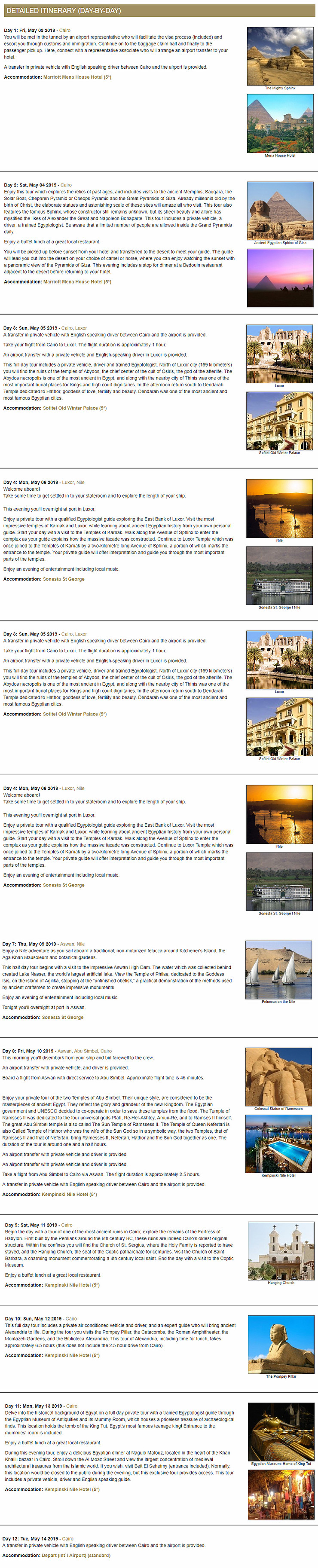
He also teaches this material on site. The [4biddenknowledge tour of Egypt](/4biddenknowledge-tour-of-egypt) takes groups through the temples and tombs where the Book of the Dead was painted and carved, with the weighing of the heart taught on the ground.
Watch, read and go deeper
The full treatment of Ma'at, the weighing of the heart and the 42 declarations is in the [Egyptian Mystery School series on 4BK TV](/watch/egyptian-mystery-school). For the surrounding history start with the [Ancient Egypt topic hub](/topics/ancient-egypt). If you would rather stand in front of a judgment scene yourself, the 4biddenknowledge Egypt tours are led by Billy Carson and visit the sites discussed here. For the inner-work reading of the heart on the scale, the [consciousness hub](/topics/consciousness) collects the related episodes and articles.
Frequently asked questions
What are the 42 laws of Ma'at in simple terms
They are the 42 statements of innocence a deceased Egyptian recited before 42 divine judges in Spell 125 of the Book of the Dead: I have not killed, I have not stolen, I have not lied, I have not polluted the water, and so on. Modern lists rephrase them as positive rules, which is why they are called laws today.
Where is the original text of the 42 laws
The best-known copy is in the Papyrus of Ani, made around 1250 BCE and held by the British Museum in London. Spell 125 also appears on many other papyri, coffins and tomb walls from the New Kingdom and later. The standard English translation is by R. O. Faulkner; Budge's 1895 translation is free to read but uses outdated readings.
Is Ma'at a goddess or a concept
Both. Ma'at is the Egyptian word for truth, order, justice and balance, and also the goddess who personifies them, shown as a woman with an ostrich feather on her head. The feather is what the heart is weighed against in the afterlife judgment.
Did the Ten Commandments come from the 42 laws of Ma'at
That claim is debated and not proven. The two texts share prohibitions on killing, theft, adultery and false witness, but those appear in almost every ancient law code, and the Negative Confession is a statement by the dead rather than a set of commands to the living. Scholars do accept that a different Egyptian text, the Instruction of Amenemope, influenced the biblical Book of Proverbs.
What happened if the heart failed the weighing
The heart was placed on one pan of a balance and the feather of Ma'at on the other, with Anubis checking the scale and Thoth recording the result. A heart heavier than the feather was thrown to Ammit, part crocodile, part lion and part hippopotamus, and the person ceased to exist. A heart in balance meant the deceased was declared true of voice and admitted to the afterlife.
Sources and further reading
- R. O. Faulkner, The Ancient Egyptian Book of the Dead, edited by Carol Andrews (British Museum Press, 1985)
- E. A. Wallis Budge, The Book of the Dead: The Papyrus of Ani (British Museum, 1895)
- Maulana Karenga, Maat, the Moral Ideal in Ancient Egypt: A Study in Classical African Ethics (Routledge, 2004)
- Jan Assmann, Ma'at: Gerechtigkeit und Unsterblichkeit im Alten Ägypten (C. H. Beck, 1990)
- Miriam Lichtheim, Ancient Egyptian Literature, Volume II: The New Kingdom (University of California Press, 1976), for the Instruction of Amenemope
- Miriam Lichtheim, Maat in Egyptian Autobiographies and Related Studies (Universitätsverlag Freiburg, 1992)
- Ogden Goelet and others, The Egyptian Book of the Dead: The Book of Going Forth by Day, the Papyrus of Ani in facsimile with the Faulkner translation (Chronicle Books, 1994)