The Egyptian Book of the Dead is a collection of roughly 190 funerary spells that the ancient Egyptians called the "Spells for Going Forth by Day." Copied on papyrus and placed with the dead from about 1550 BCE until the Ptolemaic and early Roman periods, it gave the deceased the words, names and passwords needed to pass through the underworld, survive the judgment before Osiris and live on as a blessed spirit.
It matters because it is the most complete window we have into how ordinary Egyptians, not only kings, pictured death, morality and the self. The judgment scene in spell 125, where the heart is weighed against the feather of Maat, is one of the most reproduced images from the ancient world, and its list of declared innocences has become a touchstone for anyone asking where human ethical codes began. Readers exploring the wider civilization can start at the [Ancient Egypt topic hub](/topics/ancient-egypt).
What is the Egyptian Book of the Dead, and what did the Egyptians call it?
The Book of the Dead is not a single book with a fixed text but a modern name for a large, flexible corpus of spells. The Egyptians called it rw nw prt m hrw, usually translated "Spells (or Book) of Going Forth by Day," reflecting the hope that the dead could leave the tomb in daylight and move freely between worlds.
The English title comes from the German. In 1842 the Prussian Egyptologist Karl Richard Lepsius published a long papyrus held in Turin under the title Das Todtenbuch der Ägypter, "The Book of the Dead of the Egyptians," and assigned numbers to its chapters. Later scholars extended his system as more spells were identified, which is why Egyptologists still refer to "spell 125" or "spell 30B" today. No surviving manuscript contains every spell. Each copy is a selection.
Where did the Book of the Dead come from?
The Book of the Dead is the third stage of a funerary tradition that stretches back more than a thousand years before it. The earliest stage is the Pyramid Texts, carved inside the burial chamber of King Unas at Saqqara around 2350 BCE, at the end of the Fifth Dynasty. Those spells were reserved for royalty.
In the Middle Kingdom, many of the same ideas moved onto the wooden coffins of officials and their families. These Coffin Texts widened access to the afterlife beyond the king and introduced material that the Book of the Dead would later inherit. From the start of the New Kingdom, around 1550 BCE, scribes began copying selected spells onto papyrus rolls, adding painted illustrations called vignettes. From then until the Ptolemaic and early Roman periods, the spells appeared on papyri, mummy shrouds, coffins and tomb walls.
It should not be confused with the royal "underworld books" such as the Amduat, which map the sun god's night journey on the walls of the Valley of the Kings. The Book of the Dead equips one named individual for his or her own passage.
How was a copy made, and who owned one?
A Book of the Dead was a commissioned object, produced by professional scribes and artists and personalized with the owner's name. Wealthier patrons could order a custom selection of spells and lavish vignettes; others bought prepared rolls in which blank spaces were left for a name to be written in. Some surviving papyri still have those spaces empty.
Ownership reflected status. The best-known copies belonged to scribes, priests and members of elite families, and the rolls could run to many metres. The Greenfield Papyrus in the British Museum is about 37 metres long, among the longest known. Because papyrus is fragile, many of these rolls survive in pieces, and modern conservation work continues; the site has covered [researchers mending Book of the Dead manuscripts](/manuscripts-of-the-ancient-egyptian-book-of-the-dead-are-mended-by-researchers) for readers interested in how these documents are preserved.
The Papyrus of Ani and other famous manuscripts
The Papyrus of Ani is the most famous Book of the Dead because of the quality of its painting and its early publication. Made for Ani, a Theban scribe, around 1250 BCE in the Nineteenth Dynasty, it is now in the British Museum as EA 10470. E. A. Wallis Budge acquired it for the museum in 1888 and published a translation in 1895.
Budge's version is still widely reprinted because it is out of copyright, but knowledge of Egyptian has advanced greatly since the 1890s, and readers should use modern translations: Raymond O. Faulkner's (first published in 1972, with a revised illustrated edition in 1985), Thomas George Allen's 1974 translation for the Oriental Institute of Chicago, or Barry Kemp's 2007 guide, How to Read the Egyptian Book of the Dead.
Other important manuscripts include the Papyrus of Hunefer, also a Nineteenth Dynasty scribe, whose judgment vignette is one of the clearest ever painted, and the Greenfield Papyrus mentioned above.
What happens in spell 125, the weighing of the heart?
Spell 125 is the judgment of the dead: the deceased enters the Hall of the Two Truths, declares innocence of a long list of wrongs, and has his or her heart weighed against the feather of Maat. It is the centrepiece of most copies and the source of the Book of the Dead's most famous imagery.
The negative confession
The spell has the deceased address the great god and then 42 divine assessors, each named, with a series of denials: that he or she has not stolen, not killed, not lied, not caused suffering, not taken food offerings from the temples, not tampered with the balance, and so on. Egyptologists call these statements the "negative confession" or "declaration of innocence." They are phrased as claims already fulfilled ("I have not…"), not as commands, and the wording varies from one manuscript to another. Readers who want the full list and how it has been adapted in modern teaching can read the site's guide to [the 42 laws of Maat](/the-42-laws-of-maat-ancient-egypt-moral-code).
The scales
In the vignette, the heart sits on one pan of a balance and the feather of Maat, the principle of truth, order and justice, sits on the other. The Egyptians treated the heart, not the brain, as the seat of thought, memory and moral character, which is why it was left in the body during mummification. Anubis, the jackal-headed god of embalming, checks the balance. Thoth, the ibis-headed god of writing and wisdom, records the verdict; the site's profile explains [who Thoth was and how he became Hermes Trismegistus](/who-was-thoth-egyptian-god-of-wisdom-hermes-trismegistus). Beside the scale waits Ammit, the "Devourer," part crocodile, part lion and part hippopotamus, who would consume a heart that failed.
The verdict
A successful candidate is declared maa-kheru, "true of voice," a title that then follows the owner's name. Horus leads the justified person before Osiris, ruler of the dead, enthroned and often attended by Isis and Nephthys. In the papyri the outcome is always favourable. The document was made to guarantee the result, and scenes of Ammit actually eating a heart are essentially absent.
Other key spells: the heart scarab, the shabti and the burial chamber
Beyond spell 125, a handful of spells appear again and again, and each solves a specific problem the dead were expected to face.
- Spell 30B is the heart scarab spell. The deceased asks the heart not to stand up as a witness against its owner during the judgment. It was often inscribed on a stone scarab placed on the mummy's chest.
- Spell 6 is the shabti spell. It activates the small figurines buried with the dead so that, if the owner is called to farm or dig in the next world, the shabti answers "Here I am" and does the work instead.
- Spell 17 is a long statement of creation theology centred on the sun god, notable because it includes explanatory glosses, a running commentary on its own meaning that is one of the earliest examples of the form.
- Spell 64 is a condensed, "all-in-one" spell for going forth by day. One of its rubrics claims it was discovered in the reign of the Old Kingdom king Menkaure, an ancient claim to great age rather than a date historians can verify.
- Spell 151 shows and protects the burial chamber, with Anubis tending the mummy and protective figures set around it.
What was the goal: the Duat, the akh and the Field of Reeds
The purpose of the Book of the Dead was to carry the deceased safely through the Duat, the Egyptian underworld, and to transform him or her into an akh, an effective, transfigured spirit. Egyptian religion treated knowledge as protective: to know the true name of a gate, a guardian or a god was to have power to pass.
Once justified, the dead could hope to join Osiris, travel in the sun god's barque, or dwell in the Field of Reeds, an idealized version of the Nile valley where crops grew tall and life continued in abundance. The ba, often shown as a human-headed bird, was expected to move between the tomb and the world of the living, which is part of what "going forth by day" means.
Billy Carson's reading
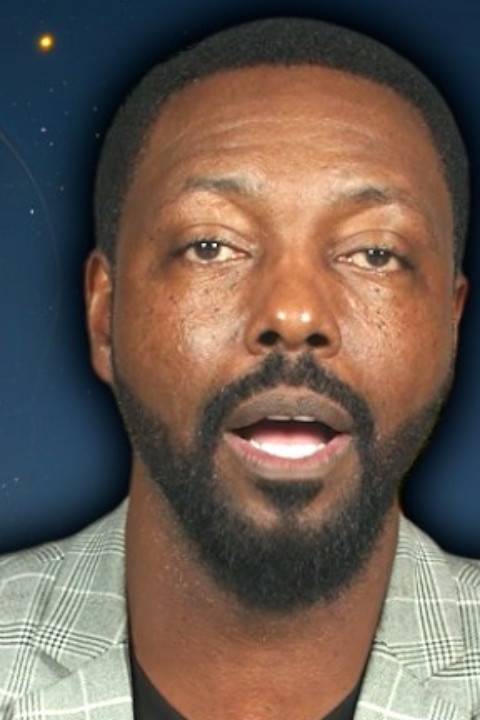
Billy Carson reads the Book of the Dead, and spell 125 in particular, as evidence of a sophisticated ethical system in Egypt long before the moral codes most Western readers learn first. In his view, the 42 declarations before the assessors, which he and many modern teachers present as the "42 laws of Maat," amount to a moral code older than the Ten Commandments.
On the dating, the surviving copies of spell 125 do come from the New Kingdom onward, earlier than the oldest surviving manuscripts of the Hebrew Bible. Mainstream scholars add two cautions: the Egyptian statements are declarations of innocence spoken at a judgment rather than commandments issued to a people, and "42 laws" is a modern arrangement of text that varies between copies. Carson's argument is about priority and continuity of ethical thought; readers can weigh it against those distinctions.
Carson also treats the judgment as a teaching about consciousness rather than only a scene in a mythical courtroom. On his reading, the weighing of the heart describes how a person's inner state, the accumulated weight of intention and action, determines what happens to awareness after death, and the idea that a heart must be "as light as a feather" is an instruction for how to live now. That is his interpretation, not a claim the Egyptian texts make in modern terms, and it connects to the themes collected on the [consciousness topic hub](/topics/consciousness). He explores Egyptian subjects regularly on 4BK TV, including in [Best of Billy Carson](/watch/best-of-billy-carson), and leads group journeys to Egyptian temple sites.
Watch, read and go deeper
For Billy Carson's own discussion of Egyptian wisdom traditions, start with [Best of Billy Carson on 4BK TV](/watch/best-of-billy-carson). The site's guides to the 42 laws of Maat and to Thoth, linked above, cover the two ideas most closely tied to the judgment scene. The [Ancient Egypt topic hub](/topics/ancient-egypt) gathers every related post, video and episode in one place, and readers who want to stand in the temples themselves can see upcoming dates on the tours page.
Frequently asked questions
Is the Book of the Dead a bible or holy book?
No. It was not a scripture read by congregations or a single authoritative text. It was a flexible collection of funerary spells, copied selectively and personalized for each owner, meant to be placed in the tomb for use by the deceased.
How many spells are in the Egyptian Book of the Dead?
Scholars count roughly 190 spells in the numbering system begun by Karl Richard Lepsius in 1842 and extended since. No single papyrus contains them all; each manuscript is a selection, and some include spells found in only a few copies.
What is the feather of Maat?
The feather is the symbol of Maat, the goddess and principle of truth, justice and cosmic order. In the judgment scene of spell 125 it sits on one side of the scales, opposite the heart of the deceased, and a heart in balance with it shows that the person lived in accordance with Maat.
Who wrote the Egyptian Book of the Dead?
No single author wrote it. The spells were composed, revised and recombined by priests and scribes over many centuries, drawing on the older Pyramid Texts and Coffin Texts. Individual copies were produced by professional scribes and artists for the people named in them.
What is the best translation of the Book of the Dead to read?
Modern translations are preferred over E. A. Wallis Budge's 1895 version, which is outdated. Raymond O. Faulkner's translation (1972, revised illustrated edition 1985) and Thomas George Allen's 1974 edition are standard, and Barry Kemp's How to Read the Egyptian Book of the Dead (2007) is a clear introduction for general readers.
Sources and further reading
- Raymond O. Faulkner (trans.), Carol Andrews (ed.), The Ancient Egyptian Book of the Dead (British Museum Press, 1985; first published 1972)
- Thomas George Allen, The Book of the Dead or Going Forth by Day (Oriental Institute of the University of Chicago, 1974)
- Barry Kemp, How to Read the Egyptian Book of the Dead (Granta, 2007)
- John H. Taylor (ed.), Journey Through the Afterlife: Ancient Egyptian Book of the Dead (British Museum Press, 2010)
- Raymond O. Faulkner and Ogden Goelet (trans.), Eva von Dassow (ed.), The Egyptian Book of the Dead: The Book of Going Forth by Day, the complete Papyrus of Ani (Chronicle Books, 1994)
- Karl Richard Lepsius, Das Todtenbuch der Ägypter (1842)