The Book of Enoch Watchers, in Billy Carson's reading, were a crew of heavenly beings who broke a standing rule against interfering with humanity: they came down, took human wives, started families and taught people knowledge they were never meant to have. In this short video, Carson walks through that story from 1 Enoch, compares the rule they broke to the prime directive of Star Trek, and sets the Watchers beside the Igigi, the laboring gods of the Mesopotamian flood story Atrahasis.
It matters because the Watchers story is one of the oldest surviving Jewish explanations for where violence, weapons and corruption came from, and it sits directly behind the brief and puzzling passage in Genesis 6 about the sons of God and the Nephilim. For Carson it also frames a question about the present: what happens to a civilization that gains power faster than it gains wisdom.
What the video covers
A rule against contact (from about 1:00)
Carson opens with the idea that the Watchers operated under what he calls a prime directive. He borrows the term from Star Trek, where the crews may not directly engage a civilization that has not yet developed warp travel. If they visit the surface of such a planet, they must blend in, pass as locals and never hand over technology. As Carson puts it: "It's forbidden, literally forbidden." He adds that the concept itself comes from the ancient tablets, though he does not develop that point in this clip.
The analogy carries his whole reading. Later in the video he stresses that the Watchers came down from the sky and that he means this literally, describing them as people rather than symbols.
Semjaza, Azazel and the human wives (from about 1:47)
According to Carson, the Watchers descended because they were attracted to human women, and he is careful to say that this is the claim of the Book of Enoch, not his own. The group, he explains, was led by two chiefs, Semjaza and Azazel (the auto-generated transcript renders the first name as Zemizaya; the usual English spellings are Semjaza or Shemihazah). In his retelling, the leaders simply decided to take wives.
The text itself adds detail the clip moves past quickly. In 1 Enoch 6, two hundred Watchers descend in the days of Jared onto the summit of Mount Hermon. Semjaza worries that he alone will pay the penalty for what they plan, so the whole group binds itself with an oath and mutual curses.
The Igigi parallel (from about 2:24)
Carson then turns to Mesopotamia. In the Enuma Elish and the Epic of Atrahasis, he says, there is a class of beings called the Igigi, whom he describes as the Anunnaki workforce. "They're not slaves, but they're the working class," he says, and explains with a construction-company analogy: a boss at the top, a master architect beneath him, a foreman beneath the architect, and the workers who actually build the house.
In Carson's telling, the Igigi complained about their working conditions, which he places on Mars, objected to being treated like slaves, and said they wanted to take human women back with them. His conclusion: "So in two different texts, from two different time periods, we find the same story." For background on the Mesopotamian side, see the site's guide to who the Anunnaki were.
Crossing the boundary (from about 3:37)
The Watchers, Carson continues, did not simply have brief encounters. They kept the women as wives and began families, breaching the heavenly boundaries set for them: do not interact, do not engage, and above all do not have sexual relations with human beings.
In 1 Enoch, those unions produce giants, the figures Genesis 6 calls the Nephilim. The text describes them consuming everything people produced, then turning on humans and animals, until the earth itself cries out. The site's article on the Nephilim of Genesis 6 and the Book of Enoch covers that thread in depth.
Teaching forbidden knowledge (from about 4:00)
The second violation, in Carson's account, was teaching. Again he attributes the claim to the text: the fallen angels passed on knowledge and skills previously unknown to humanity, with a profound and often damaging effect on human societies.
Chapter 8 of 1 Enoch is specific about what that knowledge was. Azazel teaches the making of swords, knives, shields and breastplates, the working of metals, bracelets and ornaments, eye paint, precious stones and dyes. Semjaza teaches enchantments and the cutting of roots, and other Watchers teach the signs of the stars, the earth, the sun and the moon. The result, in the text, is godlessness, and people are led astray.
Why it was forbidden (from about 4:43)
The core of the video is why this knowledge was off limits. The teaching, Carson argues, would speed up humanity's technological advancement, and a civilization that is not mature enough spiritually, once handed advanced technology, becomes a technocratic civilization that can destroy itself. He closes the point with a line aimed at the present: "And that's where we are right now." The site's piece on what forbidden knowledge means explains why this idea runs through the whole 4biddenknowledge project.
Who Enoch was (from about 7:51)
The final segment introduces Enoch himself. Carson contrasts the Sunday-school picture, a man so righteous that God took him straight to heaven without dying, with what he sees as the fuller story. Genesis 5:24 says only that Enoch walked with God and was no more, because God took him. Carson notes that Enoch is highly revered in the Bible, yet his own book "was left out of the Bible," and he asks the audience why that might be.
In 1 Enoch, Enoch is the scribe who carries the Watchers' petition for mercy to heaven and returns with its rejection. The archangels are sent out: Raphael binds Azazel in darkness, Michael binds Semjaza and his companions for seventy generations, and the flood is announced to Noah.
Key takeaways
- Carson reads the Watchers as real beings who descended from the sky and were bound by a rule against interfering with humanity.
- He compares that rule to Star Trek's prime directive: no contact with a pre-warp civilization and no transfer of technology.
- According to 1 Enoch, the Watchers led by Semjaza and Azazel broke the rule twice, by taking human wives and by teaching forbidden arts.
- Carson sees the same story in the Igigi of Atrahasis, the working-class gods who complained about their labor.
- In his view, the knowledge was forbidden because technology without spiritual maturity can lead a civilization to destroy itself.
Billy Carson's reading
Carson takes the Book of Enoch at its word. Where many readers treat the Watchers as a myth about the origin of evil, he treats them as a record of contact: a group of visitors under a non-interference code, a breakdown in discipline among the rank and file, and a transfer of knowledge that humanity was not ready for. His repeated point that these claims come from the Book of Enoch, not from him, is central: he presents himself as reporting the text, not adding to it.
The Igigi comparison does the second half of the work. For Carson, finding a labor dispute among the Anunnaki and a rebellion among the Watchers in sources from different cultures and eras points to a shared memory of real events, retold in different vocabularies. The forbidden-knowledge theme, for him, is also a warning about a modern civilization whose technical power has outrun its inner development. For a fuller treatment of the figures and the arts they taught, see who the Watchers were.
What mainstream scholarship says
Scholars describe 1 Enoch as a composite Jewish work of the Second Temple period made up of five sections. The Book of the Watchers (chapters 1 to 36) is among the oldest, usually dated to the third century BCE. Aramaic fragments of it were found among the Dead Sea Scrolls at Qumran, Greek portions survive, and the full book is preserved in Ge'ez. It is canonical in the Ethiopian and Eritrean Orthodox Tewahedo churches, and the New Testament letter of Jude quotes it, but it was never part of the Jewish canon and fell out of use in most of the church.
Most scholars read the Watchers myth as an expansion of Genesis 6:1 to 4 and as a theodicy, an explanation of how evil and violence entered the world that places the blame on rebellious heavenly beings. George Nickelsburg, for example, has suggested the violent giants reflect the wars of the Hellenistic kings who followed Alexander. On this view the text is theology, not a record of visitors.
A Mesopotamian connection is not a fringe idea in itself; scholars such as Amar Annus have argued that the Watchers draw on traditions of the apkallu, sages who brought the arts of civilization before the flood. But the Atrahasis tablets describe the Igigi digging watercourses on earth, striking over their labor and being relieved when humans are created. They do not place the Igigi on Mars or have them seek human wives; those elements come from modern ancient-astronaut readings, notably Zecharia Sitchin's. Scholars treat the resemblances as shared literary motifs, not evidence of the same event.
Watch, read and go deeper
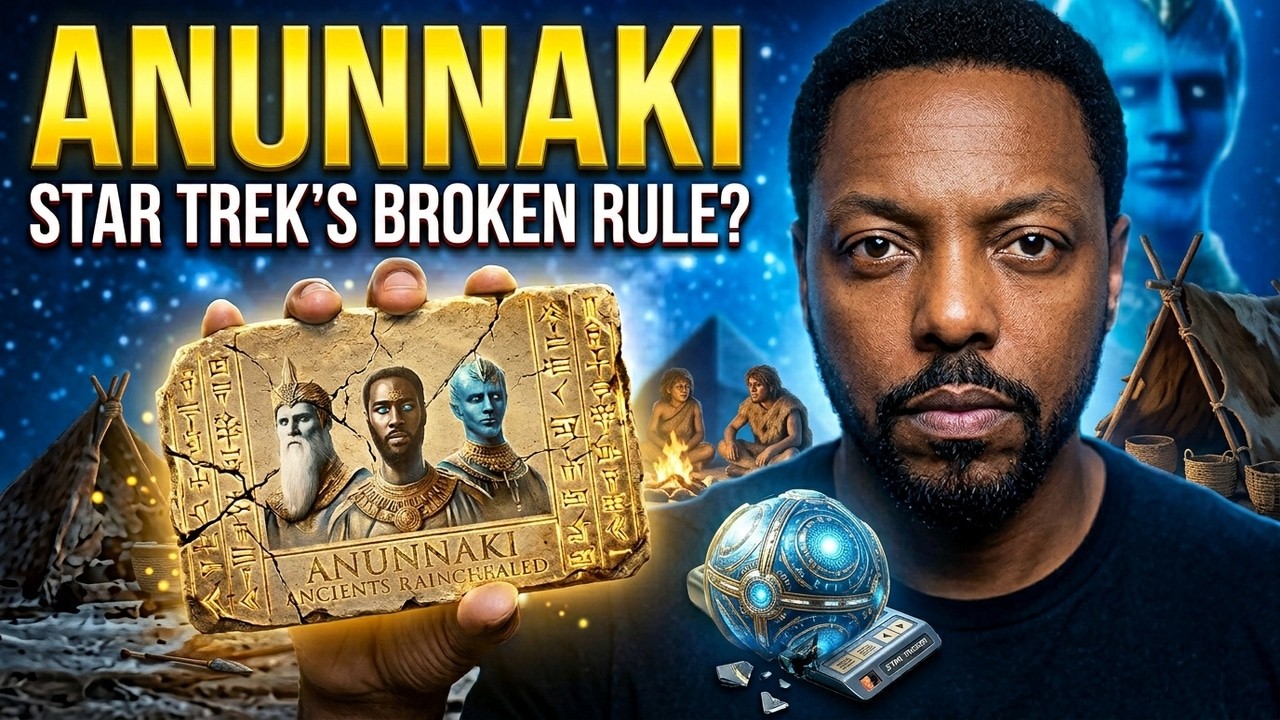
Start with the site's overview of the Book of Enoch, the Watchers and why it was left out. The Anunnaki and Sumer topic hub gathers every article, video and episode on the Mesopotamian side of the story. The audio of this session is on the 4biddenknowledge Podcast episode page, and the 4BK TV series Anunnaki: Ancient Secrets Revealed goes further into the same material.
Frequently asked questions
Who were the Watchers in the Book of Enoch?
In 1 Enoch, the Watchers are a group of two hundred heavenly beings who descend to Mount Hermon, take human wives and father giants. Their leaders include Semjaza and Azazel. Billy Carson reads them as real visitors who broke a rule against interfering with humanity, while most scholars read the story as a myth about the origin of evil.
What forbidden knowledge did the Watchers teach?
According to chapter 8 of 1 Enoch, Azazel taught metalworking, the making of weapons and armor, jewelry, eye paint, precious stones and dyes. Semjaza taught enchantments and root-cutting, and other Watchers taught the signs of the stars, sun, moon and earth.
Why was the Book of Enoch left out of the Bible?
The Book of Enoch was never accepted into the Jewish canon, and most churches left it out despite its popularity with some early Christian writers. It remains canonical in the Ethiopian and Eritrean Orthodox Tewahedo churches. Billy Carson raises the question to challenge the Sunday-school picture of Enoch.
Are the Watchers the same as the Igigi or the Anunnaki?
Billy Carson argues that the Watchers of 1 Enoch and the Igigi of the Epic of Atrahasis tell the same story of lower-ranking beings who rebelled and sought human wives. Mainstream scholars see some Mesopotamian influence on the Enoch tradition but treat the two as distinct texts with shared motifs. The Atrahasis tablets describe a labor revolt by the Igigi, not marriages with human women.
Sources mentioned
In the video Carson draws on the Book of Enoch (1 Enoch, specifically the Book of the Watchers), the Babylonian creation epic Enuma Elish, the Epic of Atrahasis, the Christian teaching on Enoch rooted in Genesis 5, and the prime directive from the Star Trek television series. For further reading, standard references include R. H. Charles's translation The Book of Enoch, George W. E. Nickelsburg and James C. VanderKam's 1 Enoch: The Hermeneia Translation, W. G. Lambert and A. R. Millard's Atra-hasis: The Babylonian Story of the Flood, and Stephanie Dalley's Myths from Mesopotamia.