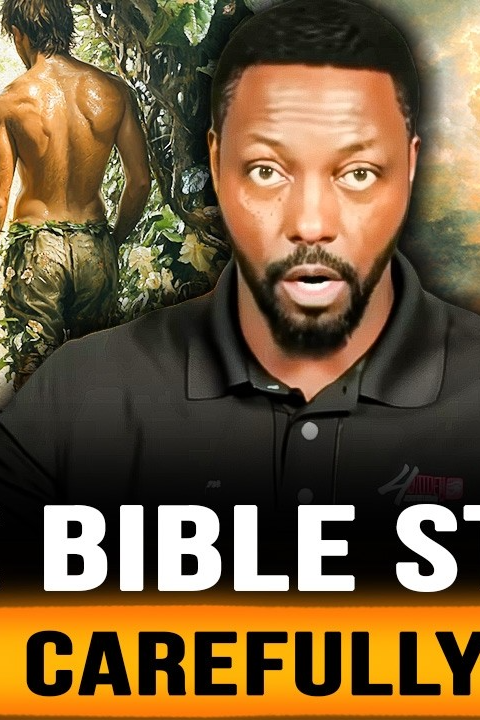
Billy Carson's answer to the Peru Atlantis question is yes, with a twist: he does not move Plato's ring city to the Andes. He argues that Atlantis was a global civilization with many capitals, and that Peru's megalithic sites are among its surviving works. In this live stream he walks through Teotihuacan, Giza, the walls around Cusco, metal clamp cuts, magnetic stones and Nazca to argue that one group of builders, led by Thoth, left the same fingerprints on several continents.
The topic matters because it sits on a fault line in how ancient America is told. Archaeology credits the Inca and the cultures before them with the walls of Sacsayhuamán and Ollantaytambo; Carson argues that later peoples inherited far older works and remembered the builders as gods. This article lays out both his evidence and the excavators'.
What the video covers
The Maya, the Aztecs and the inheritance argument (from about 10:00)
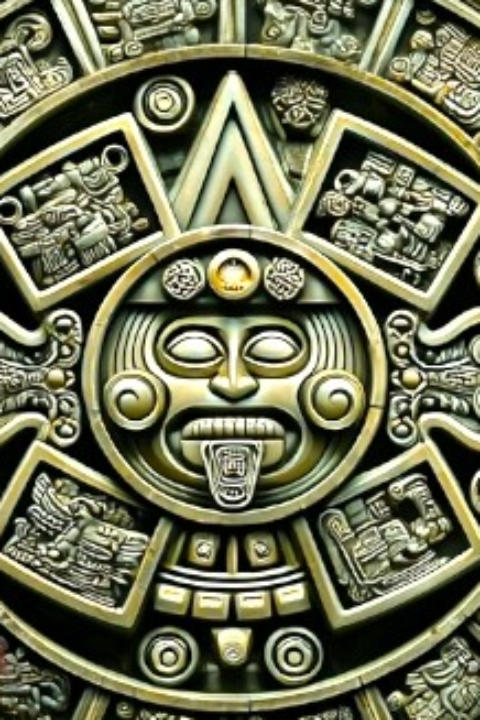
Carson starts with a baseline: television documentaries credit the Maya with megalithic sites they did not build, among them Teotihuacan, Chichén Itzá, Cobá, Tikal, Ollantaytambo and Sacsayhuamán. In his account the Maya traded with the Teotihuacan civilization, which he dates to roughly 100 BCE to 750 CE, and later peoples "became stewards of those locations, but they didn't build them." The Aztecs, he says, later fled a volcanic eruption and found Teotihuacan abandoned.
Gods who were expected to return (from about 15:40)
Carson then argues that a culture able to master geometry and load-bearing engineering would not also sacrifice people to bring back rain. To him the sacrifices show a less advanced people begging earlier builders, Atlantean and Anunnaki beings in his reading, to return. He compares this to cargo cults, in which isolated communities deify visitors whose technology they cannot explain.
Thoth leaves Africa (from about 18:40)
The core of the stream is Carson's reading of Thoth. He says the Sumerian tablets name Thoth as Ningishzida, brother of Marduk (whom Carson equates with Amun-Ra), and that the two clashed over how to treat humanity: Ningishzida wanted to educate people, Marduk saw them as little more than animals. Their father, in Carson's telling, sent Ningishzida across the planet to found a new civilization, and he brought Olmec companions from Africa into Mesoamerica. Carson ties this to his Compendium of the Emerald Tablets, where Thoth describes building the Great Pyramid after a great flood (Carson dates it 36,000 to 38,000 years ago) and calls himself an Atlantean who flew to a new land in a great ship.
Teotihuacan, Giza and one master architect (from about 23:00)
Carson's main evidence is a comparison between Teotihuacan in central Mexico and Giza. He says the Pyramid of the Sun has the same base as the Great Pyramid and half its height, that both sites sit on aquifers, that both three-pyramid layouts mirror Orion, and that both have shafts aimed at stars he names as Orion, Aldebaran, Ursa Minor and Sirius. His conclusion is that there was a single architect. He links Thoth's names across cultures: Djehuti in Egypt; Kukulkan, Quetzalcoatl and Viracocha in the Americas; Hermes Trismegistus, Mercury and Odin in Europe. "If you have enough circumstantial evidence, you can build a case," he says, and he presents the rest of the stream in that spirit.
Many capitals, shared symbols and clamp cuts (from about 28:00)
Carson accepts Plato's ring city as real but calls it one of dozens of capitals ruled by related families. He shows near-identical carved motifs and symbols from Spain, Iraq, India, Cambodia, Mexico, Peru and Japan, among others. He then turns to construction: shaped cuts where molten metal was poured to lock blocks together, which he identifies in Iran, Greece, Ethiopia, Peru, Bolivia, Turkey and Egypt, the metal long since removed. He adds a face he sees in the mountain at Machu Picchu and the elongated Paracas skulls.
Polygonal walls and the quarry problem (from about 34:00)
The Peruvian section turns on stonework. Carson sets an Andean wall beside an Italian one and argues that identical interlocking cuts, fitted without mortar and resistant to earthquakes, can only be a technique taught by one culture. He describes blocks of a thousand tons or more at a fortress site, quarried, he says, 20 miles away on another mountain, and rejects the idea that they were rolled on logs. Phone clips from Cusco show the jigsaw-like joints.
Geiger counters, compasses and magnetism (from about 37:50)
Carson says he carries a Geiger counter to sites because some stones read above background radiation, and describes a long-sealed room at the Serapeum in Egypt holding a huge stone box with a radiation warning symbol. He also brings a compass and reports needles spinning near certain stones, which he reads as a sign that the stones' atomic or magnetic structure was altered. Citing paleomagnetism, the record of Earth's field locked into cooled lava, he proposes builders may have flipped the stones' internal magnetism to reduce their weight. "It's just a hypothesis, but the evidence is leading me to believe that they had anti-gravity technology," he says.
Lake Titicaca, Rainbow Mountain and Nazca (from about 43:00)
Carson recounts traditions of objects flying out of Lake Titicaca and gold offered to it, and shows Rainbow Mountain, coloured by minerals. At Nazca he describes a mountain shaved into a flat plateau with, he says, no debris in the valley below, and suggests the removed rock may have been disintegrated. He closes with a petroglyph he says came from his local Peruvian guide: a figure with three fingers and three toes holding something above its hand, which he admits he cannot identify.
Key takeaways
- Carson treats Atlantis as a worldwide civilization with dozens of capitals, so for him an Atlantean Peru does not require Plato's island to be in South America.
- He argues that the Maya, Aztecs and Inca inherited the oldest structures and deified their builders rather than building them.
- His Thoth narrative, drawn from his Compendium of the Emerald Tablets and his reading of Sumerian texts, has Thoth leaving Africa after a dispute with Marduk to found civilizations in the Americas.
- He builds a circumstantial case from Orion alignments, pyramid proportions, polygonal masonry, clamp cuts and shared symbols.
- His magnetism and anti-gravity ideas are explicitly offered as hypotheses, based on his own compass and Geiger-counter readings.
Billy Carson's reading
Carson's position rests on accumulation rather than a single proof: the same features, from Orion layouts to mortarless walls and clamp cuts, recurring on several continents. He states the thesis directly: "Atlantis was not just a ring city. Atlantis was a global civilization." For the classical sources and proposed locations, see the Atlantis explainer and its Anunnaki connection.
The second pillar of his reading is testimony. He treats the Emerald Tablets as Thoth's own account, so when Thoth calls himself an Atlantean who built the Great Pyramid and travelled to new lands, Carson reads Teotihuacan as the fulfilment of that mission. Kukulkan, Quetzalcoatl and Viracocha, each remembered as a teacher and culture-bringer, are to him one figure under many names. Background is in who Thoth was, from Egyptian god of wisdom to Hermes Trismegistus. The third is deification: people who sacrificed to absent gods could not, in his view, have been their engineers. "Every single one of us is standing on Atlantis right now," he says, framing the Peru Atlantis link as one chapter of a planetary story.
What mainstream scholarship says
Archaeologists date Sacsayhuamán to the 15th century, when Inca rulers rebuilt Cusco as their capital, with earlier Killke-period occupation on the hill beneath it. Excavation and Spanish-era chroniclers such as Pedro Cieza de León and Garcilaso de la Vega support that dating; the largest blocks are usually estimated at around 100 to 130 tonnes, not thousands. At Ollantaytambo, Jean-Pierre Protzen documented the quarry across the valley, the ramps and blocks abandoned in transit, and reproduced the fitting with stone hammers. Polygonal, mortarless masonry appears in Peru, Greece and Italy because it is a sound engineering answer to irregular stone and earthquakes, and clamp cuts for metal ties are documented independently in Egyptian, Greek and Tiwanaku building. More on the walls themselves is in the Sacsayhuamán explainer.
On Mesoamerica, scholars agree with Carson that the Maya did not build Teotihuacan, but they credit the Maya with Chichén Itzá, Cobá and Tikal, and treat the Olmec as a native Gulf Coast culture of roughly 1200 to 400 BCE. The Pyramid of the Sun is dated to roughly the 1st to 3rd centuries CE, about 2,700 years after the Great Pyramid, and has a tunnel beneath it rather than star-aimed shafts; the Aztecs reached the Valley of Mexico in the 13th and 14th centuries, long after Teotihuacan fell, and it was they who gave it its name. The Teotihuacan explainer covers the dating in detail.
On the physical claims: andesite, diorite and other igneous rocks often contain magnetite, so compass deflection near them is natural, especially where lightning has struck; granite and similar stones also emit slightly elevated natural radiation from uranium and thorium. Magnetic reversals are irregular, typically hundreds of thousands of years apart, with the last full flip about 780,000 years ago, though the drift of magnetic north that has forced runway renumbering is real. Nazca's lines were made by clearing dark surface stones on a natural desert plateau, and researchers continue to record new figures, many humanoid; see who made the Nazca lines and how. No excavation has yet produced physical evidence of a single global Atlantean civilization.
Watch, read and go deeper
Carson's wider Anunnaki argument is collected on the Anunnaki topic hub. The audio version of this stream is on the 4biddenknowledge Podcast episode page. For more on the stonework at sites from the Andes to Egypt, the Megalithic Mysteries series on 4BK TV is the natural next step.
Frequently asked questions
Was Peru part of Atlantis?
Billy Carson argues that it was, in the sense that he sees Atlantis as a global civilization with many capitals rather than a single island city. Mainstream archaeology attributes Peru's monumental sites to the Inca and earlier Andean cultures, and has found no physical trace of Atlantis.
Who built Sacsayhuamán?
Archaeologists attribute Sacsayhuamán to the Inca in the 15th century, built over earlier Killke-period occupation, based on excavation and Spanish chronicles. Carson argues that the oldest, largest stonework predates the Inca and belongs to an earlier advanced culture.
Why do Peru's stone walls fit together without mortar?
Inca masons pounded each block with harder hammerstones and test-fitted it to its neighbours, producing tight joints that flex in earthquakes; experiments at Ollantaytambo reproduced this. Carson sees the same style in Italy and elsewhere as evidence of one taught method; archaeologists see a solution that several cultures reached independently.
Is Teotihuacan connected to the Great Pyramid of Giza?
Carson argues that the Pyramid of the Sun and the Great Pyramid share a base size and Orion alignment, pointing to one architect he identifies as Thoth. The two bases are close in size, but the monuments are separated by roughly 2,700 years, and mainstream scholars treat the resemblance as coincidental.
Sources mentioned
In the video Carson cites his own Compendium of the Emerald Tablets and the Emerald Tablets of Thoth on which it draws, the Sumerian tablets as he reads them (the Ningishzida and Marduk narrative), and Plato's account of the ring city of Atlantis in the Timaeus and Critias. Standard references for the mainstream view include Jean-Pierre Protzen's Inca Architecture and Construction at Ollantaytambo, Brian S. Bauer's Ancient Cuzco: Heartland of the Inca, Garcilaso de la Vega's Royal Commentaries of the Incas, and Johan Reinhard's The Nazca Lines: A New Perspective on Their Origin and Meaning.