Angkor Wat is a 12th-century temple in northwest Cambodia, built by the Khmer king Suryavarman II (reigned 1113 to about 1150) and dedicated to the Hindu god Vishnu. It later became a Buddhist temple, and at 162.6 hectares it is recognised by Guinness World Records as the largest religious structure in the world. Its five towers model Mount Meru, the mountain at the centre of the Hindu and Buddhist universe.
Angkor Wat matters because it sits at the heart of one of the largest pre-industrial cities ever built, and because it is a test case for two ways of reading the ancient world. Mainstream archaeology sees a Khmer achievement with a documented builder, quarry and date. Alternative researchers, most famously Graham Hancock, see a ground plan that may preserve a far older astronomical memory. This guide covers the evidence, the Draco alignment claim, and how Billy Carson's wider framework approaches sites like this one.
Who built Angkor Wat, and when
Angkor Wat was commissioned by Suryavarman II, one of the most powerful Khmer rulers, and built during his reign in the first half of the 12th century. Guinness World Records gives the construction span as 1113 to 1150; other references place the main building work between about 1122 and 1150.
The name Angkor Wat is later and translates roughly as "city temple". The temple's original name is thought to have been Vrah Vishnuloka or Parama Vishnuloka, "the world of Vishnu", echoing the posthumous title by which Suryavarman II was remembered.
According to UNESCO, the Khmer Empire flourished from the 9th to the 15th centuries with Angkor as its centre. Angkor Wat is one monument among scores of temples, reservoirs and canals in the Angkor site, which UNESCO inscribed as a World Heritage Site in 1992. It was placed on the List of World Heritage in Danger the same year and removed in 2004.
What Angkor Wat was for
Angkor Wat was built as a state temple to Vishnu, designed as a model of the Hindu cosmos in stone, and possibly as Suryavarman II's funerary monument. A moat about 190 metres wide and more than 5 kilometres around stands for the cosmic ocean. An outer wall, roughly 1,024 by 802 metres, encloses the temple grounds. Three rising galleries lead to a central platform crowned by five towers arranged in a quincunx (four at the corners, one in the middle), representing the five peaks of Mount Meru. The central tower rises about 65 metres.
Unusually for a Khmer temple, Angkor Wat faces west rather than east. In Hindu tradition the west is associated with Vishnu and with death and the setting sun. The French scholar George Coedès was among those who argued that this orientation, together with features such as the anticlockwise sequence of the reliefs, points to a funerary purpose: a temple that was also the king's mausoleum. Other scholars argue the orientation simply reflects Vishnu's association with the west.
From the late 13th century onward, Angkor Wat became predominantly a Theravada Buddhist temple. Buddhist monks kept using it, adding Buddhist images while leaving the Hindu reliefs in place. It has never stopped being a working religious site.
The bas-reliefs and the apsaras
The galleries of Angkor Wat carry close to 1,000 square metres of carved bas-reliefs. The best known panels illustrate Hindu epics and cosmology:
- The Churning of the Ocean of Milk (east gallery): gods and demons pull the serpent Vasuki to churn the cosmic ocean for the elixir of immortality, with Vishnu at the centre.
- The Battle of Kurukshetra (west gallery): the climactic war of the Mahabharata.
- The Battle of Lanka (west gallery): a scene from the Ramayana.
- The procession of Suryavarman II (south gallery): the king himself, with his army, alongside panels of 37 heavens and 32 hells.
Across the walls and towers are more than 1,700 carved female figures, usually described as devatas and apsaras, celestial dancers and guardian goddesses. In myth the apsaras were born from the same churning of the ocean shown in the east gallery.
How the Khmer moved the stone
Angkor Wat was built from sandstone quarried at the foot of Phnom Kulen, a plateau about 35 to 40 kilometres northeast of the temple, laid over a core and hidden structural parts of laterite, a rust-coloured stone that was also used for the outer wall. Estimates for the number of sandstone blocks run from 5 to 10 million, many weighing up to around 1.5 tonnes.
How those blocks travelled was a long-standing puzzle. A study by Etsuo Uchida and Ichita Shimoda of Waseda University, published in the Journal of Archaeological Science (volume 40, 2013, online in 2012), identified more than 50 quarry sites near Phnom Kulen and used magnetic susceptibility readings to show they were worked at different times. They also traced, in satellite imagery, canals running from the Kulen area towards Angkor, and argued the blocks moved along this shorter water route rather than the longer route through the Tonle Sap lake proposed earlier.
That explanation does not make the achievement small: it means a medieval kingdom organised quarrying, canal-building, rafting and lifting on a scale few pre-modern states matched. It is the same kind of logistics question that runs through the debates over Baalbek's trilithon and the pyramids around the world.
Angkor as a hydraulic city
Angkor Wat was not a temple in a jungle but the centre of a vast urban landscape engineered around water. The Khmer built huge rectangular reservoirs called barays, with embankments, moats and canals, to manage the monsoon's flood-and-drought cycle.
A 2007 paper in the Proceedings of the National Academy of Sciences, co-authored by archaeologist Damian Evans, described Greater Angkor as the world's largest pre-industrial settlement complex. In 2012 Evans led an airborne lidar survey over roughly 370 square kilometres, using laser pulses to see through the forest canopy. The results, published in PNAS in 2013, showed a planned grid of roads, house mounds and ponds extending well beyond Angkor Wat's moat, and helped define the earlier capital Mahendraparvata on Phnom Kulen itself.
A second, larger campaign in 2015 under the Cambodian Archaeological Lidar Initiative covered about 1,900 square kilometres, revealing further urban areas, iron-working sites and water systems. Near Angkor Wat the surveys also picked out large coiled earthworks south of the moat whose purpose is still unknown.
Who rediscovered Angkor, and why it declined
Angkor Wat was never lost to Cambodians, who kept worshipping there; it has appeared on the national flag since the first version in 1863.
The most vivid outside account of Angkor in its heyday comes from Zhou Daguan, a Chinese envoy sent by the Yuan court who stayed from August 1296 to July 1297. His The Customs of Cambodia (in English as A Record of Cambodia, translated by Peter Harris) describes the city's gates, causeways lined with figures pulling a many-headed naga, and daily life in the capital. Western visitors followed much later: the Portuguese friar António da Madalena saw the ruins in 1586. The French naturalist Henri Mouhot visited around 1860, and his travel journals, published after his death in 1864, made the temple famous in Europe. Mouhot popularised Angkor; he did not discover it.
Angkor's decline as a capital is usually placed in the 14th and 15th centuries. Pressure from the Thai kingdom of Ayutthaya, whose sack of Angkor is traditionally dated to 1431, is part of the story; so is climate. A 2010 PNAS study led by Brendan Buckley of Columbia University's Lamont-Doherty Earth Observatory used tree rings from Vietnamese cypress trees to identify a long drought from roughly the 1330s to the 1360s and a more severe one in the early 15th century, punctuated by unusually intense monsoon years that could have damaged the water system. Buckley framed climate as a contributing factor, not the sole cause, and later work published in PNAS in 2019 argued for a gradual decline rather than a sudden collapse.
The Draco alignment claim
The Draco alignment claim holds that the main temples of Angkor were laid out on the ground to mirror the stars of the constellation Draco, the dragon, as it appeared in the sky around 10,500 BCE. It was popularised by Graham Hancock in Heaven's Mirror: Quest for the Lost Civilization (1998), which reported the theory of his research collaborator John Grigsby that at least fifteen of Angkor's main pyramid temples form a model of Draco's coils.
The claim belongs to a wider family of "as above, so below" correlations, the best known being the Orion correlation for the Giza pyramids, proposed by Robert Bauval and later developed with Hancock. Hancock does not argue the temples were built in 10,500 BCE; he suggests the Khmer builders followed a sacred plan that preserved a far older astronomical memory from a lost civilisation, the same epoch he links to Giza.
Mainstream archaeologists and sceptical writers raise several objections:
- Build sequence. The temples in question were built by different kings over roughly four centuries, from the 9th to the early 13th century, each with its own inscriptions and dedications. No inscription mentions a shared star plan.
- Selection. Angkor has far more temples than Draco has bright stars. Critics such as Jason Colavito note that the match works only by choosing some temples, leaving out comparable ones, and skipping Draco stars that have no temple.
- The constellation itself. Draco, as drawn on Western star charts, is a Greek and Babylonian figure. There is no evidence that the Khmer, whose astronomy drew on Indian traditions, grouped those stars into the same shape.
What the evidence does support is that Angkor Wat embodies cosmological and calendrical ideas. At the spring equinox, viewers standing in front of the western entrance see the sun rise over the central tower, and the scholar Eleanor Mannikka has argued that solar and lunar time cycles were built into the temple's measurements. That is a different claim from a specific map of Draco in 10,500 BCE, which remains unproven. For a grounded look at where real mathematics ends and pattern-matching begins, see the guide to sacred geometry.
Billy Carson's reading
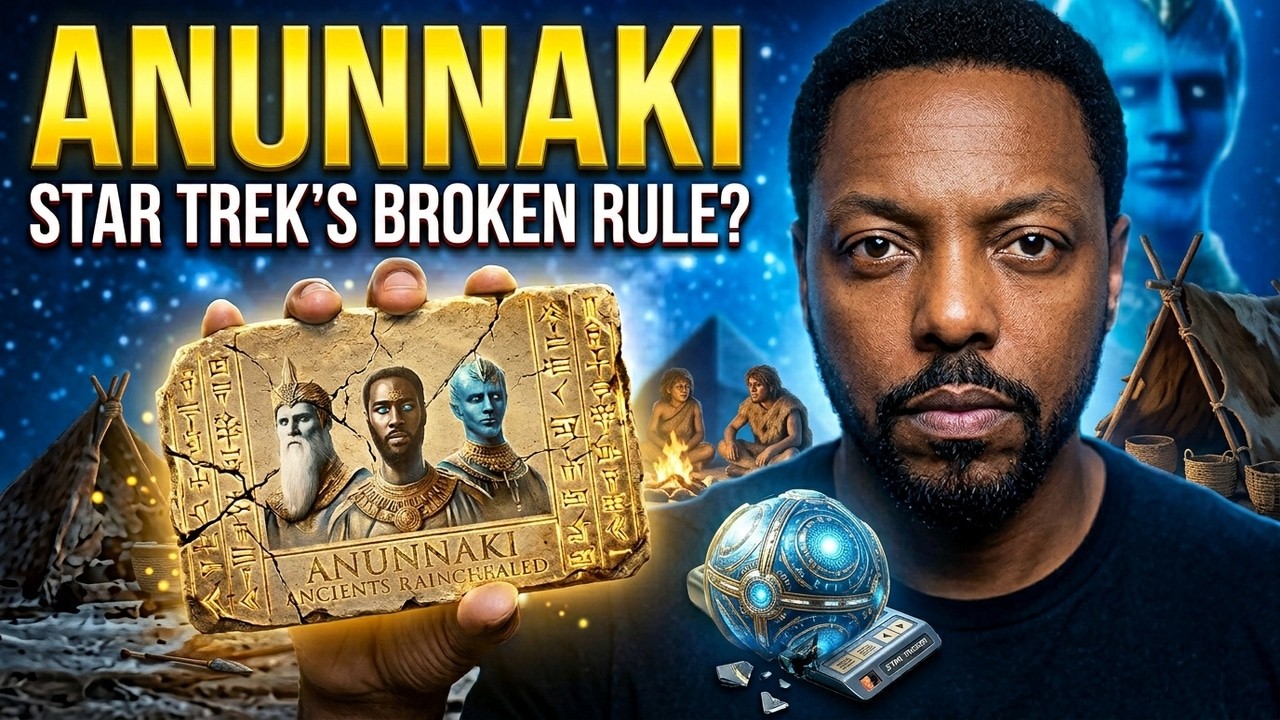
Billy Carson has not published an Angkor-specific video or book, so his reading comes from the framework he applies to sacred sites worldwide. In his coverage of global pyramid-building, Carson argues that the recurrence of monumental forms across continents reflects a tradition inherited from an earlier, advanced civilisation rather than a series of unrelated coincidences. He connects that earlier culture to Atlantis and to the Anunnaki, whom he reads as real beings who shaped early human culture. In his treatment of Baalbek, he treats the gap between the known builders' logistics and the sheer scale of the stones as the central open question, rather than a settled matter.
Applied to Angkor, that framework would place the temple among the world's sacred sites that, in Carson's view, carry astronomical and cosmological knowledge handed down from an older global culture. A temple built as a stone model of the cosmos and aligned with the sun fits naturally into that reading. It is an interpretation, not a finding: the archaeological record names Suryavarman II as builder and Phnom Kulen as the quarry, and nothing in Carson's framework requires disputing those facts. The open question is whether shared cosmic symbolism points to common human ideas or a common inheritance, a question Carson returns to in his work on the Anunnaki.
Watch, read and go deeper
For Billy Carson's on-screen look at ancient stonework, watch Megalithic Mysteries on 4BK TV. The Anunnaki topic hub gathers his writing on the earlier-civilisation framework that underpins his reading of sacred sites. For a nearby Khmer story, read the 4biddenknowledge report on a rare statue found in a dried-up pond at the Bayon temple, the late 12th- to early 13th-century temple at the centre of Angkor Thom, just north of Angkor Wat.
Frequently asked questions
Who built Angkor Wat?
Angkor Wat was built by the Khmer king Suryavarman II, who reigned from 1113 to about 1150. A large workforce quarried sandstone at Phnom Kulen and moved it to the site, likely along a canal network. The temple was dedicated to Vishnu and is thought by many scholars to have served as the king's funerary monument.
Why does Angkor Wat face west?
Unlike most Khmer temples, Angkor Wat faces west, a direction linked in Hindu tradition to Vishnu and to death. Scholars such as George Coedès argued this shows the temple doubled as Suryavarman II's mausoleum. The idea is widely discussed but not universally accepted.
Is Angkor Wat Hindu or Buddhist?
It was built as a Hindu temple to Vishnu in the 12th century. From the late 13th century it became predominantly a Theravada Buddhist site, and its Hindu reliefs survive alongside later Buddhist images.
Is Angkor Wat aligned with the constellation Draco?
The claim comes from Graham Hancock's Heaven's Mirror (1998), which reported John Grigsby's theory that Angkor's main temples mirror Draco as it appeared around 10,500 BCE. Mainstream archaeologists reject it: the temples were built by different kings over about 400 years, the match depends on which temples are included, and there is no evidence the Khmer recognised Draco. The temple does reflect Hindu cosmology and solar alignments, which is a separate, better-supported point.
How big is Angkor Wat?
Guinness World Records lists Angkor Wat as the largest religious structure in the world at 162.6 hectares. Its moat is about 190 metres wide and more than 5 kilometres around, and the central tower stands about 65 metres high.
Sources and further reading
- Zhou Daguan, A Record of Cambodia: The Land and Its People, translated by Peter Harris (Silkworm Books, 2007).
- Etsuo Uchida and Ichita Shimoda, "Quarries and transportation routes of Angkor monument sandstone blocks", Journal of Archaeological Science 40 (2013).
- Damian Evans et al., "Uncovering archaeological landscapes at Angkor using lidar", Proceedings of the National Academy of Sciences (2013).
- Brendan Buckley et al., "Climate as a contributing factor in the demise of Angkor, Cambodia", Proceedings of the National Academy of Sciences (2010).
- UNESCO World Heritage Centre, "Angkor" (World Heritage List entry 668, inscribed 1992).
- Henri Mouhot, Travels in the Central Parts of Indo-China (Siam), Cambodia, and Laos (1864).
- Graham Hancock and Santha Faiia, Heaven's Mirror: Quest for the Lost Civilization (1998).
- Jason Colavito, "Revisiting Graham Hancock's 'Draco Correlation'" (critique).