Sacred geometry is the practice of giving symbolic or spiritual meaning to geometric shapes and proportions, such as the circle, the square, the five Platonic solids and the golden ratio, and of using them to design temples, cathedrals and works of art. Some of it is rigorous mathematics that has been proved for more than two thousand years, some of it is documented historical design practice, and some of it is modern metaphysical interpretation layered on top.
The phrase now covers everything from Euclid's proofs to posters claiming the golden ratio hides in every face. Separating the three layers serves both readers who find meaning in these forms and skeptics who want to know what is true. This article sits in the [consciousness topic hub](/topics/consciousness), alongside deeper guides to individual symbols.
Where does sacred geometry come from?
Sacred geometry comes from the ancient conviction that number and shape reveal the order of the cosmos, an idea most clearly traced to the Pythagoreans of the sixth and fifth centuries BCE. The Pythagoreans found that musical harmony follows simple whole-number ratios (the octave 2:1, the fifth 3:2, the fourth 4:3) and concluded that the universe itself was built on number. Later ancient writers report that they used the five-pointed star, the pentagram, as a sign of recognition among members.
Plato carried the idea further. In the Timaeus, written around 360 BCE, the creator god fashions the physical world out of triangles and geometric solids. Several centuries later the Roman architect Vitruvius wrote in De architectura (Book III) that a temple should be proportioned like a well-formed human body, and that a man with arms and legs extended fits within both a circle and a square. Leonardo da Vinci's drawing known as the Vitruvian Man, made around 1490, is a direct illustration of that passage.
The five Platonic solids
The Platonic solids are the only five convex shapes whose faces are identical regular polygons with the same number meeting at every corner: the tetrahedron (4 triangles), the cube (6 squares), the octahedron (8 triangles), the dodecahedron (12 pentagons) and the icosahedron (20 triangles). That there are exactly five is not a belief but a theorem. Euclid proves it at the close of Book XIII of the Elements, around 300 BCE, and the reasoning is simple enough to follow: the face angles meeting at a corner must add up to less than 360 degrees, and only five combinations of regular polygons manage that.
Plato's Timaeus assigns four of the solids to the classical elements, the tetrahedron to fire, the cube to earth, the octahedron to air and the icosahedron to water, and has the creator use the fifth, the dodecahedron, for the whole cosmos. That assignment is philosophy rather than mathematics, but it is why the shapes carry his name.
The most famous attempt to make the solids literally cosmic came from Johannes Kepler. In Mysterium Cosmographicum (1596) he proposed that the orbits of the six planets then known were spaced by nesting the five solids inside one another between spheres. The model was wrong, and Kepler's own later work on elliptical orbits, built on Tycho Brahe's observations, replaced it. Still, it shows how seriously a working astronomer took the idea that geometry is the blueprint of creation.
The golden ratio and the Fibonacci sequence
The golden ratio, written φ (phi), is the number approximately 1.618 that results when a line is divided so that the whole is to the longer part as the longer part is to the shorter. Euclid called this division in 'extreme and mean ratio' (Elements Book VI, definition 3). It arises naturally in the regular pentagon, where the diagonal is φ times the side, and therefore in the pentagram, the dodecahedron and the icosahedron.
The Fibonacci sequence (1, 1, 2, 3, 5, 8, 13, 21, 34 and onward, each number the sum of the two before) was introduced to European readers by Leonardo of Pisa in his Liber Abaci of 1202, through a puzzle about breeding rabbits; Indian scholars of Sanskrit prosody had described the same sequence centuries earlier. The ratio of each term to the one before it gets steadily closer to φ: 21/13 is about 1.615, and 34/21 about 1.619.
The name 'divine proportion' comes from the Renaissance. The Franciscan mathematician Luca Pacioli published De divina proportione in Venice in 1509, with drawings of polyhedra by his friend Leonardo da Vinci. Pacioli's title reflects theology rather than measurement.
The strongest real-world case for φ is in plants. Many plants place each new leaf or seed about 137.5 degrees around the stem from the last, the 'golden angle', which divides a full circle in the golden ratio. Packing seeds this way produces the interlocking spirals visible in sunflower heads and pinecones, and the number of spirals running in each direction is very often a pair of consecutive Fibonacci numbers, such as 34 and 55 in a sunflower or 8 and 13 in a pinecone. This pattern, called phyllotaxis, is well documented in botany, though not every plant or every seed head follows it.
The vesica piscis, the circle and the square
The vesica piscis is the almond-shaped lens formed when two circles of equal size overlap so that each passes through the other's centre. It is the first construction in Euclid's Elements (Book I, proposition 1), where it is used to build an equilateral triangle, and its height is exactly √3 times its width. In Christian art the same shape, called a mandorla, frames images of Christ in majesty, and it is the seed of the larger overlapping-circle pattern covered in the guide to [the Flower of Life](/flower-of-life-explained-sacred-geometry-history-and-meaning).
The circle and the square have their own long history as symbols of heaven and earth. Squaring the circle, meaning constructing a square with exactly the same area as a given circle using only compass and straightedge, occupied geometers for more than two thousand years. In 1882 Ferdinand von Lindemann proved that π is transcendental, which settled the question: it cannot be done.
Medieval builders used these constructions in practice. Gothic masons laid out plans and elevations ad quadratum (from a square and its rotated copies) or ad triangulum (from equilateral triangles), a method that let a master mason generate a whole building's proportions from one starting measure with little more than cord and compass. The late fourteenth-century arguments over Milan Cathedral, where consultants debated whether the church should rise ad quadratum or ad triangulum, are among the best-recorded examples of how seriously this was taken.
Islamic geometric patterns and the quasicrystal surprise
Islamic art developed the most sophisticated geometric ornament of the pre-modern world, and one strand of it anticipated twentieth-century mathematics. Craftsmen built complex star-and-polygon patterns from a small set of decorated tiles now called girih tiles. In 2007 the physicists Peter J. Lu and Paul J. Steinhardt showed in the journal Science that, by the fifteenth century, these tilings had reached near-perfect quasi-periodic patterns, ordered designs that never repeat, of the kind Western mathematics described only in the 1970s with Penrose tilings. Their prime example is the Darb-i Imam shrine in Isfahan, Iran, built in 1453. How formally the designers understood the mathematics is still debated.
The modern revival: from Lawlor to Robert Edward Grant
Most of what is presented as sacred geometry today comes from a revival that took shape in the 1970s and 1980s. Keith Critchlow's books, including Islamic Patterns (1976), treated traditional geometry as a contemplative discipline, and Robert Lawlor's Sacred Geometry: Philosophy and Practice (1982) brought the term to a popular audience, presenting compass-and-straightedge constructions as a path to insight.
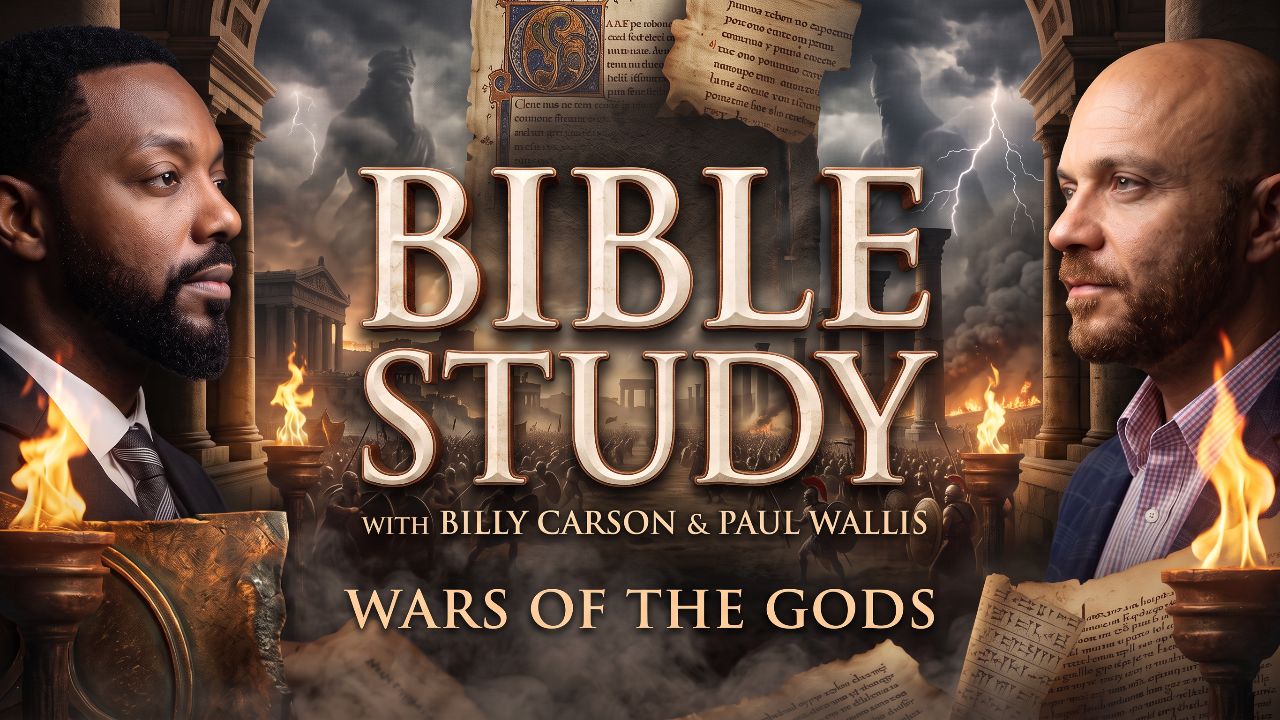
At the end of the 1990s Drunvalo Melchizedek's The Ancient Secret of the Flower of Life joined geometry with meditation practice and channelled teaching, popularising the Flower of Life and the [Merkaba meditation](/merkaba-explained-meaning-origins-and-the-mer-ka-ba-meditation). More recently, the artist and researcher Robert Edward Grant has published work connecting geometry, prime numbers and ancient monuments; his claims about the Great Pyramid and prime numbers are his own and have not been adopted by mainstream mathematics. Billy Carson explored this territory with Grant in the podcast conversation Sacred Geometry and Philosophy with Robert Edward Grant.
Which popular claims do not hold up?
Several of the most repeated sacred-geometry claims fail on measurement, even though the shapes behind them are real.
- The Parthenon: the claim that its facade fits a golden rectangle depends on which points are measured. The mathematician George Markowsky's 1992 paper 'Misconceptions about the Golden Ratio' showed the fit is loose, and no ancient text says the architects used φ.
- The Great Pyramid: its slope of about 51.84 degrees makes the perimeter-to-height ratio close to 2π and the slant-height-to-half-base ratio close to φ at the same time. Both follow from the Egyptian seked system, here a run of 5½ palms for every cubit of rise, which the Rhind Mathematical Papyrus uses in its pyramid problems. The double match is a numerical coincidence of that slope, not evidence that the builders encoded either constant. The guide to [how the Great Pyramid was built](/how-was-the-great-pyramid-of-giza-built-evidence-theories-and-open-questions) covers the construction evidence.
- The nautilus shell: it is a genuine logarithmic spiral, but measured shells widen at a rate clearly different from the golden spiral.
- DNA: the often-quoted figures of 34 ångströms per turn and 21 ångströms across give a ratio near φ, but both are rounded approximations, and the real dimensions vary.
- Cymatics: Ernst Chladni's vibrating-plate figures of the 1780s, and Hans Jenny's twentieth-century experiments that gave cymatics its name, are real physics, with sand collecting along the still lines of a standing wave. They show that vibration can organise matter into patterns; they do not show that sound creates matter.
None of this makes the geometry less remarkable. It only means the evidence should be kept separate from the interpretation.
Billy Carson's reading
Billy Carson treats sacred geometry as more than decoration: in his framework it is the language in which creation is written. In his Compendium of the Emerald Tablets, a commentary on Maurice Doreal's text, he reads the tablets as geometric and vibrational teaching and connects them to sacred geometry and the Merkaba. His wider model, set out in [the fractal holographic universe](/the-fractal-holographic-universe-explained-billy-carsons-model-of-reality), holds that the same patterns repeat at every scale, so that studying a shape becomes a way of studying the structure of reality and of consciousness itself.
This is Carson's interpretation, not a mathematical result, and he presents it as a philosophical and spiritual framework. What it shares with the historical tradition, from the Pythagoreans to Kepler, is the conviction that geometry points beyond itself. Where it parts from mainstream science is in treating that conviction as a description of how the universe actually works. Readers can weigh it alongside the evidence above, and the [holographic universe hub](/topics/holographic-universe) collects his related material.
Watch, read and go deeper
Carson's full conversation with Robert Edward Grant is on the podcast, and more episodes on geometry, consciousness and ancient knowledge stream on 4BK TV in [the 4biddenknowledge Podcast show](/watch/billy-carson-4biddenknowledge-podcast). For individual symbols, start with the Flower of Life and Merkaba guides linked above, then read the Compendium of the Emerald Tablets for Carson's interpretation in full. The consciousness topic hub brings the related articles, episodes and books together in one place.
Frequently asked questions
What is sacred geometry in simple terms?
Sacred geometry is the idea that certain shapes and proportions, such as the circle, the vesica piscis, the Platonic solids and the golden ratio, express a deeper order in the universe and belong in sacred buildings and art. The shapes themselves are ordinary geometry. The 'sacred' part is the meaning people give them.
Is sacred geometry real mathematics?
Partly. The Platonic solids, the golden ratio, the golden angle in plants and the √3 proportion of the vesica piscis are established mathematics, several of them proved in Euclid's Elements. The spiritual meanings attached to them are interpretation, and some popular claims, such as the golden ratio in the Parthenon or in DNA, do not survive careful measurement.
Why are there only five Platonic solids?
At each corner of a solid, the angles of the faces that meet there must total less than 360 degrees. Only five arrangements of identical regular polygons satisfy that rule: three, four or five triangles, three squares, or three pentagons. Euclid proved this at the end of Book XIII of the Elements.
Is the golden ratio really everywhere in nature?
No. It genuinely appears in the leaf and seed arrangement of many plants through the 137.5-degree golden angle, and in the geometry of the pentagon. Claims that it governs the nautilus shell, the human face or DNA rest on loose measurement.
What does Billy Carson teach about sacred geometry?
Billy Carson presents geometry as the language of creation, drawing on his reading of the Emerald Tablets and his fractal holographic model of the universe. He frames it as a spiritual and philosophical framework that sits alongside the mathematics rather than replacing it.
Sources and further reading
- Euclid, Elements, trans. Thomas L. Heath (Cambridge University Press, 1908), Books I, VI and XIII
- Plato, Timaeus, in Francis M. Cornford, Plato's Cosmology (1937)
- Johannes Kepler, Mysterium Cosmographicum (1596), trans. A. M. Duncan as The Secret of the Universe (1981)
- Mario Livio, The Golden Ratio: The Story of Phi, the World's Most Astonishing Number (2002)
- George Markowsky, 'Misconceptions about the Golden Ratio', College Mathematics Journal 23 (1992)
- Peter J. Lu and Paul J. Steinhardt, 'Decagonal and Quasi-Crystalline Tilings in Medieval Islamic Architecture', Science 315 (2007)
- Robert Lawlor, Sacred Geometry: Philosophy and Practice (Thames and Hudson, 1982)
- Billy Carson, Compendium of the Emerald Tablets (2019)