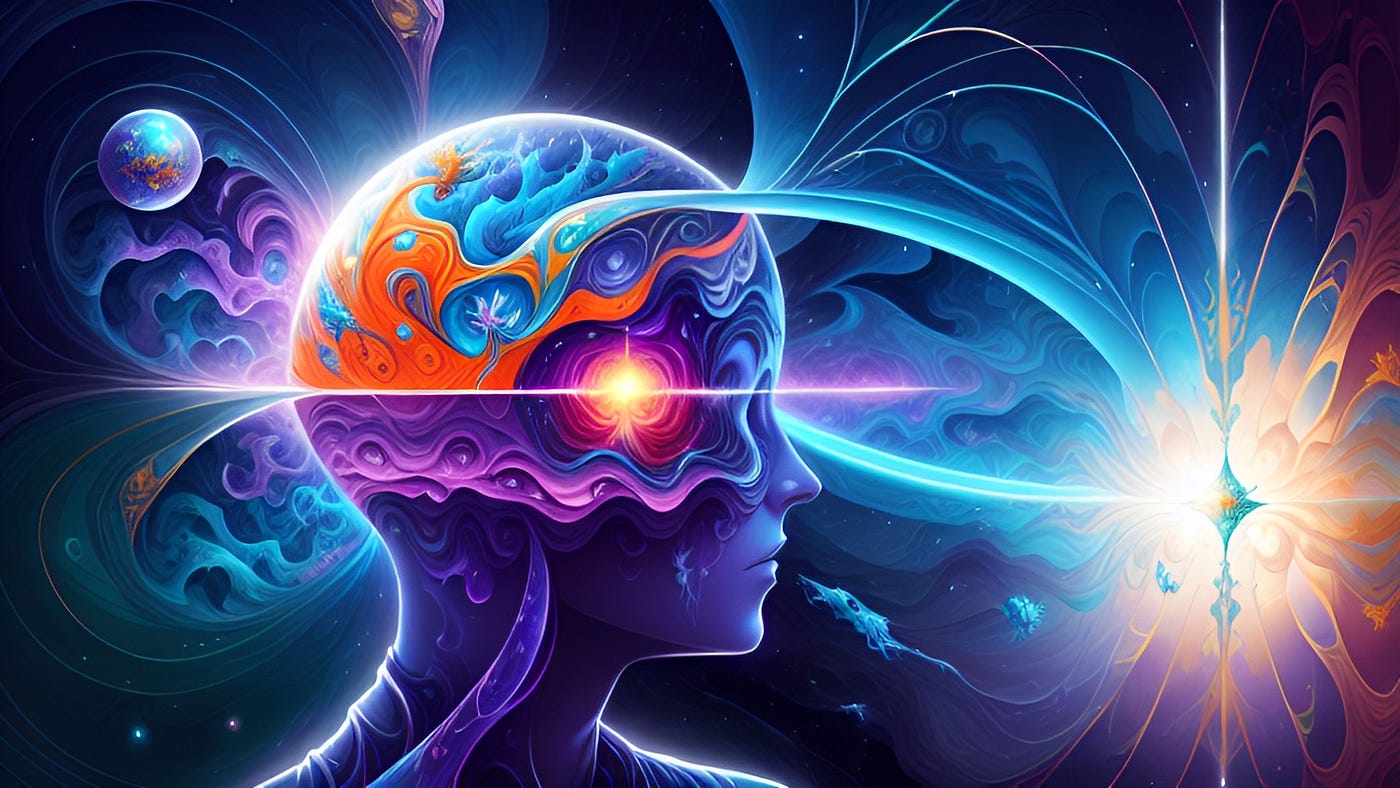
Dream interpretation is the practice of finding meaning in the images, stories and feelings of dreams. It is one of the oldest recorded human practices, running from an Egyptian dream manual of about 1220 BC through Sigmund Freud and Carl Jung to modern sleep laboratories, and each tradition answers the same question differently: is a dream a message, a disguised wish, a mirror of the mind, or a by-product of the sleeping brain?
The question matters because almost everyone dreams, and most people suspect their dreams mean something. That makes it worth separating what the interpretive traditions claim from what sleep science has measured. This guide covers both, then the dream themes people search for most and practical ways to work with your own dreams.
How old is dream interpretation?
Dream interpretation is at least 3,200 years old in written form. The British Museum holds Papyrus Chester Beatty III (EA 10683), a 19th Dynasty papyrus from Deir el-Medina, the village of the royal tomb builders near Thebes, dated to around 1220 BC. Its first columns contain a hieratic dream book: a manual listing dreams and whether each is a good or a bad omen. The papyrus later belonged to the scribe Qenherkhepeshef, who copied other texts on its back, and it was published in translation by the Egyptologist A. H. Gardiner in 1935.
The Greek world produced its own manual. Artemidorus of Daldis wrote the Oneirocritica in the 2nd century CE, a large handbook that sorted dreams by type and stressed that the dreamer's circumstances (occupation, health, social position) changed what a dream meant. Dreams as messages also run through scripture: in Genesis, Joseph interprets Pharaoh's dreams of fat and lean cattle, and in the Book of Daniel, Daniel interprets Nebuchadnezzar's dream of a statue. Many other traditions treated dreams as a channel for guidance, disagreeing mainly on where a dream points: to the gods, to the future, or back to the dreamer.
What did Freud say dreams mean?
Freud argued that dreams are disguised fulfilments of wishes, usually wishes the waking mind will not admit. He set this out in The Interpretation of Dreams (Die Traumdeutung), published in November 1899 but dated 1900 by its publisher. The first printing of 600 copies took years to sell, yet the book became one of the founding texts of psychoanalysis.
Freud distinguished the manifest content of a dream, the story you remember, from its latent content, the hidden thoughts beneath it. The mind turns one into the other through what he called the dream-work. Condensation packs several ideas into one image; displacement shifts emotional weight from something important onto something trivial, so that the dream's real subject is hidden in plain sight. Interpretation, for Freud, meant reversing the process through the dreamer's free associations. He called the interpretation of dreams "the royal road to a knowledge of the unconscious activities of the mind."
Freud's influence on culture is hard to overstate, but his theory of wish-fulfilment has not been confirmed by experimental research, and nightmares in particular are hard to explain as wishes.
How did Jung read dreams differently?
Carl Jung treated dreams as the psyche's attempt to restore balance rather than as disguised wishes. Jung had been Freud's closest collaborator, and the two broke in 1913, partly over this very question. In Jung's view a dream compensates for a one-sided conscious attitude: someone who presents an inflated image of themselves by day might dream of being small or humiliated, and someone who undervalues themselves might dream of being honoured.
Jung saw dreams as expressions of both the personal unconscious and what he called the collective unconscious, a layer of the psyche shared by all people and populated by archetypes. The ones that appear most often in his writing on dreams are the shadow (the disowned parts of the self), the anima and animus (the inner feminine in men and the inner masculine in women) and the Self (the whole personality). The practice of facing the shadow is covered in detail in shadow work explained.
Jung was wary of fixed meanings. He worked with the dreamer's own associations, compared images with parallels in myth and religion, a method he called amplification, and preferred to study a series of dreams over time rather than a single dream in isolation. His popular introduction, Man and His Symbols, appeared in 1964, three years after his death. As with Freud, Jung's theories are influential interpretive frameworks; they are not scientifically validated models of how dreaming works.
What does sleep science say about dreaming?
Modern sleep science treats dreaming as something the brain does during sleep, and it has tested several explanations of why. The turning point came in 1953, when Eugene Aserinsky and Nathaniel Kleitman at the University of Chicago reported in the journal Science that sleep contains recurring periods of rapid eye movement. Sleepers woken from REM sleep usually reported vivid dreams. Later research showed that dreaming also occurs in non-REM sleep, though REM dreams tend to be longer and more story-like.
In 1977 the Harvard psychiatrists J. Allan Hobson and Robert McCarley proposed the activation-synthesis hypothesis in the American Journal of Psychiatry. It held that during REM sleep the brainstem sends bursts of activity upward, and the forebrain does its best to weave that activity into a story. On this view, the strangeness of dreams reflects the brain's improvisation rather than a coded message.
In 2000 the Finnish researcher Antti Revonsuo proposed the threat-simulation theory in Behavioral and Brain Sciences: dreaming evolved to rehearse responses to danger. Studies since have found that threatening events are common in dreams. A 2004 study by Malcolm-Smith and Solms in the journal Dreaming, however, found that only about 8.5 per cent of dreamers reported a realistic life-threatening event, and a realistic escape was rarer still, which is not what a dedicated survival simulator would predict.
Other work links dreaming to memory. In a study published in Current Biology in 2010, Erin Wamsley, Robert Stickgold and colleagues trained 99 students on a virtual maze, then had some take a 90-minute nap and others stay awake. Nappers who reported dreaming about the task improved far more when retested than everyone else. Their dreams were not replays of the maze but loose associations, such as background music from the game or being lost in a cave. The authors read this as a sign that dreams reflect the brain reprocessing recent learning.
The broadest finding is the continuity hypothesis, associated with G. William Domhoff and others and built on the content-analysis system Calvin Hall and Robert Van de Castle published in 1966. Coding thousands of dream reports, researchers find that dream content largely reflects the people, worries and interests of waking life. Even the ability to communicate with sleepers in real time, described in researchers communicating with people while they dream, has come out of this laboratory tradition.
What do common dream symbols mean?
No dream symbol has a single fixed meaning, but some themes are reported so widely that interpretive traditions have built conventional readings around them. In a study published in Dreaming in 2003, Tore Nielsen and colleagues surveyed Canadian university students with a 55-item questionnaire. The most widely reported typical themes, each reported by more than 60 per cent, were being chased or pursued, falling, school or studying, and sexual experiences. Other themes people often search for include teeth falling out, flying, being late, being naked in public and the death of a loved one.
The popular readings below come from dream books and psychological folklore. They are interpretive conventions, not research findings:
- Being chased is often read as avoiding a problem, a feeling or a person.
- Falling is commonly linked to a sense of losing control or support.
- Teeth falling out is usually read as anxiety about appearance, ageing or how one communicates.
- Flying tends to be read as freedom, ambition or rising above a situation.
- Being late or unprepared for an exam is often tied to performance pressure, even years after school.
- Being naked in public is read as fear of exposure or judgement.
- The death of a loved one is more often read as change or fear of loss than as a literal event.
The more useful question is what a symbol connects to in the dreamer's own life. For research on frequent bad dreams, see the connection between nightmares, ageing and health, and the experience of waking unable to move is covered in the sleep paralysis phenomenon.
Do dreams reveal hidden truths or predict the future?
Most people believe dreams reveal something hidden, but science has not shown that dreams predict the future. In research published in the Journal of Personality and Social Psychology in 2009, Carey Morewedge and Michael Norton surveyed students in the United States, South Korea and India and found that most agreed dreams reveal hidden truths about themselves and the world. Their further studies found that people weigh dreams that fit their existing beliefs and desires more heavily, for example finding a pleasant dream about someone they like more meaningful than an unpleasant one.
A dream that seems to come true is remembered; the thousands that do not are forgotten. The evidence supports dreams as a reflection of the dreamer's concerns, memories and emotions. It does not support universal symbol dictionaries, dreams as forecasts, or dreams as verified messages from outside the mind.
How to work with your own dreams
The most reliable way to explore dreams is to record them consistently and look for patterns over time. A simple routine:
- Keep a notebook or phone by the bed and write before you move or check messages, since recall fades within minutes.
- Record the feelings as well as the plot; the emotion is often the clearest link to waking life.
- Note anything from the previous day or two that the dream might echo.
- Look for recurring settings, people and themes across weeks rather than decoding one dream.
This approach overlaps with techniques for becoming aware inside dreams, described in lucid dreaming and astral projection explained, and with the habit-change methods in how to reprogram your subconscious mind.
Recurrent nightmares, dreams that disturb sleep night after night, or ongoing sleep problems are a reason to speak with a doctor or sleep specialist. Nightmare disorder affects roughly 4 per cent of adults according to the American Academy of Sleep Medicine, and it is a recognised, treatable condition.
Billy Carson's reading
Billy Carson's documented connection to this subject is practical rather than theoretical. He has not published a dedicated talk on Freud or Jung, but he is behind DecodeMyDream.ai, an app that offers AI-generated dream interpretations and describes itself as a way to explore the subconscious. It is best understood as a reflective tool: a prompt for thinking about what a dream might connect to, not a diagnosis and not a prediction.
The question Carson poses fits his wider teaching on consciousness: whether dreams are a window into the subconscious worth decoding. Across his work he treats consciousness as primary, a position he presents as his interpretation rather than as established science, and that view ties dream work to his teaching on meditation, astral projection and reshaping the subconscious. A skeptical reader can take the practical core on its own terms: paying attention to dreams and writing them down is a way of paying attention to waking concerns.
Watch, read and go deeper
Billy's guided Meditation Mondays session on astral projection is discussed in lucid dreaming and astral projection explained, the natural next step for anyone who wants to move from interpreting dreams to practising awareness in them. For the Jungian side, start with shadow work explained. The consciousness topic hub collects every related article, from the subconscious to the pineal gland and meditation.
Frequently asked questions
What is the oldest known dream interpretation book?
One of the oldest surviving examples is the dream book in Papyrus Chester Beatty III, now in the British Museum. It comes from Deir el-Medina in Egypt and dates to about 1220 BC, in the 19th Dynasty. It lists dreams and classifies each as a good or bad omen.
What is the difference between Freud's and Jung's dream interpretation?
Freud saw dreams as disguised wish-fulfilment, with a hidden latent meaning decoded through free association. Jung saw them as compensating for one-sided conscious attitudes and drawing on archetypes, and he read them through the dreamer's associations and dream series rather than fixed meanings.
Do we only dream in REM sleep?
No. Vivid, story-like dreaming is most common in REM sleep, which Aserinsky and Kleitman identified in 1953, but people woken from non-REM sleep also report dreams. Those reports tend to be shorter and less vivid.
What does it mean to dream about being chased?
Popular interpretation usually reads it as avoiding a problem or feeling. Research cannot confirm a fixed meaning, but Nielsen and colleagues found being chased among the most widely reported typical dreams. The most useful reading connects it to the dreamer's own life.
Can dreams predict the future?
There is no scientific evidence that dreams predict the future. Research by Morewedge and Norton shows that people tend to give more weight to dreams that match what they already believe, which makes apparent hits feel more significant than they are. Dreams are better understood as reflections of waking concerns and memories.
Sources and further reading
- A. H. Gardiner, Hieratic Papyri in the British Museum, Third Series: Chester Beatty Gift (1935)
- Artemidorus of Daldis, Oneirocritica (2nd century CE)
- Sigmund Freud, The Interpretation of Dreams (1899, dated 1900)
- C. G. Jung and others, Man and His Symbols (1964)
- Eugene Aserinsky and Nathaniel Kleitman, "Regularly Occurring Periods of Eye Motility, and Concomitant Phenomena, During Sleep," Science (1953)
- J. Allan Hobson and Robert W. McCarley, "The Brain as a Dream State Generator," American Journal of Psychiatry (1977)
- Antti Revonsuo, "The Reinterpretation of Dreams," Behavioral and Brain Sciences (2000)
- Erin J. Wamsley, Robert Stickgold and colleagues, "Dreaming of a Learning Task Is Associated with Enhanced Sleep-Dependent Memory Consolidation," Current Biology (2010)
This article is educational and is not medical advice; anyone with persistent nightmares or sleep problems should consult a qualified clinician.