Synchronicity is the psychiatrist Carl Gustav Jung's term for a meaningful coincidence: an inner state, such as a thought, dream or feeling, lines up with an outer event that has no causal connection to it, yet the match strikes the person as deeply significant. Jung called it "an acausal connecting principle", meaning a link made by meaning rather than by cause and effect. Psychology and statistics explain why such coincidences happen as often as they do; what a person makes of them is a separate question.
That split is why the subject matters. Almost everyone has had the phone ring just as they thought of the caller. Some treat those moments as guidance, others as noise. This guide sets out what Jung proposed and when, the scarab case, his collaboration with the physicist Wolfgang Pauli, what psychology and probability say about coincidence, and how Billy Carson reads these moments.
What is synchronicity?
Synchronicity is the coincidence in time of two or more events that are not causally related but share the same or a similar meaning. In Jung's examples, one half is usually psychological (a dream or premonition) and the other physical (an event that mirrors it), and the person finds the match meaningful.
Jung framed synchronicity as a possible principle of explanation alongside causality, not a replacement for it. Synchronicity, in his view, described cases where no cause could be found but the arrangement of events seemed too meaningful to dismiss. He tied the idea to his theory of archetypes, the deep, shared patterns of the psyche that he believed shaped both dreams and myths. For background on his psychology, see the guide to shadow work and Jung's shadow.
Where did Jung's idea come from?
Jung developed the idea over more than twenty years, starting in the late 1920s. According to the International Association for Analytical Psychology, the first known presentation of meaningful coincidence as a fundamental principle came in his private seminar on dream analysis in 1928, where he contrasted Eastern attention to coincidence with Western reliance on causality.
He first used the word publicly in 1930, in his memorial address for Richard Wilhelm, the German sinologist whose translation of the I Ching Jung admired. Jung argued there that the I Ching's method rests on what he called the synchronistic principle rather than on causality. The Chinese oracle, consulted by casting coins or yarrow stalks, became his favorite example of reading the whole of a moment rather than a chain of causes.
In 1951 Jung gave his first major outline of synchronicity in a lecture at the Eranos conference in Switzerland. The full essay, "Synchronicity: An Acausal Connecting Principle", appeared in 1952 in Naturerklärung und Psyche, a joint volume with Wolfgang Pauli, whose contribution was "The Influence of Archetypal Ideas on the Scientific Theories of Kepler". The English edition, The Interpretation of Nature and the Psyche, followed in 1955 in the Bollingen Series. Jung's essay now sits in volume 8 of his Collected Works, The Structure and Dynamics of the Psyche, and is also sold as a standalone book under the title Synchronicity.
The golden scarab: Jung's most famous example
The best-known synchronicity story comes from Jung's own practice, and it is told in his own account. A young woman patient, whom he describes as intensely rationalistic and very hard to reach in therapy, was telling him a dream in which someone gave her a golden scarab, a costly piece of jewelry. Jung was sitting with his back to the closed window. As she spoke, he heard a gentle tapping on the glass, turned, and saw a flying insect knocking against the pane.
He opened the window and caught it as it flew in. It was a rose-chafer, Cetonia aurata, the nearest local equivalent to a golden scarab. Jung handed it to her. He reports that the moment pierced her rational defenses and allowed the treatment to move forward. He also notes that the beetle had behaved against its usual habits by trying to get into a dark room.
The story is powerful, but it is a single anecdote reported only by Jung. It shows why he thought the experience could matter in therapy; it is not a controlled test.
Wolfgang Pauli and the meeting of psyche and matter
Wolfgang Pauli was one of the founders of quantum theory and won the 1945 Nobel Prize in Physics for the exclusion principle. He first consulted Jung in early 1932, in a period of personal crisis, and Jung studied a long series of his dreams, more than 400 by most accounts, using many of them anonymously in Psychology and Alchemy. Their letters, published as Atom and Archetype: The Pauli/Jung Letters, 1932–1958, run for roughly a quarter century, ending with Pauli's death in December 1958.
Together they explored the idea of a "psychoid" level of reality, a layer beneath both mind and matter where the two are not yet distinct. In their view, synchronistic events might arise when archetypes at this level are activated, showing up at once as an inner image and an outer event. Philosophers today discuss this as the Pauli-Jung conjecture, a form of dual-aspect thinking about mind and matter. It is a philosophical proposal, not an experimental result.
Pauli's name also attaches to a piece of physics folklore. The "Pauli effect" is the joke that laboratory equipment broke whenever he was nearby. George Gamow tells the classic version in Thirty Years That Shook Physics (1966): an expensive apparatus in James Franck's laboratory in Göttingen failed for no clear reason, and it later turned out that Pauli's train had stopped at Göttingen station at that moment. It is a story physicists told with amusement, not evidence of anything, and it does not mean Pauli endorsed paranormal claims; his own interest, as the Kepler essay shows, was in how archetypal ideas shape scientific thinking.
Did Jung try to test synchronicity?
Yes, and the attempt is part of the 1952 essay. Jung included a chapter called "An astrological experiment", in which he collected horoscopes of married couples and looked for traditional astrological marriage indicators. The results did not establish anything, and Pauli was critical of the experiment.
That history matters for how synchronicity is discussed today. There is no experiment showing that meaningful coincidences occur more often than chance and ordinary psychology would predict, and claims that quantum physics validates synchronicity go beyond what the physics shows. Jung's idea remains an interpretive concept, valued mainly in psychotherapy and personal reflection.
The psychology of coincidence: apophenia, bias and large numbers
Psychology offers three tools that explain most coincidences without any hidden principle. The first is apophenia, a term coined by the German psychiatrist Klaus Conrad in his 1958 book Die beginnende Schizophrenie. Conrad used it for the "unmotivated seeing of connections" accompanied by a specific feeling of abnormal meaningfulness, an early sign of psychosis. In everyday use the word now describes the normal human tendency to see patterns in noise. Pareidolia, seeing faces in clouds or electrical outlets, is its visual form, and the writer Michael Shermer coined "patternicity" in 2008 for the same habit: finding meaningful patterns in meaningless noise.
The second is confirmation bias. People remember the time they thought of a friend and the friend called; they do not log the hundreds of times they thought of someone and nothing happened. The hits stick and the misses vanish.
The third is what the statisticians Persi Diaconis and Frederick Mosteller called the law of truly large numbers. In "Methods for Studying Coincidences" (Journal of the American Statistical Association, 1989), they put it plainly: "With a large enough sample, any outrageous thing is likely to happen." A one-in-a-million event, given millions of people and many chances a day, should happen to someone somewhere all the time. Their classic illustration is the birthday problem: in a group of just 23 people, the odds are better than even that two share a birthday, because the number of possible pairs grows much faster than the group.
The same mechanics sit behind other pattern experiences covered on this site, from repeating numbers like 111 and 1111 to the Mandela effect and false memory.
What critics and defenders argue
Skeptics such as Robert Todd Carroll, author of The Skeptic's Dictionary, argue that apophenia explains synchronicity completely: people can expect many striking coincidences over a lifetime, so Jung's metaphysical principle is unnecessary.
The parapsychologist Charles Tart wrote in 1981 about "the temptation to mental laziness": calling something synchronicity can become a way to stop looking for ordinary causes. Diaconis and Mosteller, for their part, treated Jung's interest in coincidence as a serious subject for study even while attributing most cases to hidden causes, psychology, multiple endpoints and large numbers. For the wider evidence debate on mind-over-matter and psychic claims, see the companion piece on the science of ESP.
How synchronicity is used in manifestation practice
In manifestation and New Thought circles, synchronicity is often treated as feedback: repeated numbers such as 11:11, an unexpected call from the right person, or a book falling open at the right page are read as signs that intention and reality are lining up. The movement behind that view is covered in the law of attraction and what psychology says about it. Some people keep a synchronicity journal, and some therapists in the Jungian tradition use a striking coincidence as a prompt for reflection rather than as a prediction.
A balanced way to engage has three steps. First, note the experience as it happened, with the date and the details, before memory improves it. Second, ask what it means to you, because the personal meaning is the part Jung cared about and the part no statistic can supply. Third, ask how often the same kind of thing happens without anyone noticing.
Billy Carson's reading
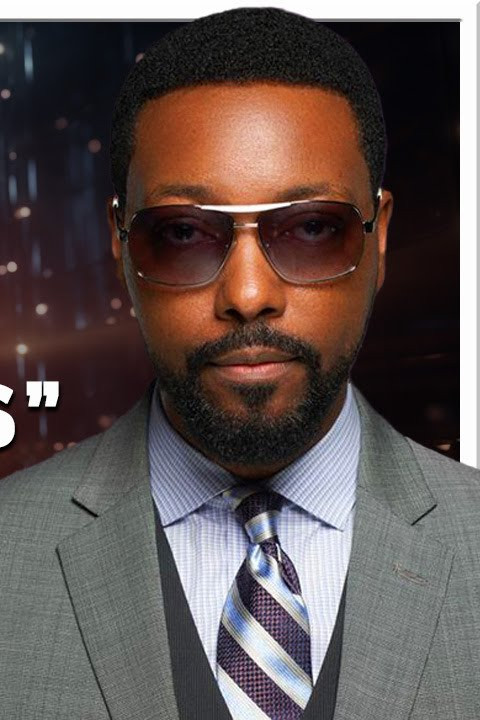
Billy Carson has not, as far as 4biddenknowledge's archive shows, given a dedicated talk on Jung's synchronicity. His nearest teachings deal directly with meaningful coincidence. In his live session 11·11 Manifestation Gate: Tune Your Mind. Claim Your Timeline (15 November 2025), the episode description calls 11:11 "a wink from the universe" seen on clocks, receipts and flight boards, and sets out to use that window to focus the mind and "impress the field with clear intention". The same description insists the approach is "pattern and practice" rather than superstition.
His talk The Universe Isn't Testing You, It's Reflecting You adds the framework. Carson argues that outer circumstances mirror a person's dominant inner frequency, summed up in his line "You're going to attract what you are, not what you want." Read alongside Jung, his position treats meaningful coincidences as reflections of a person's inner state. That is his interpretation: the psychology above explains why such moments are common, while Carson's reading is about using them as a cue for attention and intention.
Watch, read and go deeper
The full 11·11 session is on the 4biddenknowledge Podcast, and the mirror talk is broken down in the companion guide linked above. For the numbers side of pattern-seeing, the angel numbers guide covers 111, 1111 and the psychology of repeated digits. The consciousness topic hub gathers the related articles on mind, perception and Jungian psychology in one place.
Frequently asked questions
What is the difference between synchronicity and coincidence?
Every synchronicity is a coincidence, but not every coincidence is a synchronicity. In Jung's usage, the term applies only when an inner state and an outer event line up without a causal link and the person experiences the match as meaningful. The meaning, not the timing alone, is what defines it.
What was the scarab in Jung's synchronicity story?
It was a rose-chafer beetle, Cetonia aurata, the closest Swiss relative of the golden scarab. It tapped at Jung's window while a patient was describing a dream about being given a golden scarab, and Jung caught it and handed it to her. The account is Jung's own and is a single anecdote.
Is synchronicity scientifically proven?
No. Jung's own astrological experiment did not establish anything, and no later study has shown that meaningful coincidences occur more often than chance and psychology predict. Apophenia, confirmation bias and the law of truly large numbers account for most reported cases. Many people still find the concept useful for reflection.
What did Wolfgang Pauli have to do with synchronicity?
Pauli, the 1945 Nobel laureate in physics, was first Jung's patient and then his collaborator. Their joint 1952 volume carried Jung's synchronicity essay alongside Pauli's study of archetypal ideas in Kepler's science, and together they developed the idea of a psychoid level where psyche and matter meet. Pauli was also critical of Jung's experiments.
How can you tell a meaningful coincidence from apophenia?
From the outside, there is no test that separates them. A practical approach is to record the event, reflect on what it means to you, and honestly estimate how often similar things happen unnoticed. If coincidences start driving anxious decisions, that is a sign the pattern-seeking has stopped helping.
Sources and further reading
- C. G. Jung, "Synchronicity: An Acausal Connecting Principle", in The Structure and Dynamics of the Psyche, Collected Works, volume 8 (Princeton University Press), also published separately as Synchronicity.
- C. G. Jung and W. Pauli, The Interpretation of Nature and the Psyche (Bollingen Series 51, Pantheon, 1955); German original Naturerklärung und Psyche (1952).
- Atom and Archetype: The Pauli/Jung Letters, 1932–1958.
- Persi Diaconis and Frederick Mosteller, "Methods for Studying Coincidences", Journal of the American Statistical Association 84, no. 408 (1989).
- Klaus Conrad, Die beginnende Schizophrenie (1958), the origin of the term apophenia.
- Michael Shermer, "Patternicity: Finding Meaningful Patterns in Meaningless Noise", Scientific American, December 2008.
- Robert Todd Carroll, The Skeptic's Dictionary (2003).
- George Gamow, Thirty Years That Shook Physics (1966).