Billy's Colloidal Silver + Starfire Gold duo —
 Déjà vu, French for "already seen", is the brief and unsettling clash between a strong feeling that the present moment is familiar and the clear knowledge that it cannot be. Memory researchers explain it as a familiarity signal that fires without any retrievable source, while the "glitch in the Matrix" idea, popularised by the 1999 film, treats it as a sign that reality itself has been edited. Most people have felt it, usually for a few seconds.
Déjà vu matters because it is one of the few moments when people catch their own memory misfiring in real time. For neuroscientists it is a window into how the brain decides whether something is new or known; for readers drawn to consciousness and simulation questions, it is the most commonly cited personal experience that seems to hint at something stranger about reality. This article sets out what the research shows, the neurological links, how the Matrix idea took hold, and how Billy Carson's view of reality frames the question.
What is déjà vu?
Déjà vu is the feeling of having already experienced a situation that you know, at the same moment, you are meeting for the first time. The second half of that definition is what makes it distinctive. Recognising a place you have visited is ordinary memory; déjà vu is recognition your own judgement overrules.
The term is credited to the French philosopher and psychical researcher Émile Boirac, who first used it in 1876, so the word was born in circles interested in psychical research long before it became a laboratory topic.
Two related terms help mark its edges:
- Jamais vu ("never seen") is the reverse: something thoroughly familiar suddenly feels strange. The classic example is a common word repeated or written over and over until it starts to look wrong, as if you had never seen it before.
- Déjà vécu ("already lived") is a rarer, more persistent sense of having lived through whole events before. Unlike passing déjà vu, it can be sustained and is sometimes pathological, reported in some people with memory disorders.
How common is déjà vu?
Déjà vu is very common. In his 2003 review "A Review of the Déjà Vu Experience", published in Psychological Bulletin, the psychologist Alan S. Brown of Southern Methodist University pooled decades of surveys and concluded that roughly two-thirds of people report at least one episode in their lifetime, and most of those report several.
Brown's review also found consistent patterns. Reports are more frequent in younger people and fall with age, and they are associated with more education, higher socioeconomic status and more travel. Episodes typically last seconds, which is one reason the experience was so hard to study until researchers learned to produce it on demand.
What causes déjà vu, according to memory science?
The mainstream explanation is that déjà vu is a memory illusion: a feeling of familiarity that arrives without any memory of where that familiarity comes from. To see why, it helps to know that recognition memory has two parts.
- Familiarity is the quick, fuzzy sense that you have met something before, like knowing a face in a crowd without knowing whose it is.
- Recollection is the slower retrieval of the details: where you met that person, when and why.
Déjà vu fits the case where familiarity fires strongly but recollection comes back empty, so the brain is left holding a sense of "known" with no source attached, while your conscious knowledge insists the situation is new.
Anne Cleary of Colorado State University and her colleagues, including Alan S. Brown, tested this directly. In a study published in Consciousness and Cognition in 2012, they used The Sims video game to build a set of virtual scenes, viewed in 3-D through a head-mounted display. Some new scenes looked completely different from earlier ones but shared the same spatial layout: a central plant flanked by bushes in a courtyard, for example, matched a central statue flanked by benches in a museum. Participants reported more déjà vu in new scenes whose layout matched a scene they had seen earlier but could not recall. This is often described as "gestalt familiarity": the overall arrangement of a scene, rather than any single object, can trigger the feeling.
The 4biddenknowledge article on why we misremember when events occurred looks at a related family of illusions in which memory feels reliable but places events in the wrong time.
Does déjà vu predict the future?
The research says the feeling of premonition during déjà vu is real, but the prediction is not. Many people feel during déjà vu that they know what is about to happen next, which is one reason the experience is linked to precognition.
Cleary and her former graduate student Alexander Claxton put that feeling to the test in a follow-up study published in Psychological Science in 2018. Participants moved through virtual scenes made up of a series of turns. Later, they moved through new scenes that spatially mapped onto the earlier ones, and at the final moment were asked whether they were having déjà vu, whether they felt they knew which way the next turn would go, and which way it would go. About half of participants who had déjà vu reported a strong feeling that they knew what came next. Yet they were no better than chance at predicting the turn. The feeling of knowing came with confidence, but not with accuracy.
What happens in the brain during déjà vu?
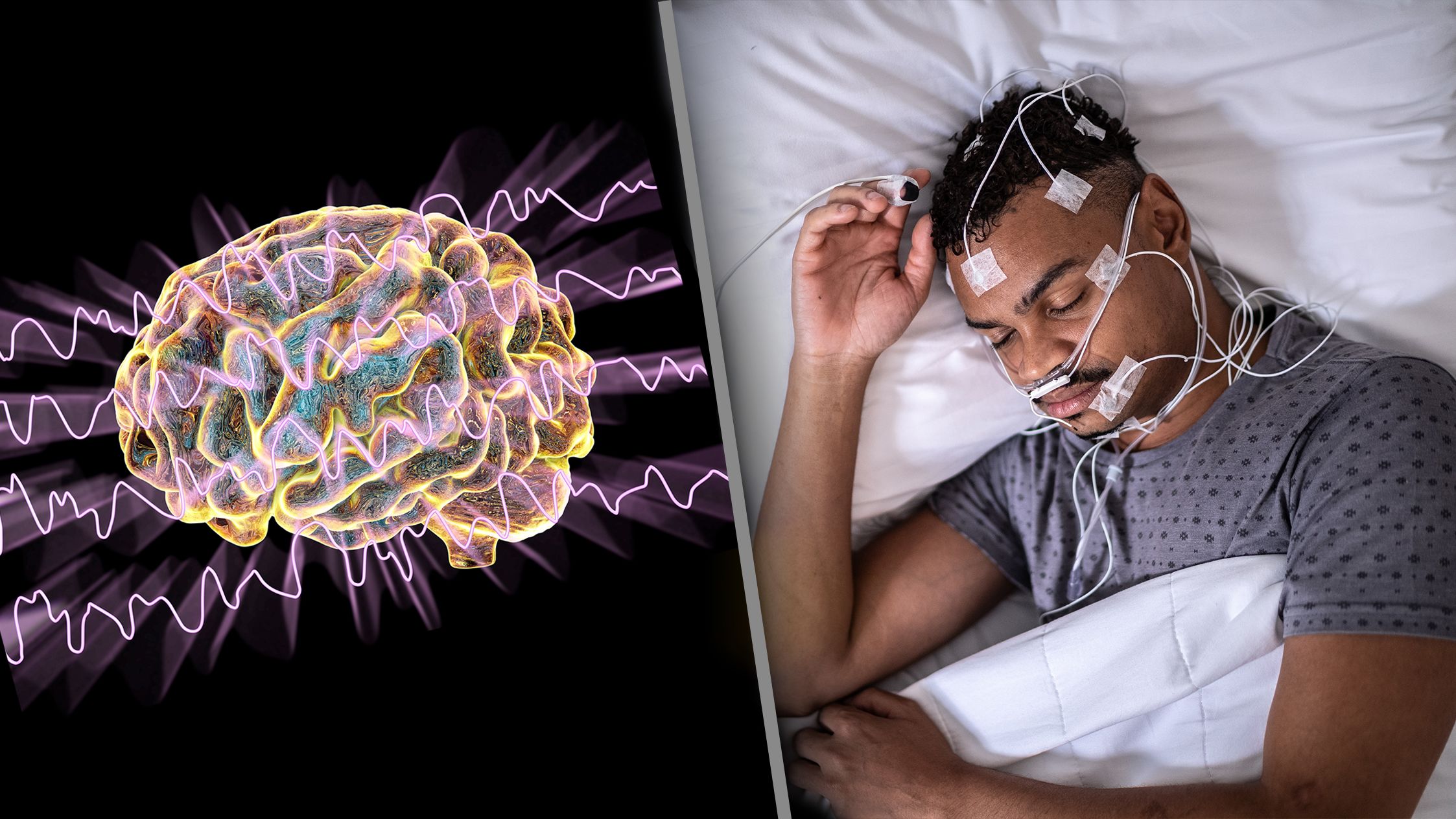
Brain-imaging work suggests déjà vu may involve the brain's error-checking systems rather than memory storage areas alone. A team led by Akira O'Connor at the University of St Andrews induced a déjà vu analogue in a brain scanner using word lists. Volunteers studied lists of related words, such as bed, pillow, dream and blanket, that pointedly left out the theme word "sleep". When later asked about "sleep", many felt it was familiar while knowing it could not have been on the list.
In a talk at the International Conference on Memory in Budapest in July 2016, O'Connor reported that the strongest activity during these episodes appeared in frontal regions, rather than in memory centres such as the hippocampus. The team suggested déjà vu might reflect the brain checking its memories for errors and flagging a conflict between a feeling of familiarity and what it knows to be true. That interpretation should be treated as preliminary. A peer-reviewed version with 21 participants, led by J. A. Urquhart, appeared in the journal Memory in 2018 and pointed to frontal and parietal regions associated with resolving memory conflict, but the evidence still rests on a few small studies.
Is déjà vu linked to temporal lobe seizures?
Yes, in some cases déjà vu can be part of a seizure, though occasional déjà vu on its own is normal. Déjà vu is a recognised aura, or warning sensation, of focal seizures that begin in the medial temporal lobe, the part of the brain that includes the hippocampus and the surrounding rhinal cortex.
In the nineteenth century the British neurologist John Hughlings Jackson wrote about a "dreamy state" in some patients with epilepsy, which included a vivid sense of reminiscence and familiarity, and in his later work he linked these seizures to the medial temporal region.
Fabrice Bartolomei and colleagues in Marseille, reporting in the journal Neurology in 2004, electrically stimulated medial temporal structures in patients with drug-resistant epilepsy. Déjà vu was produced most often by stimulating the entorhinal cortex, part of the rhinal cortex, and far less often by stimulating the hippocampus. That finding fits the memory account: the rhinal cortex is closely tied to familiarity, so activating it can produce the feeling of "known" without any real memory behind it.
Occasional déjà vu is normal and reported by most people. Frequent episodes that come together with other symptoms, such as loss of awareness, staring spells, unusual smells or tastes, or confusion afterwards, are worth discussing with a clinician, who can assess what is going on.
Where the "glitch in the Matrix" idea comes from
The idea that déjà vu is a glitch in reality comes mainly from The Matrix (1999). In one of the film's best-known scenes, Neo sees a black cat cross a doorway, then sees what looks like the same cat cross again. Trinity explains that déjà vu is usually "a glitch in the Matrix" that happens "when they change something". Déjà vu became popular shorthand for the suspicion that reality is a program that sometimes rewrites itself, and online "glitch in the Matrix" communities now collect personal stories of repeated moments and odd coincidences.
In 2003 the philosopher Nick Bostrom published his simulation argument, which gave the wider question a serious philosophical form. The 4biddenknowledge pillar on simulation theory and whether we are living in a simulation covers that argument and its critics in detail.
There is also a clear overlap with the Mandela effect. In both cases memory feels certain but can be wrong: with the Mandela effect, many people share the same false memory of a detail, and with déjà vu, one person feels a false sense of having lived a moment before. The pillar on the Mandela effect, false memory and parallel realities explains how false memories form.
Billy Carson's reading
No first-party video in which Billy Carson discusses déjà vu specifically has been identified, so his view here is best understood through the framework he has set out elsewhere. Carson argues that reality is a fractal holographic matrix of light, built from a higher dimension, in which consciousness plays a central role. In the livestream summarised in Did the Anunnaki Program the Matrix?, he lays out that view, cites Nick Bostrom among the thinkers who have entertained the simulation idea, and explores, as a hypothesis rather than a settled claim, whether other beings may have learned to manipulate that matrix. His podcast episode The Truth About the Simulation You Call Reality returns to the same theme.
Within that framework, déjà vu raises a natural question: could experiences like it be clues that reality is a projection rather than a solid, fixed world? That is the question Carson's view invites readers to ask. It is important to keep it separate from the answer that memory science gives. The mainstream explanation, supported by the virtual-reality, imaging and stimulation studies described above, is that déjà vu is a familiarity signal firing without a source. The research describes the mechanism; Carson's framework asks what kind of reality that mechanism operates in.
Watch, read and go deeper
For Billy Carson's own discussion of reality as a simulation, start with the podcast episode The Truth About the Simulation You Call Reality and the companion write-up Did the Anunnaki Program the Matrix?. For the philosophy behind the glitch idea, read the simulation theory pillar, and for the memory science that déjà vu shares with other illusions, read the Mandela effect pillar. To follow the wider thread on mind, perception and awareness, visit the Consciousness topic hub.
Frequently asked questions
What is déjà vu in simple terms?
Déjà vu is the feeling that you have already lived through the present moment, combined with the knowledge that you have not. The term is French for "already seen" and was first used by Émile Boirac in 1876. Researchers describe it as a memory illusion in which a sense of familiarity appears without any memory to explain it.
Is déjà vu a glitch in the Matrix?
There is no scientific evidence that déjà vu is a glitch in a simulation. The idea comes from the 1999 film The Matrix, in which Trinity calls déjà vu "a glitch in the Matrix". Memory research explains déjà vu as familiarity without recollection, and laboratory studies can produce it with scenes and word lists.
Can déjà vu predict the future?
No. In a 2018 study in Psychological Science, Anne Cleary and Alexander Claxton found that about half of participants felt they knew what would happen next during déjà vu, but they predicted the next turn in a virtual scene no better than chance. The feeling of premonition is real, but the prediction is not.
Is frequent déjà vu a sign of epilepsy?
Not on its own. Déjà vu can be the aura of a focal seizure starting in the medial temporal lobe, but occasional déjà vu is a normal experience reported by about two-thirds of people. Frequent episodes that come with loss of awareness, staring, odd smells or tastes, or confusion afterwards are worth discussing with a clinician.
What is the opposite of déjà vu?
The opposite is jamais vu, French for "never seen". It is the experience of something familiar suddenly feeling strange or new, such as a common word that starts to look wrong after it has been repeated many times.
Sources and further reading
- Alan S. Brown, "A Review of the Déjà Vu Experience", Psychological Bulletin (2003).
- Anne M. Cleary, Alan S. Brown and colleagues, "Familiarity from the configuration of objects in 3-dimensional space and its relation to déjà vu: A virtual reality investigation", Consciousness and Cognition (2012).
- Anne M. Cleary and Alexander Claxton, study of déjà vu and feelings of prediction, Psychological Science (2018).
- J. A. Urquhart, A. R. O'Connor and colleagues, "fMRI evidence supporting the role of memory conflict in the déjà vu experience", Memory (2018).
- Fabrice Bartolomei and colleagues, cortical stimulation study of the rhinal cortex in déjà vu and reminiscence, Neurology (2004).
- Nick Bostrom, "Are You Living in a Computer Simulation?", The Philosophical Quarterly (2003).